Description
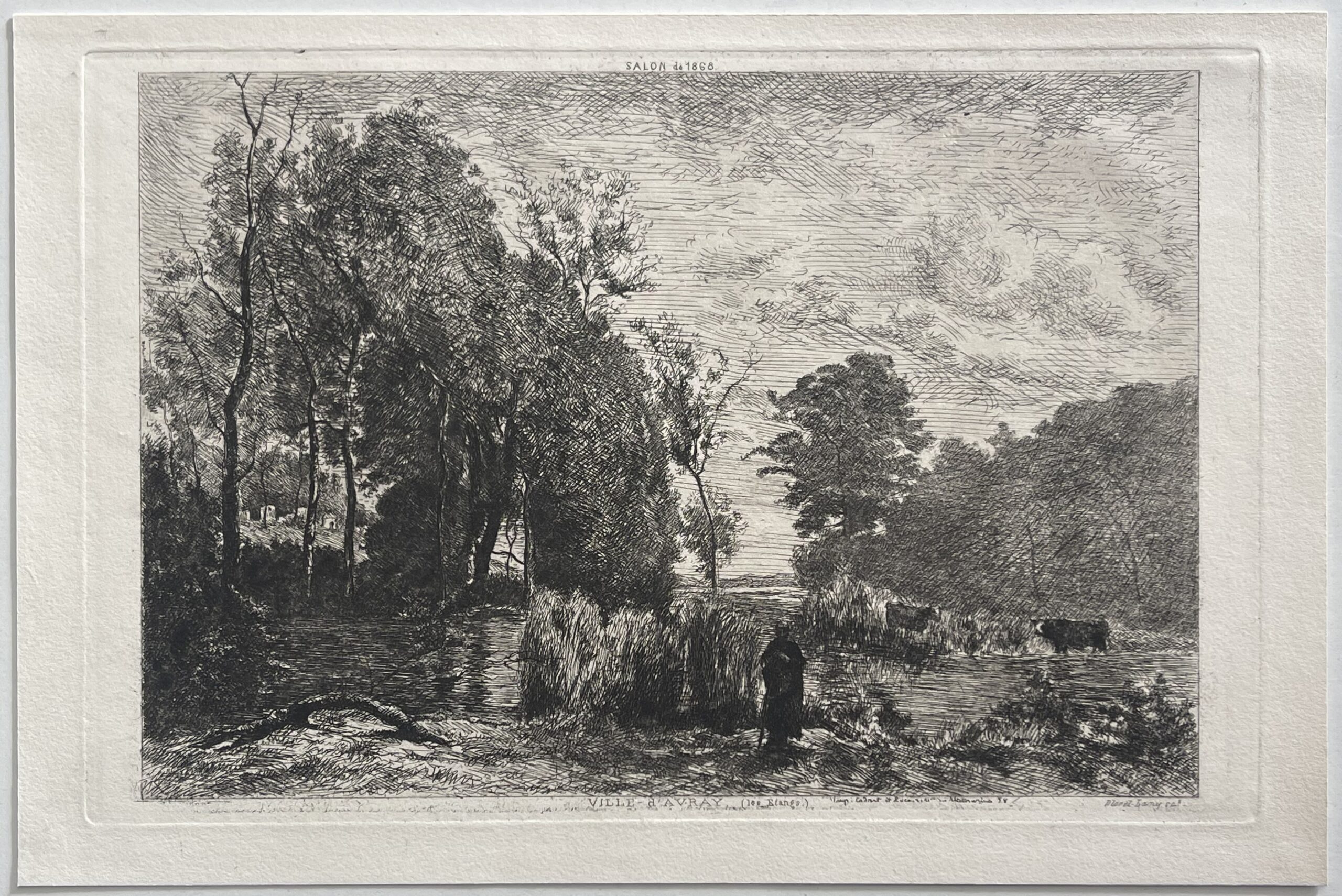
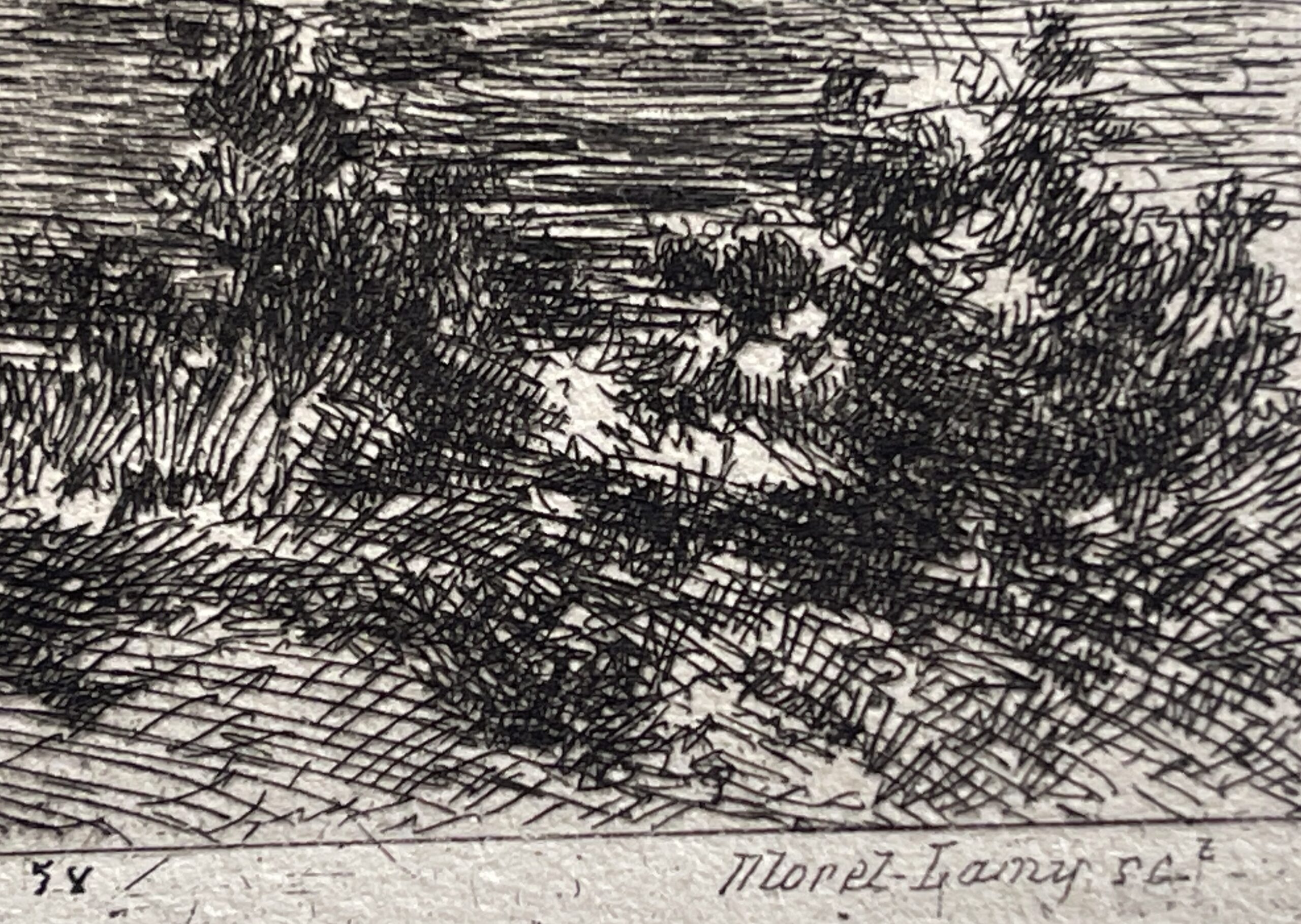
Ville-d’Avray France 1868 – Original nineteenth-century etching by Félix Morel-Lamy after Jean-Baptiste Camille Corot (1796–1875), depicting the celebrated ponds of Ville-d’Avray near Paris.
Artculture6 presents this beautiful French landscape etching entitled Ville d’Avray (Les Étangs), engraved by Félix Morel-Lamy after a composition by Camille Corot.
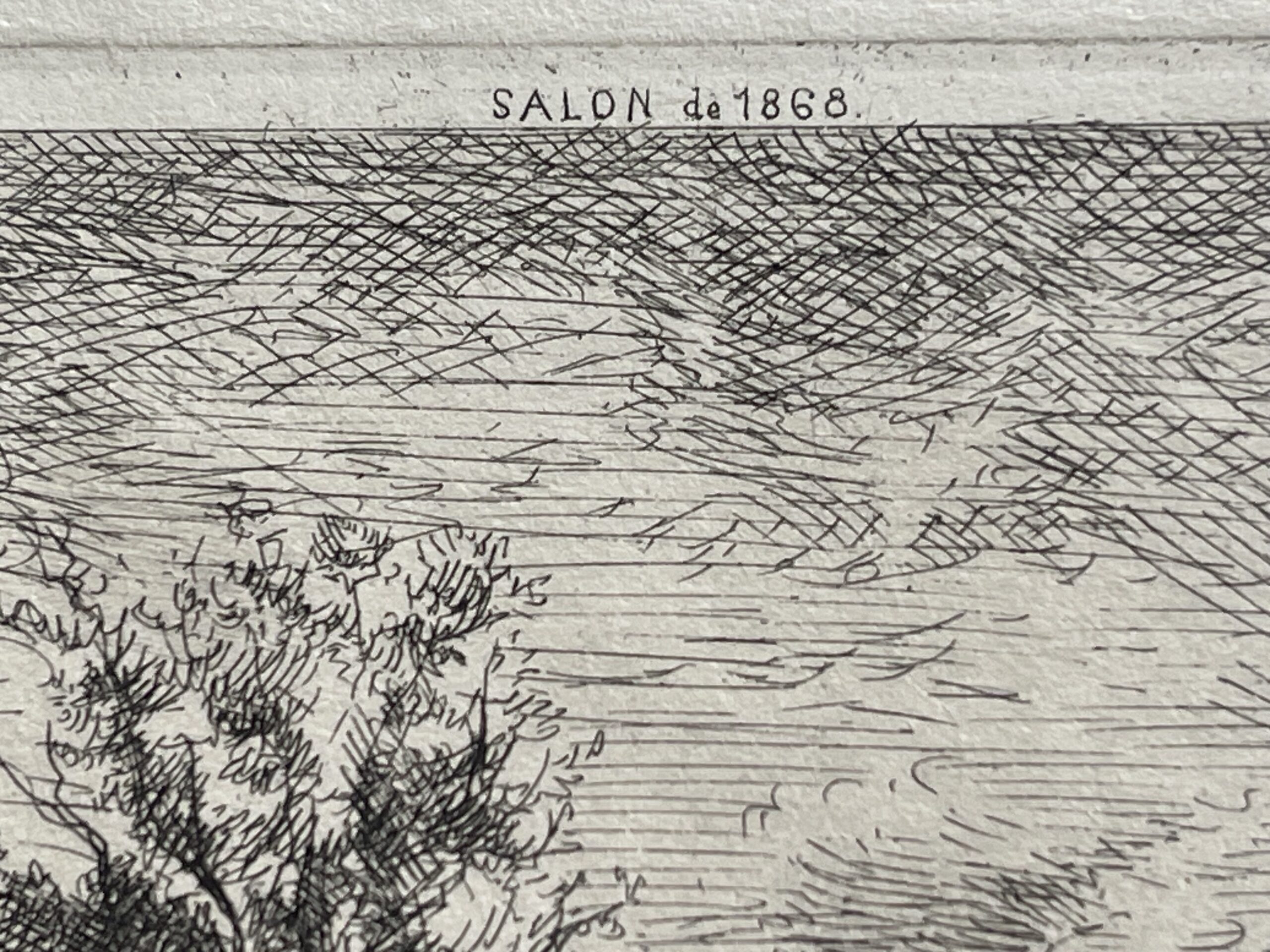
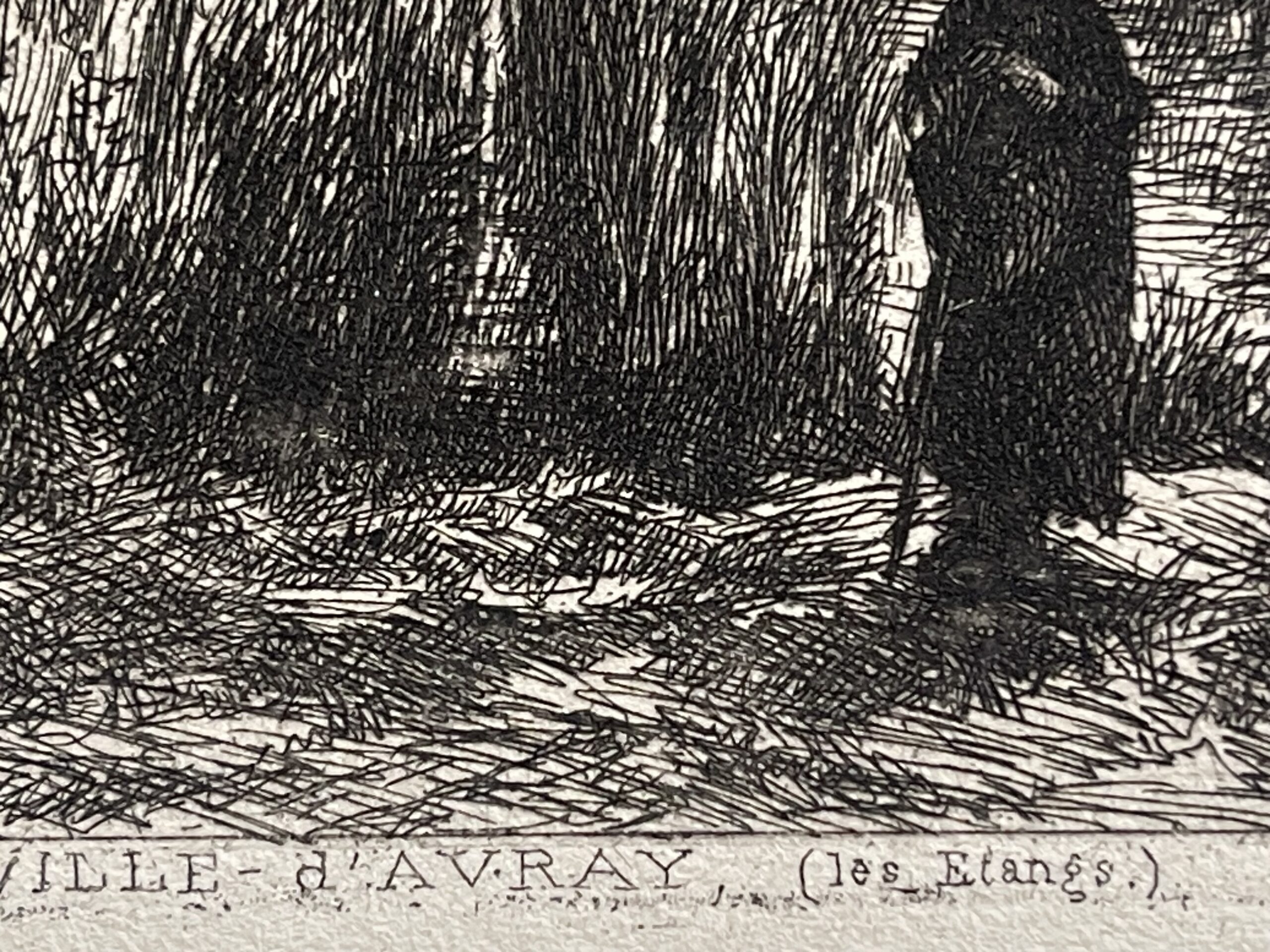
The plate bears the inscriptions “SALON de 1868” above the image and “VILLE D’AVRAY (les Étangs)” beneath the composition.
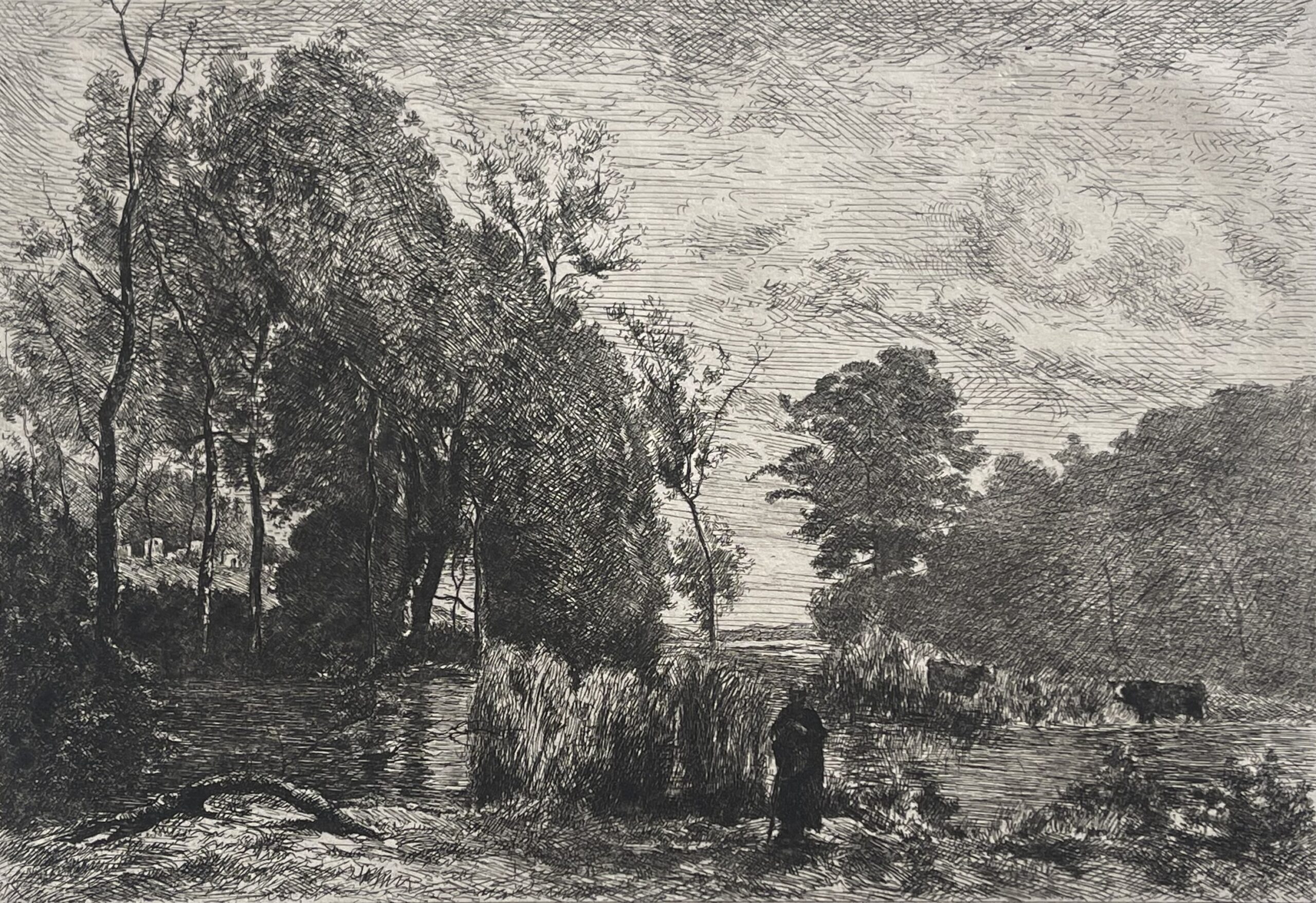
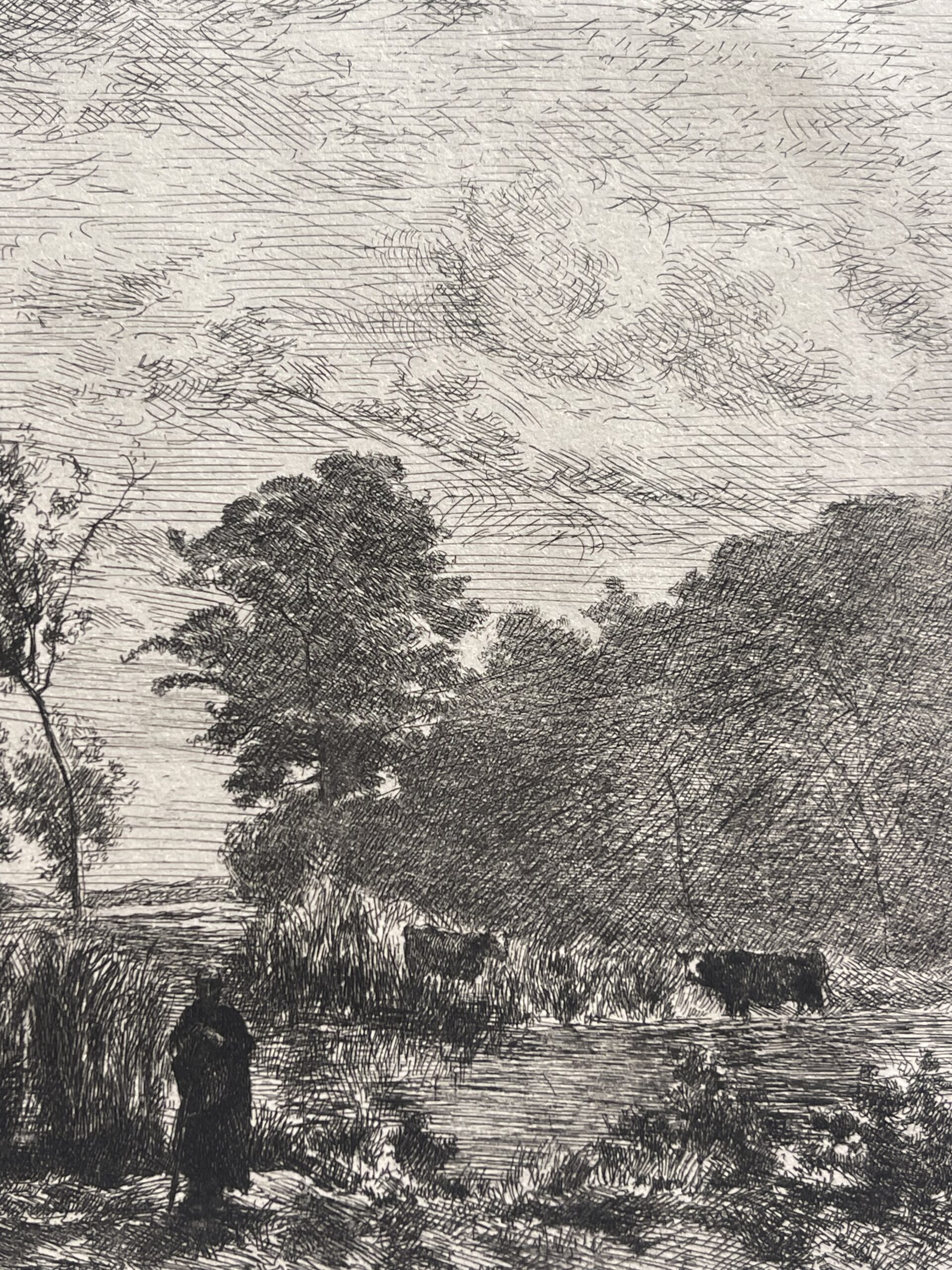
This atmospheric landscape depicts the wooded banks of a pond, a solitary figure, tall reeds and an extensive sky filled with softly moving clouds.
The richness of the engraved lines and the contrasts between deep shadows and delicate light give the work a particularly attractive character.
VILLE-D’AVRAY – THE PONDS OF CAMILLE COROT
Ville-d’Avray is situated in the Hauts-de-Seine department, west of Paris.
Its picturesque ponds, wooded banks and peaceful countryside played an important role in the artistic life of Camille Corot.
The painter frequently visited the area, where his family maintained a country residence.
The ponds became one of his favourite subjects.
Their quiet waters, surrounding trees and atmospheric light provided endless opportunities for landscape studies.
Corot returned repeatedly to these subjects, developing the subtle and poetic approach to nature for which he became internationally celebrated.
Today, the ponds are closely associated with his name and remain an important part of the artistic heritage of Ville-d’Avray.
A BEAUTIFUL WOODED LANDSCAPE
The composition presents a peaceful landscape beside a pond.
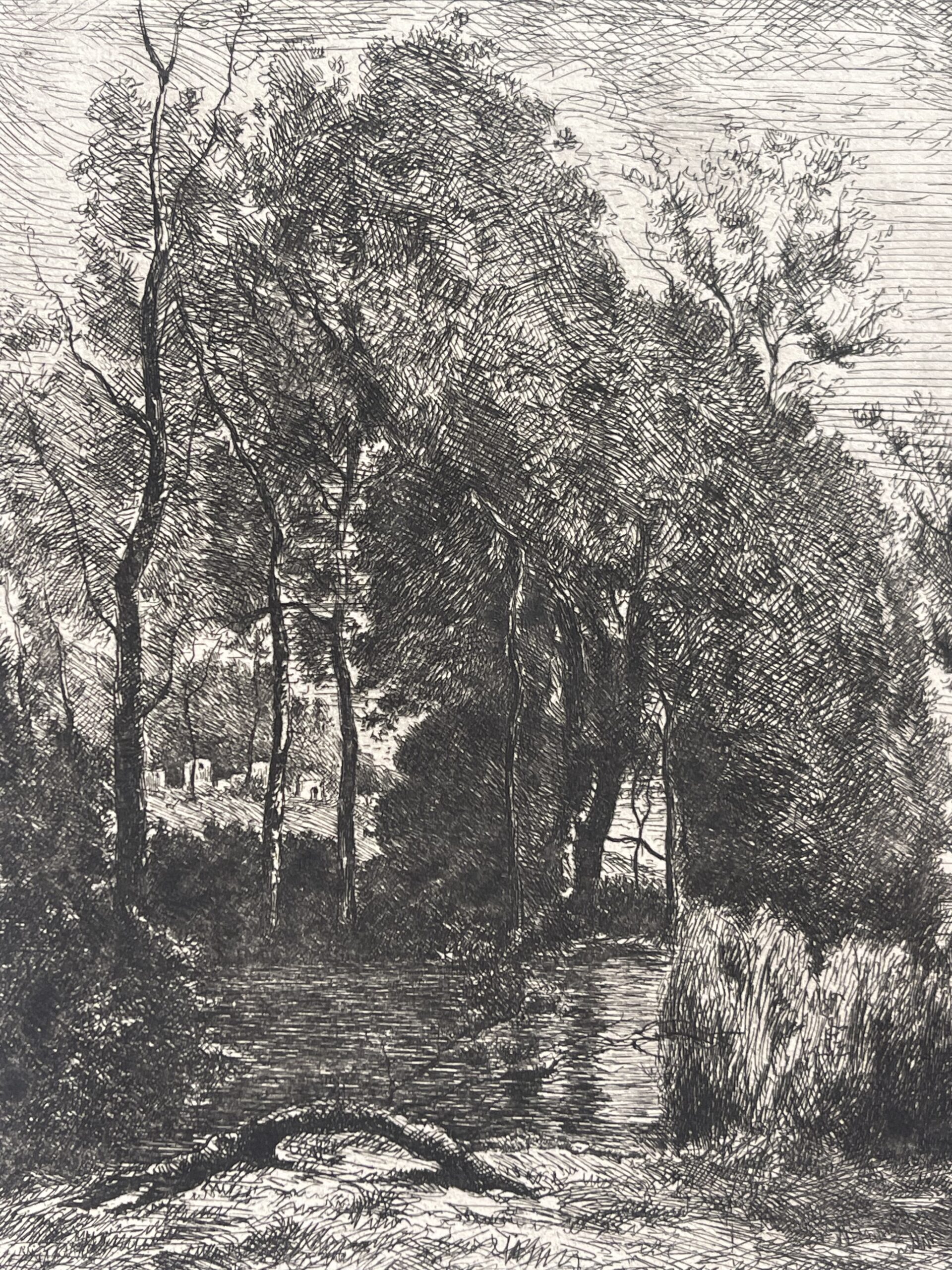
On the left, a dense group of trees creates an imposing mass of foliage.
The trunks rise vertically against the sky, while their branches form an intricate network of lines.
The foreground is covered with grasses, uneven ground and low vegetation.
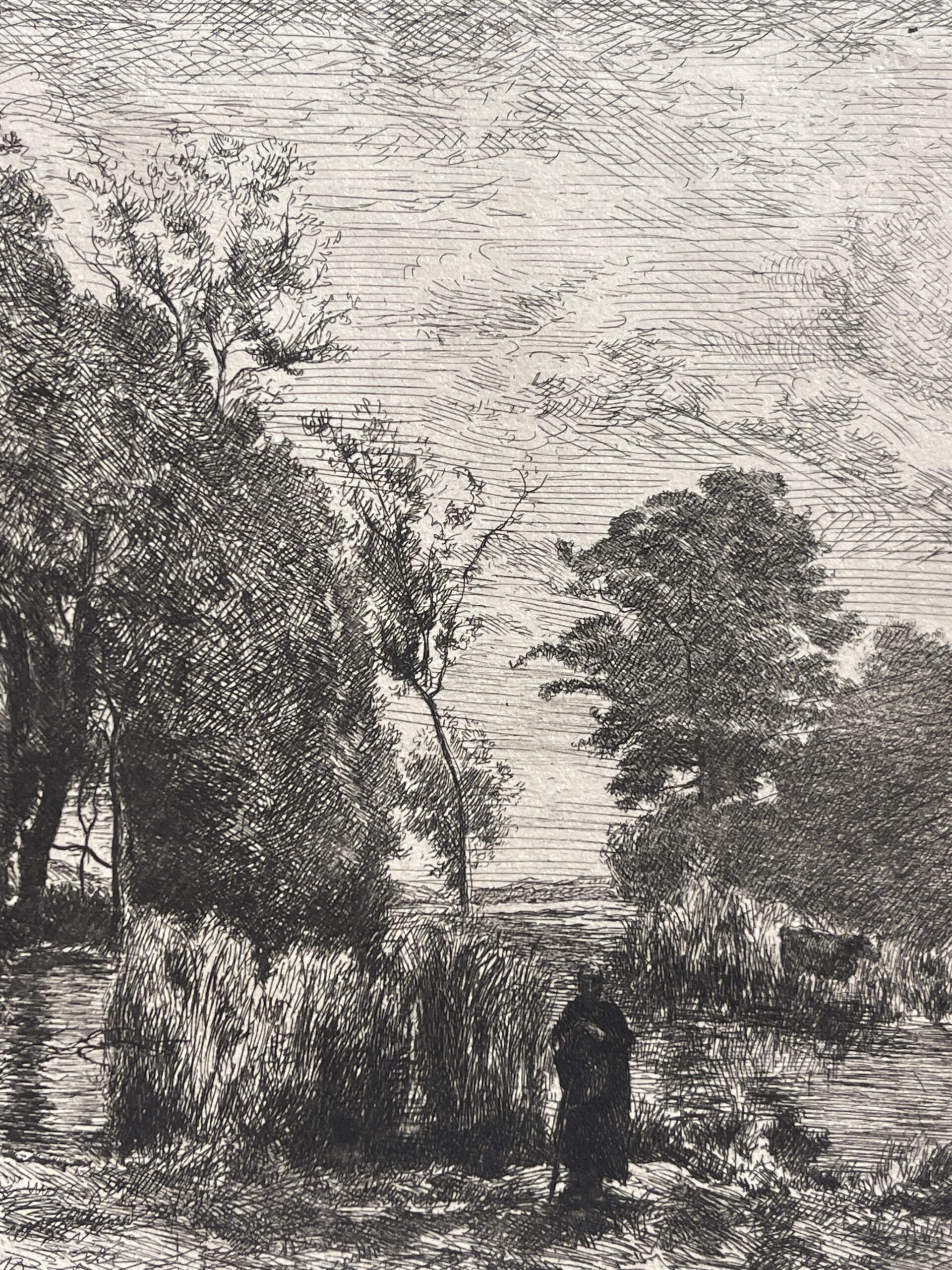
Near the centre, tall reeds grow beside the water.
A solitary figure stands close to the bank, adding a quiet human presence to the scene.
On the right, darker vegetation and trees extend towards the far side of the pond.
The distant horizon is partly concealed by foliage.
Above the landscape, an extensive cloudy sky occupies the upper part of the image.
The contrast between the detailed foreground and the delicate atmosphere of the distance creates a strong impression of depth.
CAMILLE COROT (1796–1875)
Jean-Baptiste Camille Corot was born in Paris in 1796.
He became one of the most influential French landscape painters of the nineteenth century.
After studying painting, he travelled extensively throughout France and Italy.
His artistic development was deeply influenced by direct observation of nature.
Corot was particularly interested in the effects of light, atmospheric perspective and the subtle relationships between trees, water and sky.
Although associated with the Barbizon School, he developed an individual artistic language that combined classical composition with an increasingly poetic interpretation of the natural world.
His landscapes often feature quiet ponds, solitary figures, wooded paths and delicate silvery light.
The surroundings of Ville-d’Avray provided some of his most celebrated subjects.
Corot died in Paris in 1875.
His works are now preserved in leading museums throughout the world.
FÉLIX MOREL-LAMY – THE ENGRAVER
Félix Morel-Lamy was a French nineteenth-century engraver who produced original etched interpretations of paintings and landscapes.
His work belongs to the important tradition of reproductive and interpretative etching.
During the nineteenth century, accomplished engravers translated major paintings into printed images, making celebrated artistic compositions accessible to collectors.
The present etching, dated 1868, demonstrates the technical qualities of Morel-Lamy’s engraving.
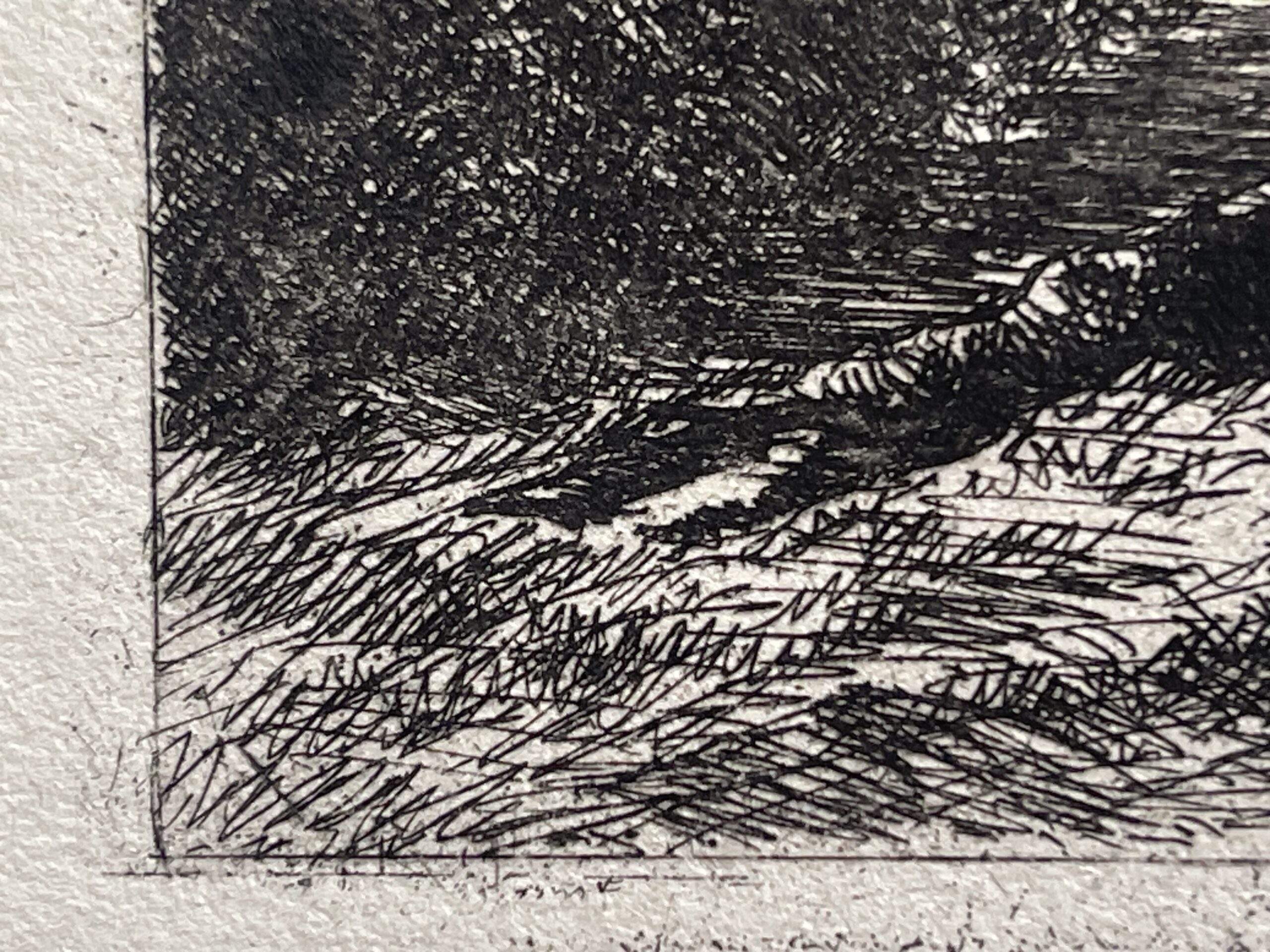
The artist uses finely arranged lines, dense cross-hatching and varied tonal values to recreate the atmospheric landscape.
The dark trees on the left are rendered through tightly worked lines.
The reeds, grasses and water are described with more spontaneous marks.
The sky is covered by a sophisticated network of delicate engraved strokes.
The result is a sensitive interpretation of Corot’s landscape painting.
THE ART OF NINETEENTH-CENTURY ETCHING
Etching became an important artistic medium in France during the nineteenth century.
The technique involves drawing into a protective ground on a metal plate and using acid to bite the exposed lines.
The engraved plate is then inked and printed under pressure.
This process allows artists to create a remarkable variety of lines, from extremely fine strokes to rich, dark passages.
In the present work, the engraver exploits these qualities to reproduce the complex structure of trees, foliage and atmospheric effects.
The sky contains numerous delicate lines that suggest the movement of clouds and the changing quality of daylight.
The foreground presents stronger contrasts and more concentrated shading.
The water is indicated through carefully arranged horizontal strokes, while the trees and reeds are rendered in a more varied manner.
These different techniques combine to create an impressive landscape composition.
A LANDSCAPE ASSOCIATED WITH THE SALON OF 1868
The inscription “SALON de 1868” connects this image with the artistic context of the Paris Salon of that year.
The Salon was one of the most important official art exhibitions in nineteenth-century France.
It played a central role in the recognition of painters and the circulation of their work.
Corot’s atmospheric landscapes were increasingly admired during this period.
Engraved interpretations such as this example contributed to the dissemination of his compositions among collectors and art lovers.
THE BARBIZON SCHOOL AND NATURALISTIC LANDSCAPE ART
The Barbizon School transformed French landscape painting during the nineteenth century.
Its artists placed increasing emphasis on observing the natural environment.
Forests, rivers, rural roads, ponds and agricultural landscapes became major artistic subjects.
Camille Corot shared this interest in nature while developing his own distinctive approach to landscape.
His works combine careful composition with subtle emotional and atmospheric effects.
The present etching is particularly representative of this sensitivity.
Its quiet pond, dense vegetation, solitary figure and cloudy sky create a timeless sense of tranquillity.
A HISTORIC FRENCH PRINT
This antique landscape etching provides an attractive interpretation of one of the subjects most closely associated with Camille Corot.
The finely executed composition preserves the quiet character of the wooded ponds of Ville-d’Avray.
The extensive sky and beautifully rendered foliage demonstrate the engraver’s technical accomplishment.
The inscriptions preserved on the plate also provide useful historical identification.
DIMENSIONS AND TECHNICAL DETAILS
Country: France
Region: Île-de-France, Hauts-de-Seine
Place depicted: Ville-d’Avray
Subject: Wooded landscape beside a pond
Original painter: Jean-Baptiste Camille Corot (1796–1875)
Engraver: Félix Morel-Lamy
Date indicated on the plate: 1868
Technique: Etching
Sheet dimensions: 26.8 × 17.8 cm
Engraved image dimensions: 21.7 × 14.9 cm
Printed inscriptions: “SALON de 1868” and “VILLE D’AVRAY (les Étangs)”
Artistic context: Barbizon School and nineteenth-century French landscape art


Avis
Il n’y a pas encore d’avis.