Description
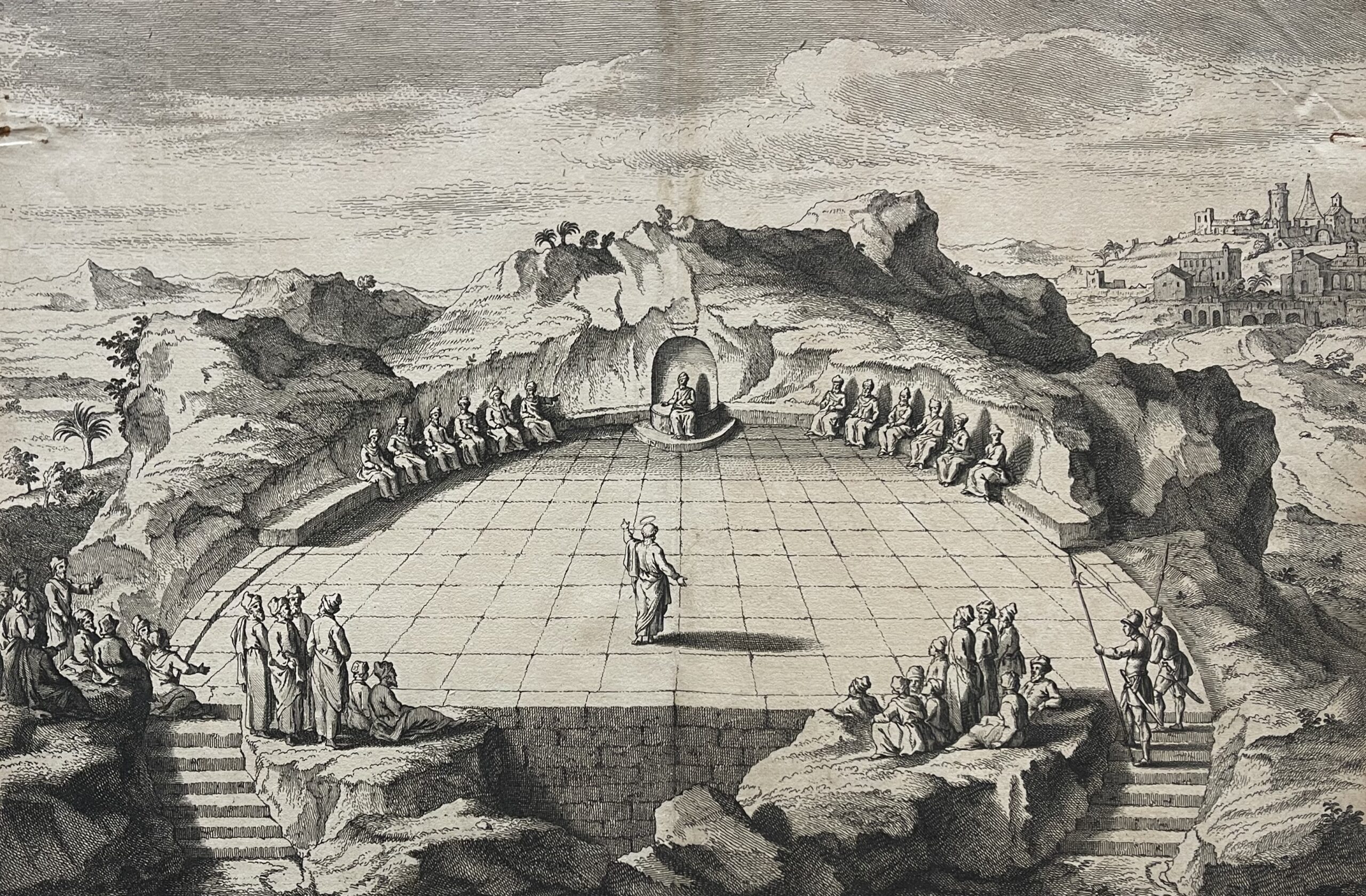
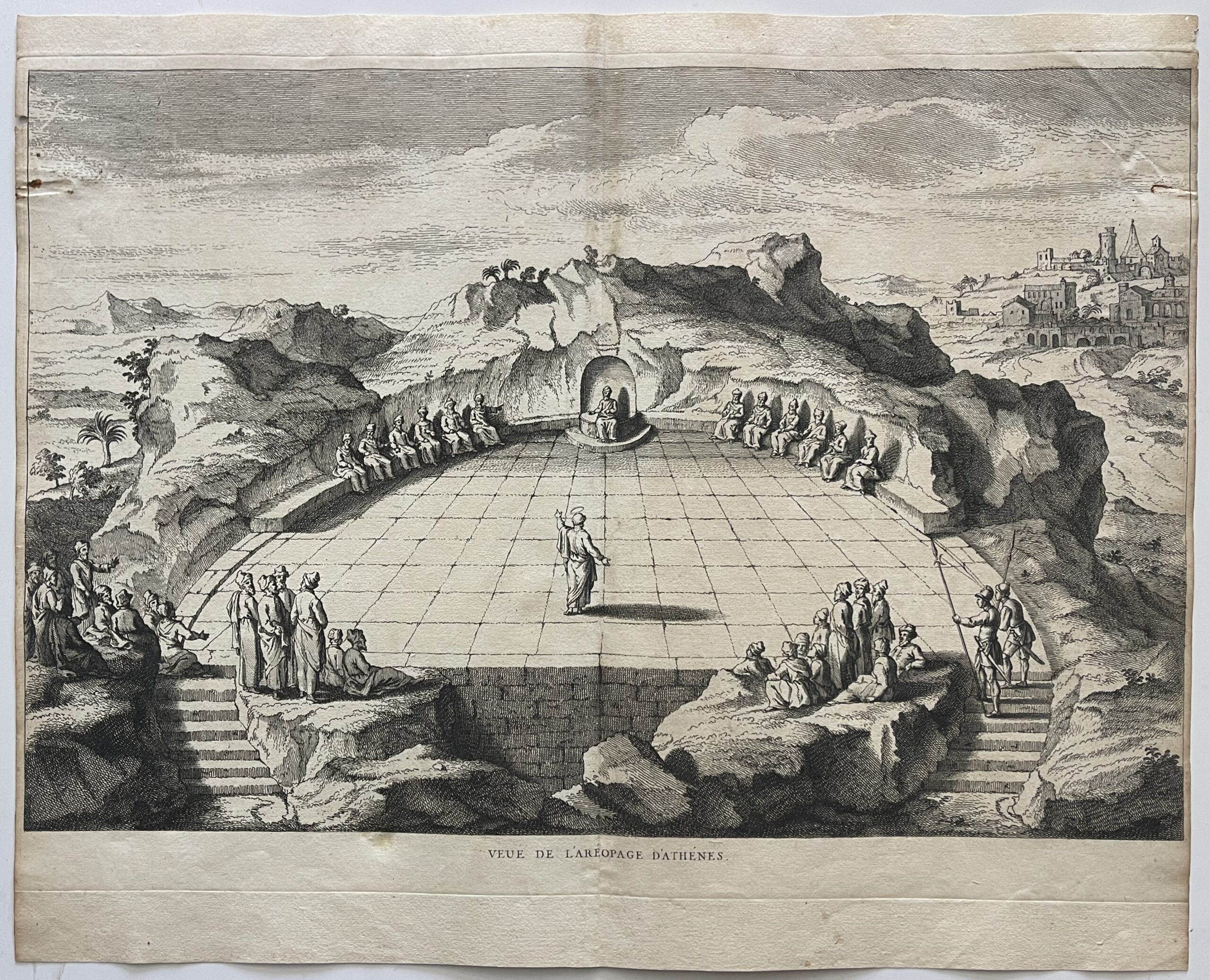
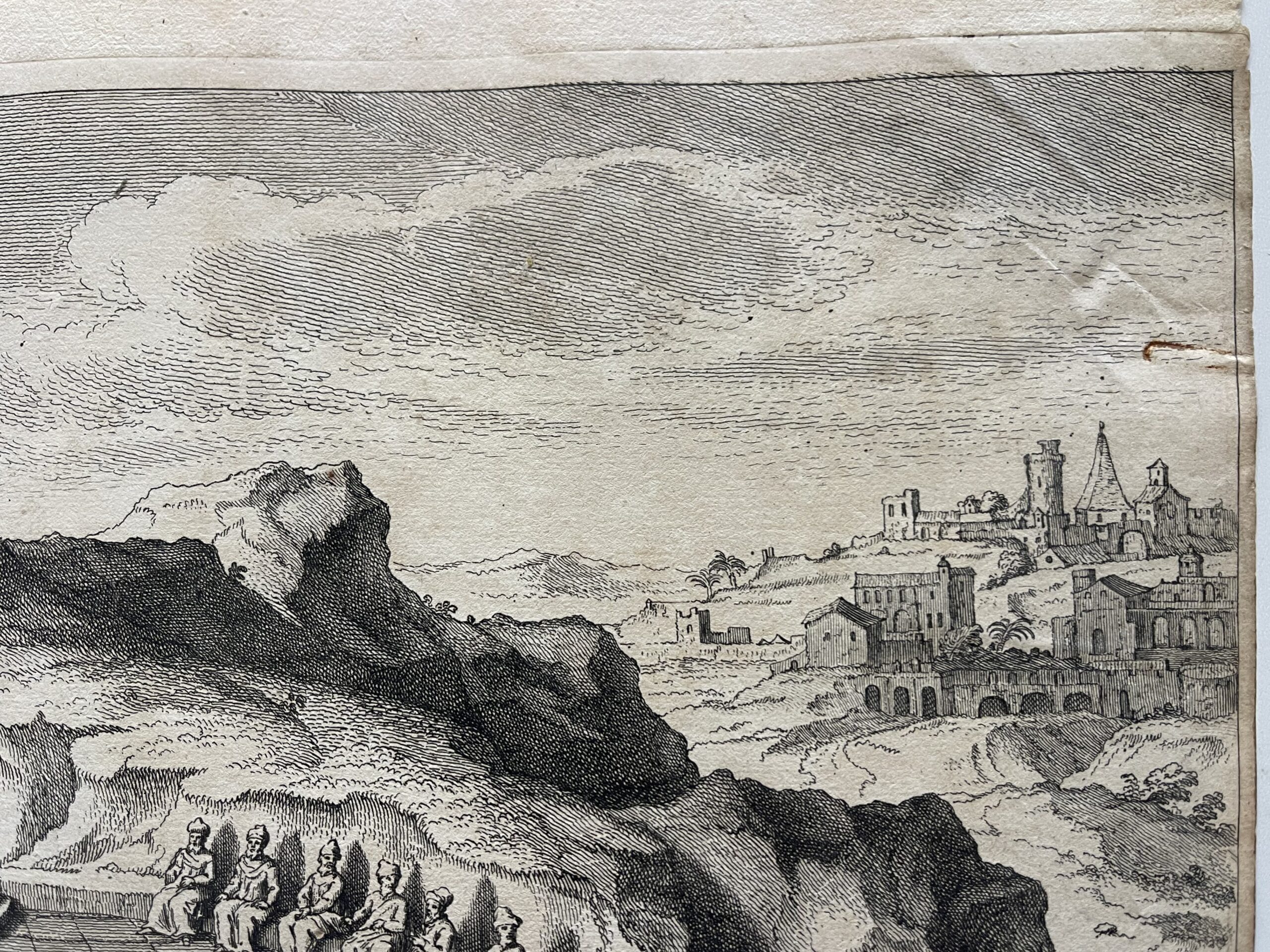
Athens Greece 1722 – Original antique copperplate engraving depicting Saint Paul preaching before the Areopagus in ancient Athens, surrounded by an assembly of Greek philosophers, magistrates and spectators.
Artculture6 presents this remarkable large eighteenth-century French engraving entitled « VEUE DE L’ARÉOPAGE D’ATHÈNES », illustrating one of the most celebrated episodes in the history of early Christianity.
Published in Paris in 1722, this beautiful copperplate engraving presents an imaginative reconstruction of the famous Areopagus of Athens, with the Apostle Paul addressing an important gathering of Athenians.
The composition combines biblical history, classical Greek antiquity, architecture and an impressive mountainous landscape.
Printed on antique laid paper, this large engraving is distinguished by its extensive architectural setting, numerous carefully rendered figures and exceptionally detailed treatment of the rocky scenery.
THE AREOPAGUS – A FAMOUS HISTORIC SITE OF ANCIENT ATHENS
The Areopagus, also known as Mars Hill, is a rocky hill situated northwest of the Acropolis of Athens, Greece.
Its name derives from the ancient Greek expression Areios Pagos, meaning the Hill of Ares, the Greek god of war.
In classical Athens, the Areopagus was associated with one of the city’s most important councils.
Originally an aristocratic institution exercising considerable political influence, the council subsequently became particularly associated with judicial responsibilities.
Among its principal functions was the examination of serious criminal cases and matters of public importance.
The Areopagus therefore occupied a significant position in the political and judicial history of ancient Athens.
The site also became famous in Christian tradition because of the celebrated address delivered by the Apostle Paul during his visit to the Greek city in the first century AD.
SAINT PAUL PREACHING BEFORE THE ATHENIANS
The engraving represents a spectacular historical reconstruction of the famous biblical episode.
At the centre of a vast rectangular stone-paved platform stands a solitary figure representing Saint Paul.
The Apostle addresses the assembled Athenians, extending one arm as he delivers his discourse.
The arrangement of the scene emphasises the importance of his speech.
Along both sides of the platform, numerous listeners are seated on benches cut into the surrounding rocky landscape.
Their long robes, distinctive head coverings and varied attitudes evoke the appearance of an ancient Greek assembly.
At the far end of the enclosure, an important seated figure occupies a raised architectural niche facing the central speaker.
Other members of the gathering are distributed along the sides of the platform.
In the foreground, additional spectators sit or stand upon the surrounding rocks.
Two staircases provide access to the assembly, one on each side of the monumental paved area.
The numerous figures, individually represented, contribute to the solemn and theatrical atmosphere of the composition.
THE APOSTLE PAUL AND THE UNKNOWN GOD
According to the Acts of the Apostles, chapter 17, Saint Paul visited Athens during his missionary journeys.
The city was renowned throughout the ancient Mediterranean world for its philosophical traditions, religious monuments and intellectual activity.
During his stay, Paul encountered a population devoted to numerous religious practices and philosophical discussions.
His famous address to the Athenians included a reference to an altar dedicated to an unknown god.
Using this inscription as the starting point for his teaching, Paul introduced his audience to the Christian understanding of God.
This episode represents one of the most important encounters between early Christianity and the philosophical culture of ancient Greece.
The biblical narrative records that some listeners rejected Paul’s message, while others expressed interest.
Among those who accepted his teaching were Dionysius the Areopagite and a woman named Damaris.
The subject subsequently became an important theme in European religious painting, engraving and historical illustration.
AN IMPRESSIVE RECONSTRUCTION OF ANCIENT ATHENS
The engraving presents an imaginative eighteenth-century interpretation of the ancient Areopagus rather than an exact archaeological reconstruction.
The principal architectural feature is a large paved platform surrounded by massive formations of rock.
The carefully arranged seating creates the appearance of an open-air council chamber or natural amphitheatre.
The rock formations are represented with considerable precision, their irregular surfaces contrasting with the geometric organisation of the paved enclosure.
Beyond the gathering place extends an extensive mountainous landscape.
On the right, a picturesque fortified city rises above the surrounding terrain.
Its numerous buildings, towers, monumental structures and architectural openings form an attractive distant panorama.
On the left, smaller trees and scattered vegetation animate the rocky slopes.
The overall composition reflects the fascination of European artists and scholars with the monuments and historical settings of classical antiquity.
A REMARKABLE EIGHTEENTH-CENTURY COPPERPLATE ENGRAVING
The artistic quality of this large engraving is particularly evident in the extensive treatment of the landscape and the numerous figures.
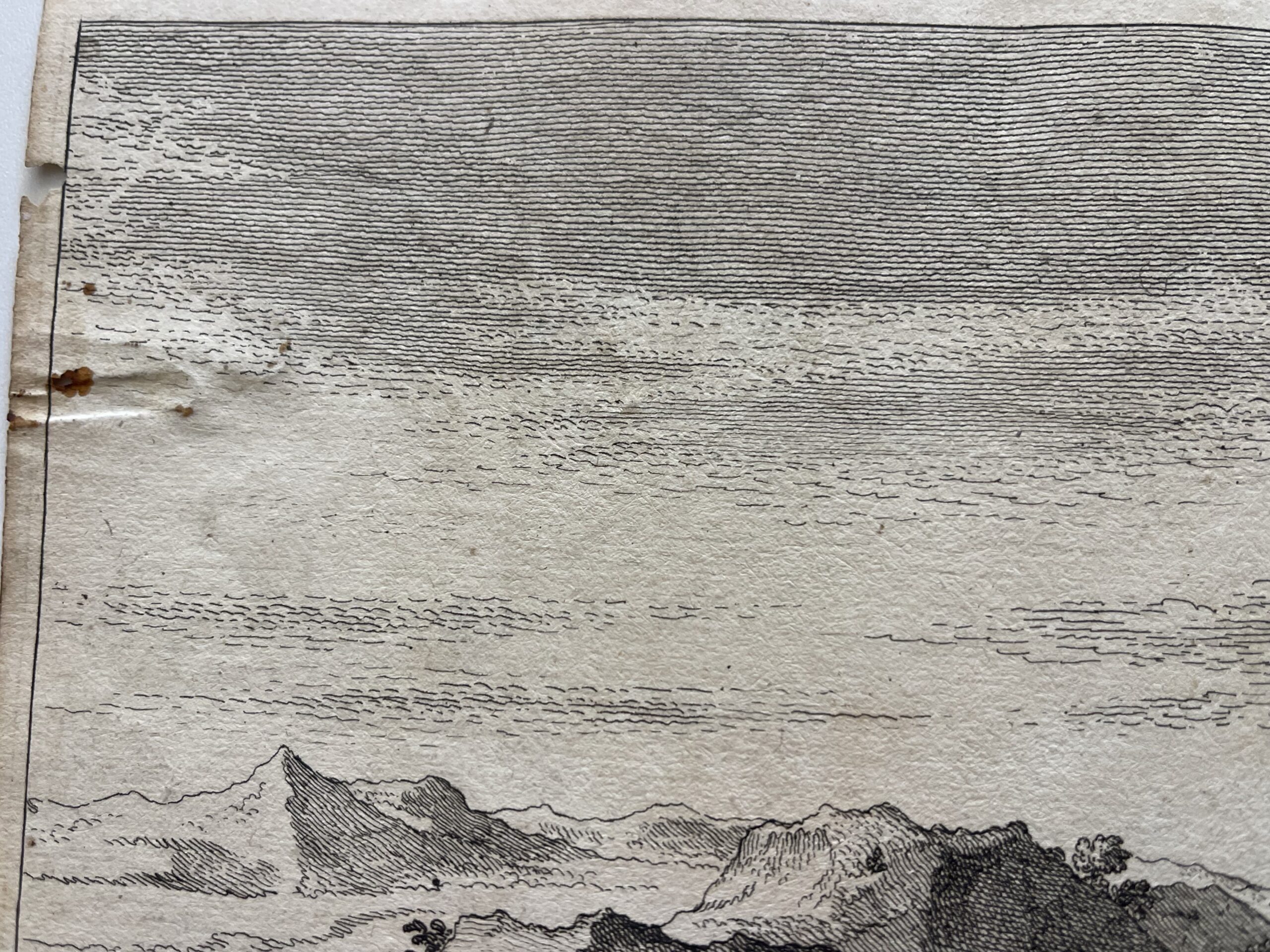
The sky occupies a substantial part of the composition.
Broad cloud formations are created through delicate parallel lines and subtle variations of engraved shading.
The surrounding mountains and rocky outcrops are rendered through closely arranged hatching, producing strong contrasts between illuminated surfaces and deep shadows.
The large paved platform has been constructed with careful attention to linear perspective.
Its regular geometric divisions lead the viewer’s eye towards the central figures and the assembly gathered at the far end.
The numerous spectators are represented with remarkable precision despite their relatively small dimensions.
Their gestures, garments and individual postures give life to the historical scene.
The distant cityscape is equally rich in detail, with numerous buildings, towers, arcades and fortified structures.
The resulting composition combines biblical narrative, historical imagination and the technical refinement of eighteenth-century copperplate engraving.
ATHENS AND THE EUROPEAN FASCINATION WITH ANTIQUITY
During the seventeenth and eighteenth centuries, European artists, historians and scholars developed an increasing interest in the history and monuments of ancient Greece.
Athens occupied a particularly important place in this intellectual tradition.
Its association with classical philosophy, political institutions and early Christian history made it one of the most frequently discussed cities of antiquity.
Engraved representations allowed European audiences to discover and imagine places that relatively few travellers had visited.
These historical compositions combined geographical knowledge, literary tradition and artistic interpretation.
The present engraving is a fine example of this tradition, presenting the Areopagus as a grand monumental setting for one of the most significant episodes of early Christian history.
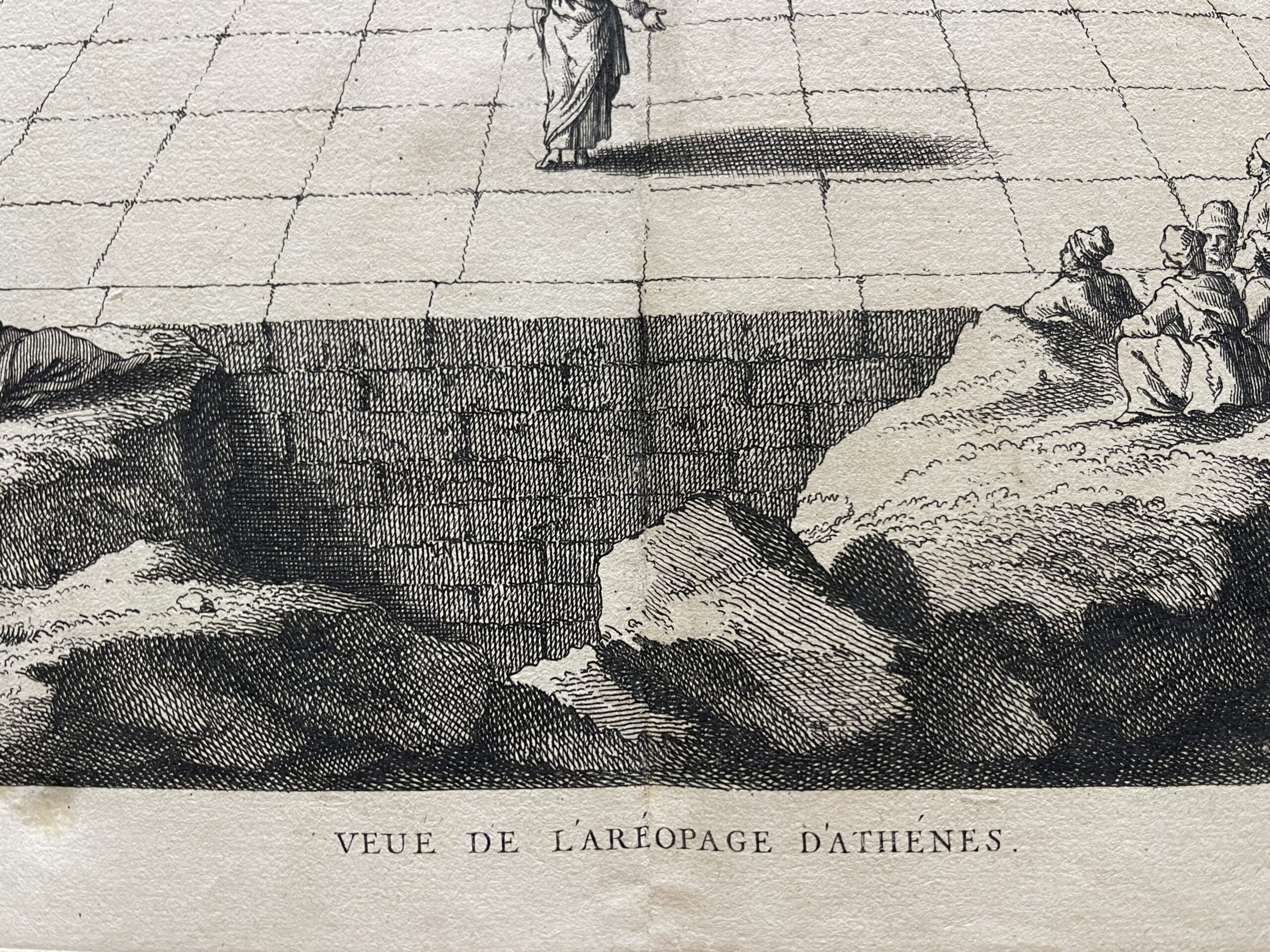
ORIGINAL FRENCH ENGRAVED TITLE
The caption printed beneath the composition reads:
« VEUE DE L’ARÉOPAGE D’ATHÈNES »
The historical French spelling Veue corresponds to the modern word Vue, meaning « View ».
The original printed inscription is preserved beneath the engraved image.
DIMENSIONS AND TECHNICAL DETAILS
Country represented: Greece
Location: Athens
Subject: Saint Paul preaching before the Areopagus
Date: 1722
Origin: France
Technique: Antique copperplate etching
Support: Antique laid paper
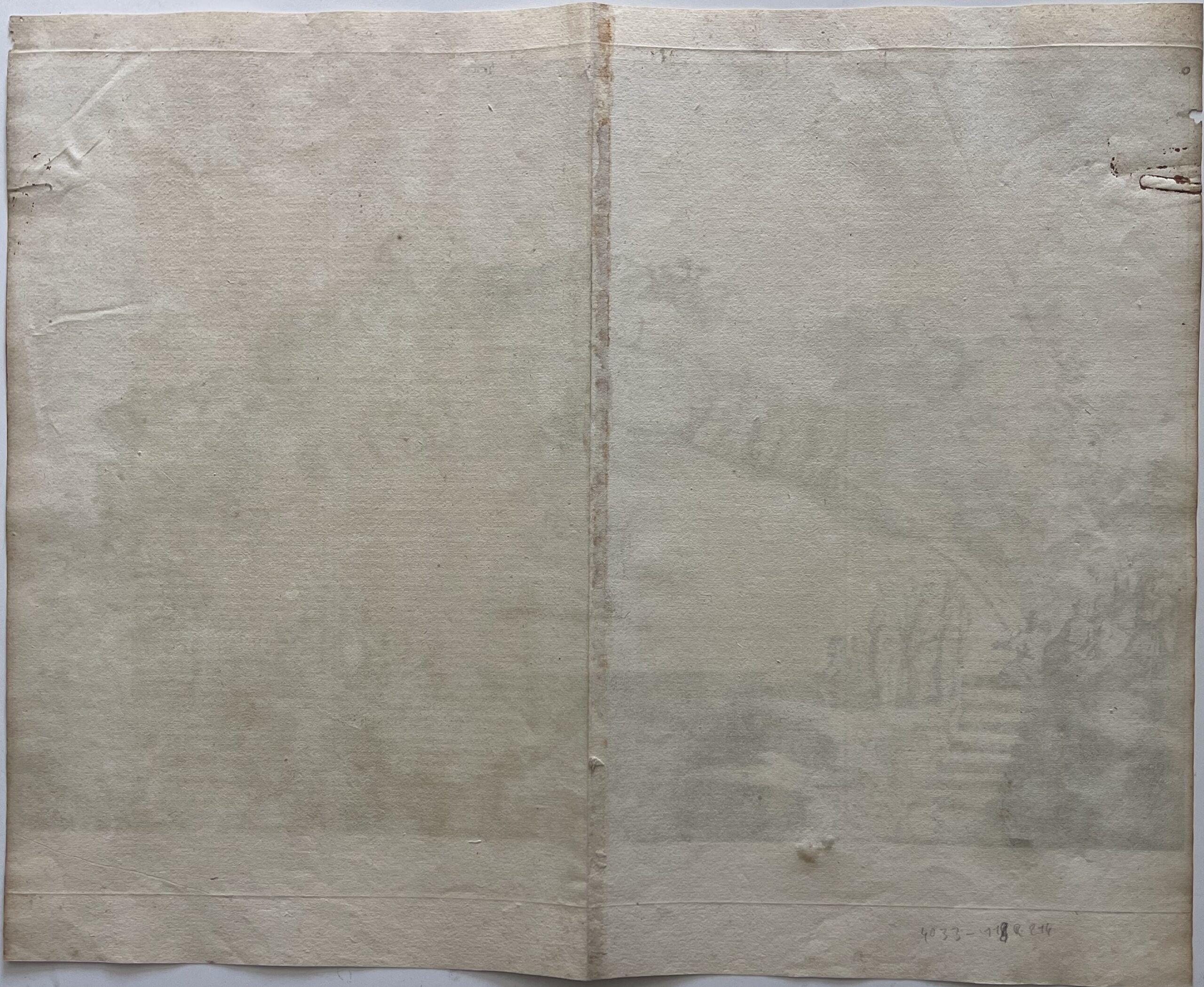
Sheet dimensions: 44.6 × 39 cm
Engraved image dimensions: 44 × 28.8 cm
Original printed caption: « Veue de l’Aréopage d’Athènes »
Period: Early eighteenth century


Avis
Il n’y a pas encore d’avis.