

Description
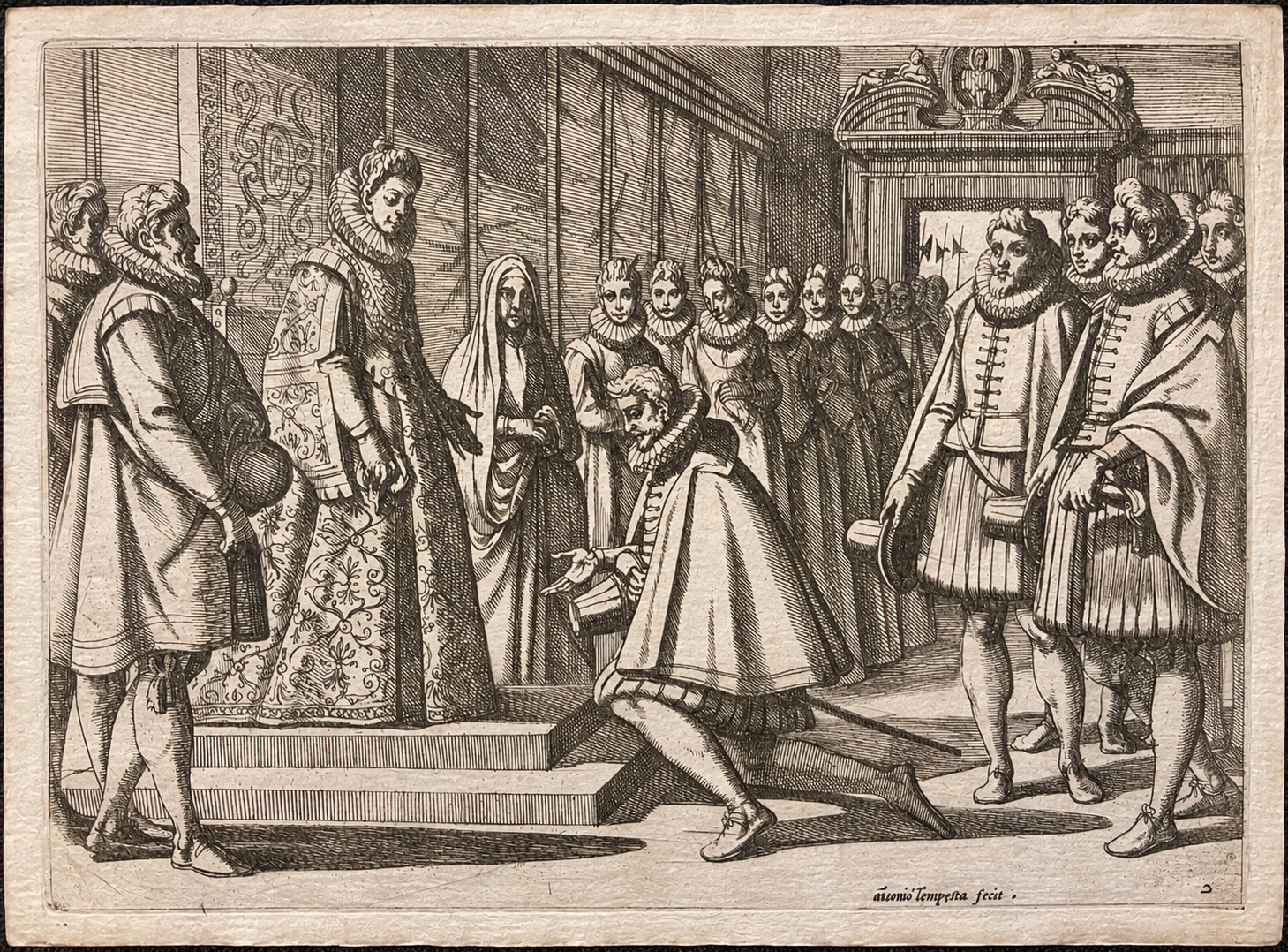
Antonio Tempesta 1612 – The Messengers of Philip III of Spain Before Margaret of Austria – Original Italian Baroque Etching – Antique Impression from the Late 17th or Early 18th Century.
Artculture6 presents this magnificent antique Italian etching by Antonio Tempesta (1555–1630), one of the most celebrated and prolific Italian printmakers of the late Renaissance and early Baroque period.
The composition depicts the messengers of King Philip III of Spain appearing before Margaret of Austria, future Queen of Spain.
This historical scene belongs to an important series of engravings published in Florence in 1612, illustrating episodes from the life of Margaret of Austria.
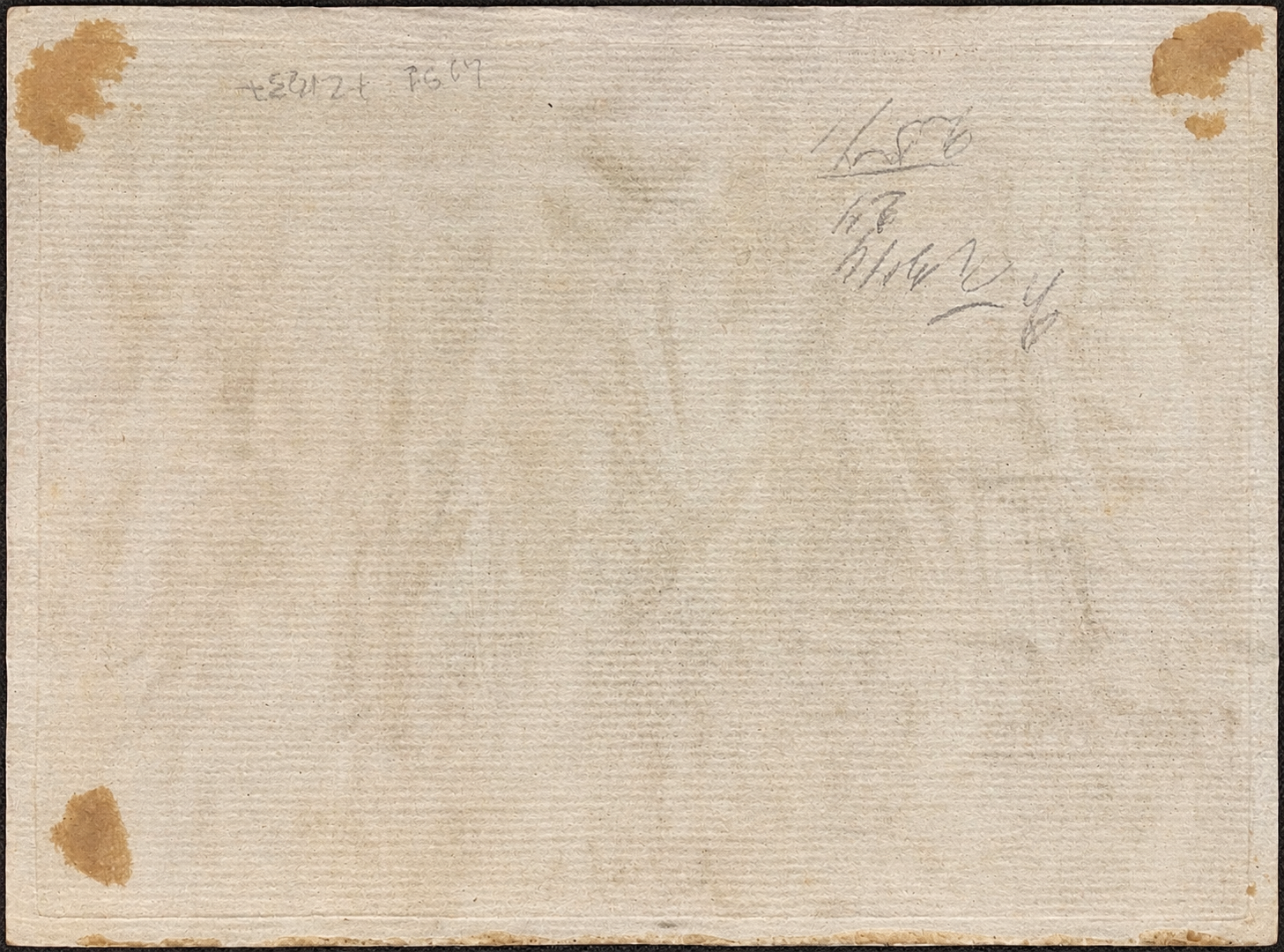
The present example is an antique impression believed to date from the late seventeenth or early eighteenth century, printed on laid linen paper.
MARGARET OF AUSTRIA AND THE MESSENGERS OF PHILIP III OF SPAIN
The engraving represents a solemn diplomatic audience at a European royal court around the beginning of the seventeenth century.
At the centre of the composition, a messenger kneels respectfully before Margaret of Austria.
The princess stands upon a raised platform, wearing a magnificent ceremonial gown decorated with elaborate floral designs and richly engraved embroidery.
Her costume is distinguished by its luxurious ornamentation, large ruff collar and elegant Renaissance hairstyle.
Beside her stands a veiled female figure, while other dignitaries observe the proceedings.
Behind the principal figures, a group of ladies-in-waiting forms an impressive assembly, each wearing fashionable court dress with characteristic ruff collars.
On the right, several gentlemen in elaborate doublets, cloaks and knee-length breeches participate in the ceremony.
The kneeling messenger forms the focal point of the scene, his gesture emphasising the formal nature of this royal reception.
The surrounding architecture, decorated wall panels and monumental doorway contribute to the atmosphere of a prestigious courtly gathering.
MARGARET OF AUSTRIA (1584–1611), QUEEN OF SPAIN
Margaret of Austria was born in Graz in 1584.
She was the daughter of Archduke Charles II of Inner Austria and Maria Anna of Bavaria, and belonged to the powerful Habsburg dynasty.
In 1599, she married Philip III, King of Spain and Portugal.
Through this marriage, Margaret became Queen Consort of Spain and an important figure in the dynastic relations between the Spanish and Austrian branches of the House of Habsburg.
Royal marriages during this period played a fundamental role in European diplomacy, alliances and political relations.
Margaret died in Madrid in October 1611, at the age of only twenty-six.
Her death was commemorated through elaborate funeral ceremonies in several European courts.
In Florence, Grand Duke Cosimo II de’ Medici organised an important memorial ceremony in her honour.
These events led to the publication of an illustrated commemorative volume in 1612.
THE FLORENTINE PUBLICATION OF 1612
The present etching belongs to the illustrated publication dedicated to the life and funeral commemorations of Margaret of Austria, Queen of Spain.
The volume was written by Giovanni Altoviti and published in Florence in 1612 by Bartolommeo Sermartelli and his brothers.
Its illustrations formed an important artistic undertaking involving several leading printmakers of the period.
Among the participating artists were Antonio Tempesta, Jacques Callot and Raffaello Schiaminossi.
The engravings depict significant episodes in the life of the queen and the ceremonial events associated with her memory.
The present composition is identified in the collection of the Metropolitan Museum of Art, New York, as:
« The Messengers of Philip of Spain Before Margaret of Austria »
It is attributed specifically to Antonio Tempesta.
Another impression of the composition is preserved in the National Gallery of Art, Washington, D.C.
ANTONIO TEMPESTA (1555–1630)
Antonio Tempesta was born in Florence in 1555.
A painter, draughtsman and engraver, he became one of the most prolific printmakers of his generation.
His artistic training developed within the Florentine school, where he was associated with artists such as the Flemish-born painter Jan van der Straet, also known as Stradanus.
Tempesta later established himself in Rome, where he worked on numerous important artistic commissions.
His extensive engraved production includes historical subjects, religious compositions, biblical scenes, classical mythology, hunting scenes, battles and portraits of important figures.
He also participated in decorative projects connected with the Vatican, including the Gallery of Maps.
His prints are characterised by energetic compositions, finely engraved details and an exceptional ability to represent complex scenes involving numerous figures.
Examples of his work are preserved in major international collections, including the Louvre, the Uffizi Gallery, the Metropolitan Museum of Art and the National Gallery of Art.
Antonio Tempesta died in Rome in 1630.
JACQUES CALLOT AND RAFFAELLO SCHIAMINOSSI
The 1612 Florentine publication is especially interesting because of the participation of Jacques Callot (1592–1635), the celebrated French engraver from Nancy.
Callot was working in Florence during this period, where he developed the exceptional technical abilities that would later establish his reputation as one of the greatest European etchers of the seventeenth century.
The Italian printmaker Raffaello Schiaminossi (1572–1622) also contributed illustrations to the same publication.
These artists worked on different plates within the larger series.
The present etching was executed by Antonio Tempesta, not jointly engraved by the three artists.
The engraved inscription « Antonio Tempesta fecit » appears along the lower edge of the composition.
This is an original engraved attribution printed from the plate, not a handwritten autograph signature.
A REMARKABLE EXAMPLE OF EARLY BAROQUE ENGRAVING
The artistic quality of this print is particularly evident in the representation of the elaborate court costumes.
Tempesta has carefully described the embroidered fabrics, decorative collars, flowing cloaks and fashionable accessories worn by the figures.
Fine engraved lines and closely arranged hatching create subtle variations of light and shadow.
The faces and gestures of the principal characters are rendered with precision, contributing to the dramatic effect of the composition.
The kneeling messenger, positioned in the foreground, provides a strong visual connection with Margaret of Austria.
The contrast between his respectful posture and the imposing figure of the princess emphasises the ceremonial character of the scene.
The numerous spectators and the carefully rendered architectural setting give the composition exceptional richness.
AN ANTIQUE IMPRESSION ON LAID PAPER
The original engraved composition was published in 1612.
The present impression is believed to be a later printing, dating from the late seventeenth or early eighteenth century.
It has been printed on antique laid linen paper, retaining the characteristic appearance of early paper production.
The technique is intaglio etching, with finely engraved linework.
The plate impression is visible around the composition.
DIMENSIONS AND TECHNICAL DETAILS
Artist: Antonio Tempesta (1555–1630)
Artistic school: Italian, Florentine
Subject: The Messengers of Philip III of Spain Before Margaret of Austria
Original publication: Florence, 1612
Historical figure: Margaret of Austria, Queen of Spain (1584–1611)
Technique: Etching with fine intaglio linework
Printing period: Believed late 17th to early 18th century
Paper: Antique laid linen paper
Sheet dimensions: 18.5 × 13.8 cm
Plate mark dimensions: 17.7 × 12.7 cm
Engraved inscription: Antonio Tempesta fecit

Avis
Il n’y a pas encore d’avis.