Description
Ulm Germany Napoleon Victory 1805 – Austrian Army Surrender – Large French Military Engraving after Swebach circa 1850
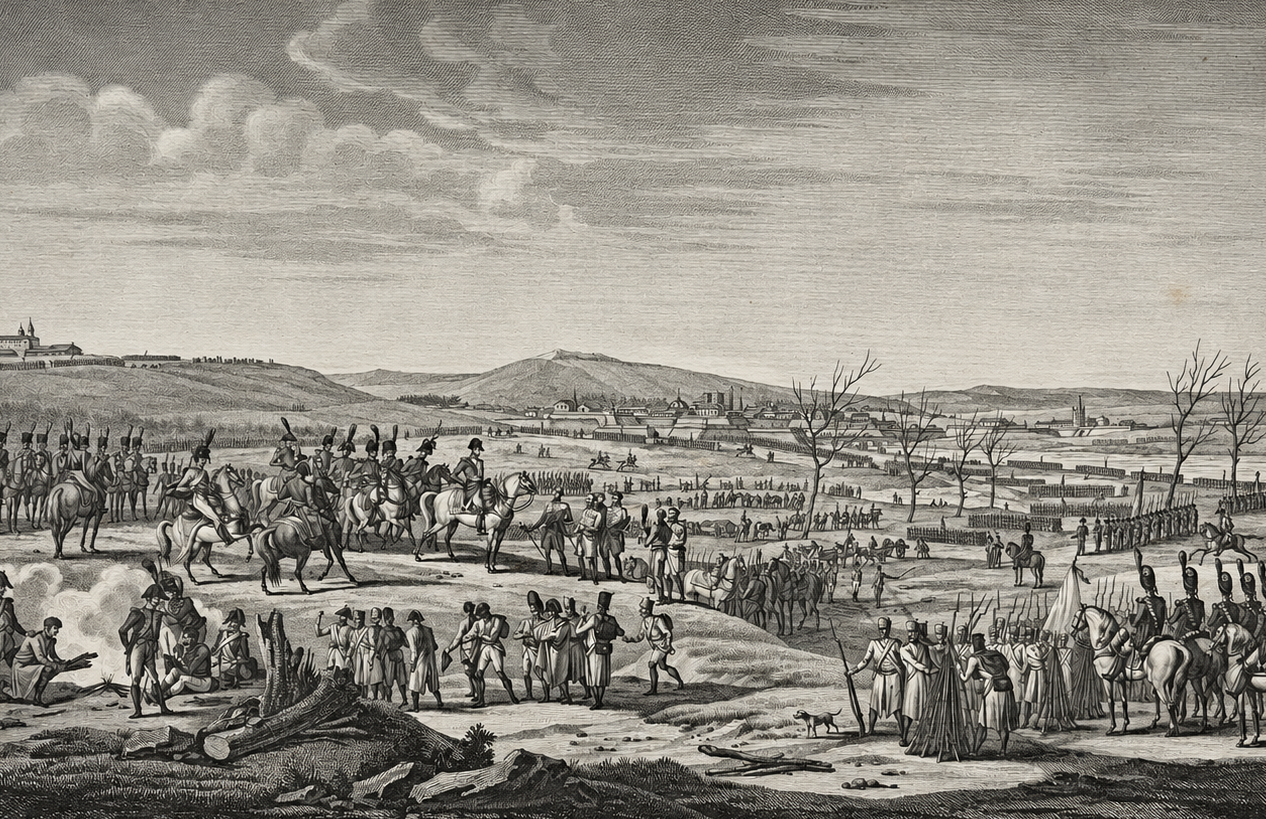
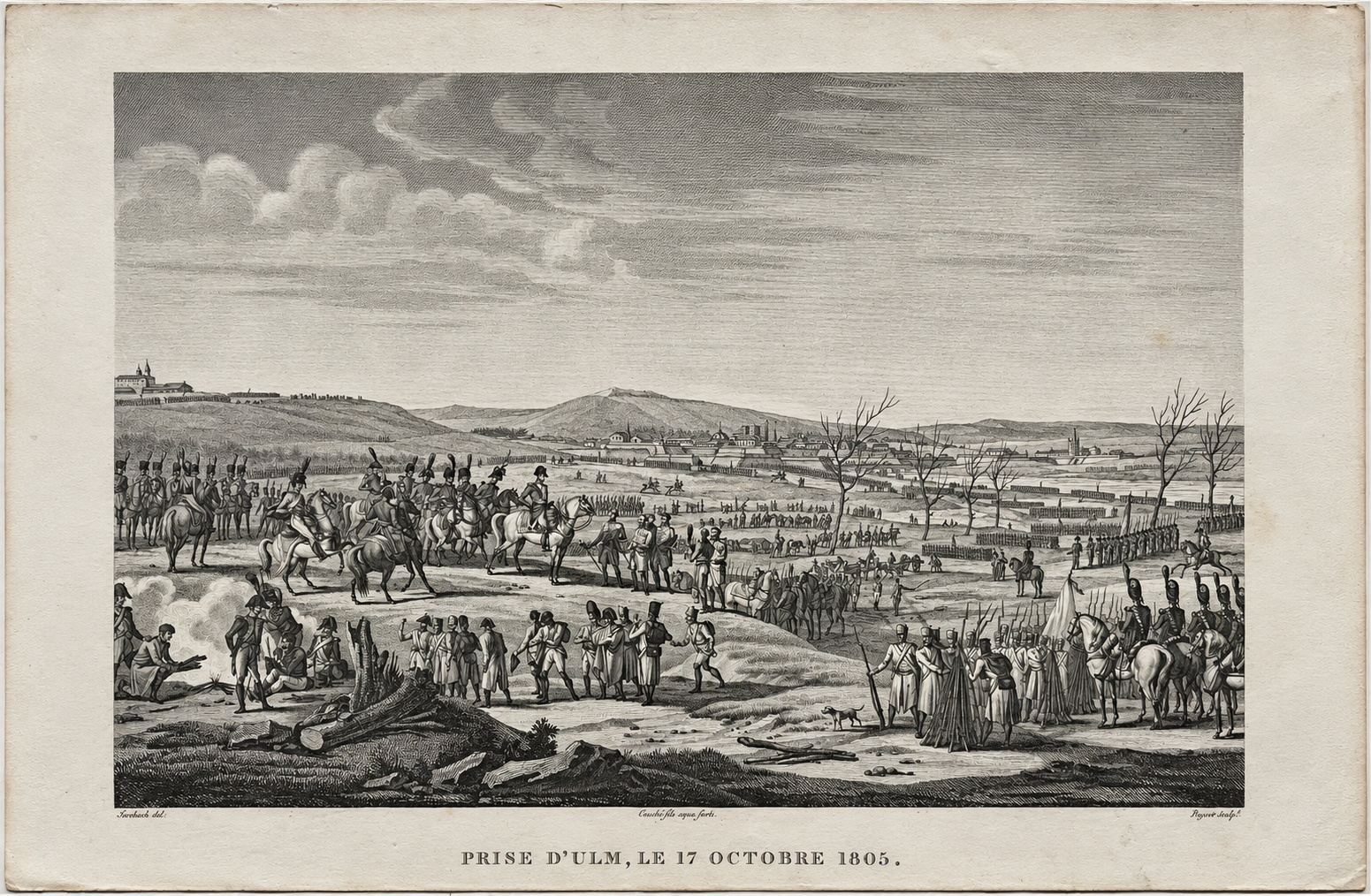
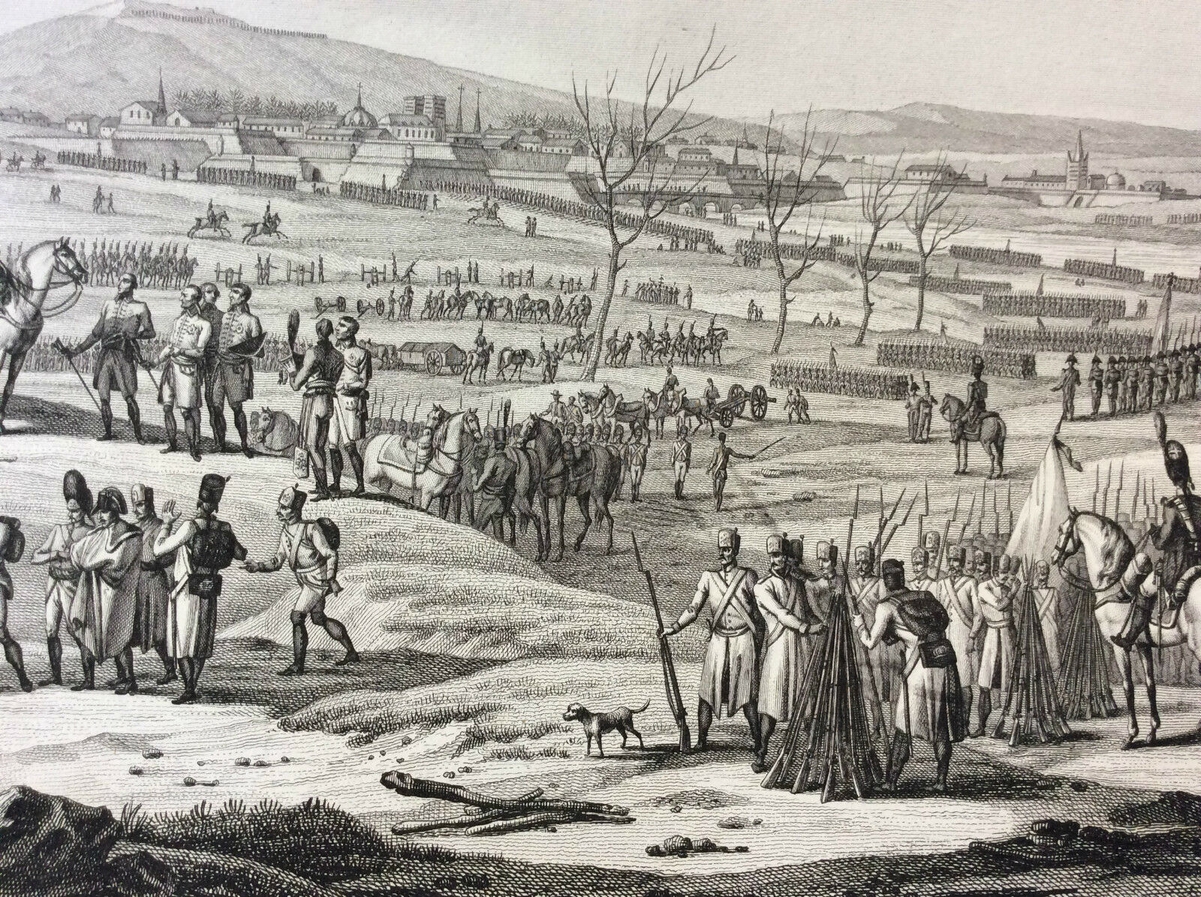
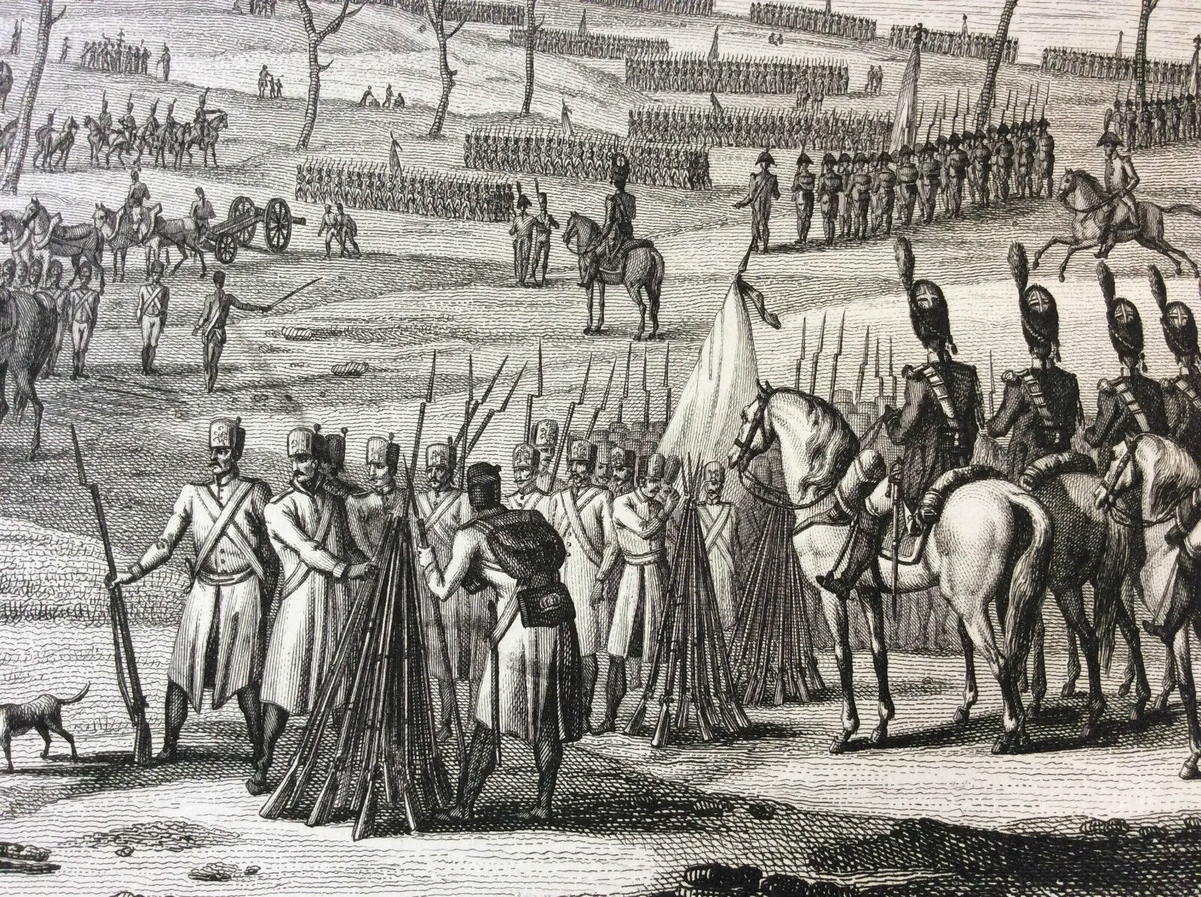
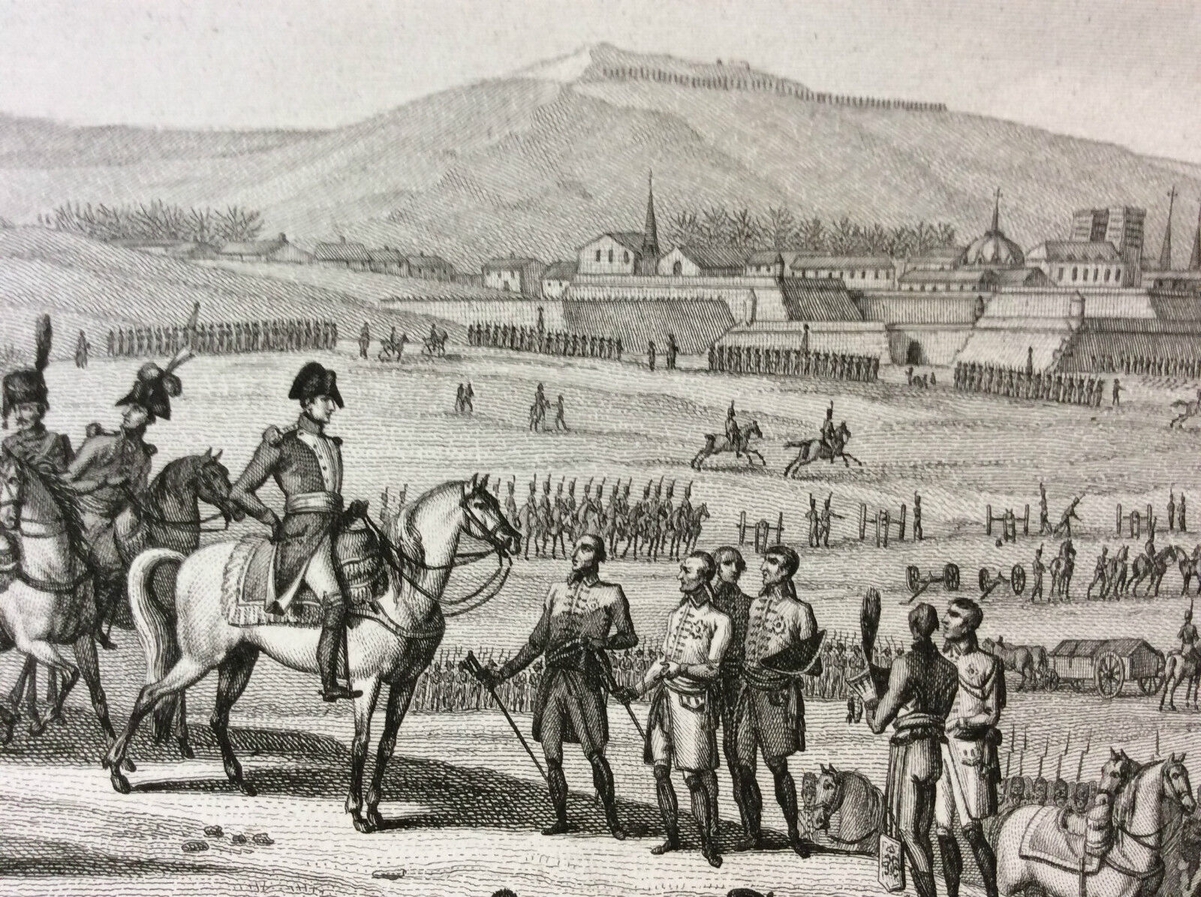
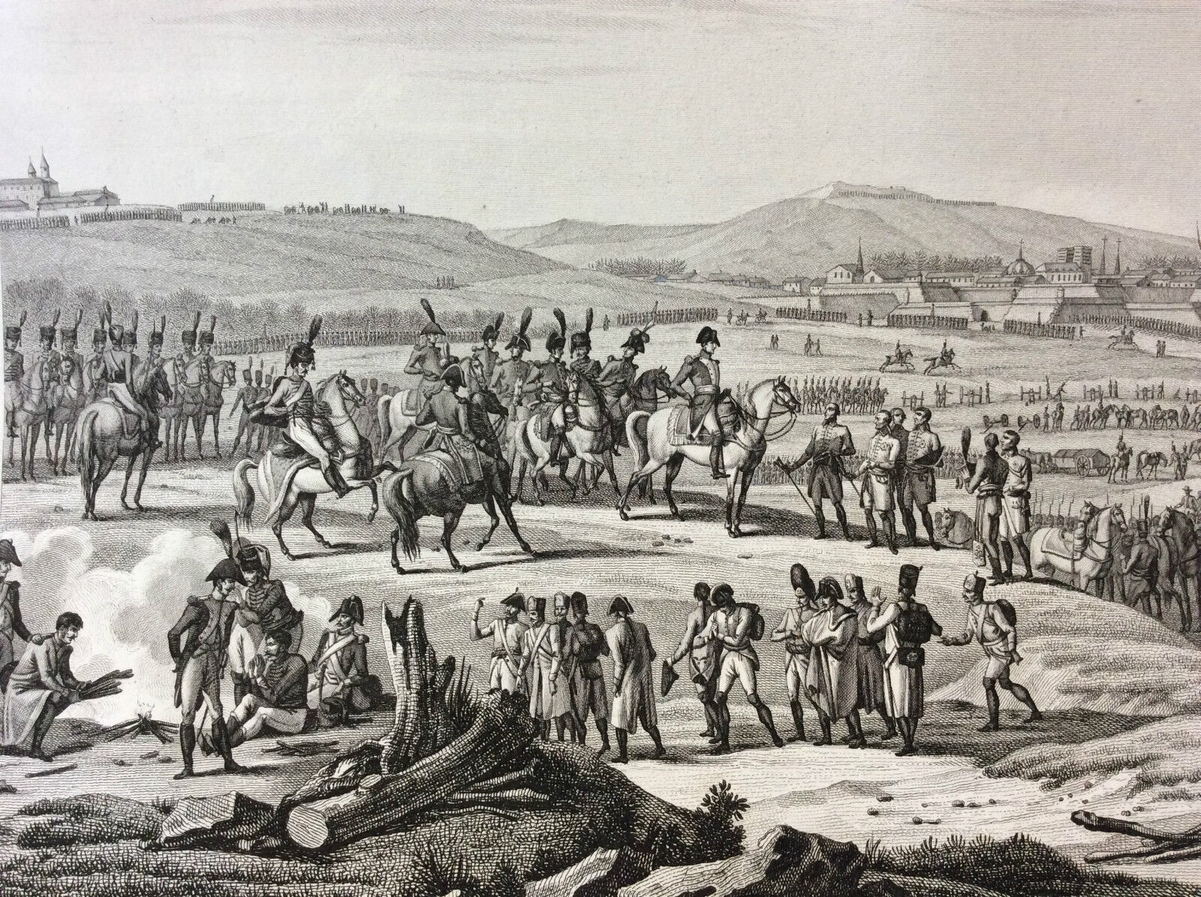
Ulm Germany Napoleon Victory 1805 – Large nineteenth-century French historical engraving after Jacques François Joseph Swebach-Desfontaines (1769–1823), depicting the French victory over the Austrian army during the Ulm Campaign of October 1805.
Artculture6 presents this impressive antique French engraving, traditionally dated circa 1850, illustrating one of Napoleon Bonaparte’s greatest strategic victories during the War of the Third Coalition.
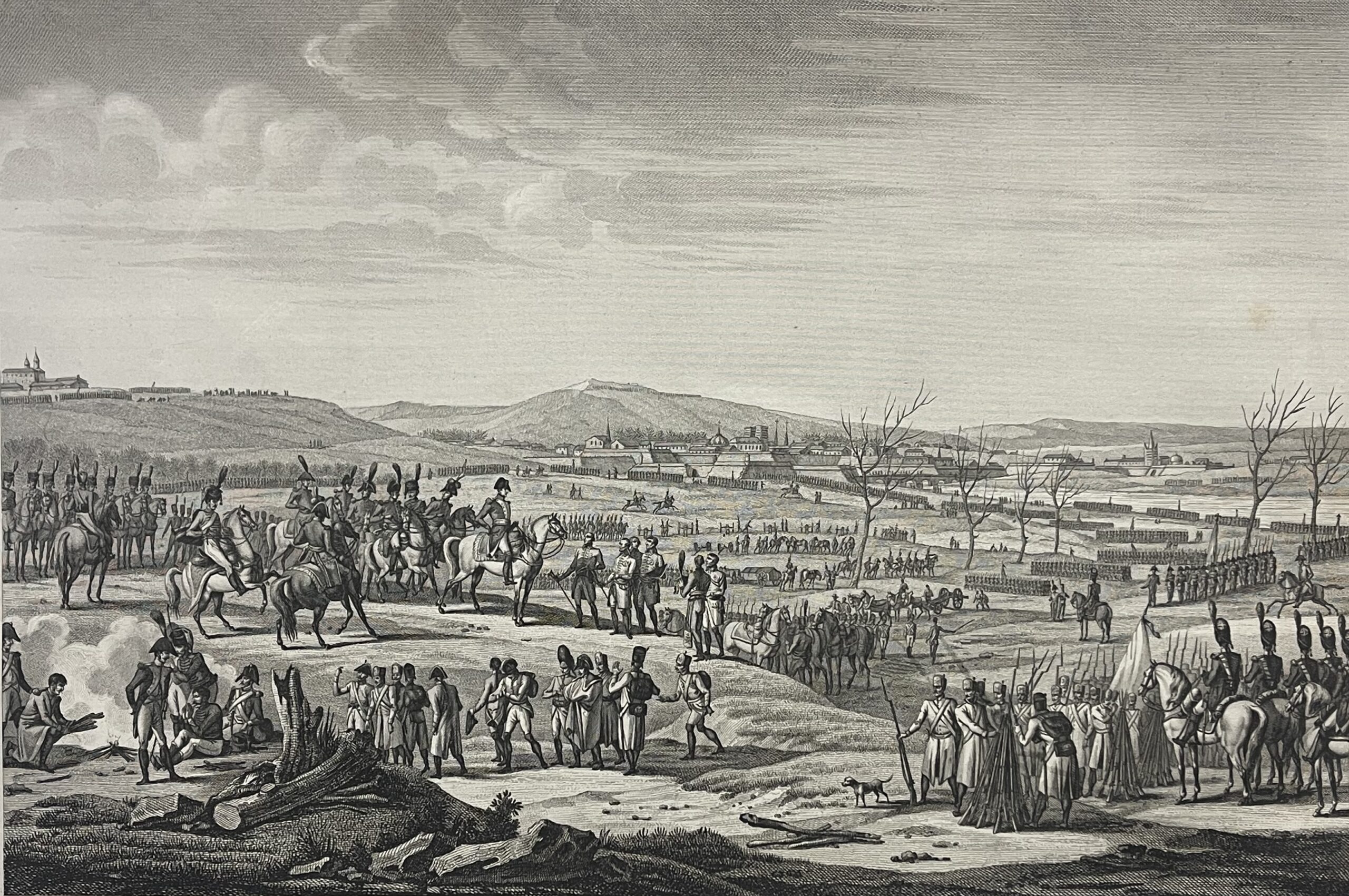
The composition depicts an extensive military panorama with Emperor Napoleon I, mounted officers, infantry formations, cavalrymen, horses, artillery equipment and the distant town of Ulm in southern Germany.
This important historical subject recalls the surrender of General Karl Mack’s Austrian army following Napoleon’s remarkable encirclement manoeuvres.
ULM GERMANY – THE NAPOLEONIC CAMPAIGN OF 1805
The Ulm Campaign took place in October 1805, during the War of the Third Coalition.
The Austrian army, commanded by General Karl Mack von Leiberich, occupied positions around Ulm in Swabia, southern Germany.
Napoleon’s Grande Armée had recently advanced from its earlier positions near the English Channel.
Rather than launching a direct frontal assault against the Austrians, Napoleon undertook a large strategic manoeuvre designed to encircle their army.
French forces crossed the Rhine and advanced rapidly towards the Danube.
The different French army corps moved along separate routes before converging around the Austrian positions.
This carefully coordinated operation disrupted Austrian communications and reduced their opportunities for retreat.
The result was one of the most remarkable strategic successes of the Napoleonic Wars.
THE SURRENDER OF THE AUSTRIAN ARMY
As French forces advanced, General Mack’s army became increasingly isolated.
A series of engagements weakened the Austrian defensive positions.
The French victory at Elchingen on 14 October helped close the routes of escape.
By mid-October, a substantial part of the Austrian army was surrounded in Ulm.
On 17 October 1805, Mack agreed to a convention of capitulation.
The surrender was subsequently brought forward, and on 20 October the Austrian soldiers formally laid down their arms before Napoleon.
Tens of thousands of prisoners, together with artillery pieces, horses and military standards, passed into French hands.
The victory established Napoleon’s overwhelming advantage during the opening phase of the campaign.
A MAGNIFICENT PANORAMIC MILITARY COMPOSITION
The engraving presents a remarkable panoramic view of the French military positions around Ulm.
The foreground is occupied by numerous soldiers, mounted officers and groups of cavalry.
Several officers gather near the centre of the composition, apparently discussing military operations.
On the left, large formations of infantry and cavalry occupy rising ground.
Additional military figures stand near a small campfire, while soldiers and attendants move across the countryside.
Towards the right, long columns of troops advance through the open landscape.
Horse-drawn vehicles, cavalrymen and officers appear between the military formations.
The careful arrangement of the different groups conveys the enormous scale of Napoleon’s army.
THE CITY OF ULM AND THE SWABIAN LANDSCAPE
One of the most attractive features of the engraving is its extensive landscape.
The town of Ulm appears in the distance, with its buildings, roofs and towers visible beyond the military positions.
Broad hills extend across the horizon.
Scattered trees, fields and roads divide the surrounding countryside.
The composition is framed by large open spaces, giving an impressive sense of depth.
Leafless trees suggest the autumn season in which the campaign took place.
The sky occupies much of the upper half of the engraving and is rendered with fine horizontal lines and softly modelled clouds.
The combination of architectural details, military formations and landscape makes this an especially decorative example of nineteenth-century historical printmaking.
NAPOLEON BONAPARTE AND THE GRANDE ARMÉE
Napoleon Bonaparte (1769–1821) became Emperor of the French in 1804.
His military campaigns transformed the political map of Europe during the early nineteenth century.
The Ulm Campaign demonstrated his particular ability to combine speed, manoeuvre and coordinated army movements.
The French forces were organised into separate corps, each capable of carrying out independent operations while remaining part of a larger strategic plan.
This organisation allowed Napoleon to concentrate his troops rapidly at decisive points.
At Ulm, the manoeuvre of the Grande Armée largely deprived the Austrian forces of the opportunity to fight a major open-field battle.
The resulting capitulation became one of Napoleon’s most celebrated strategic achievements.
GENERAL KARL MACK VON LEIBERICH
Karl Mack von Leiberich (1752–1828) was an Austrian military commander who played a central role in the 1805 campaign.
He commanded the Austrian forces concentrated around Ulm.
As the French advance developed, his army became increasingly isolated from supporting forces.
Several attempted withdrawals failed, and French troops gradually closed the routes of escape.
Mack eventually accepted the terms of capitulation.
His surrender became a symbol of the strategic difficulties faced by the Austrian army during Napoleon’s rapid campaign.
MARSHAL NEY AND THE BATTLE OF ELCHINGEN
Marshal Michel Ney played an important role in the operations surrounding Ulm.
On 14 October 1805, his forces fought a major battle at Elchingen, near the Danube.
The French victory helped prevent the Austrian army from escaping towards the northeast.
Ney’s achievement contributed significantly to the final encirclement of General Mack’s forces.
In recognition of his military success, Ney later received the title Duke of Elchingen.
The fighting around Ulm therefore involved several important figures of Napoleon’s military command.
FROM ULM TO AUSTERLITZ
The surrender of Ulm did not bring the War of the Third Coalition to an end.
Following the victory, Napoleon advanced further into Austrian territory.
French forces entered Vienna in November 1805.
On 2 December 1805, Napoleon defeated the combined Austrian and Russian forces at the Battle of Austerlitz.
The victory at Ulm had helped establish the strategic conditions for the continuation of the French campaign.
These events formed one of the most successful periods of Napoleon’s military career.
JACQUES FRANÇOIS JOSEPH SWEBACH-DESFONTAINES
Jacques François Joseph Swebach-Desfontaines was born in Metz, France, on 19 March 1769 and died in Paris on 10 February 1823.
He was a distinguished French painter, draughtsman and printmaker, particularly admired for military subjects, cavalry scenes and historical compositions.
He received his first artistic instruction from his father and later studied with Michel Hamon-Duplessis.
His artistic career developed during the French Revolution, and he exhibited at the Paris Salon.
From 1802 to 1813, he served as principal painter at the Sèvres porcelain manufactory.
After the Napoleonic period, he also worked in Russia in connection with the Imperial Porcelain Manufactory.
His works are particularly appreciated for the precise depiction of horses, military equipment, uniforms and large groups of figures.
A FRENCH NAPOLEONIC ENGRAVING OF THE NINETEENTH CENTURY
During the nineteenth century, French publishers produced numerous engravings commemorating the campaigns and achievements of Napoleon I.
The Ulm Campaign became a celebrated historical subject because it represented a victory secured principally through strategic manoeuvre.
Historical engravings of this period frequently combine portraits of important military figures with elaborate panoramic landscapes.
The present example belongs to this tradition of Napoleonic military illustration.
Its extensive landscape, numerous soldiers and equestrian figures contribute to its historical and decorative appeal.
ENGRAVING TECHNIQUE AND ARTISTIC DETAILS
The print is distinguished by the precision of its linear engraving.
The mounted officers and horses are carefully rendered, with close attention to uniforms, saddles and military equipment.
The different troop formations are represented by numerous small figures, creating a remarkable impression of scale.
The rolling hills, distant town and roads are developed through lighter engraved passages.
The delicate treatment of the sky contrasts with the darker foreground.
The composition successfully combines military history, landscape and the representation of large organised groups.
TECHNICAL DETAILS
Subject: Napoleon’s victory and the Austrian surrender at Ulm.
Historical period: October 1805.
Location: Ulm, Swabia, Germany.
Conflict: War of the Third Coalition.
French commander: Emperor Napoleon I.
Austrian commander: General Karl Mack von Leiberich.
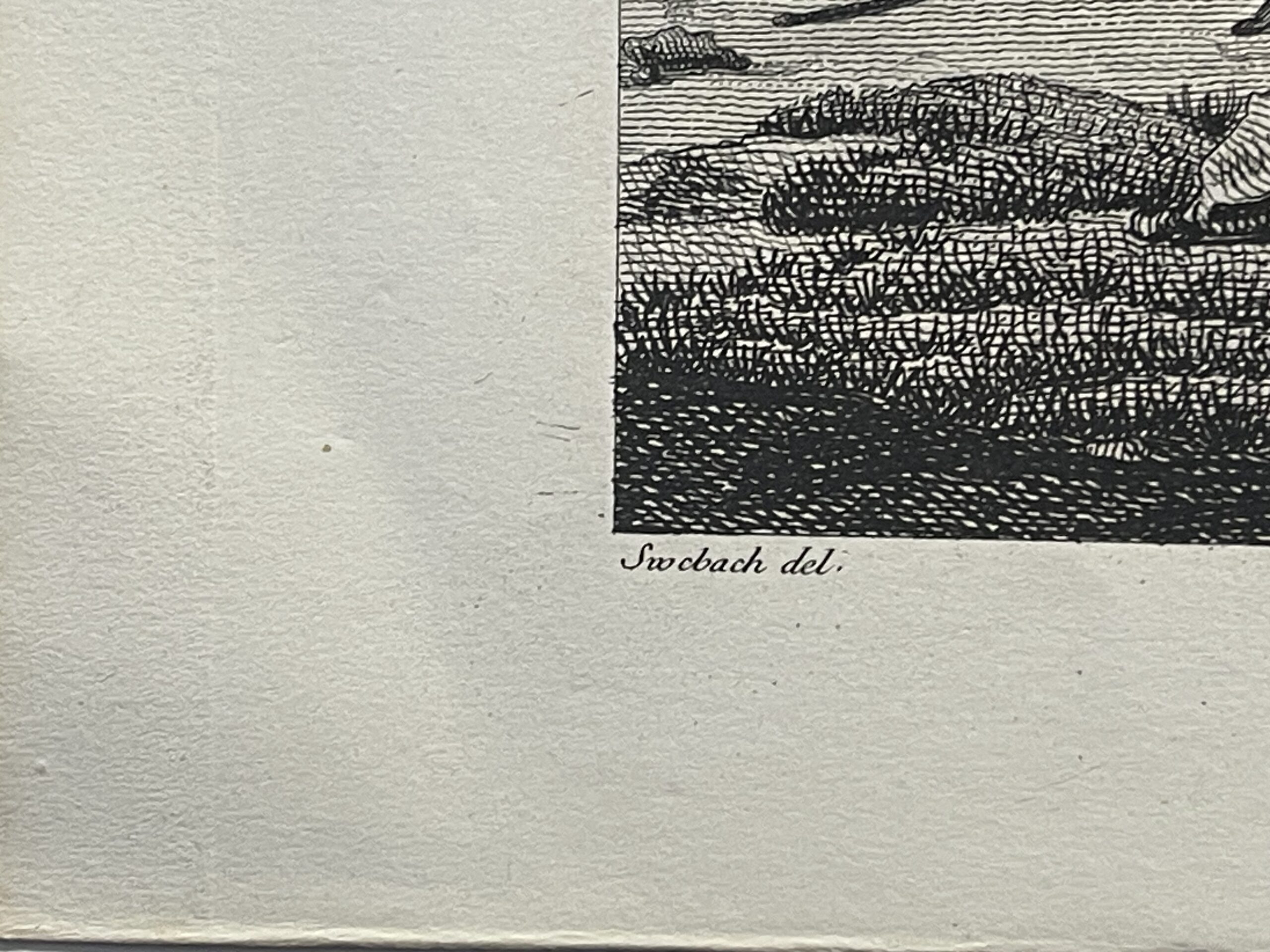
Original draughtsman: Jacques François Joseph Swebach-Desfontaines (1769–1823).
Period of the print: Nineteenth century.
Date of this impression: Circa 1850, as catalogued.
Technique: Antique French etching.
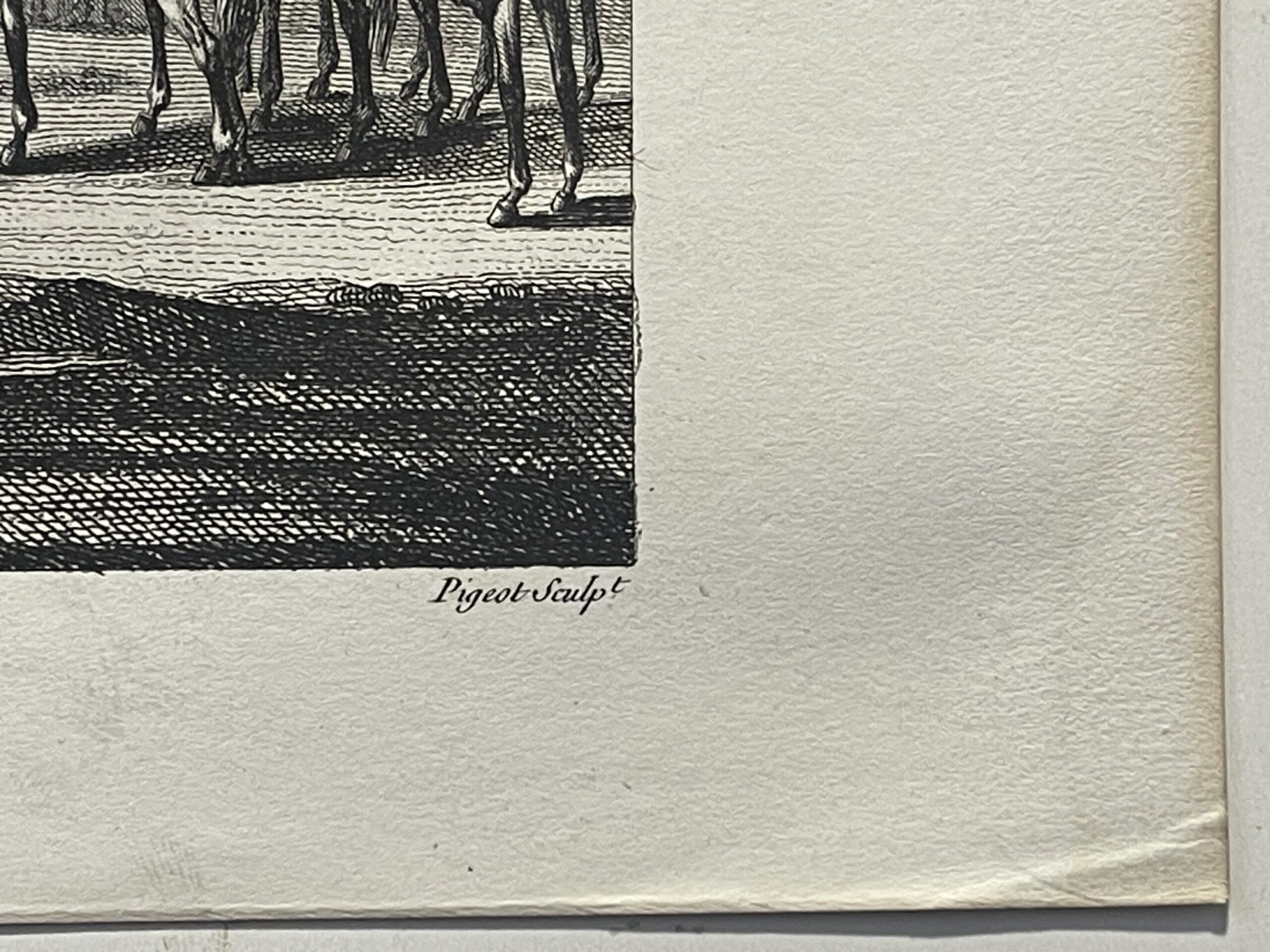
Sheet dimensions: 46.4 × 29.9 cm.
Engraved composition: 38.1 × 25.6 cm.
Reference: 4401-80R324D25.

Avis
Il n’y a pas encore d’avis.