Abensberg Bavaria Germany 1809 Napoleon Battle Austria Swebach Engraving c1850
59,00 €
Abensberg Bavaria Germany Napoleon Battle 1809 – Large Antique French Engraving after Swebach circa 1850.
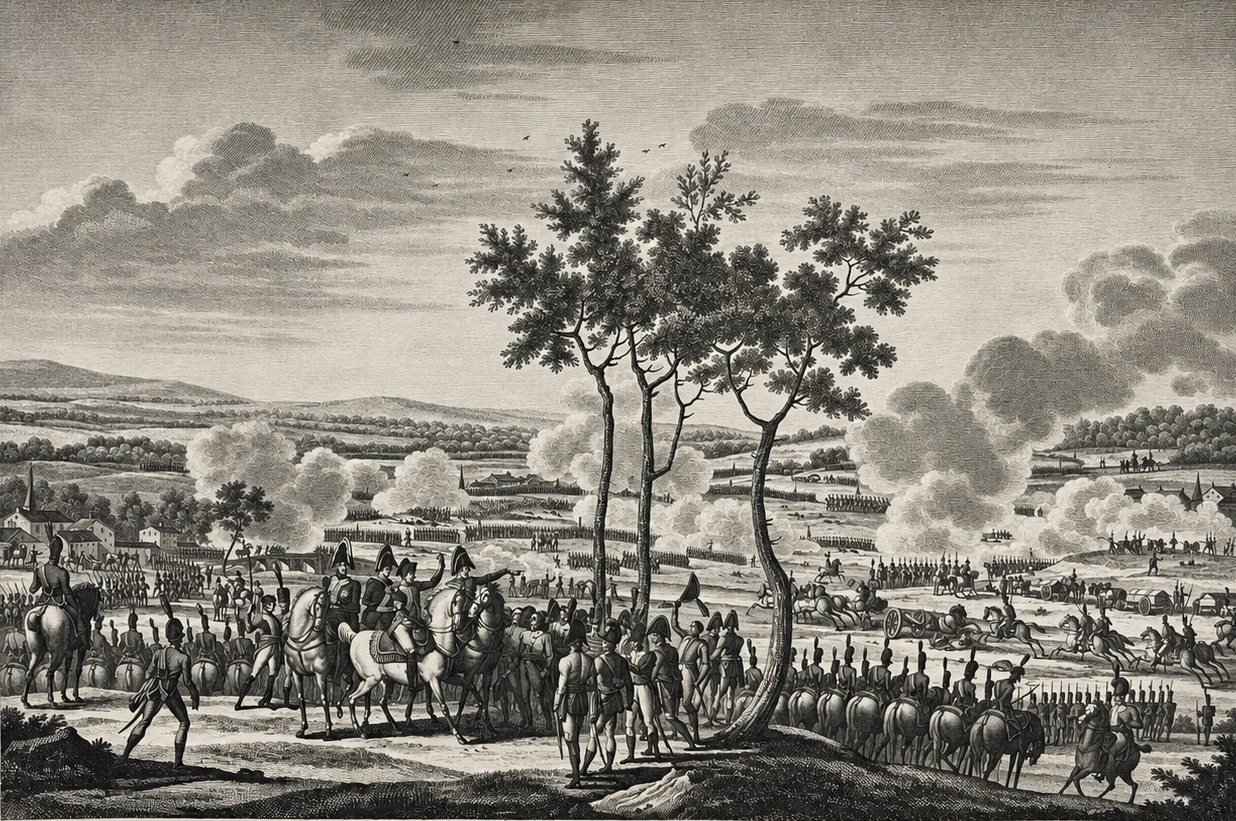
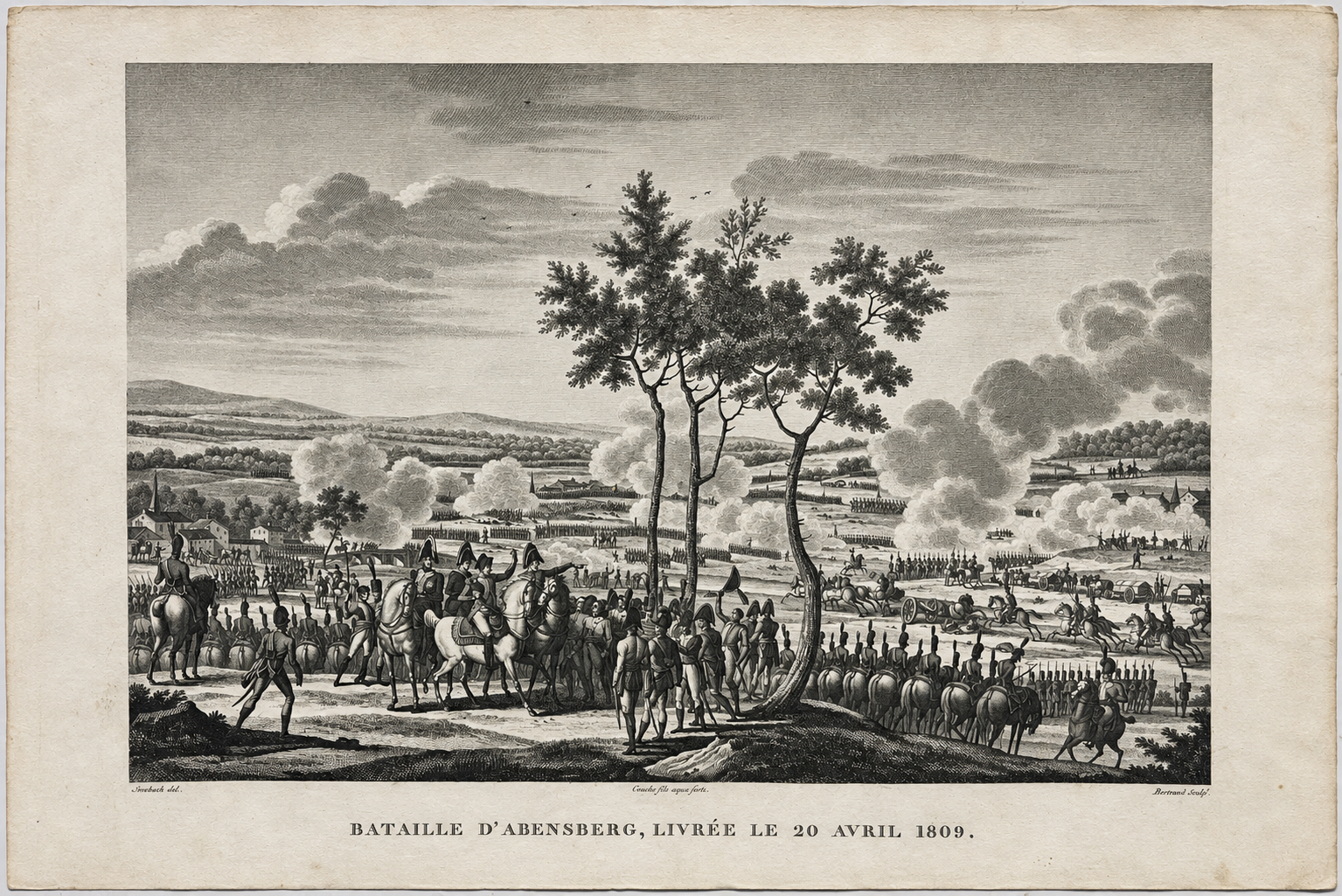
Impressive nineteenth-century French etching and burin engraving depicting the Battle of Abensberg, fought on 20 April 1809 between Napoleon’s French and allied forces and the Austrian army.
A magnificent military panorama showing Napoleon on horseback, French and allied infantry formations, cavalry officers, artillery batteries and clouds of gunpowder smoke across the Bavarian countryside.
Artist: Jacques François Joseph Swebach-Desfontaines (1769–1823).
Engravers: Couché fils and Edme Bovinet.
Technique: Antique French etching and burin.
Sheet dimensions: 46.3 × 30 cm.
Engraved image: 38 × 25.5 cm.
Reference: 4401-78R324D25.
Description
Abensberg Bavaria Germany Napoleon Battle 1809 – Austrian Army Defeat – Large French Engraving after Swebach circa 1850
Abensberg Bavaria Germany Napoleon Battle 1809 – Large original nineteenth-century French military engraving after Jacques François Joseph Swebach-Desfontaines (1769–1823), depicting the famous Battle of Abensberg fought on 20 April 1809 between Napoleon’s French and allied armies and the Austrian forces.
Artculture6 presents this impressive antique French historical engraving, traditionally dated circa 1850, illustrating one of Napoleon Bonaparte’s important victories during the War of the Fifth Coalition.
The composition was designed by Swebach-Desfontaines, etched by Louis-François Couché fils and finished in burin by Edme Bovinet.
The engraving is distinguished by its extensive panoramic landscape, numerous soldiers, mounted officers, cavalry, artillery batteries, military horses and great clouds of gunpowder smoke.
ABENSBERG – BAVARIA – THE BATTLE OF 20 APRIL 1809
The Battle of Abensberg took place in Bavaria, southern Germany, during the Austrian campaign of 1809.
In April, the Austrian Empire renewed hostilities against Napoleon’s French Empire.
The Austrian army, commanded by Archduke Charles, invaded Bavaria with the intention of challenging French influence in the German states.
Napoleon arrived at the front on 17 April and rapidly reorganised his forces.
On 20 April, French troops supported by Bavarian and Württemberg contingents attacked Austrian positions around Abensberg.
The battle formed part of a remarkable sequence of operations through which Napoleon regained the strategic initiative.
The French victory forced Austrian formations to retreat and contributed to the separation of major sections of their army.
A MAGNIFICENT PANORAMIC BATTLE SCENE
The engraving depicts a broad landscape occupied by numerous military formations.
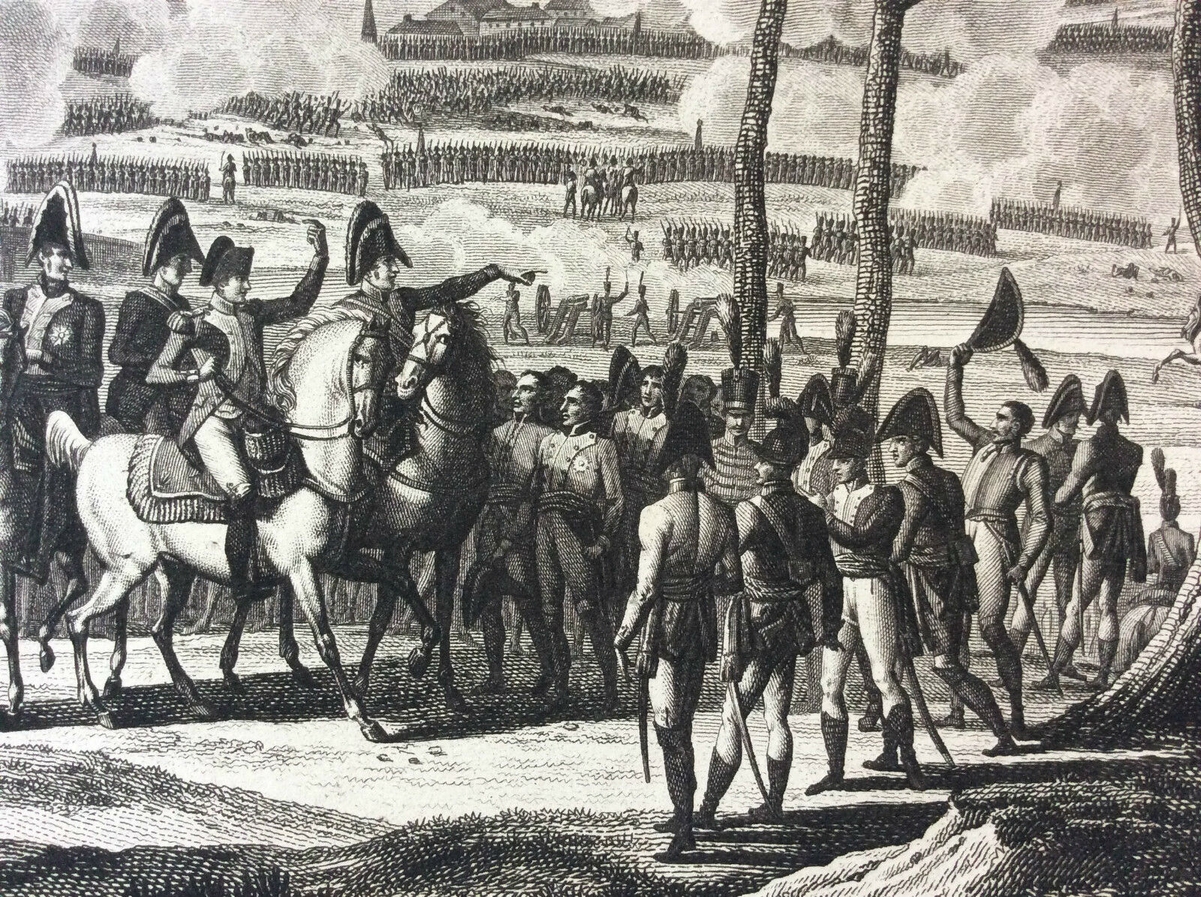
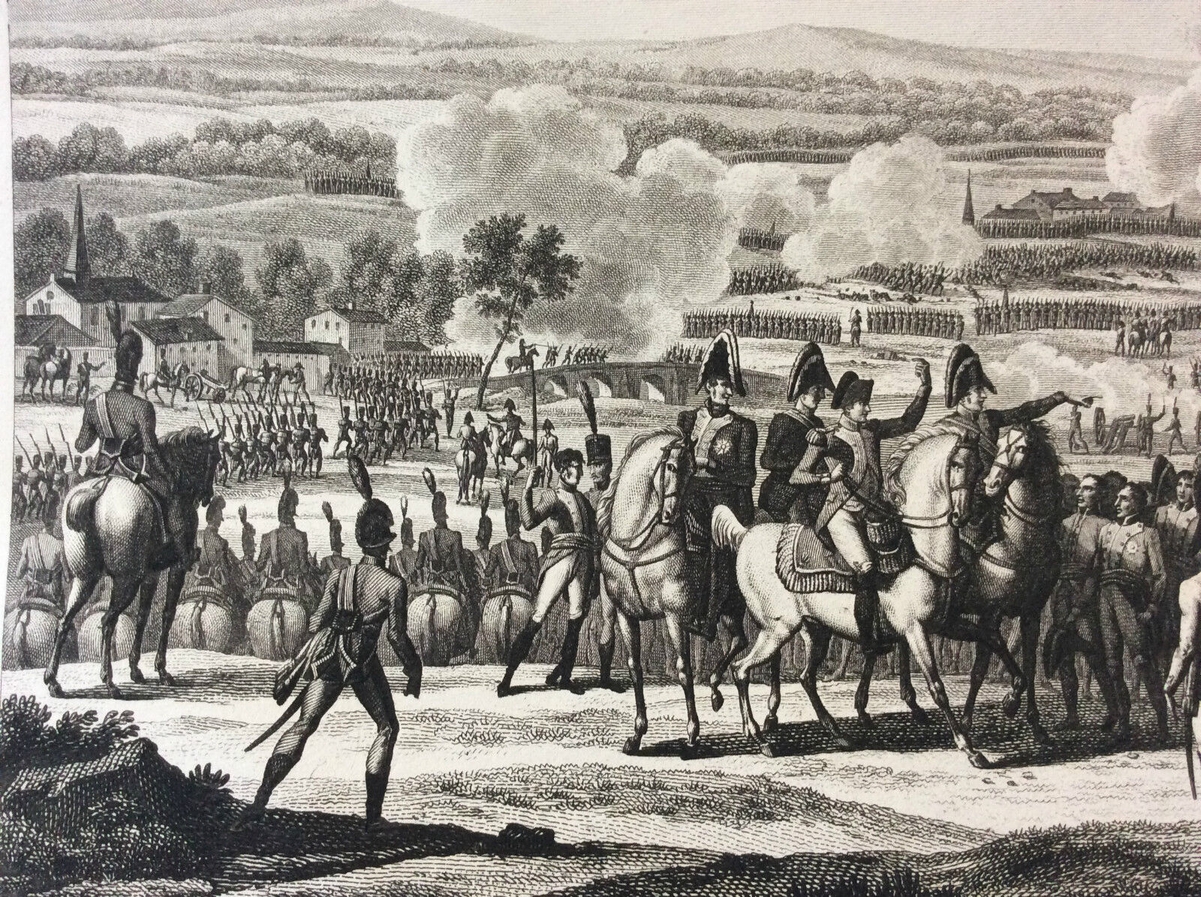
In the foreground, Napoleon and his staff are represented on horseback, observing the movements of the army.
The emperor appears mounted upon a light-coloured horse, surrounded by officers in elaborate Napoleonic uniforms.
Other military figures stand nearby, apparently communicating orders or discussing the progress of the battle.
Large trees occupy the centre of the composition, creating an impressive visual contrast with the surrounding open countryside.
In the middle distance, long lines of infantry advance across the rolling landscape.
Numerous cavalrymen move between the different formations.
On the right, mounted troops charge across the battlefield while artillery batteries fire from prepared positions.
The distant hills and buildings extend the composition towards the horizon.
NAPOLEON AND THE ARMY COMMAND
Napoleon Bonaparte personally directed the French operations during the Bavarian campaign.
His arrival at the front transformed the strategic situation.
The French army had been dispersed across a broad area, while the Austrians attempted to exploit this weakness.
Napoleon rapidly concentrated his forces and ordered a series of attacks designed to divide the Austrian army.
At Abensberg, French troops operated alongside the contingents of their German allies.
The battlefield became a demonstration of the mobility and coordinated action characteristic of Napoleonic warfare.
FRENCH, BAVARIAN AND WÜRTTEMBERG TROOPS
The Battle of Abensberg was notable for the participation of several allied armies.
The Kingdom of Bavaria and the Kingdom of Württemberg supplied troops to Napoleon’s forces.
These German states belonged to the Confederation of the Rhine, established under French influence in 1806.
Their participation demonstrates the important military role played by Napoleon’s German allies during the Austrian campaign.
French, Bavarian and Württemberg formations fought together against the Austrian army.
The victory strengthened Napoleon’s position in southern Germany.
ARTILLERY, CAVALRY AND MILITARY HORSES
The engraving contains numerous details of Napoleonic military equipment.
Artillery batteries are represented firing across the countryside, producing large clouds of smoke.
Military wagons, horse-drawn vehicles and groups of cavalry are distributed throughout the landscape.
The mounted officers in the foreground are particularly attractive.
Their horses are shown in varied positions, with carefully engraved harnesses, saddles and anatomical details.
Swebach-Desfontaines was celebrated for his ability to depict horses and cavalry.
The combination of equestrian subjects, artillery and infantry formations gives this print considerable historical and decorative interest.
THE LANDSCAPE OF BAVARIA
The composition extends across rolling hills and open fields typical of the Bavarian countryside.
Groups of trees frame different parts of the battlefield.
Several small settlements and buildings can be distinguished in the distance.
The countryside is divided by roads and gently rising terrain, while the military formations follow the contours of the landscape.
The sky occupies a large portion of the engraving.
Its finely engraved clouds contrast with the darker masses of smoke produced by artillery fire.
The panoramic viewpoint creates an impressive sense of scale.
THE ROAD TO LANDSHUT AND ECKMÜHL
The French victory at Abensberg formed part of several consecutive military successes in April 1809.
On 21 April, French forces defeated Austrian troops at Landshut.
The fighting continued at Eckmühl on 21 and 22 April, where Napoleon achieved another important victory.
On 23 April, the French captured Regensburg, known historically in French as Ratisbonne.
These operations forced the Austrian armies into retreat and allowed Napoleon to advance towards Vienna.
The campaign subsequently included the important battles of Aspern-Essling and Wagram.
Abensberg therefore represents an essential stage in the military history of the 1809 campaign.
JACQUES FRANÇOIS JOSEPH SWEBACH-DESFONTAINES
Jacques François Joseph Swebach-Desfontaines was born in Metz, France, in 1769 and died in 1823.
He was a distinguished French painter, draughtsman and engraver particularly admired for his military scenes and equestrian compositions.
His artistic career developed during the French Revolution and First Empire.
He studied with his father and subsequently with Michel Hamon-Duplessis.
Swebach exhibited at the Paris Salon and became associated with the representation of important military and historical events.
From 1802 to 1813, he served as principal painter at the Sèvres porcelain manufactory.
He also worked in Russia after the Napoleonic period.
His works are especially appreciated for their detailed uniforms, animated horses, carefully organised landscapes and large groups of military figures.
COUCHÉ FILS AND EDME BOVINET
The composition was etched by Louis-François Couché fils (1782–1849).
The burin engraving was executed by Edme Bovinet.
Both engravers contributed to the production of illustrated historical works devoted to Napoleon and his military campaigns.
The combination of etching and burin gives the image fine linear detail and carefully controlled tonal contrasts.
The military figures, horses, weapons, artillery and landscape are rendered with considerable precision.
The lighter treatment of the distant hills contrasts with the stronger engraved passages of the foreground.
A DOCUMENTED HISTORICAL COMPOSITION
The same composition is recorded in the Napoleon Collection of McGill University.
The catalogue identifies the original inscriptions:
Swebach del. – Couché fils aqua forti – Bovinet Sculpt.
The original French title reads:
BATAILLE D’ABENSBERG, LIVRÉE LE 20 AVRIL 1809.
McGill documents an edition dated 1820.
The Fondation Napoléon also preserves a later example, catalogued circa 1860, in a collection of historical engravings representing the military campaigns of the French Consulate and Empire.
The present example is catalogued as a circa 1850 impression.
NINETEENTH-CENTURY NAPOLEONIC PRINTMAKING
During the nineteenth century, French publishers produced numerous engraved illustrations commemorating Napoleon’s victories and military achievements.
The Bavarian campaign of 1809 provided particularly dramatic subjects.
The Battle of Abensberg allowed artists to combine panoramic landscapes with numerous soldiers, mounted officers, military horses and artillery batteries.
The present engraving belongs to this tradition of historical printmaking.
Its impressive dimensions and elaborate composition make it especially attractive for collectors of Napoleonic military art.
TECHNICAL DETAILS
Subject: Battle of Abensberg, Napoleon against the Austrian army.
Historical date: 20 April 1809.
Location: Abensberg, Bavaria, Germany.
Conflict: War of the Fifth Coalition.
French commander: Emperor Napoleon I.
Opposing forces: Austrian army.
Original draughtsman: Jacques François Joseph Swebach-Desfontaines (1769–1823).
Etcher: Louis-François Couché fils (1782–1849).
Burin engraver: Edme Bovinet.
Period of the print: Nineteenth century.
Date of this impression: Circa 1850, as catalogued.
Technique: Antique French etching and burin engraving.
Sheet dimensions: 46.3 × 30 cm.
Engraved image dimensions: 38 × 25.5 cm.
Reference: 4401-78R324D25.
CONDITION
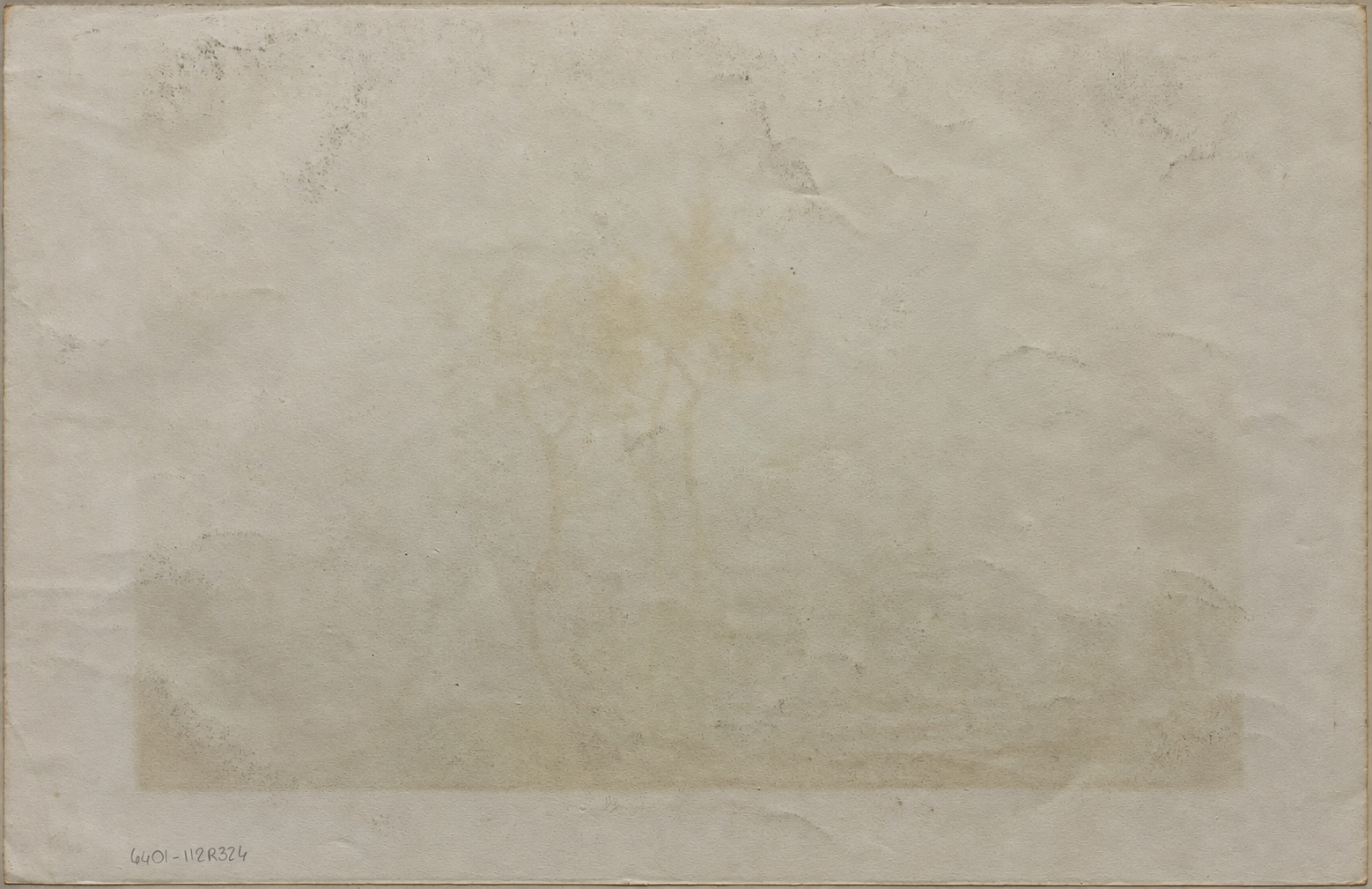
Antique example displaying the natural patina of aged paper. The engraved composition and original inscriptions remain well preserved.
COLLECTOR’S INTEREST
An impressive large nineteenth-century French military engraving depicting Napoleon Bonaparte’s victory at Abensberg in Bavaria on 20 April 1809.
Particularly interesting for collectors of Napoleonic history, the First French Empire, Bavarian history, Austrian military history, cavalry, artillery and antique French historical prints.
The large panoramic landscape, numerous military formations, mounted officers, detailed horses and clouds of artillery smoke give the composition remarkable decorative appeal.
An attractive addition to a collection devoted to Napoleon I and the history of nineteenth-century European warfare.
Offered by Artculture6 – Antique Prints, Drawings and Works of Art.


Avis
Il n’y a pas encore d’avis.