

Description
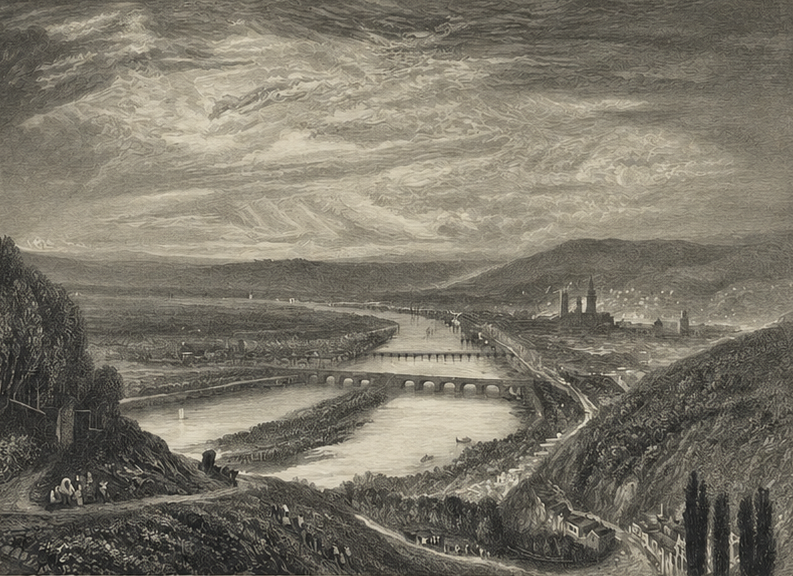
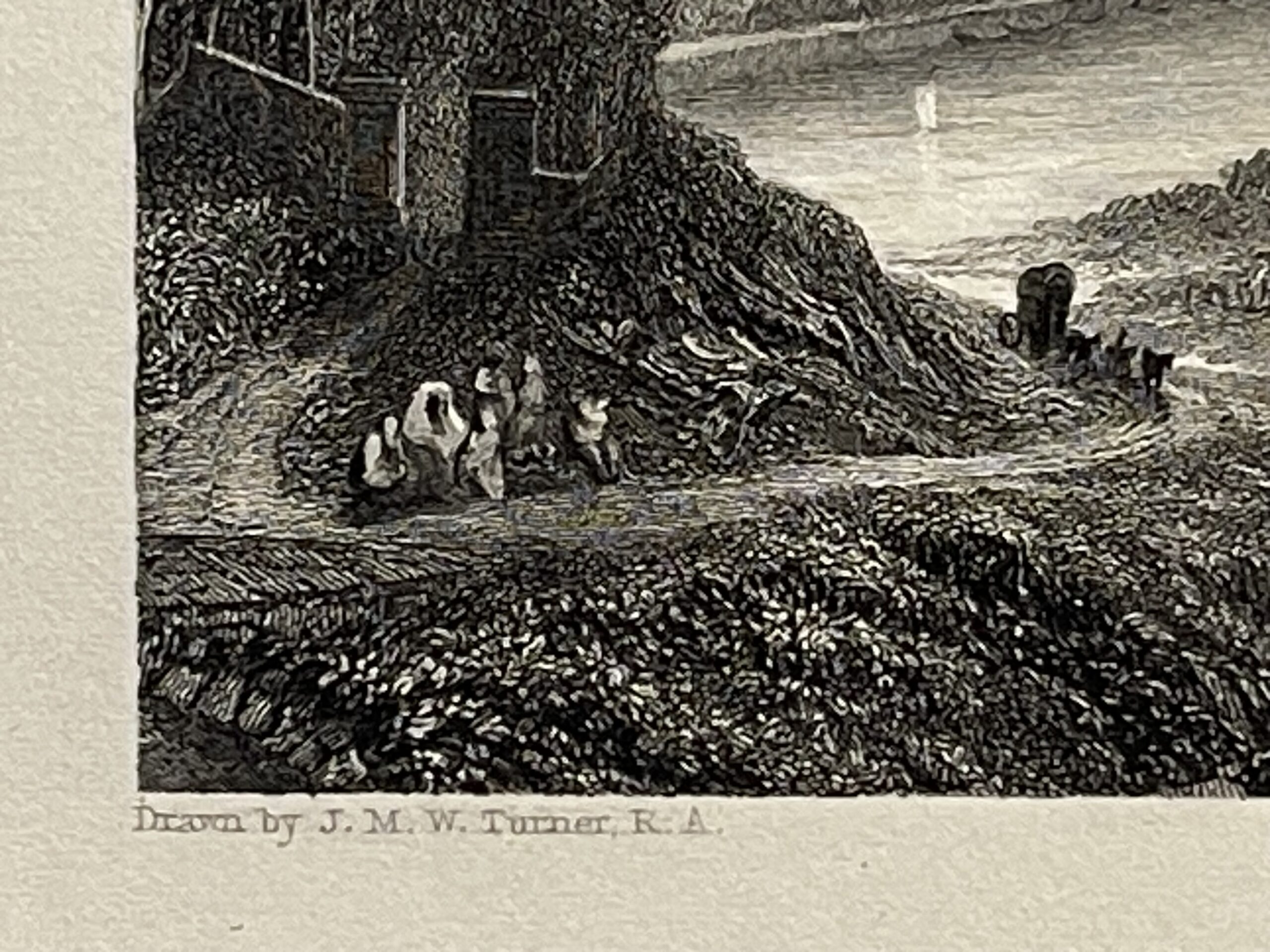
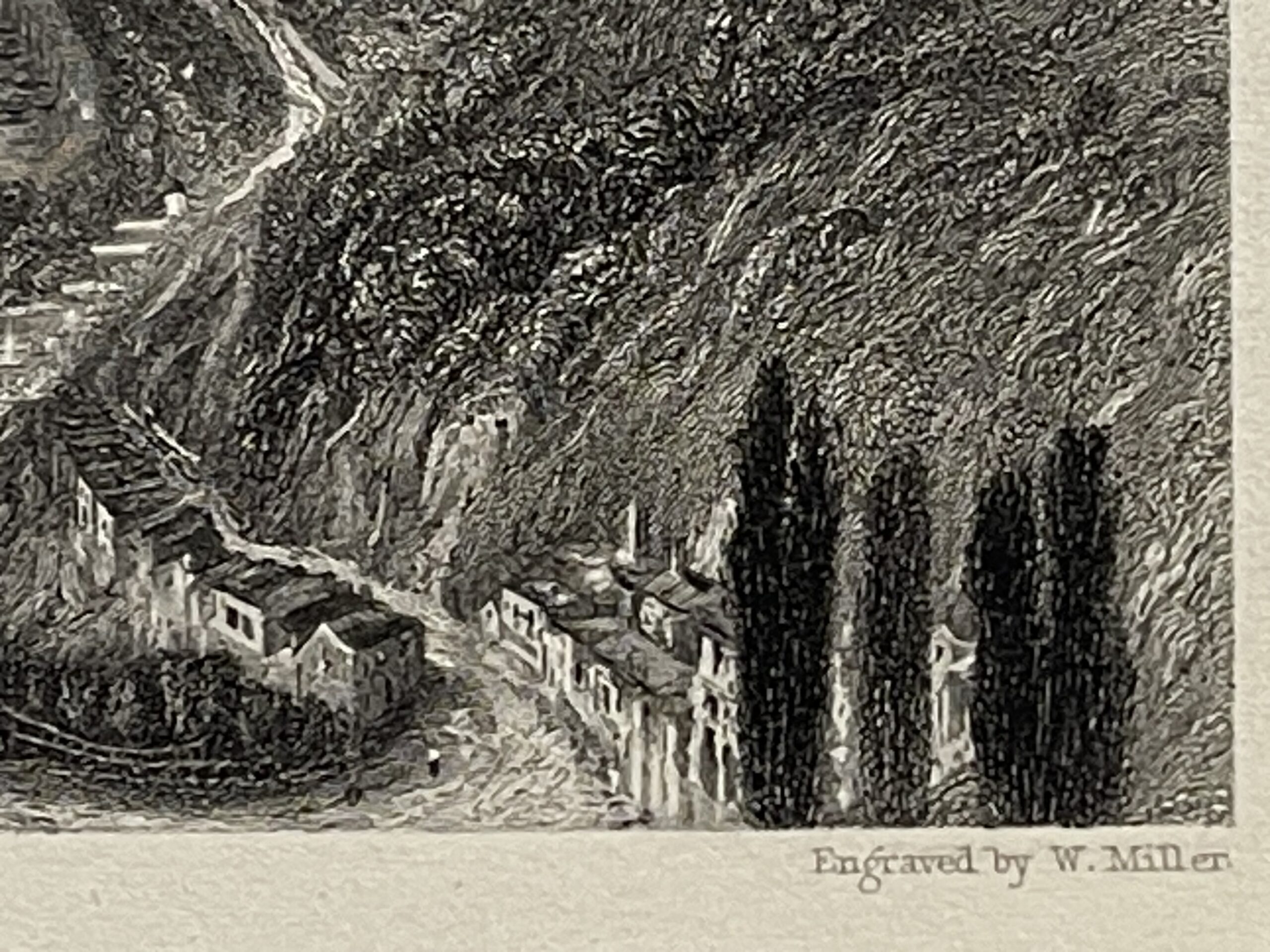
Rouen Normandy antique engraving, a beautiful original 19th-century steel engraving after Joseph Mallord William Turner (1775–1851), depicting a magnificent panoramic view of Rouen and the River Seine from the heights of St. Catherine’s Hill in Normandy, France.
Engraved by William Miller (1796–1882), the distinguished Scottish engraver renowned for his exceptional interpretations of Turner’s landscapes.
Published in 1834 as part of Turner’s Annual Tour – The Seine, this remarkable composition illustrates one of the most celebrated historic cities of Normandy.
Rouen – A Magnificent Panorama of the Seine Valley
The engraving presents a spectacular elevated view overlooking the historic city of Rouen and the winding course of the River Seine.
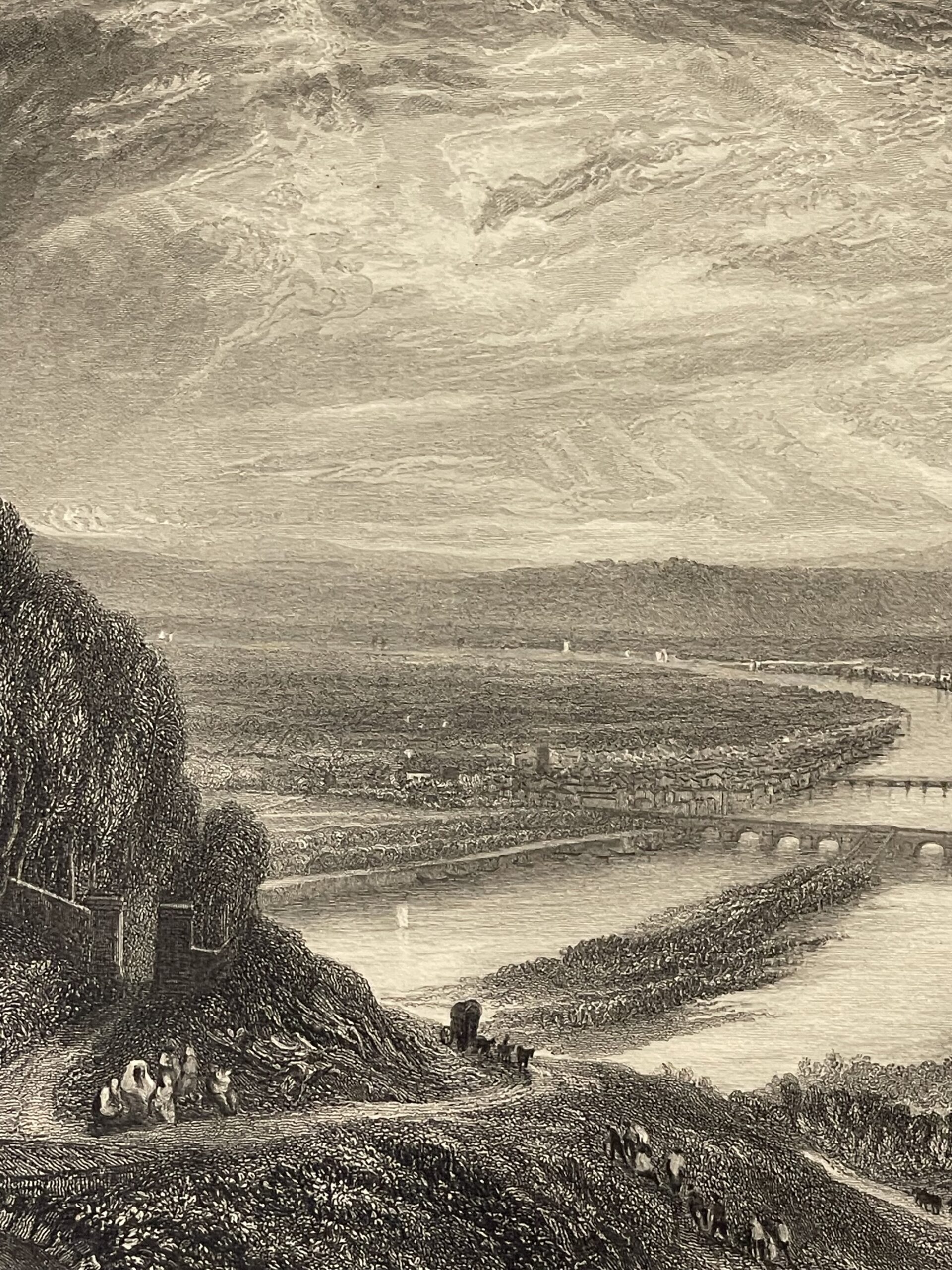
The river dominates the centre of the composition, extending through a broad valley towards the distant horizon.
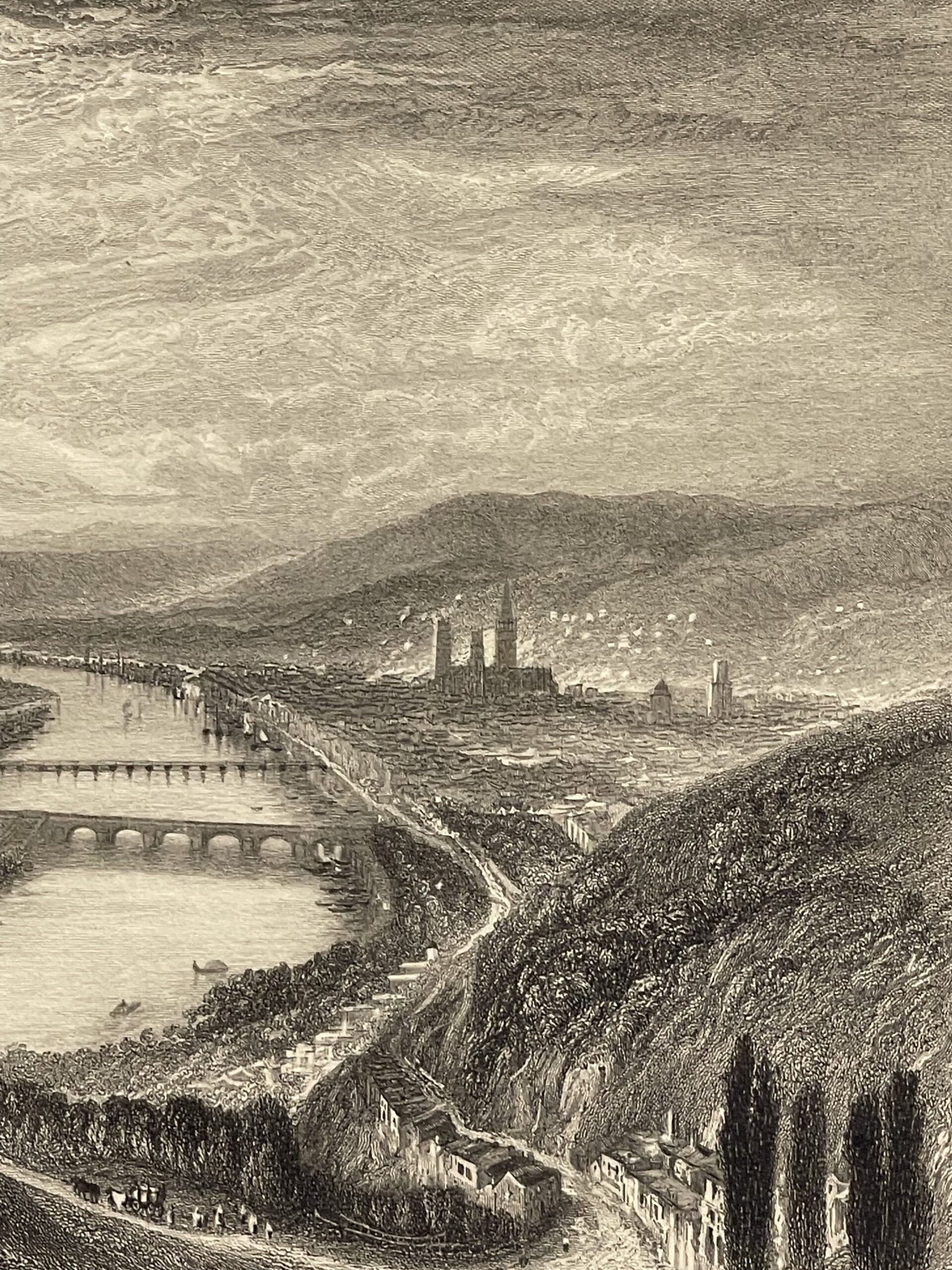
A substantial stone bridge crosses the Seine, connecting the two banks and illustrating the importance of Rouen as a commercial and transportation centre.
Numerous small boats and vessels navigate the waters, reflecting the maritime and commercial activities of the city during the early 19th century.
On the right, the historic town spreads beneath the surrounding hills.
The silhouettes of churches and important buildings emerge from the urban landscape, including the magnificent Rouen Cathedral, one of the great monuments of French Gothic architecture.
The foreground is occupied by steep wooded hillsides, winding paths and small figures overlooking the extensive panorama.
Turner’s Extraordinary Atmospheric Effects
One of the most striking features of this composition is the remarkable treatment of the sky.
Immense formations of clouds sweep across the upper portion of the image, creating a dramatic contrast between light and shadow.
The subtle transitions of tone, the movement of the clouds and the distant atmospheric perspective demonstrate Turner’s extraordinary sensitivity to natural light.
The landscape combines topographical precision with the expressive qualities of Romantic painting.
William Miller’s finely executed steel engraving captures these effects with exceptional delicacy.
Joseph Mallord William Turner (1775–1851)
Joseph Mallord William Turner was one of the greatest British landscape painters of the Romantic period.
A member of the Royal Academy, he became internationally celebrated for his innovative treatment of light, atmosphere, water and dramatic natural scenery.
His travels through France inspired numerous drawings and watercolours depicting historic cities, rivers, ports and architectural monuments.
The Normandy landscapes held a particular fascination for Turner, combining picturesque scenery with rich historical and architectural subjects.
Rouen, with its imposing cathedral, extensive river traffic and spectacular views over the Seine valley, provided an ideal subject for his artistic exploration.
William Miller (1796–1882)
William Miller was a distinguished Scottish engraver, especially celebrated for his engravings after J. M. W. Turner.
His exceptional technical skill enabled him to reproduce the delicate atmospheric effects and complex tonal variations of Turner’s original compositions.
Miller’s steel engravings are distinguished by their precision, subtle gradations of light and shadow, and remarkable treatment of landscape detail.
The present view of Rouen demonstrates his mastery of the technique, particularly in the engraving of the clouds, distant hills, buildings and river reflections.
Rouen During the 19th Century
Rouen was one of the principal historic and commercial cities of northern France.
Situated on the River Seine, it had long played a major role in trade between Paris and the English Channel.
Its medieval architecture, Gothic churches, river bridges and surrounding hills made it an attractive destination for European travellers and artists.
During the 19th century, Rouen became an increasingly important subject in landscape painting and topographical illustration.
The city’s distinctive atmosphere and historic monuments would later attract major Impressionist painters, including Claude Monet.
This engraving preserves a fascinating view of Rouen during the Romantic period, before the major transformations of modern urban development.
An Attractive Antique Normandy Landscape
This original steel engraving is particularly appealing to collectors of Turner prints, French topographical views, historic Rouen, Romantic landscapes and 19th-century European engravings.
Dimensions
- Sheet: 25 × 17.3 cm
- Engraved image: 13.5 × 9.9 cm
Condition
An antique impression displaying the natural patina of the paper. Beautiful preservation of the engraved composition and original inscriptions.

Avis
Il n’y a pas encore d’avis.