
Description
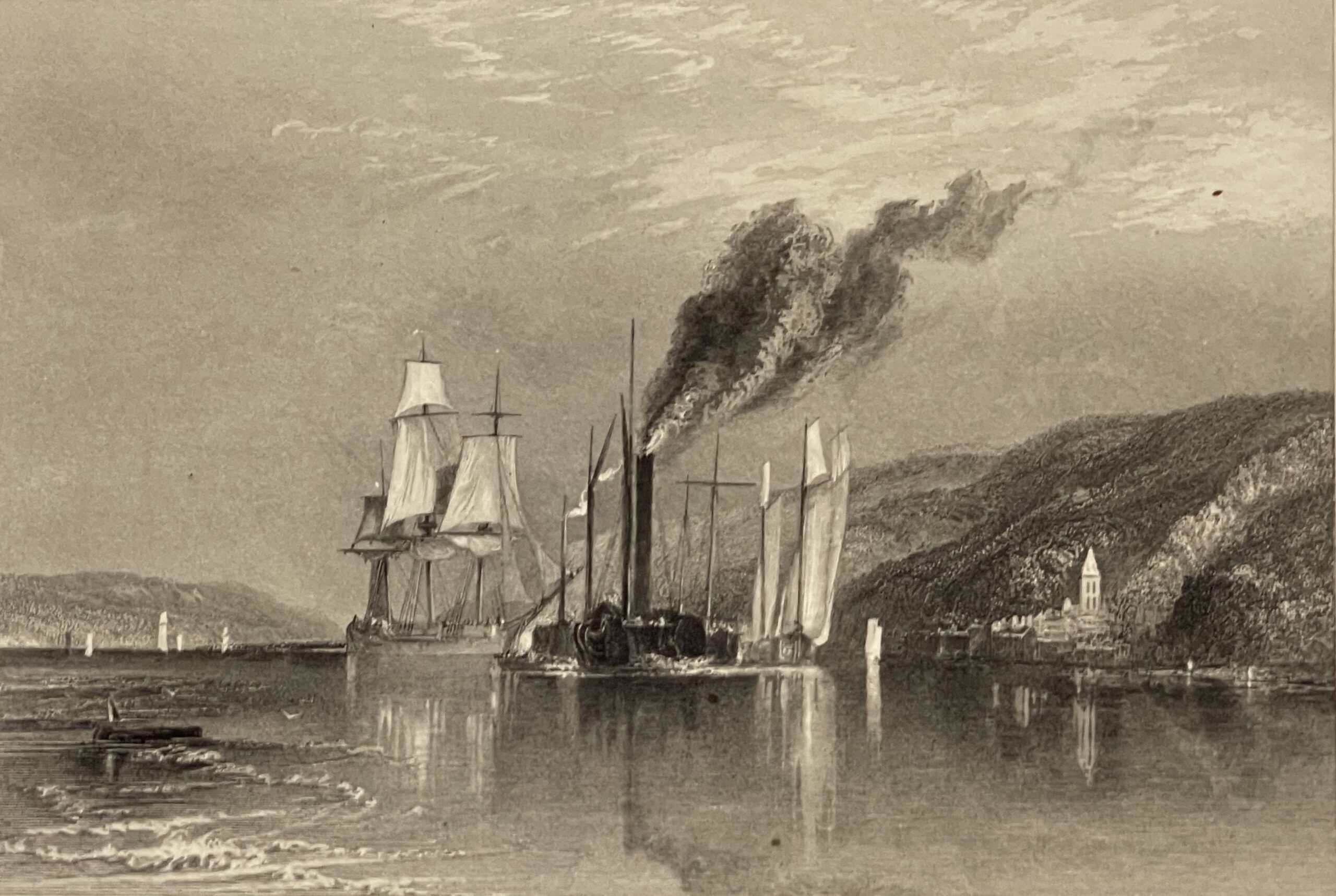
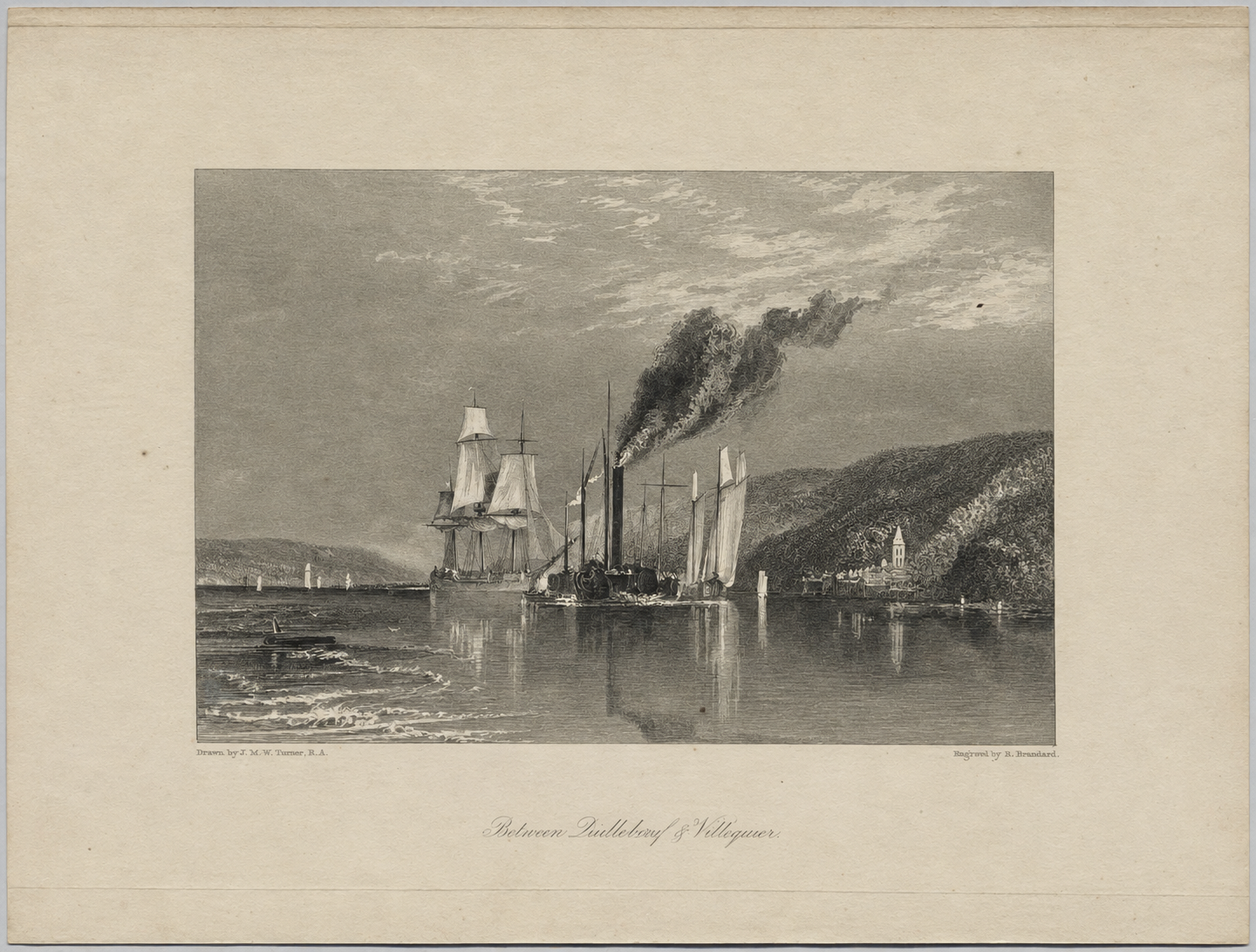
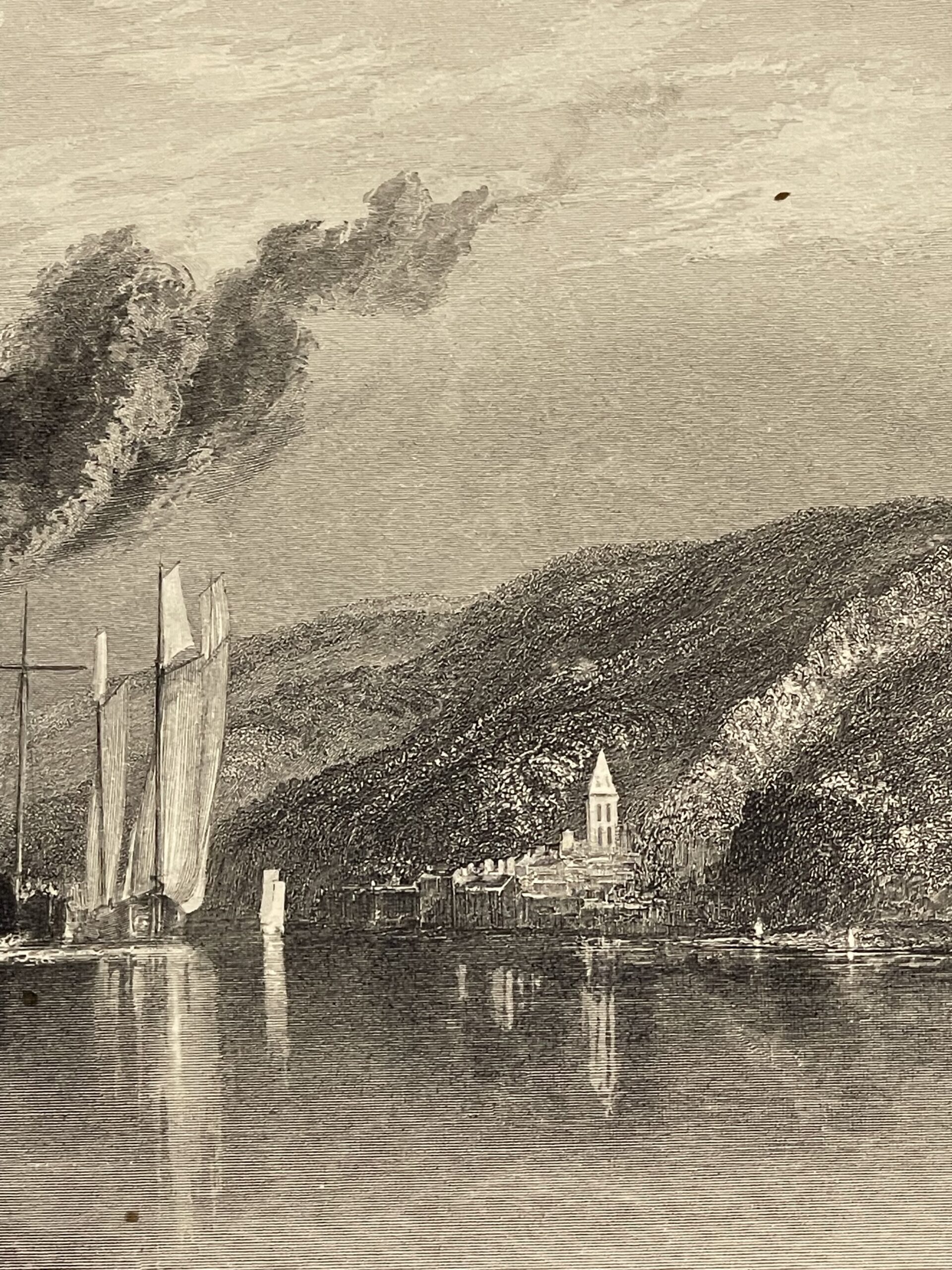
Quillebeuf Villequier Normandy engraving, a beautiful original 19th-century steel engraving after Joseph Mallord William Turner (1775–1851), depicting the River Seine between Quillebeuf and Villequier in Normandy, France.
Engraved by Robert Brandard (1805–1862), a distinguished British engraver celebrated for his finely executed interpretations of Turner’s landscapes.
Dating from approximately 1833–1834, this remarkable composition captures the beauty of the Seine and the transformation of river navigation during the early Industrial Revolution.
The River Seine Between Quillebeuf and Villequier
The engraving presents a picturesque view of the River Seine in Normandy, between the historic settlements of Quillebeuf-sur-Seine and Villequier.
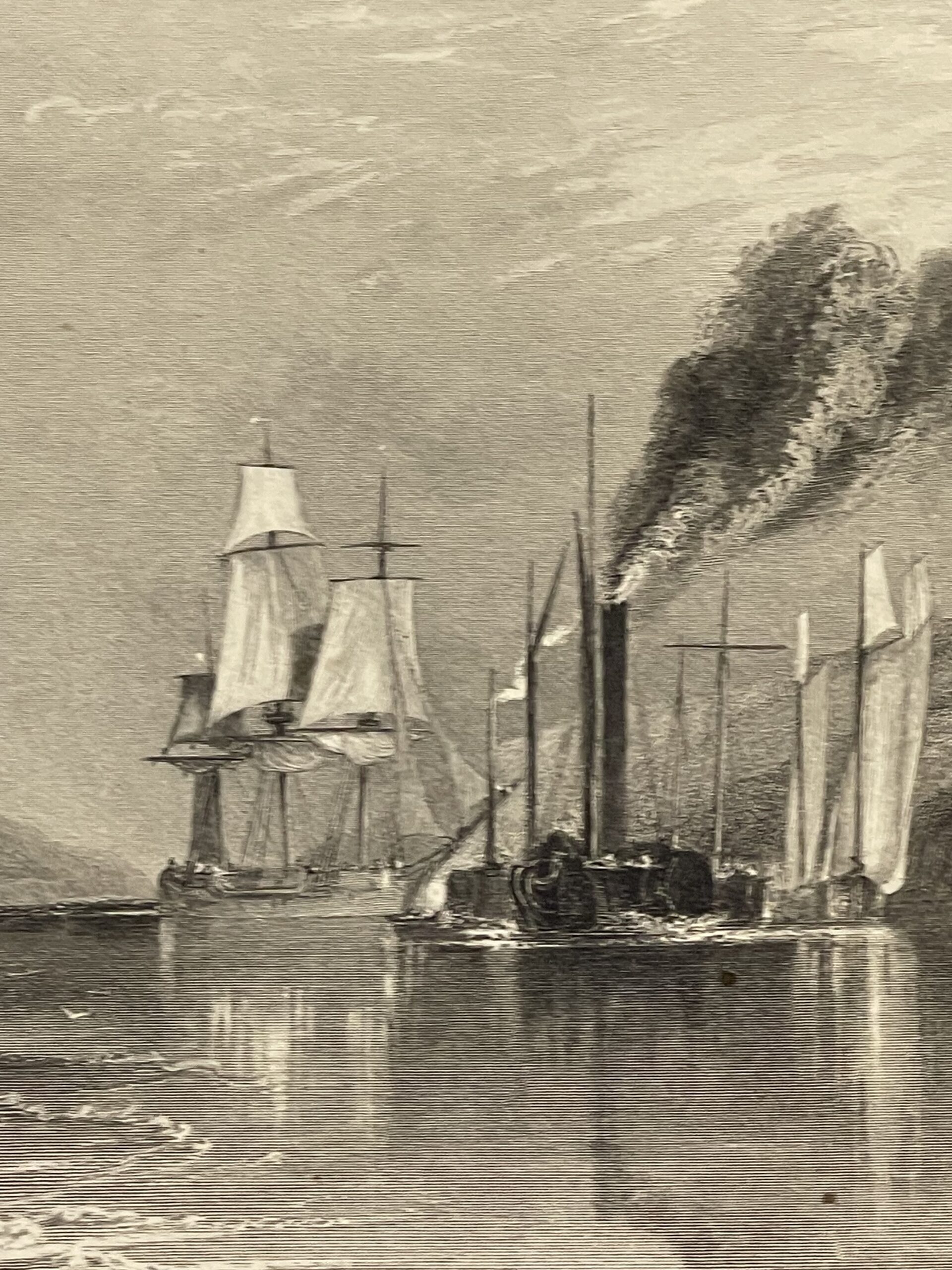
At the centre of the composition, a paddle steamer with a tall funnel moves along the river, towing sailing vessels through the calm waters.
A dramatic plume of dark smoke rises from its chimney, contrasting with the luminous sky and delicate cloud formations.
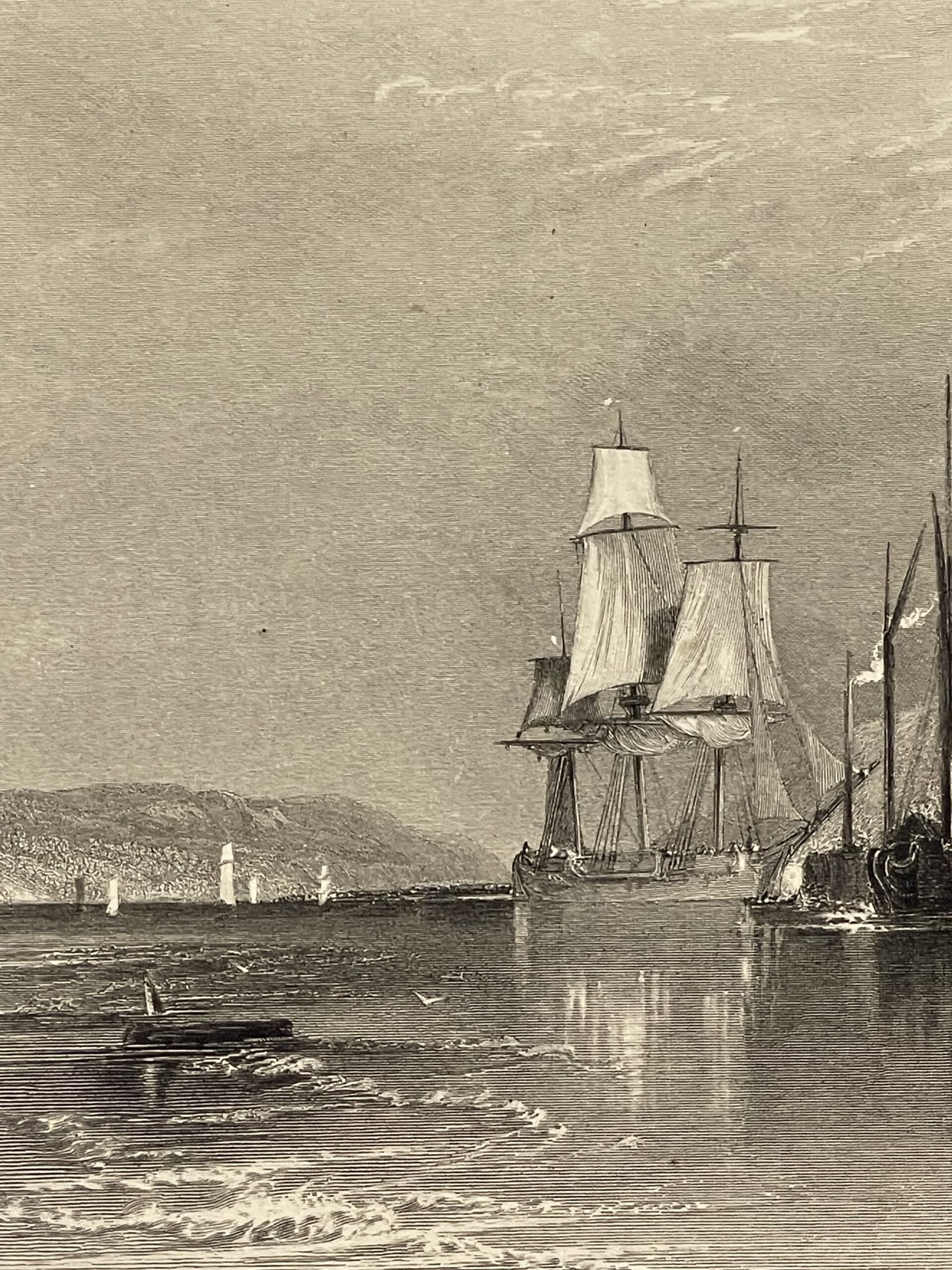
To the left, a large sailing ship with several masts dominates the river.
Smaller vessels accompany the main ships, illustrating the importance of maritime and commercial navigation along the Seine.
On the right, densely wooded hills rise above the waterfront.
A small settlement with traditional buildings and a church tower appears at the foot of the hills.
The reflections of the vessels, the movements of the water and the atmospheric effects of the sky are reproduced with exceptional precision.
Joseph Mallord William Turner (1775–1851)
Joseph Mallord William Turner was one of the greatest British landscape painters of the Romantic period.
Renowned for his extraordinary ability to represent light, atmosphere and the natural elements, Turner transformed European landscape painting during the first half of the 19th century.
His travels throughout France provided inspiration for numerous compositions depicting rivers, towns, historic monuments and maritime landscapes.
The Seine held particular interest for Turner because of its changing light, picturesque scenery and growing commercial activity.
This composition beautifully illustrates his fascination with the relationship between nature, technology and human activity.
Steam Navigation and the Industrial Revolution
The early 19th century witnessed significant developments in maritime and river transportation.
Steam-powered vessels gradually became an important part of European navigation, operating alongside traditional sailing ships.
The Seine was one of France’s principal commercial waterways, linking Paris with Rouen and the ports of the English Channel.
Turner’s representation of a steam vessel towing sailing ships provides a fascinating visual record of this transitional period.
The contrast between the dark smoke of the steamer and the elegant sails of the surrounding vessels gives the engraving both historical significance and remarkable visual appeal.
Robert Brandard (1805–1862)
Robert Brandard was an accomplished British engraver known particularly for his landscape engravings after J. M. W. Turner.
His work demonstrates exceptional technical refinement, especially in the delicate representation of atmospheric effects, water and architectural details.
The present engraving is a beautiful example of the steel line engraving tradition of the early Victorian period.
The intricate treatment of the ships, rigging, smoke, clouds and reflections highlights the precision of his craftsmanship.
An Attractive Antique Normandy Landscape
This original 19th-century engraving is particularly appealing to collectors of Turner prints, French topographical views, maritime history and Romantic landscape art.
The composition combines the beauty of the Normandy countryside with an important historical representation of early steam navigation.
Dimensions
- Sheet: 19.8 × 15 cm
- Engraved image: 13.7 × 9.3 cm
Condition
An antique impression displaying the natural patina of the paper. Beautiful preservation of the engraved composition and original inscriptions.

Avis
Il n’y a pas encore d’avis.