Jena Germany Napoleon Battle 1806 Prussia Swebach Couche Bovinet French Engraving c1850
59,00 €
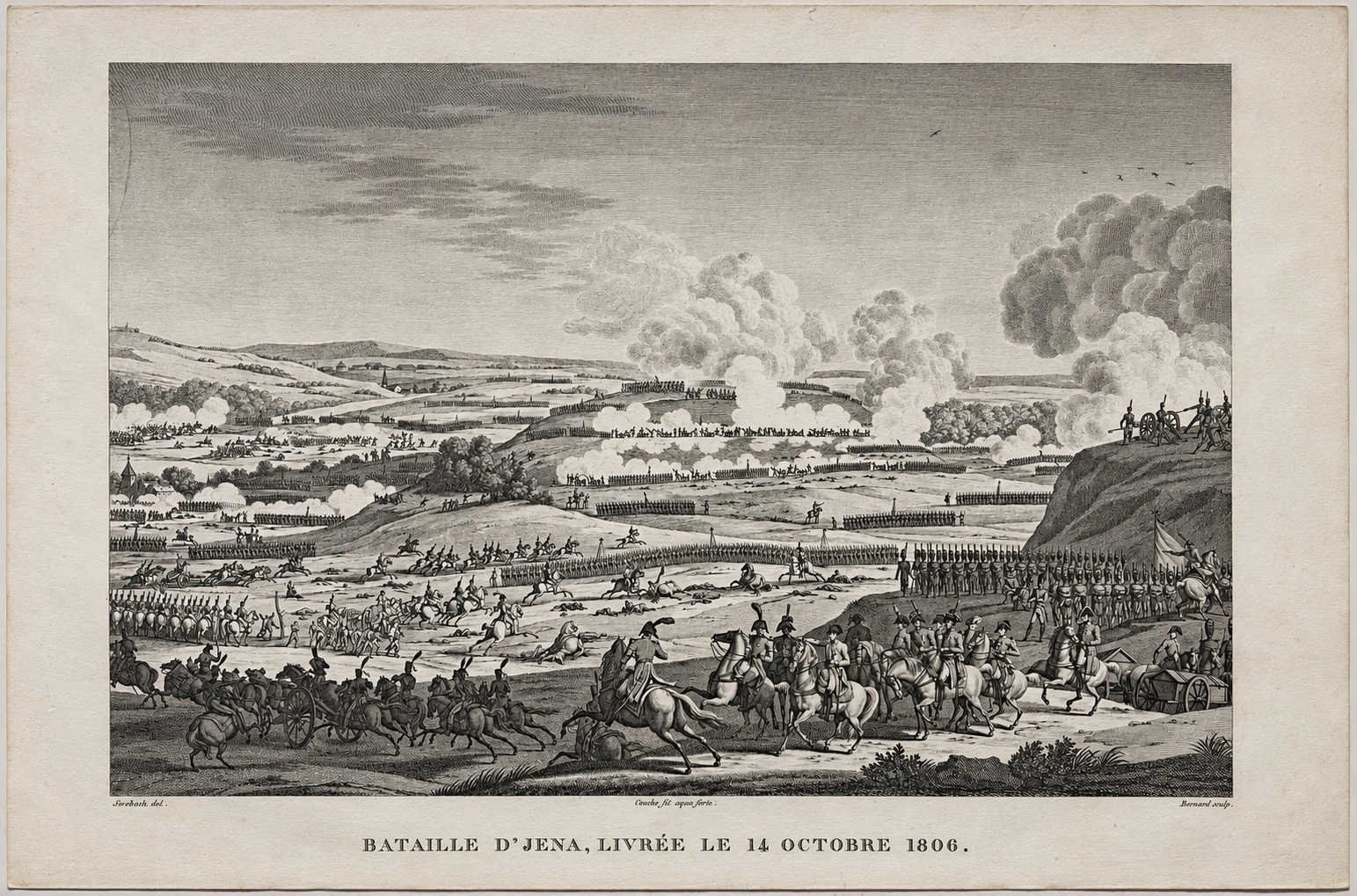
Jena Germany Napoleon Battle 1806 – Large French Historical Engraving after Swebach, circa 1850.
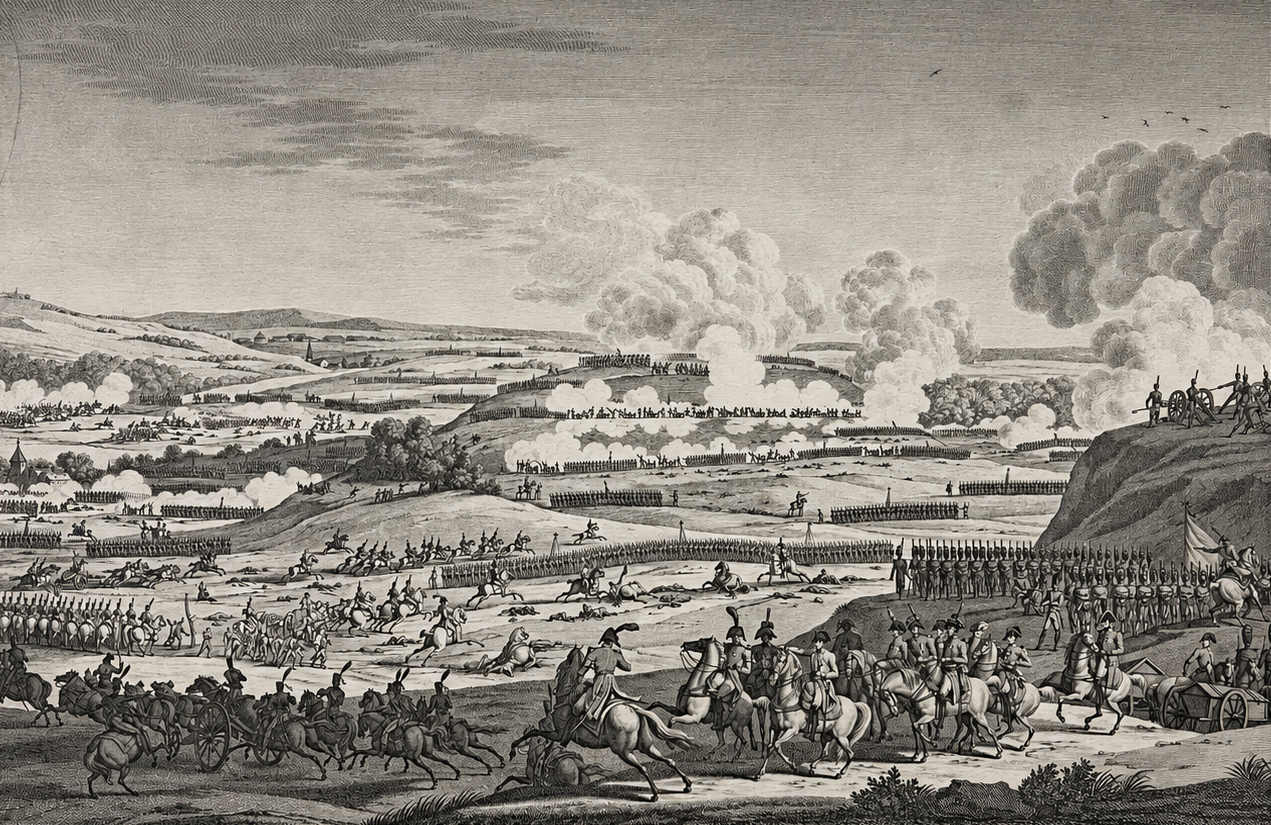
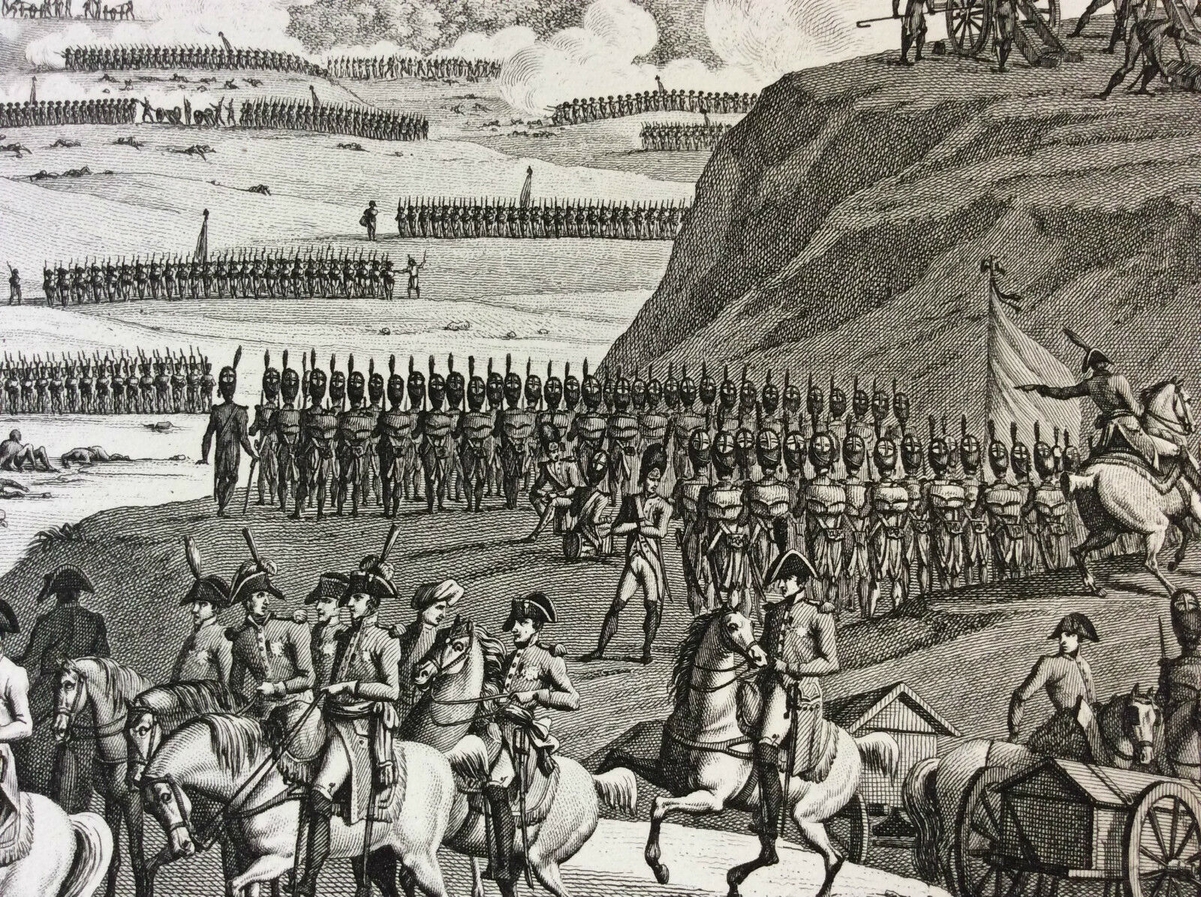
Impressive nineteenth-century French etching and burin engraving depicting the Battle of Jena, fought on 14 October 1806 between Napoleon Bonaparte’s Grande Armée and the Prussian forces commanded by Prince Hohenlohe.
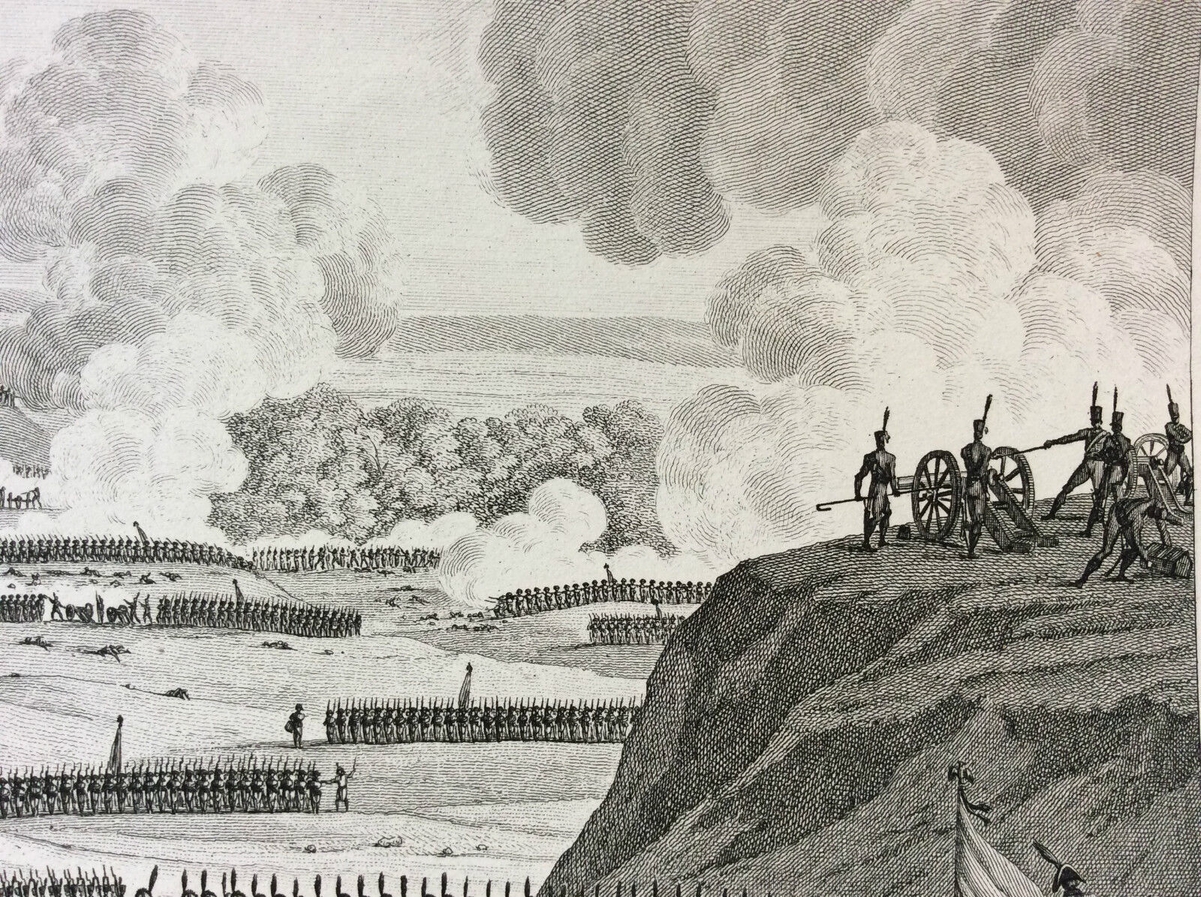
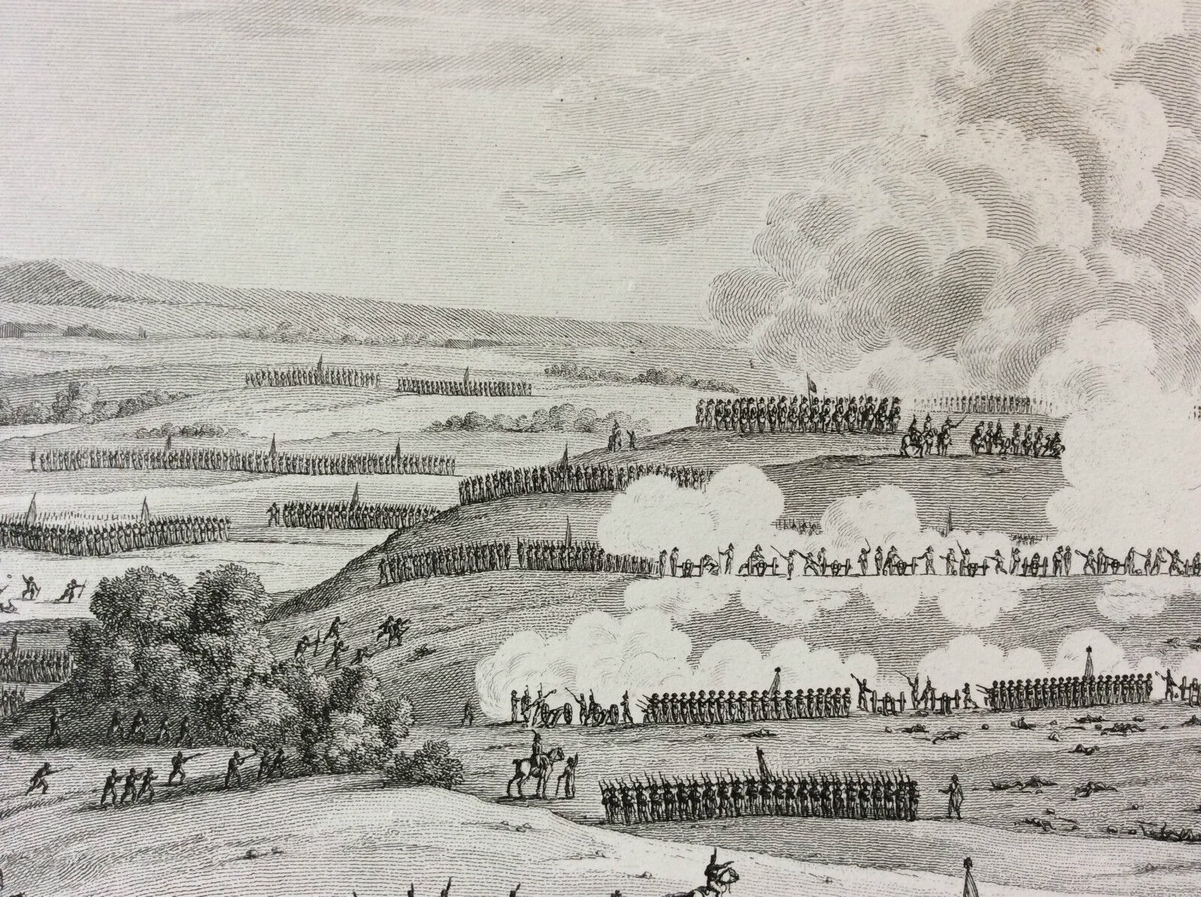
An extraordinary panoramic battlefield with infantry formations, charging cavalry, military horses, artillery batteries and clouds of gunpowder smoke.
This famous French victory, combined with Davout’s success at Auerstedt, led to the collapse of Prussian resistance and Napoleon’s entry into Berlin.
Artist: Jacques François Joseph Swebach-Desfontaines (1769–1823).
Engravers: Couché fils and Edme Bovinet.
Date: Circa 1850.
Sheet dimensions: 46.4 × 30.2 cm.
Engraved image: 38.5 × 25.5 cm.
Reference: 4401-90R324D25.
Description
Jena Germany Napoleon Battle 1806 – Prussian Army Defeat – Large French Military Engraving after Swebach circa 1850
Jena Germany Napoleon Battle 1806 – Large original nineteenth-century French historical engraving after Jacques François Joseph Swebach-Desfontaines (1769–1823), depicting the famous Battle of Jena fought on 14 October 1806 between the French army of Emperor Napoleon I and the Prussian forces commanded by Prince Hohenlohe.
Artculture6 presents this impressive antique French engraving, traditionally dated circa 1850, illustrating one of the greatest military victories of the First French Empire.
The composition was designed by Swebach-Desfontaines, etched by Louis-François Couché, known as Couché fils, and engraved in burin by Edme Bovinet (1767–1843).
The engraving is distinguished by its extensive panoramic battlefield, numerous infantry formations, mounted cavalry officers, military horses, artillery batteries and spectacular clouds of gunpowder smoke.
JENA GERMANY – THE BATTLE OF 14 OCTOBER 1806
The Battle of Jena took place in Thuringia, Germany, during the War of the Fourth Coalition.
After Napoleon’s victory at Austerlitz in December 1805, relations between France and Prussia deteriorated.
Prussia feared the increasing influence of Napoleon over the German states.
In October 1806, the Prussian kingdom entered into open conflict with the French Empire.
Napoleon advanced rapidly through Germany and confronted the Prussian forces near Jena on 14 October.
The Prussian army in this sector was commanded by Prince Friedrich Ludwig of Hohenlohe-Ingelfingen.
The French victory destroyed much of the Prussian army’s ability to continue organised resistance.
The battle became one of the decisive events of Napoleon’s military career.
AN EXTRAORDINARY PANORAMIC BATTLEFIELD
The engraving presents a broad view of the battle, extending across hills, valleys and open countryside.
Numerous military formations occupy the landscape.
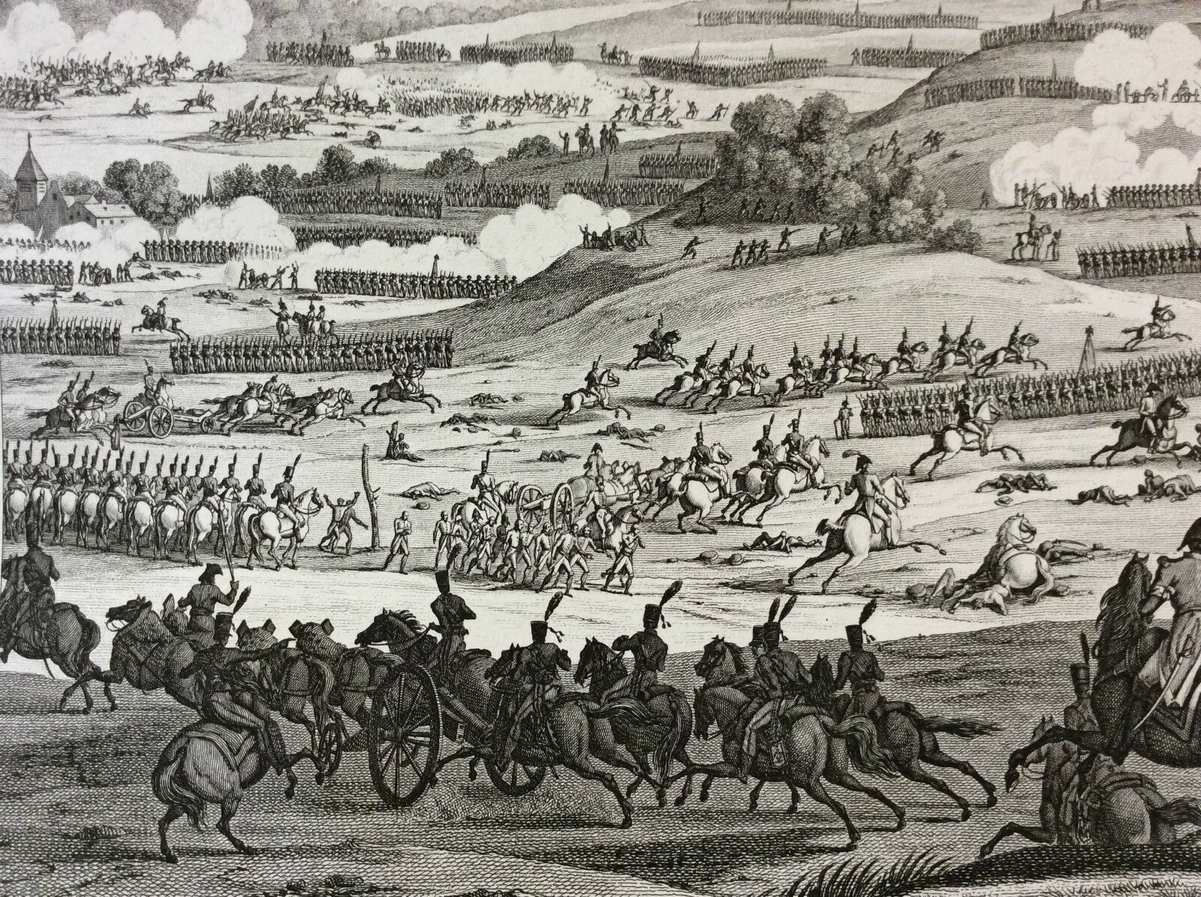
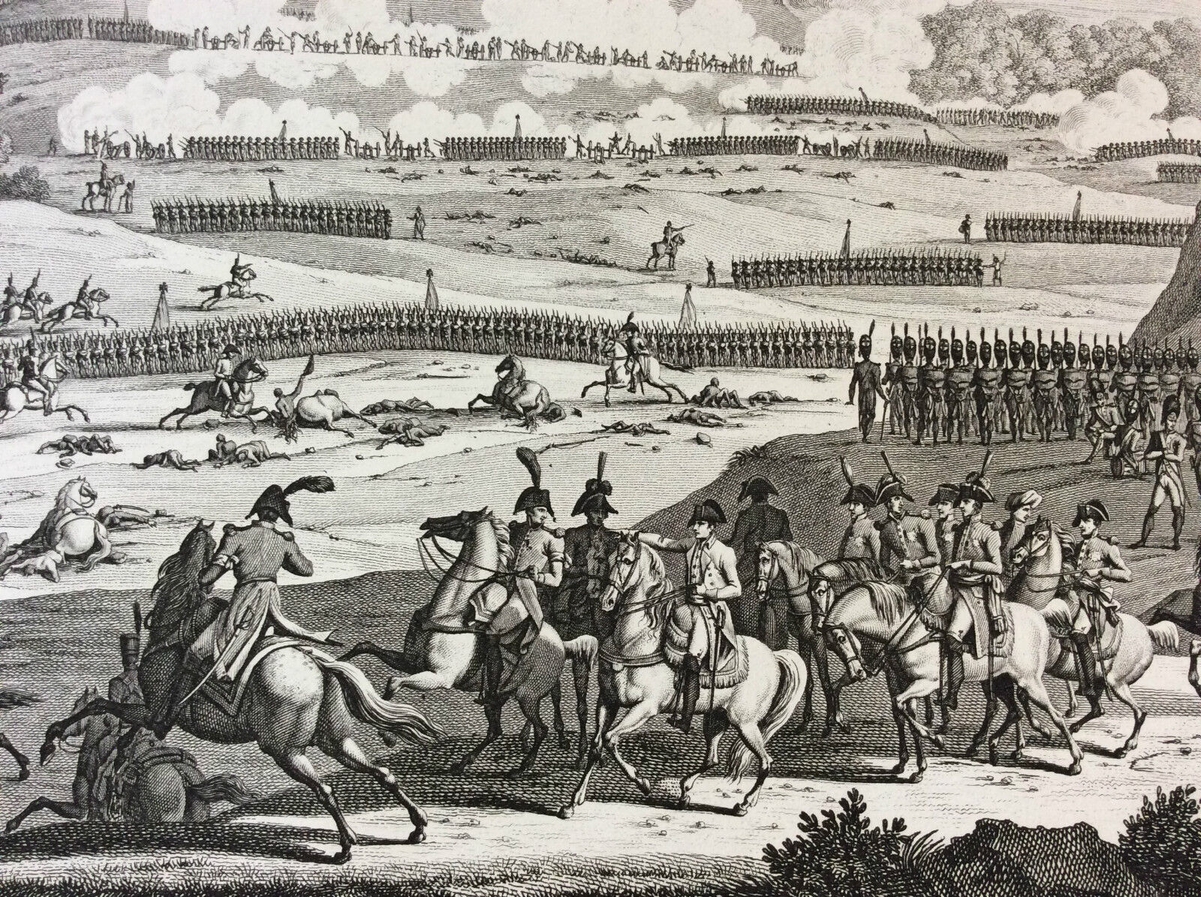
In the foreground, mounted officers and cavalrymen observe the manoeuvres of the French forces.
Several groups of soldiers are represented moving across the terrain, while horse-drawn military equipment accompanies the advancing troops.
At the centre, long lines of infantry extend across the battlefield.
The soldiers stand in carefully organised formations, with muskets and bayonets creating distinctive patterns.
Between these formations, cavalry units charge across the open ground.
Fallen horses, wounded soldiers and scattered combatants emphasise the intensity of the confrontation.
The panorama provides a remarkable impression of the scale and complexity of Napoleonic warfare.
THE ARTILLERY BATTERIES
Artillery plays an important role throughout the composition.
On the right, cannons are positioned upon elevated ground overlooking the battlefield.
The artillery pieces are shown with their gun carriages and military crews.
Large clouds of smoke rise from the guns, spreading across the landscape.
Other batteries can be distinguished in the middle distance.
The artist has carefully represented the relationship between artillery, infantry and cavalry during the battle.
The smoke creates a particularly striking visual effect, partially concealing distant troop formations and adding atmospheric depth.
NAPOLEON’S MILITARY OPERATIONS
Napoleon personally commanded the French forces at Jena.
During the night of 13–14 October, French artillery was brought onto the Landgrafenberg plateau overlooking the battlefield.
The attack began early in the morning, as the French forces advanced against the Prussian positions.
The fighting developed around several villages, including Vierzehnheiligen.
Marshals Lannes, Soult, Ney and Augereau participated in the operations.
The coordinated French offensive gradually overwhelmed the Prussian formations.
The defeat became a decisive moment in the campaign against Prussia.
JENA AND AUERSTEDT – TWO VICTORIES ON THE SAME DAY
On 14 October 1806, two major battles took place in Germany.
While Napoleon defeated the Prussian army near Jena, Marshal Louis Nicolas Davout confronted another powerful Prussian force near Auerstedt.
Despite facing a numerically superior enemy, Davout secured a remarkable victory.
The combination of these two defeats produced a military disaster for Prussia.
Its forces retreated in disorder, and numerous fortresses surrendered during the following weeks.
On 27 October 1806, Napoleon entered Berlin through the Brandenburg Gate.
The French victory at Jena therefore formed an essential part of the campaign that transformed the political balance of Central Europe.
INFANTRY, CAVALRY AND MILITARY HORSES
The engraving is particularly attractive for the extraordinary number of military figures represented.
Long ranks of infantrymen extend across the battlefield.
Mounted officers and charging cavalrymen provide movement throughout the foreground and middle distance.
The horses are depicted in numerous positions, including galloping, turning and falling.
Swebach-Desfontaines was particularly admired for his skill in drawing horses and military subjects.
His understanding of equestrian movement is evident in the dynamic figures that animate the composition.
The uniforms, weapons, military equipment and formations contribute to the historical interest of the print.
THE LANDSCAPE OF THURINGIA
The battlefield is situated within a vast landscape of rolling hills and open plains.
Wooded areas, distant buildings and small settlements appear among the military formations.
The panoramic viewpoint allows the different sections of the battlefield to be represented simultaneously.
The sky occupies the upper portion of the image.
Finely engraved clouds contrast with the darker smoke rising from the artillery.
The combination of landscape and military action creates both a historical narrative and an attractive decorative composition.
JACQUES FRANÇOIS JOSEPH SWEBACH-DESFONTAINES
Jacques François Joseph Swebach-Desfontaines was born in Metz, France, in 1769 and died in Paris in 1823.
He was a distinguished French painter, draughtsman and printmaker, celebrated for military scenes, cavalry and representations of historical events.
He studied with his father and subsequently with Michel Hamon-Duplessis.
His artistic career developed during the French Revolution, and he exhibited at the Paris Salon.
From 1802 to 1813, he served as principal painter at the Sèvres porcelain manufactory.
After the fall of Napoleon, Swebach also worked in Russia in connection with the Imperial Porcelain Manufactory.
His work is admired for its precise representation of military costumes, horse anatomy and large historical compositions.
COUCHÉ FILS AND EDME BOVINET
The original composition was etched by Louis-François Couché, known as Couché fils.
The burin work was executed by Edme Bovinet (1767–1843).
The engraving combines precise outlines with carefully controlled tonal passages.
The infantry formations, artillery equipment, mounted officers and military horses are rendered with numerous fine engraved lines.
Lighter strokes establish the contours of the distant hills, clouds and smoke.
The resulting image demonstrates the technical quality associated with nineteenth-century French historical engraving.
THE CAMPAIGNS OF THE FIRST FRENCH EMPIRE
The Battle of Jena was one of the principal victories of Napoleon during the War of the Fourth Coalition.
The defeat of Prussia allowed French forces to occupy Berlin and continue their operations towards Poland and East Prussia.
Further important events followed during 1807, including the Siege of Danzig, the Battle of Friedland and the Treaties of Tilsit.
The present engraving therefore belongs to a sequence of compositions illustrating the major campaigns and diplomatic achievements of the Napoleonic period.
It also forms an attractive companion to historical prints depicting Napoleon’s entry into Berlin on 27 October 1806 and his military operations in 1807.
A DOCUMENTED NINETEENTH-CENTURY ENGRAVING
An example of the same composition is preserved in the collections of the Fondation Napoléon under the French title Bataille d’Jéna, livrée le 14 octobre 1806.
The museum records the inscriptions identifying Swebach as the draughtsman, Couché fils as the etcher and Bovinet as the engraver.
Its example is dated circa 1860 and belongs to an illustrated collection devoted to the military campaigns of the French Consulate and Empire.
The present example is catalogued as a circa 1850 impression.
TECHNICAL DETAILS
Subject: Battle of Jena, Napoleon against the Prussian army.
Historical date: 14 October 1806.
Location: Jena, Thuringia, Germany.
Historical period: First French Empire, War of the Fourth Coalition.
French commander: Emperor Napoleon I.
Prussian commander: Prince of Hohenlohe.
Original draughtsman: Jacques François Joseph Swebach-Desfontaines (1769–1823).
Etcher: Louis-François Couché, known as Couché fils.
Burin engraver: Edme Bovinet (1767–1843).
Period of the print: Nineteenth century.
Date of this impression: Circa 1850, as catalogued.
Technique: Antique French etching and burin engraving.
Sheet dimensions: 46.4 × 30.2 cm.
Engraved composition: 38.5 × 25.5 cm.
Reference: 4401-90R324D25.
CONDITION
Antique example displaying the natural patina of aged paper. The engraved composition remains well preserved.
COLLECTOR’S INTEREST
An impressive large nineteenth-century French military engraving depicting Napoleon Bonaparte’s victory at Jena in 1806.
Particularly interesting for collectors of Napoleonic history, the First French Empire, Prussian military history, cavalry, artillery, military horses and historical engravings.
The extensive panoramic landscape, extraordinary number of military figures and detailed artillery batteries make this a particularly decorative historical composition.
An appealing addition to a collection devoted to Napoleon I and the military history of nineteenth-century Europe.
Offered by Artculture6 – Antique Prints, Drawings and Works of Art.


Avis
Il n’y a pas encore d’avis.