Description
able Portrait of a Scottish General
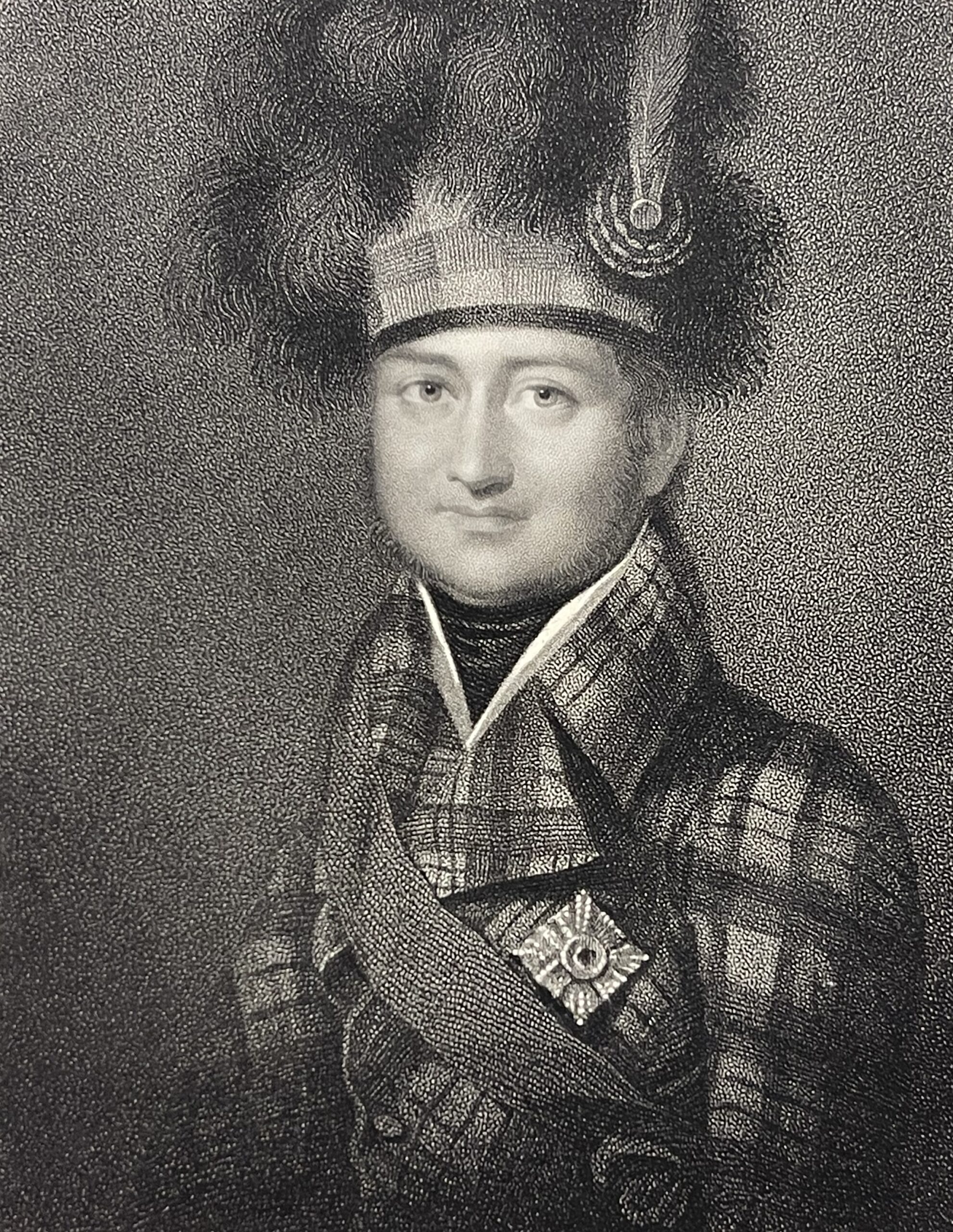
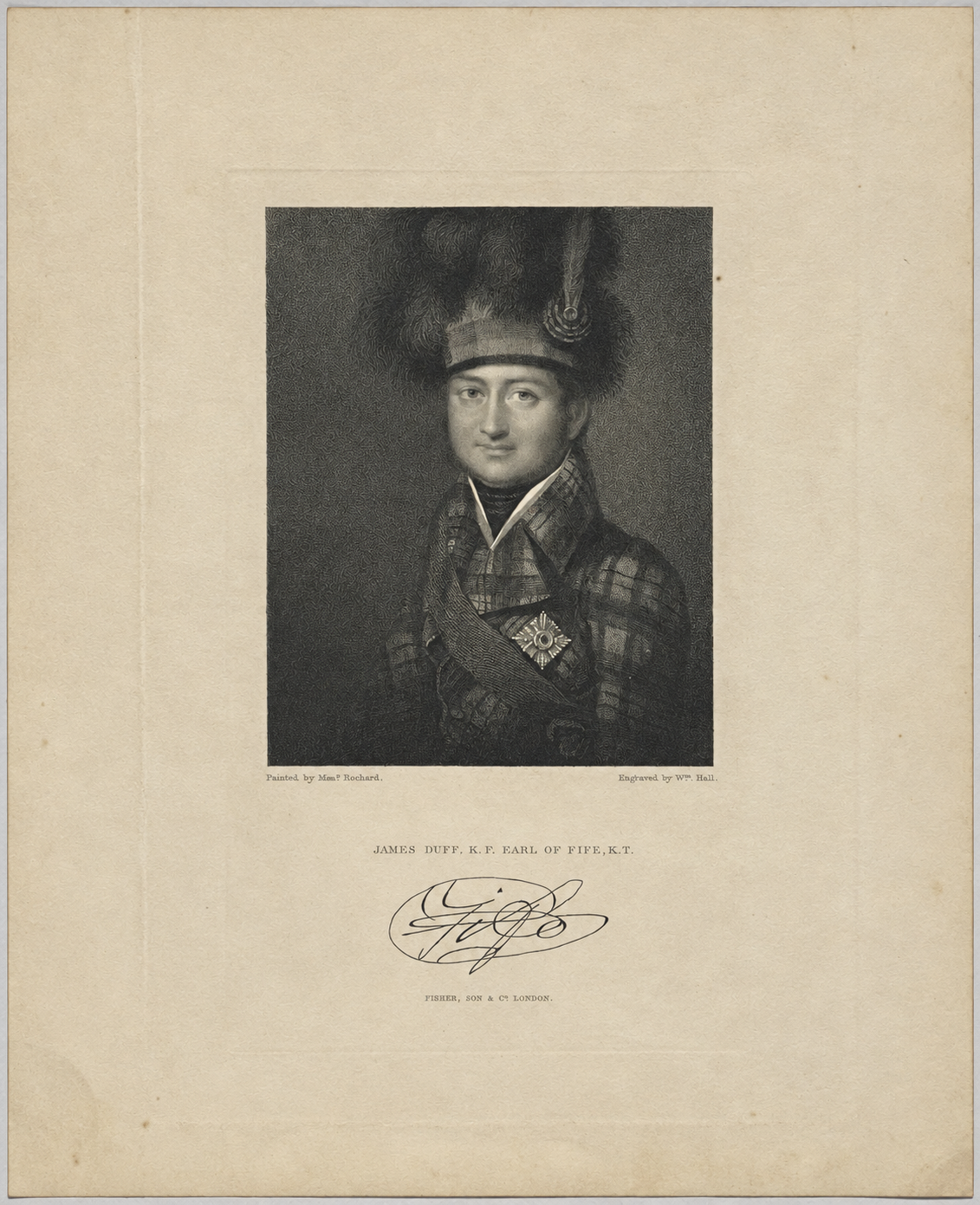
The engraving presents an elegant half-length portrait of James Duff, 4th Earl of Fife.
He is represented wearing Scottish tartan dress, crossed by a broad sash and decorated with a magnificent star-shaped order of chivalry.
His distinctive headdress features a tall feather plume.
The finely engraved portrait captures the sitter’s expression with remarkable delicacy.
The dark background emphasises the illuminated face, while the carefully rendered tartan, sash and decorations reflect his aristocratic and military status.
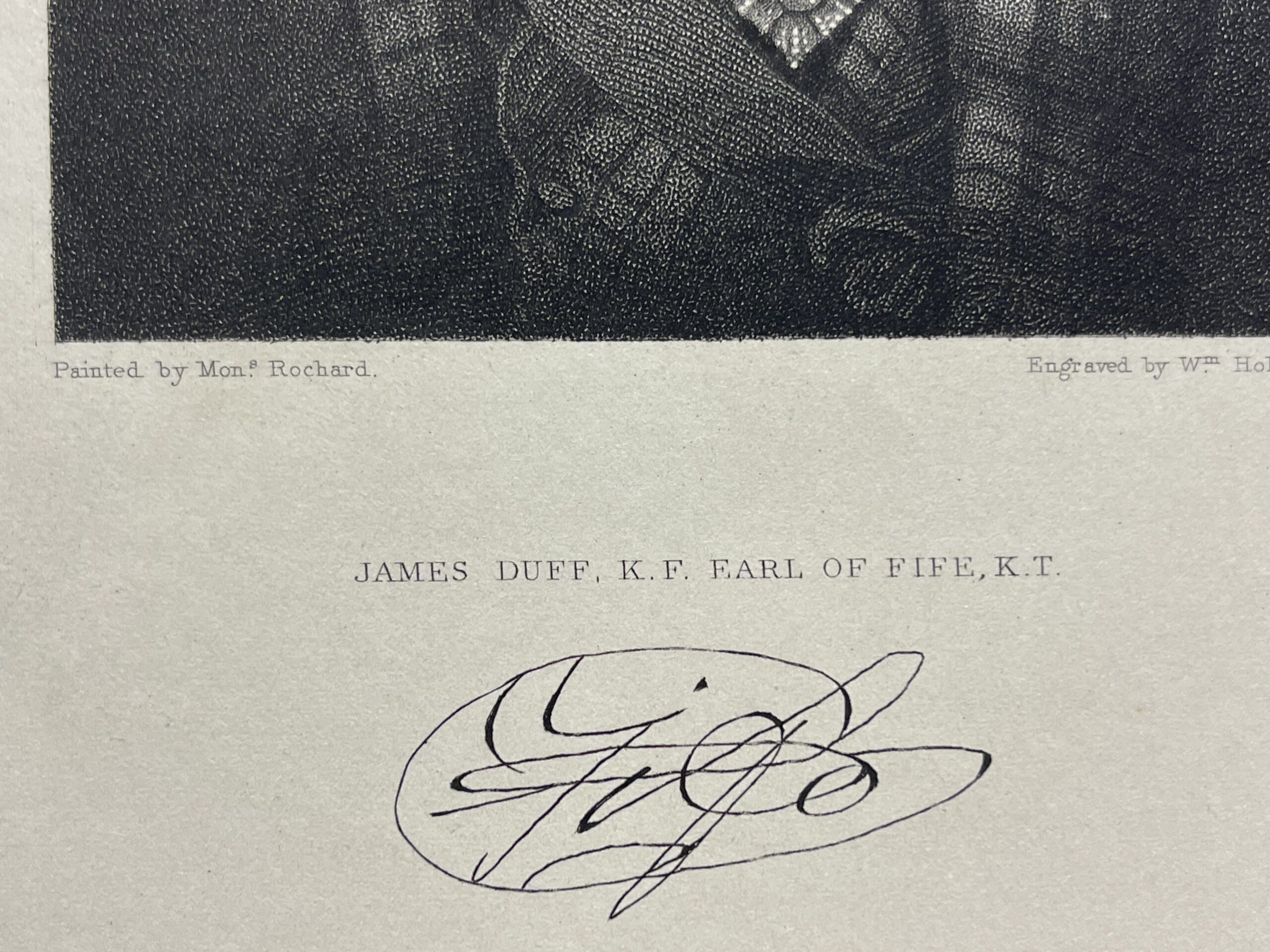
Beneath the portrait appears the inscription:
JAMES DUFF. K.F. EARL OF FIFE, K.T.
A large facsimile of his signature is reproduced beneath the inscription.
The signature is printed as part of the engraving and is not handwritten.
James Duff and the Napoleonic Wars
James Duff was born in Scotland on October 6, 1776, into the influential Duff family of Banffshire and Aberdeenshire.
Although he had not originally intended to pursue a military career, the political and military upheavals of the Napoleonic period profoundly influenced his life.
In 1808, following the French invasion of Spain and the outbreak of the Peninsular War, Duff volunteered to serve alongside the Spanish forces resisting Napoleon’s occupation.
His enthusiasm, financial assistance and personal commitment were welcomed by the Spanish authorities.
He received the rank of major-general in the Spanish Army.
Unlike many aristocratic figures whose military distinctions were largely ceremonial, Duff personally participated in combat operations against Napoleon’s troops.
The Battle of Talavera – July 27–28, 1809
The Battle of Talavera was one of the major engagements of the Peninsular War.
British and Spanish forces confronted French armies in a fierce two-day battle near Talavera de la Reina, southwest of Madrid.
James Duff participated in the fighting as a major-general in Spanish service.
During the battle, he attempted to rally Spanish soldiers who were retreating from their positions.
He was severely wounded during this action.
Duff narrowly escaped capture by French troops thanks to the courageous intervention of his close friend, Major Samuel Ford Whittingham, who later became a lieutenant-general.
His conduct at Talavera demonstrated his personal courage and commitment to the Spanish cause.
The Defence of Cádiz – 1810
Despite his serious injury at Talavera, Duff continued his military involvement in Spain.
In 1810, he participated in the defence of Cádiz, one of the most important strategic strongholds resisting Napoleon’s armies.
The city was threatened by French forces commanded by Marshal Claude-Victor Perrin, commonly known as Marshal Victor.
During military operations around Fort Matagorda, Duff was once again severely wounded.
These two serious injuries established his reputation as an aristocratic officer who had personally risked his life during the struggle against Napoleonic France.
Military Honours and Political Career
In recognition of his service to Spain, James Duff received the Spanish Order of Saint Ferdinand.
On April 17, 1811, he succeeded his father as the 4th Earl of Fife.
After returning to Britain, Duff continued his public career.
He was elected Member of Parliament for Banffshire in 1818.
In 1827, he was created a peer of the United Kingdom as Baron Fife and was appointed a Knight of the Thistle, one of Scotland’s most prestigious orders of chivalry.
He subsequently retired to his family estate at Duff House in Banffshire.
James Duff died on March 9, 1857, aged 80.
François Théodore Rochard (1798–1858)
François Théodore Rochard was a French portrait painter and miniaturist who worked extensively in Great Britain.
His portraits were particularly appreciated for their refined representation of facial features, elegant modelling and delicate treatment of light.
The original portrait of James Duff reflects the sitter’s distinguished position in British aristocratic and military society.
William Holl the Elder (1771–1838)
William Holl was a celebrated British engraver who specialised in portraits of prominent military officers, aristocrats, politicians and historical personalities.
The present portrait was executed using the stipple engraving technique.
This method employs numerous finely engraved dots to create subtle tonal gradations, particularly effective in reproducing facial features and delicate transitions between light and shadow.
Holl’s remarkable precision is particularly evident in the rendering of Duff’s face, Scottish tartan costume, military headdress and honorary decoration.
An Important Historical Portrait of the Peninsular War
This original 1830 engraving represents a distinguished Scottish military figure who fought directly against Napoleon’s forces in Spain.
The combination of Napoleonic military history, Scottish aristocratic portraiture and fine British engraving gives this print considerable historical and decorative interest.
It is particularly appealing to collectors of Napoleonic Wars memorabilia, Peninsular War history, the Battle of Talavera, British military portraits and Scottish aristocratic history.
Dimensions
- Sheet: 24 × 19.5 cm
- Engraved portrait: 11.5 × 9 cm
Condition
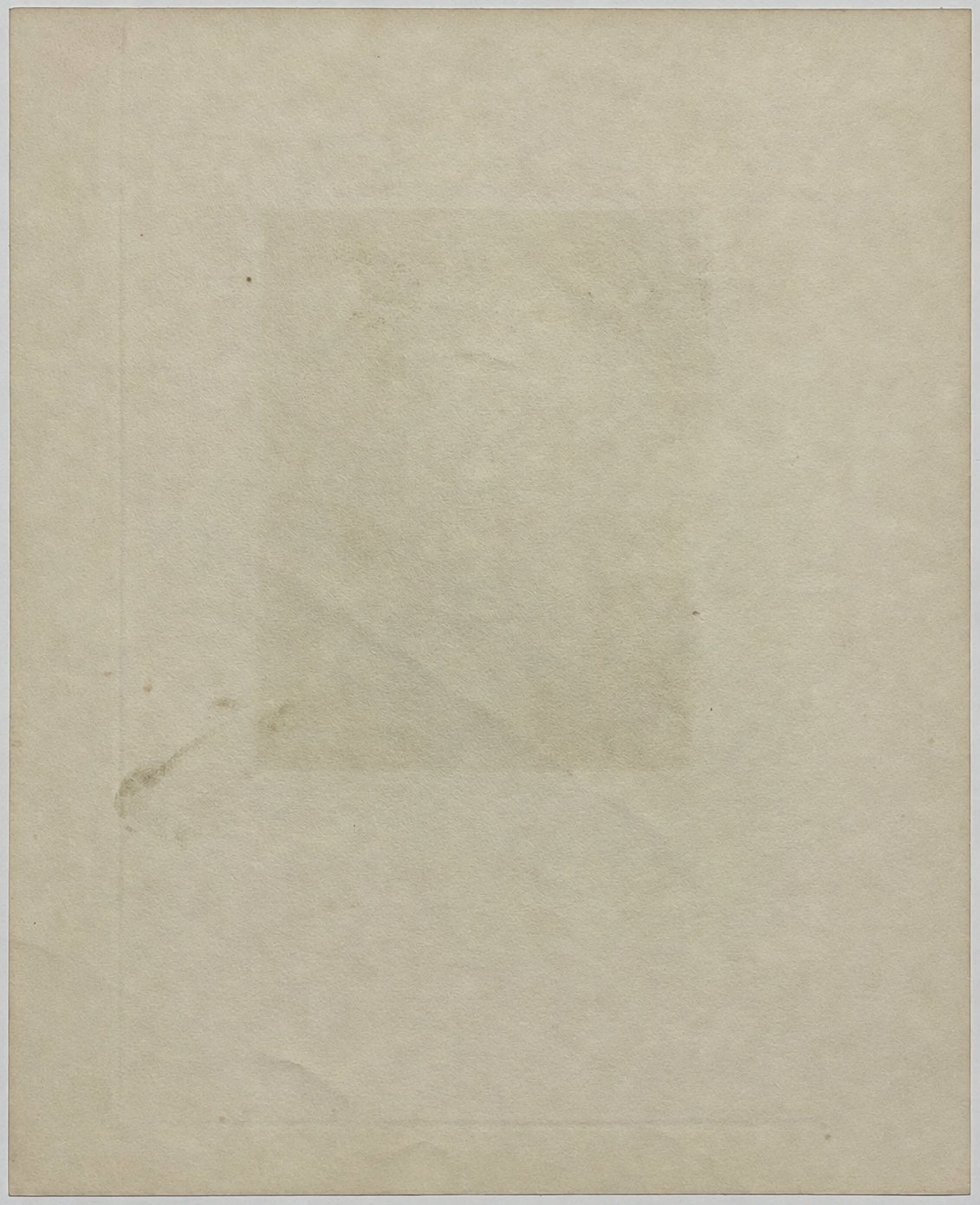
An antique impression displaying the natural patina of the paper.
Beautiful preservation of the engraved portrait, original inscriptions and printed facsimile signature.
The signature beneath the portrait is part of the printed composition and is not handwritten.

Avis
Il n’y a pas encore d’avis.