Description
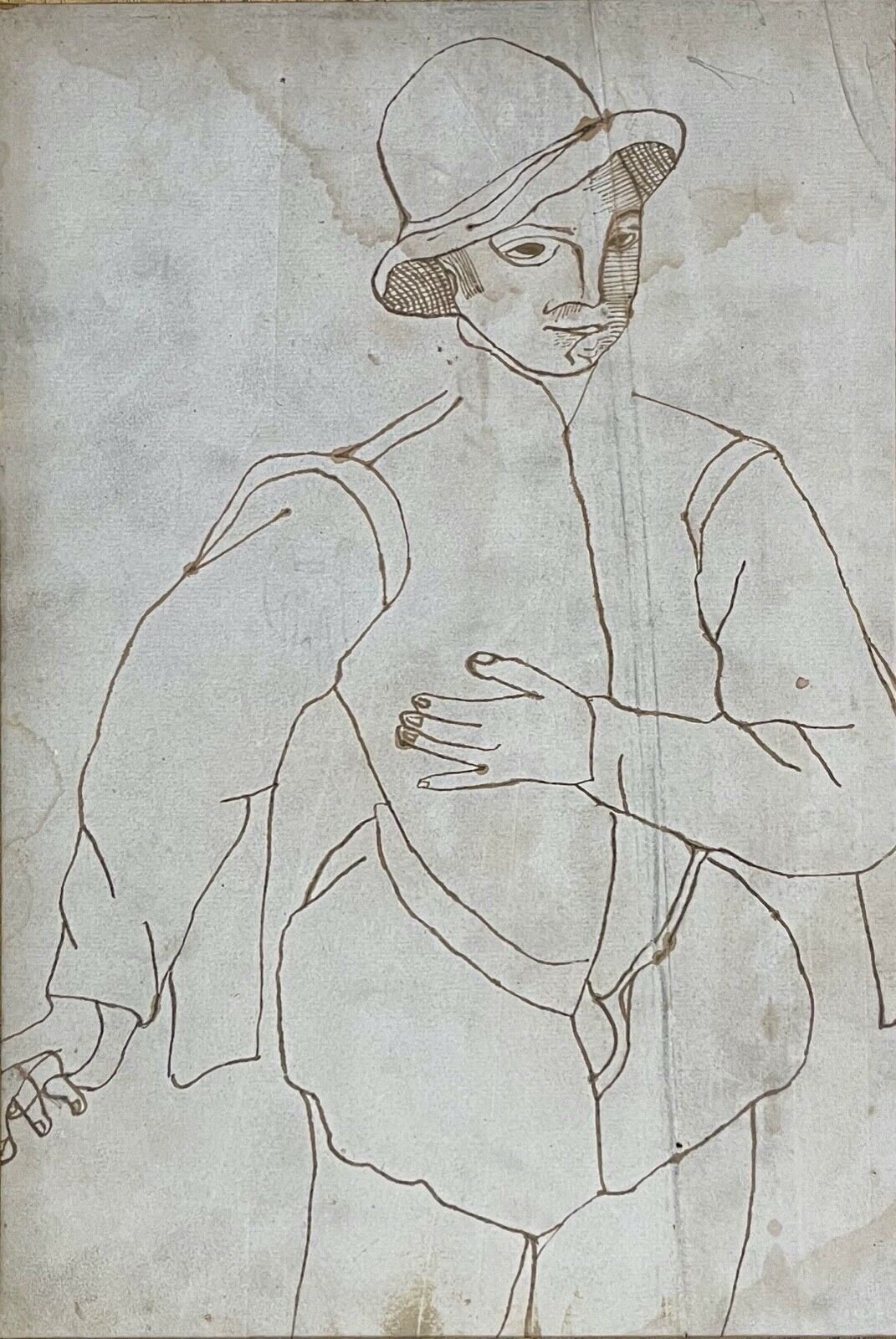
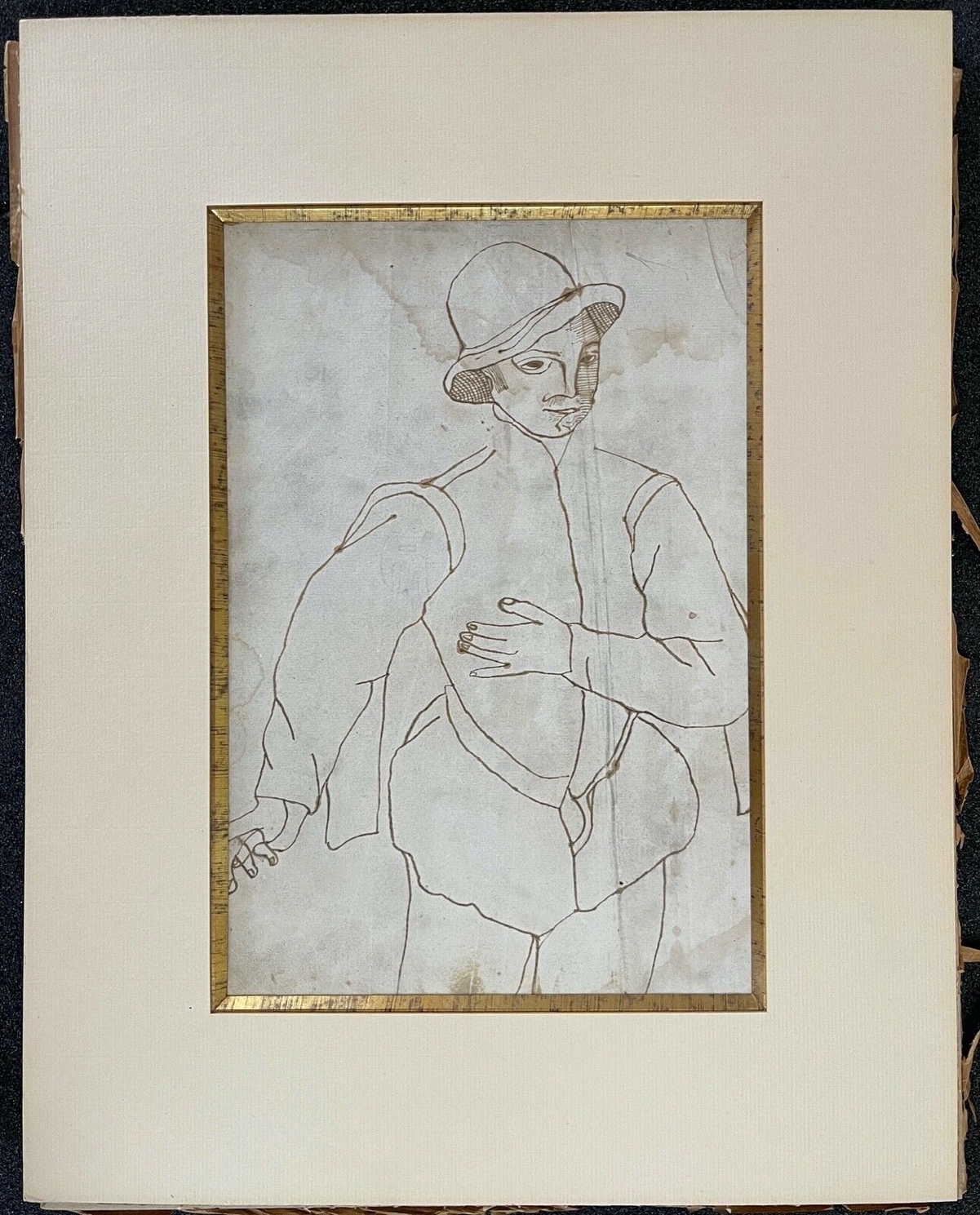
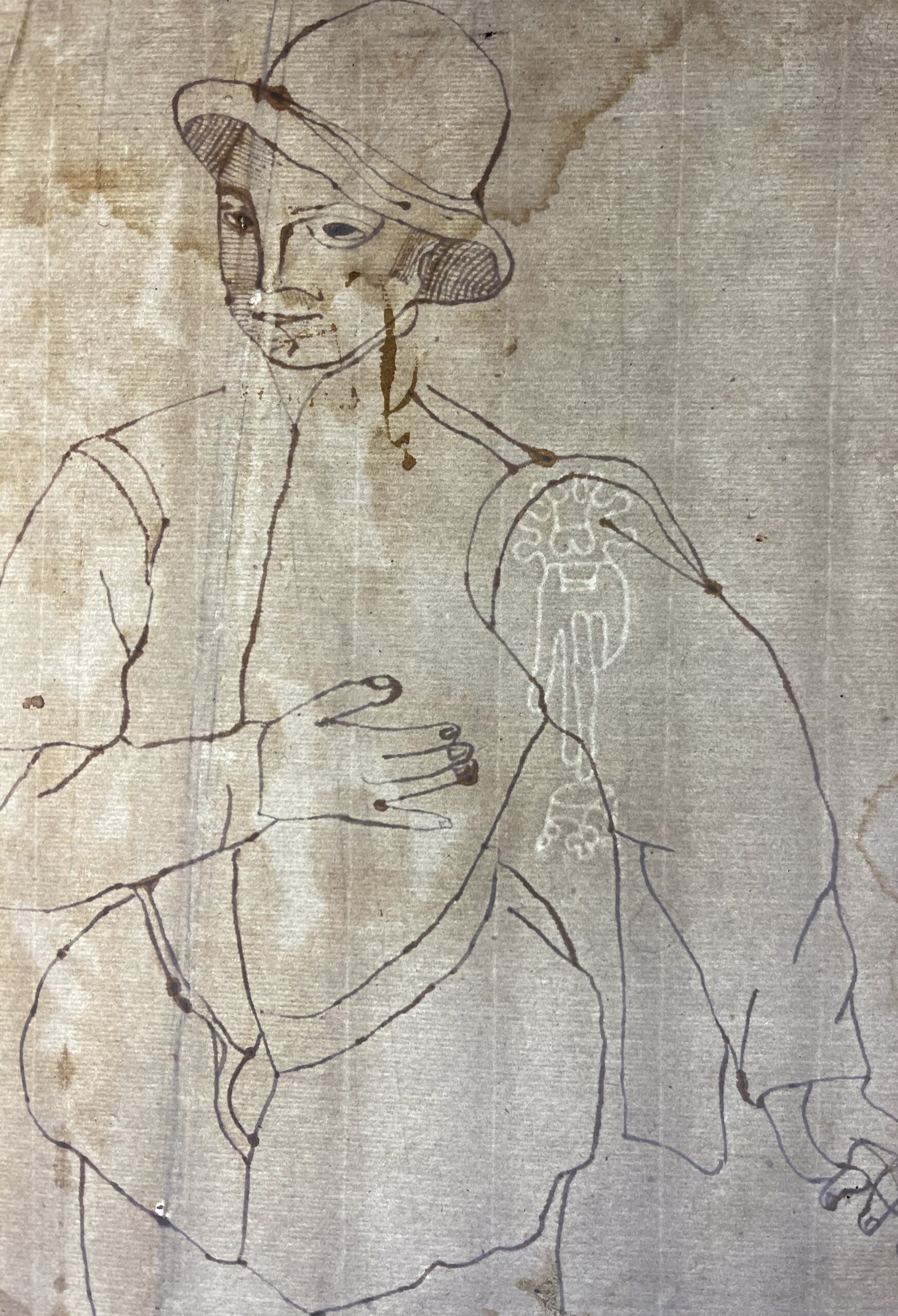
Southwest France circa 1540 – Original antique brown ink drawing depicting a male figure wearing a distinctive Renaissance costume, with a high rounded hat, narrow brim and voluminous sleeves. French School, sixteenth century.
Artculture6 presents this intriguing historical drawing on fine antique laid paper, associated with the artistic and cultural traditions of southwestern France during the Renaissance.
The work represents a standing male figure wearing a short garment with exceptionally ample sleeves and a characteristic high-crowned hat.
The drawing is executed in brown ink, using expressive outlines and a limited amount of cross-hatching.
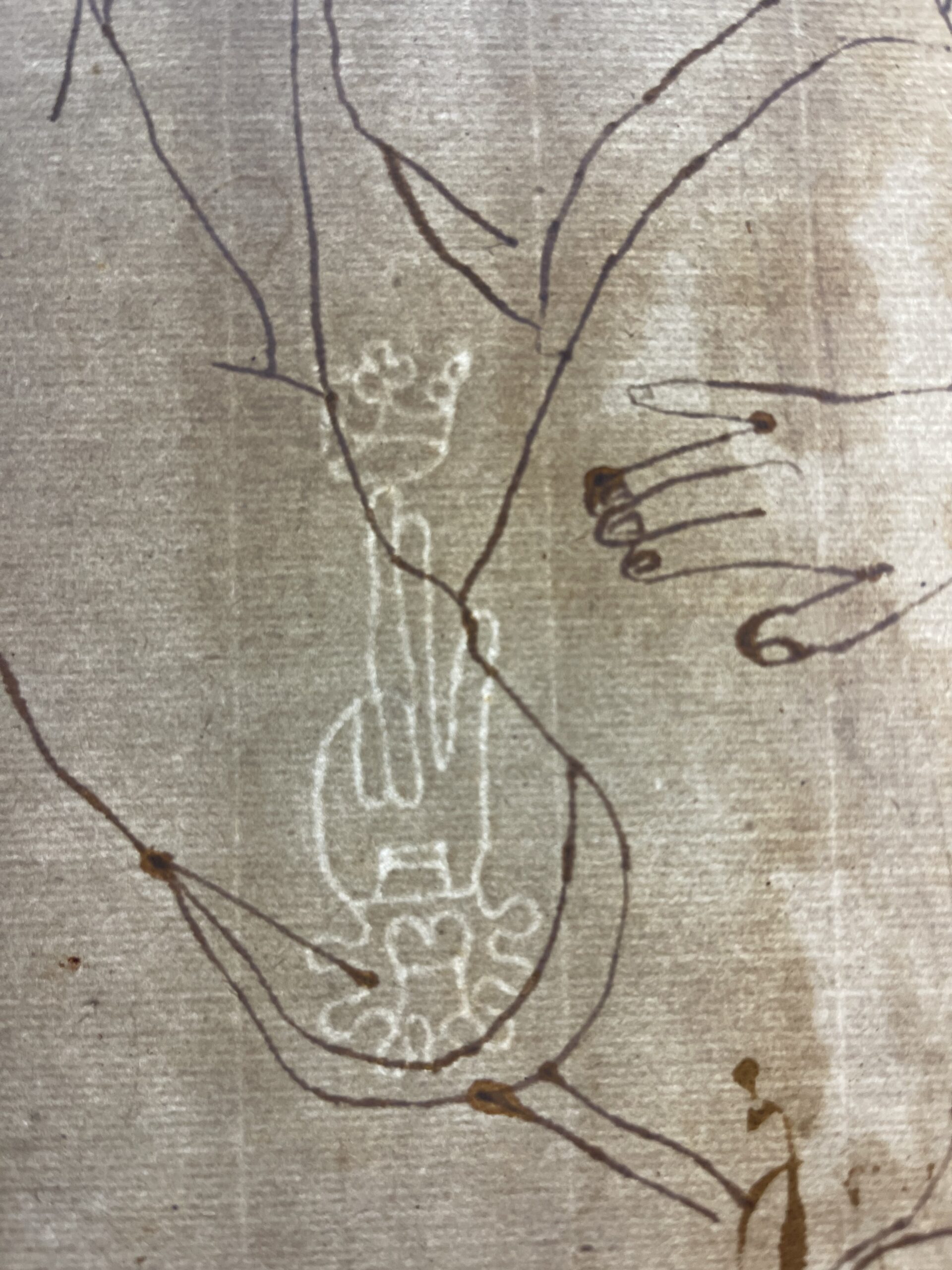
The sheet measures 30 × 21 cm and bears an interesting historical watermark representing a crowned hand of blessing or oath.
A comparison has been proposed with watermark number 11560 in the historical repertory of Charles-Moïse Briquet.
A MALE FIGURE IN RENAISSANCE COSTUME
The composition depicts a man standing in a slightly turned position.
His head is covered by a high, rounded hat with a narrow brim.
The face is rendered with expressive, economical lines, including almond-shaped eyes, an elongated nose and a small mouth.
Short engraved-looking strokes in brown ink give structure to the facial features and create darker areas beneath the hat.
The figure wears a short Renaissance garment with very wide sleeves.
One hand is raised towards the chest, while the other arm extends downwards.
The simplicity of the contours contrasts with the distinctive silhouette of the clothing.
The drawing possesses considerable interest as a historical representation of Renaissance male dress.
A HIGH ROUNDED HAT WITH A NARROW BRIM
The hat is one of the most characteristic features of this work.
It consists of a distinctly raised and rounded crown, surrounded by a narrow brim.
Unlike the wide, flat Renaissance caps familiar from many French and German portraits of the early sixteenth century, this hat presents a taller and more structured silhouette.
Its brim is clearly separated from the crown, while the lateral sections are emphasised through darker hatching.
The design offers interesting parallels with developments in Spanish and Catalan male fashion around the middle of the sixteenth century.
High-crowned hats with relatively narrow brims became increasingly fashionable in parts of the Iberian Peninsula around the 1540s.
This comparison provides one of the main stylistic arguments for the proposed dating of the represented costume.
VOLUMINOUS SLEEVES AND A DISTINCTIVE DOUBLET
Another remarkable feature is the construction of the shoulders.
The junction between the sleeves and the main body of the garment is indicated by two strongly defined curved lines.
The sleeves appear as substantial, almost independent volumes attached to a more closely fitted upper garment.
This construction recalls Renaissance clothing in which the sleeves could be separately made or attached to the doublet.
The lower section of the garment is comparatively short and rounded.
The overall silhouette may be compared with male clothing represented in French and Habsburg court portraits during the 1530s and 1540s.
The combination of ample sleeves, strongly marked shoulder attachments and a high-crowned hat makes this figure particularly interesting for the study of sixteenth-century costume.
SOUTHWESTERN FRANCE AND RENAISSANCE FASHION
Southwestern France occupied an important position in the cultural and commercial exchanges between France and the Iberian Peninsula.
During the sixteenth century, the regions around Toulouse and the Pyrenees maintained links with neighbouring Catalonia, Aragon and the territories of the Spanish monarchy.
Textiles, clothing styles and artistic models circulated across these regions.
The costume represented in the present drawing offers interesting parallels with the fashions associated with this wider Franco-Iberian environment.
The proposed geographical context is based on stylistic and documentary comparison rather than an inscription identifying the place where the work was executed.
AN ORIGINAL BROWN INK DRAWING
The work is executed in brown ink on fine laid paper.
The artist has concentrated on the contours and essential characteristics of the figure.
The face is described through a combination of flowing outlines and short hatching.
The hat is outlined with particular care, and the brim is emphasised by closely spaced lines.
The garments are represented with relatively few strokes, allowing their broad volumes and distinctive construction to remain clearly visible.
The simplified treatment of the hands, facial features and drapery gives the drawing an individual and expressive character.
It may be of particular interest to collectors researching historical figure studies and Renaissance clothing.
AN INTERESTING CROWNED HAND WATERMARK
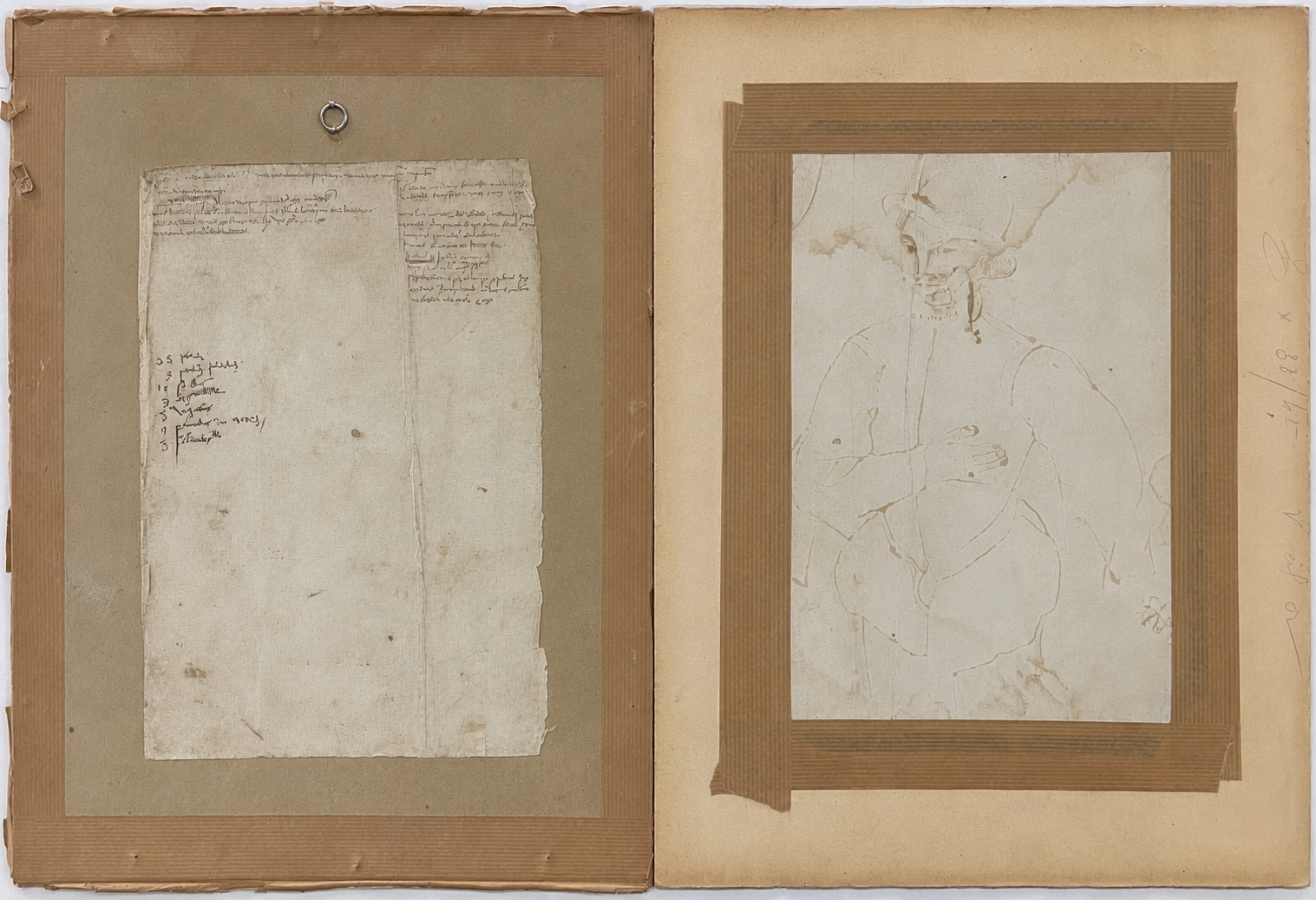
The paper bears a watermark showing a hand of blessing or oath surmounted by a crown.
This motif belongs to a recognised family of historical European watermarks.
A comparison has been proposed with Briquet watermark number 11560, a type associated with early sixteenth-century paper.
The watermark is visible in photographs taken with transmitted light.
Its presence provides an important material feature for the study of the paper.
The exact correspondence with the Briquet reference remains subject to specialist comparison.
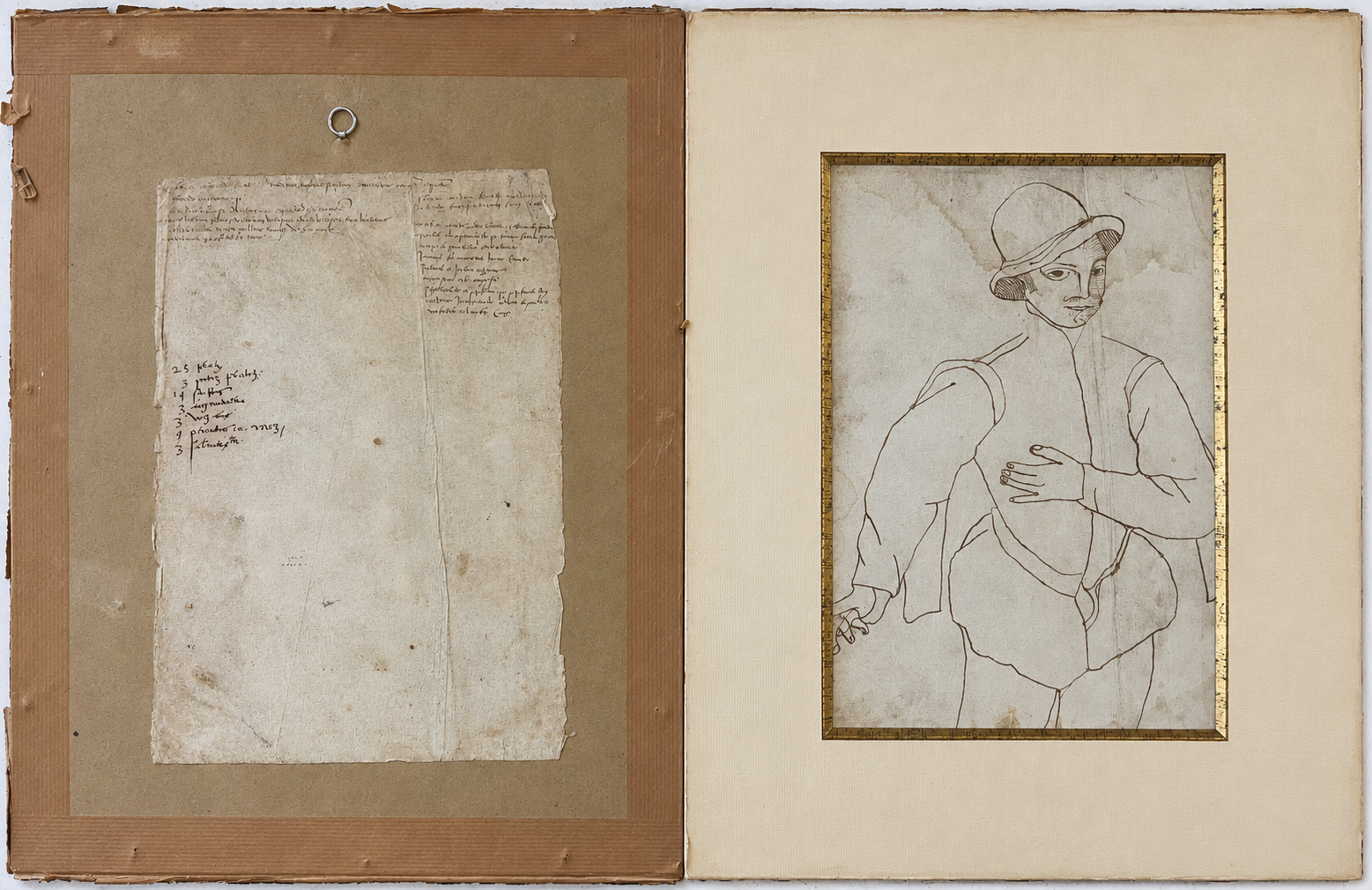
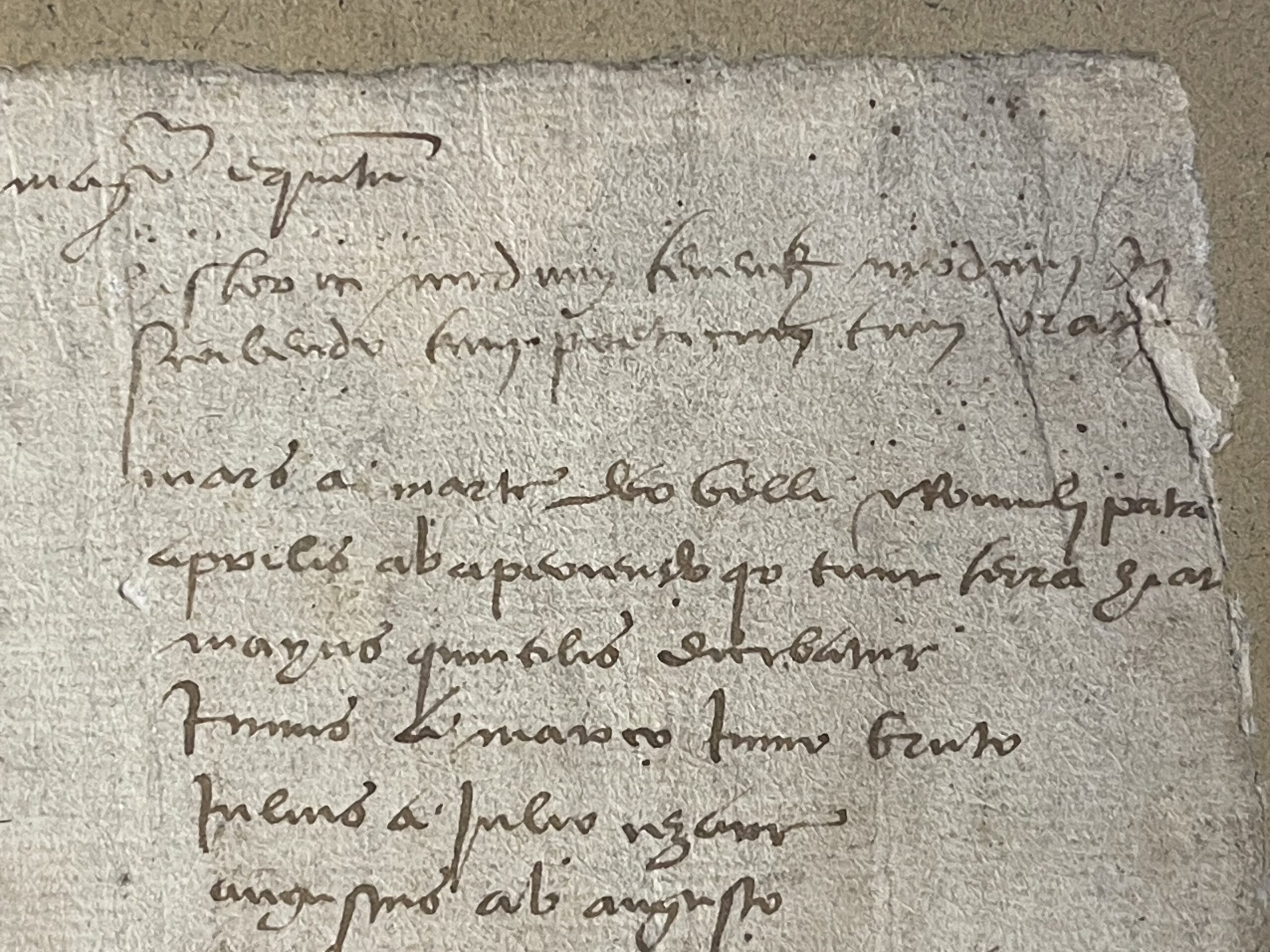
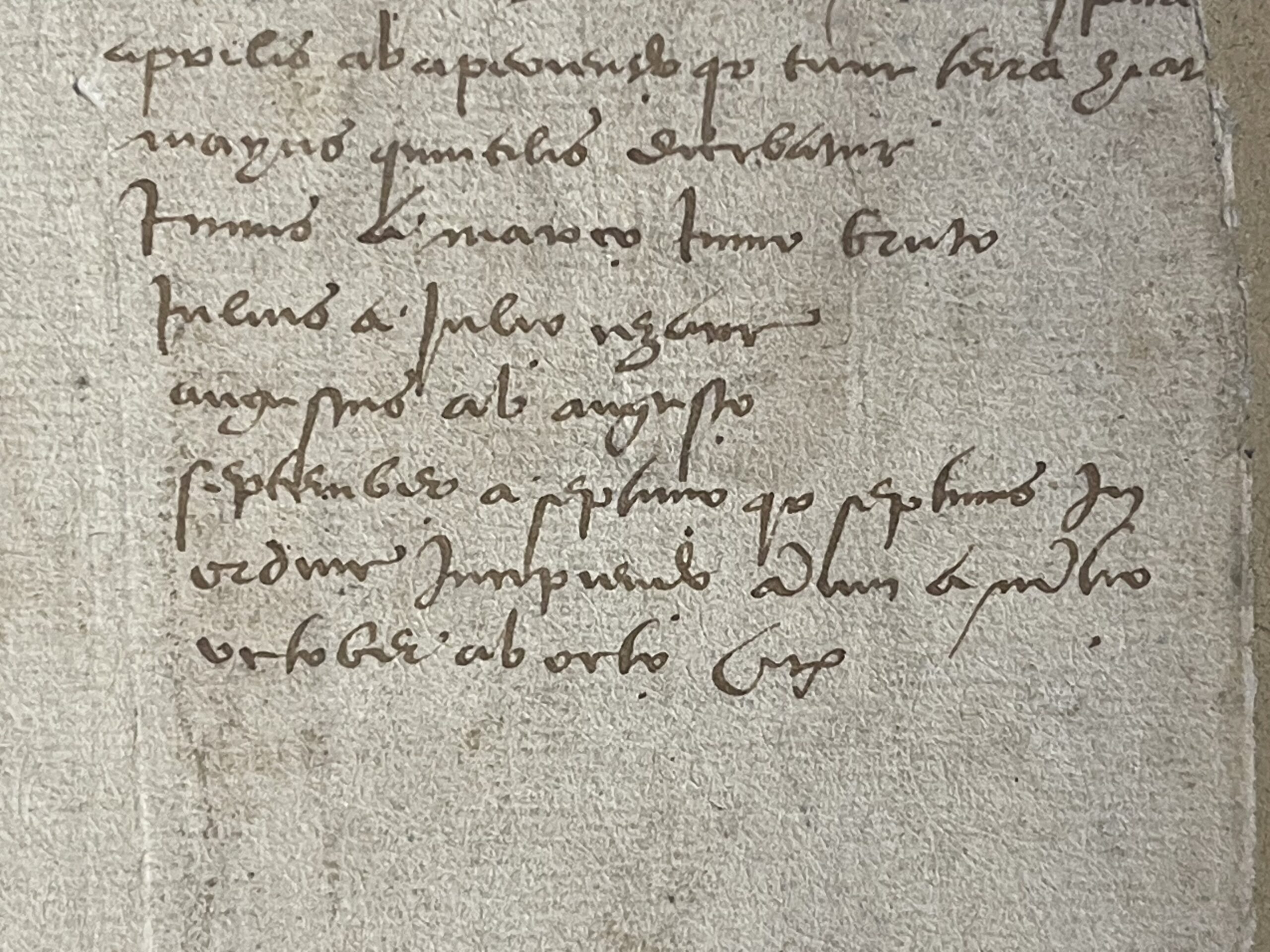
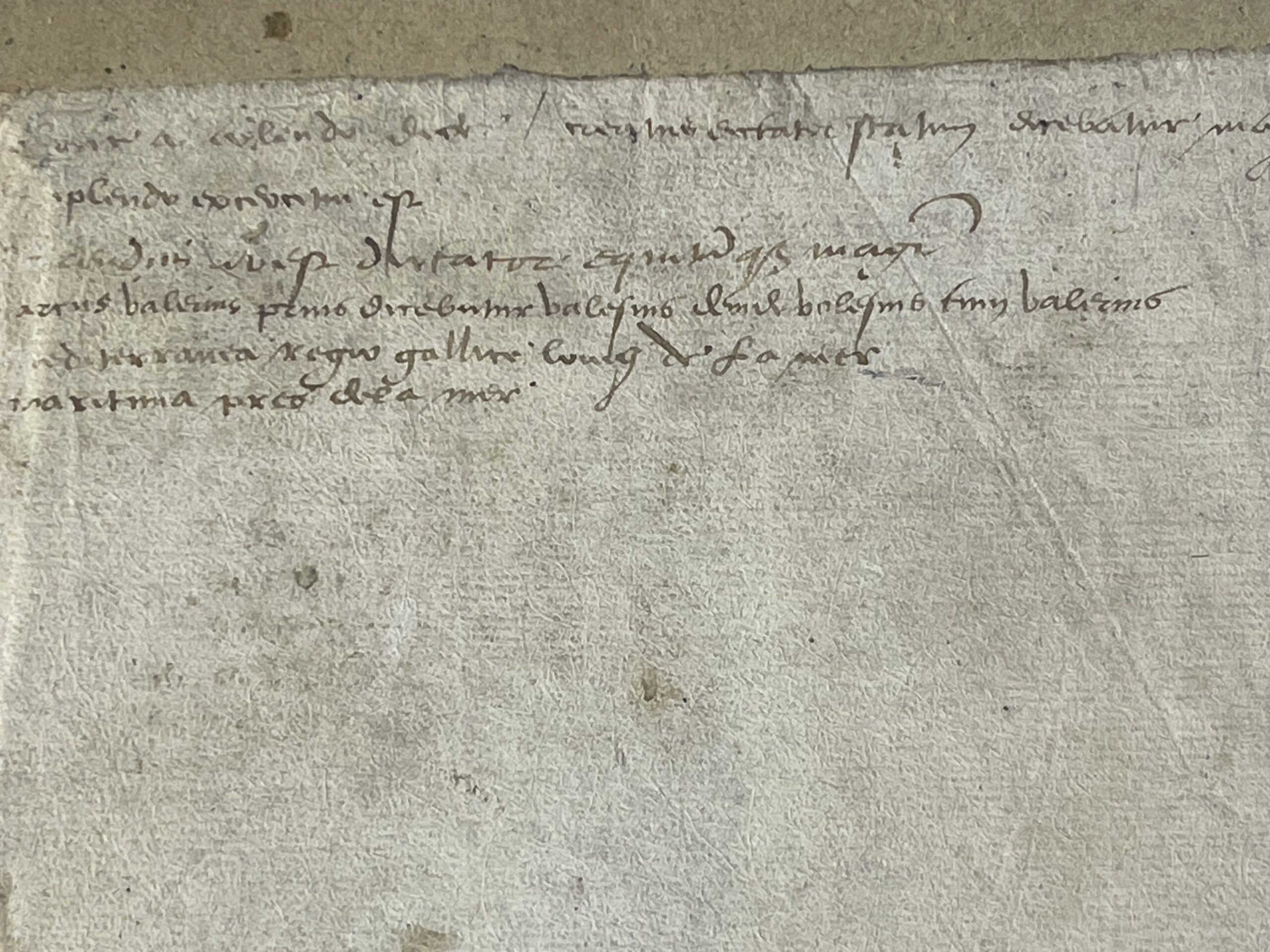
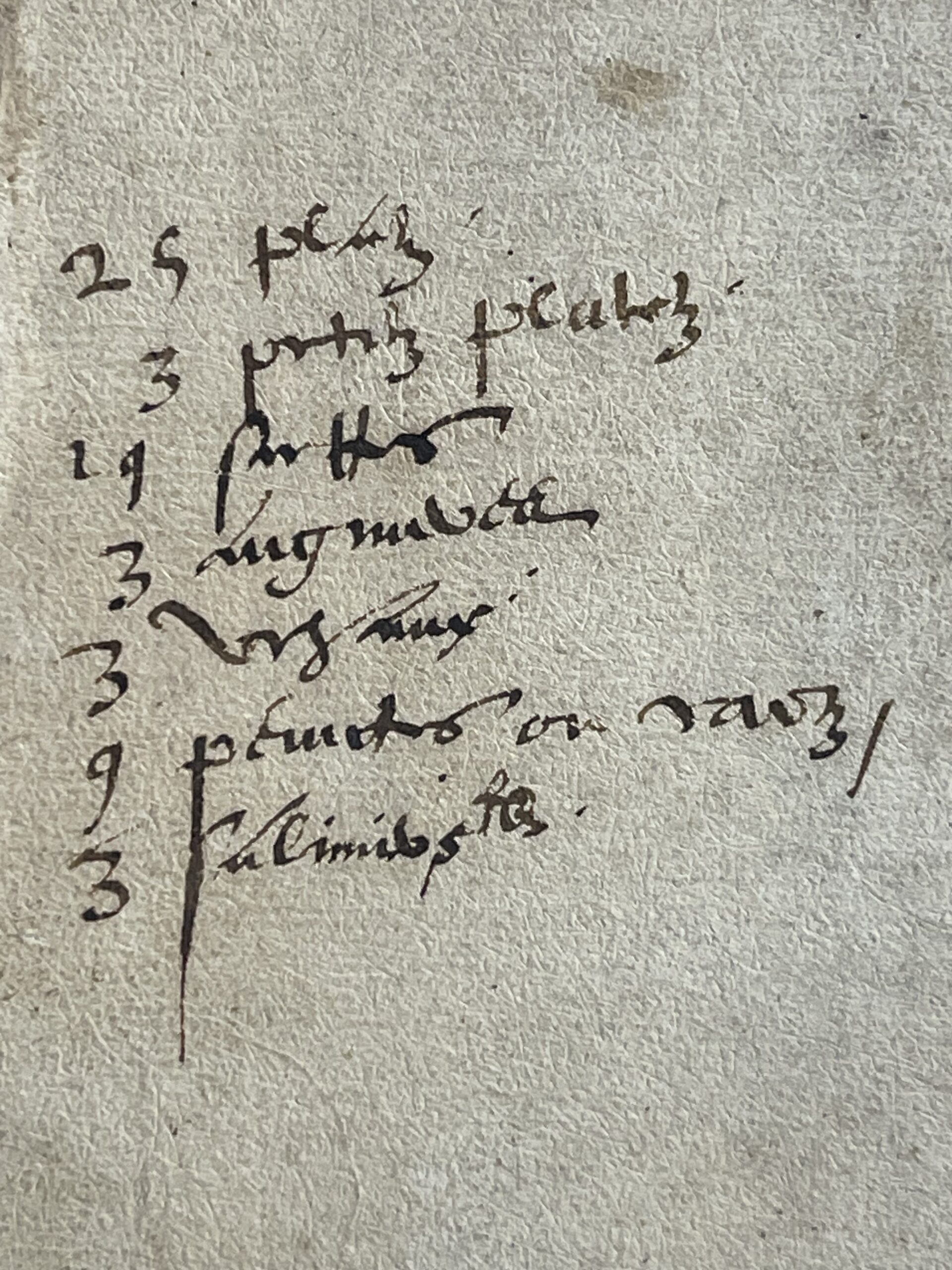
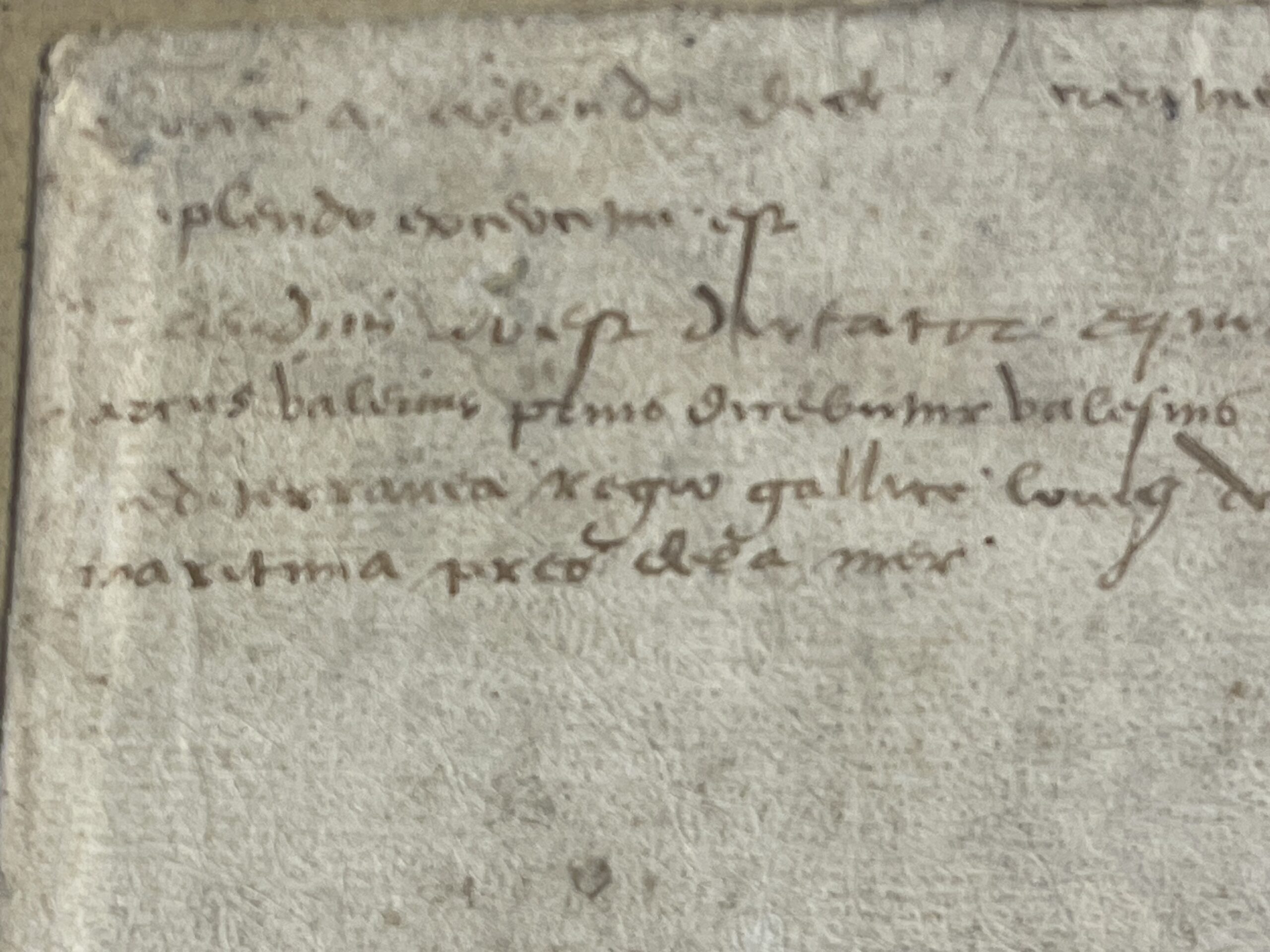
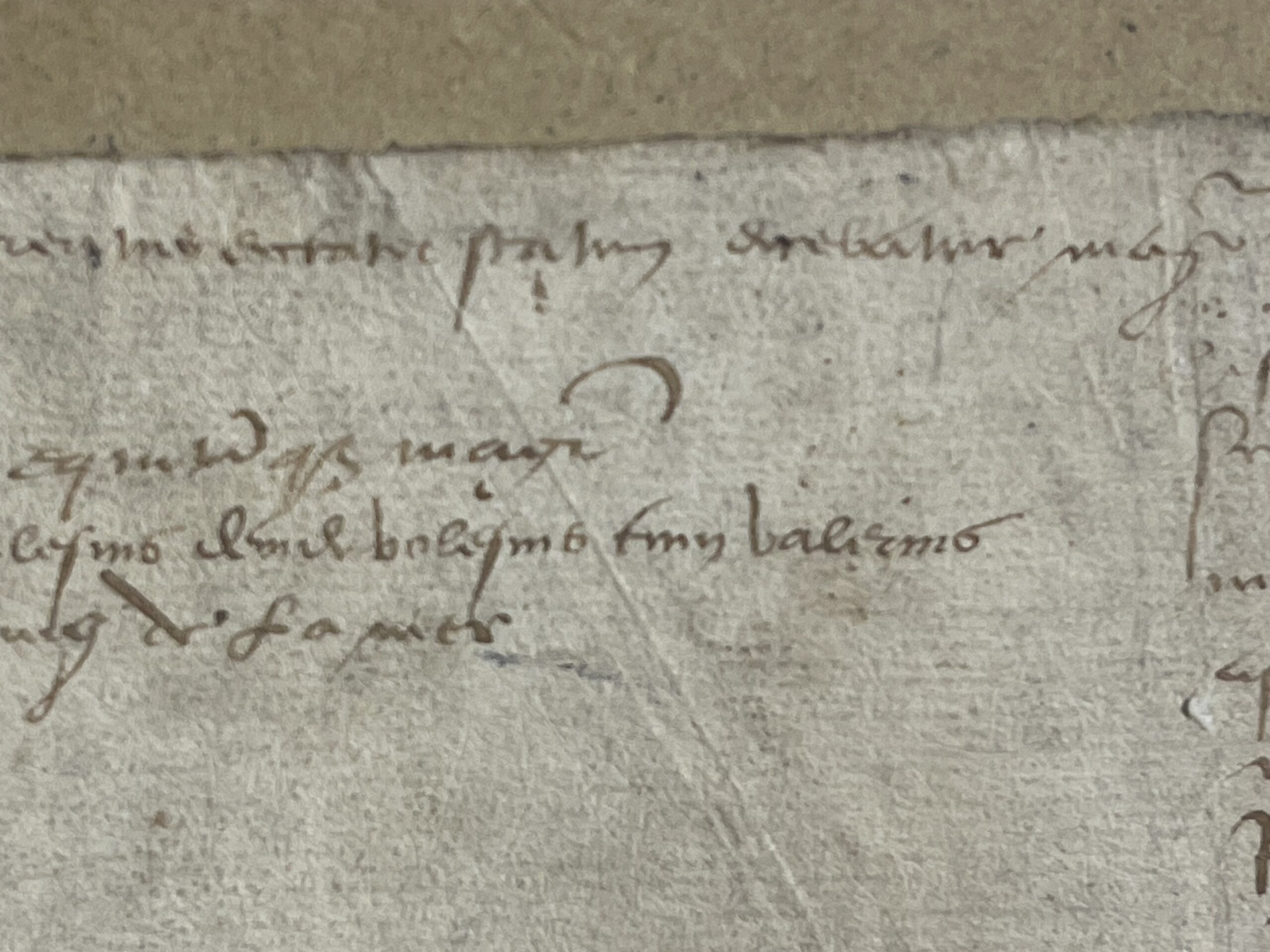
AN OLD MANUSCRIPT ON THE REVERSE OF THE MOUNT
The existing mounting includes an additional historical document attached to its reverse.
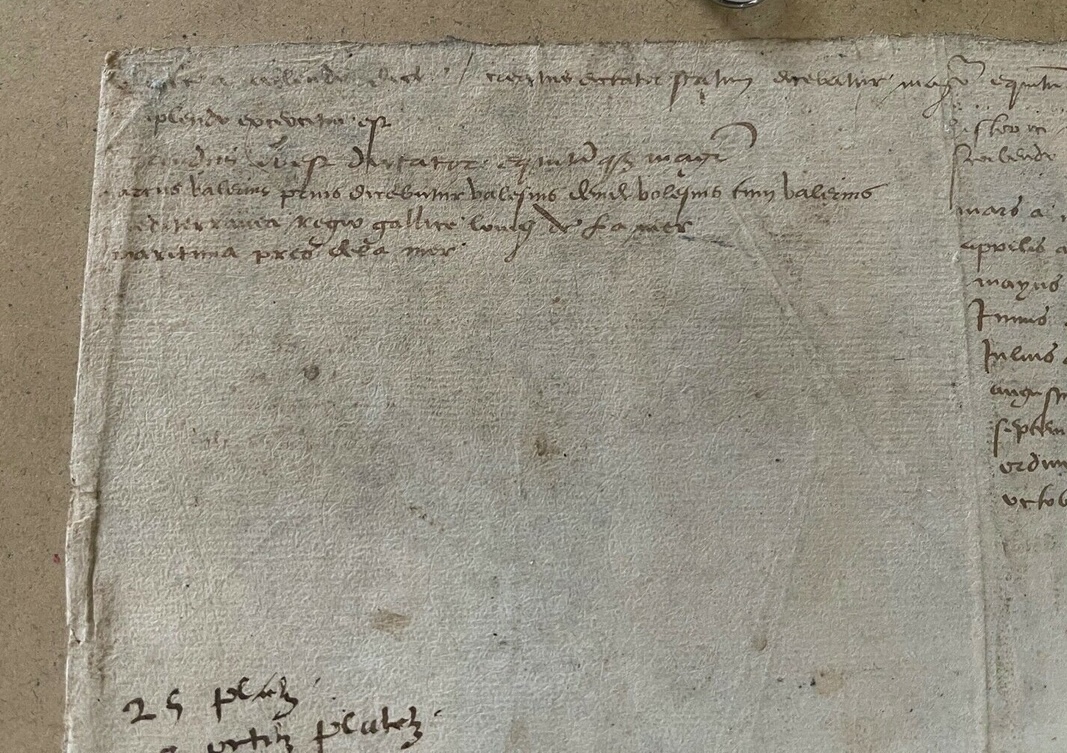
This separate manuscript is written in brown ink, in an old cursive hand containing numerous abbreviations.
Several lines of writing and numerical entries can be distinguished.
The manuscript is not written on the reverse of the drawing itself. It is a separate sheet attached to the reverse of the old mounting board.
Its historical relationship with the drawing has not been established.
The manuscript is included as part of the existing ensemble.
A HISTORICAL WORK OF ART WITH RESEARCH POTENTIAL
The drawing brings together several features of interest to collectors and historians:
A Renaissance male costume with a distinctive hat and voluminous sleeves.
An expressive original drawing in brown ink.
Fine antique laid paper with a historical crowned-hand watermark.
An old mounting preserving a separate handwritten document.
The combination of costume history, paper studies and early drawing techniques makes this work an intriguing object for further investigation.
DIMENSIONS AND TECHNICAL DETAILS
Country: France
Proposed region: Southwestern France
Artistic school: French School, 16th century
Proposed date: Circa 1540
Subject: Male figure in Renaissance costume
Technique: Original brown ink drawing
Paper: Fine antique laid paper
Watermark: Crowned hand of blessing or oath
Comparative reference: Briquet 11560
Sheet dimensions: 30 × 21 cm
Artist: Unidentified
Presentation: Existing old mounting
Associated document: Separate handwritten manuscript attached to the reverse of the mount


Avis
Il n’y a pas encore d’avis.