Description
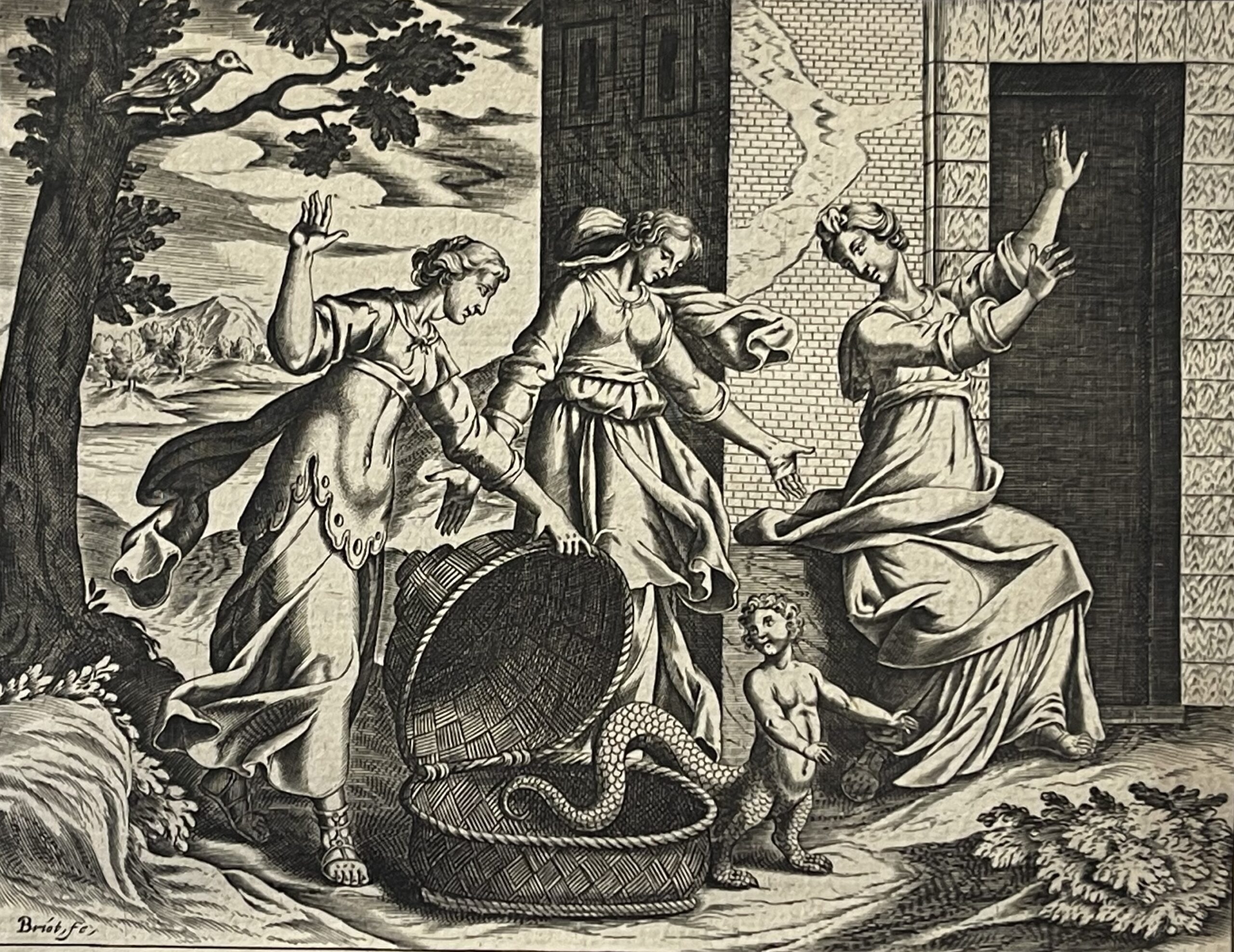
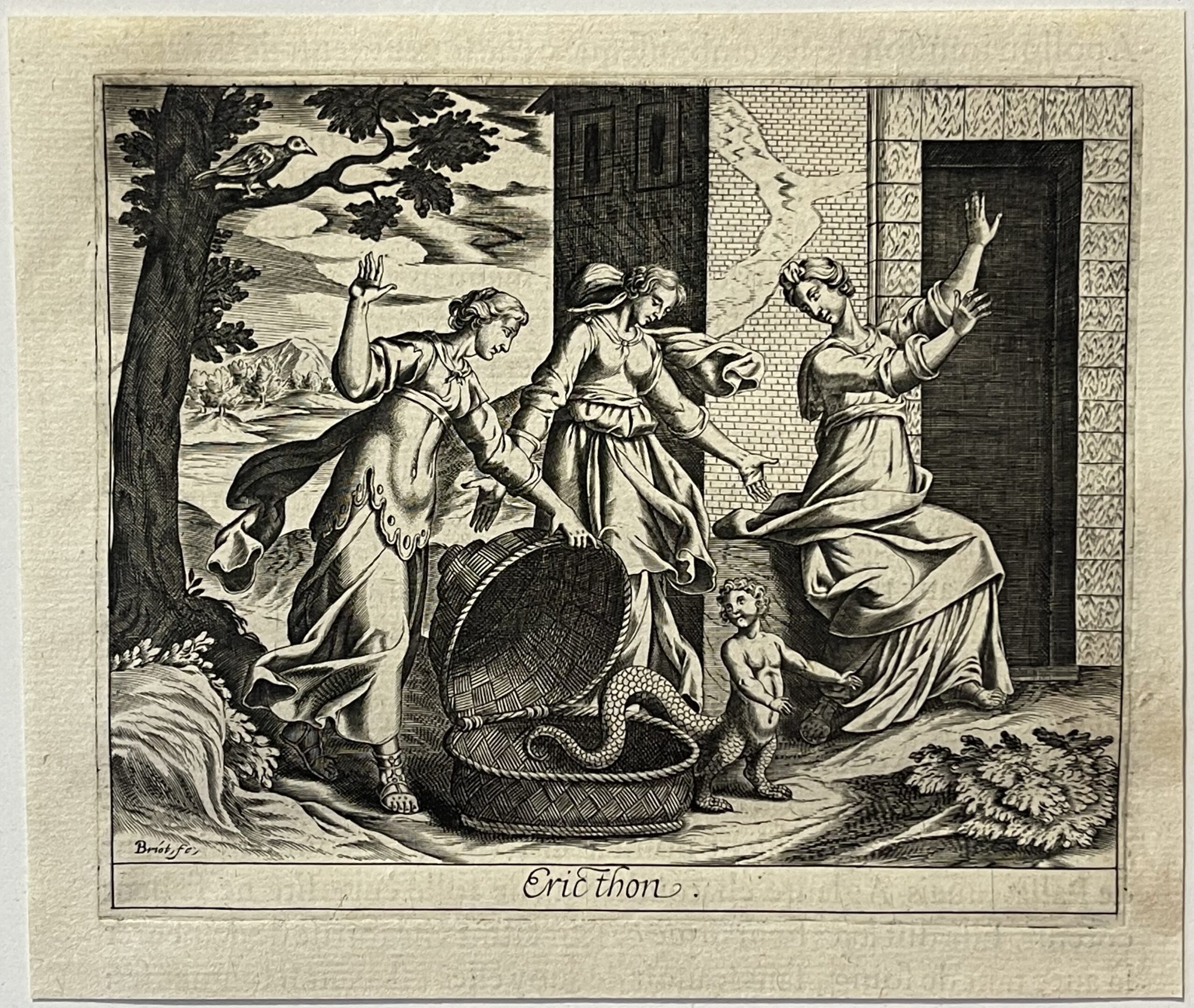
Erichthonius Greek mythology engraving, an original copperplate print dating from 1619, depicting the extraordinary discovery of the infant Erichthonius by the three daughters of Cecrops, legendary king of Athens.
The original engraved title reads Ericthon.
This remarkable early 17th-century composition illustrates one of the most fascinating episodes of ancient Greek mythology, combining divine intervention, human curiosity and supernatural transformation.
The Legend of Erichthonius
According to Greek mythology, Erichthonius was born under extraordinary circumstances involving the god Hephaestus, the goddess Athena and Gaia, the personification of the Earth.
Athena took the mysterious child into her protection and concealed him inside a woven basket.
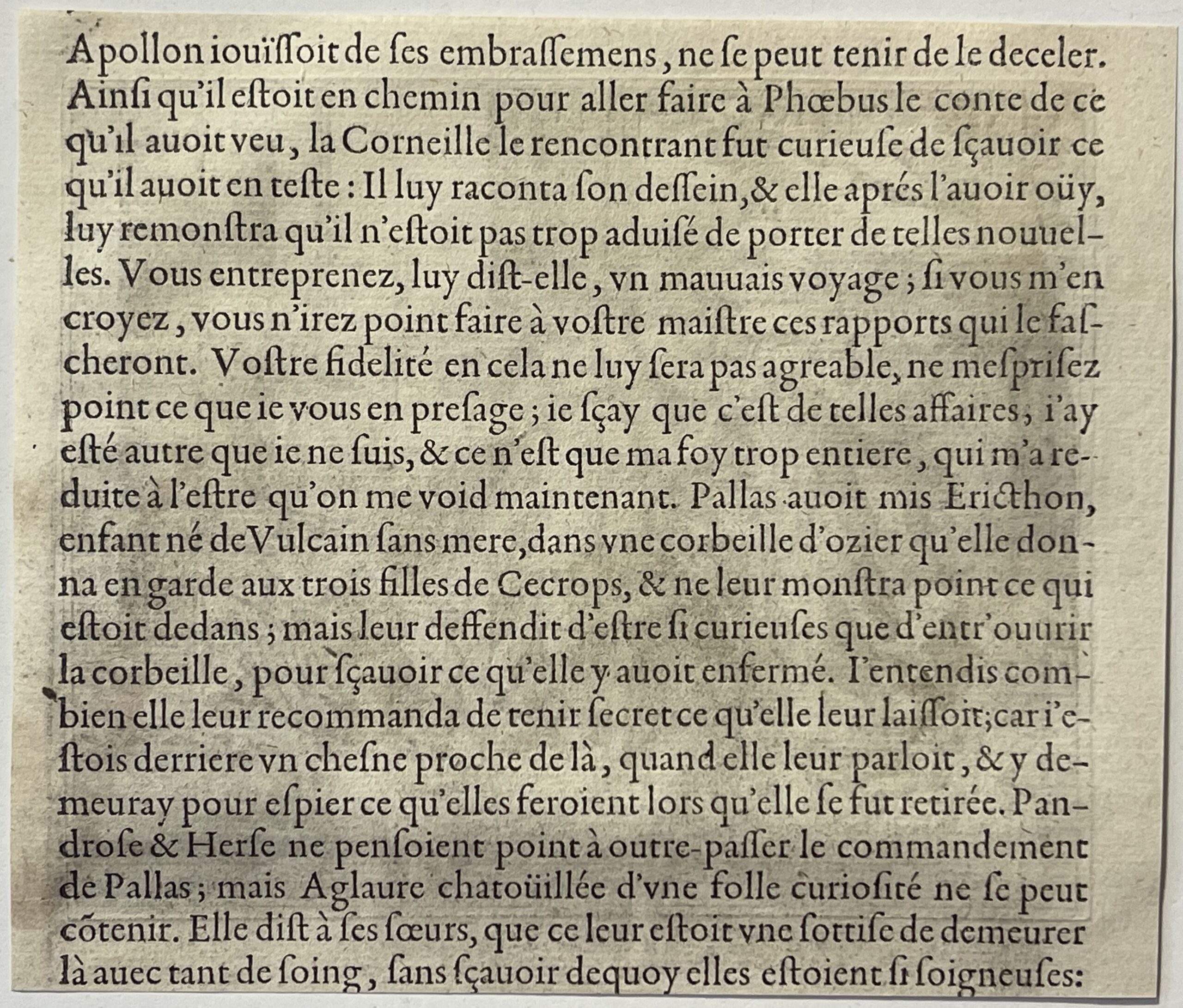
She entrusted the basket to the three daughters of Cecrops, legendary king of Athens: Aglauros, Herse and Pandrosos.
The goddess strictly forbade the young women from opening the basket or examining its contents.
However, curiosity overcame the divine prohibition.
When the basket was opened, the sisters discovered the infant Erichthonius accompanied by a serpent.
In certain ancient traditions, Erichthonius himself was represented with a serpentine lower body, emphasising his extraordinary origin and his connection with the Earth.
The terrifying discovery led to tragic consequences for the daughters of Cecrops.
Erichthonius subsequently became one of the legendary rulers of Athens and was associated with the city’s ancient religious traditions.
A Remarkable Mythological Composition
The engraving depicts the dramatic moment when the three young women discover the mysterious contents of the basket.
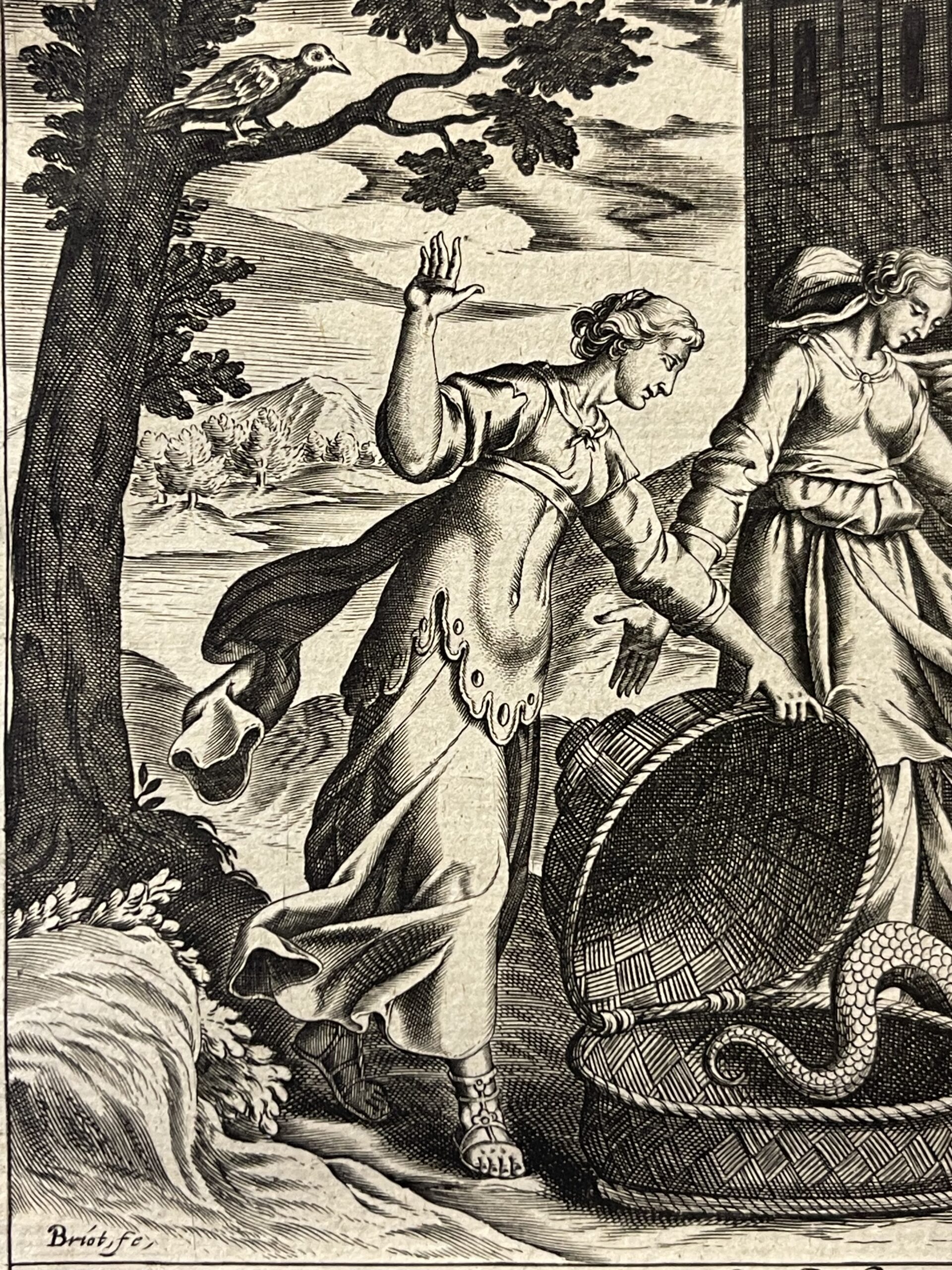
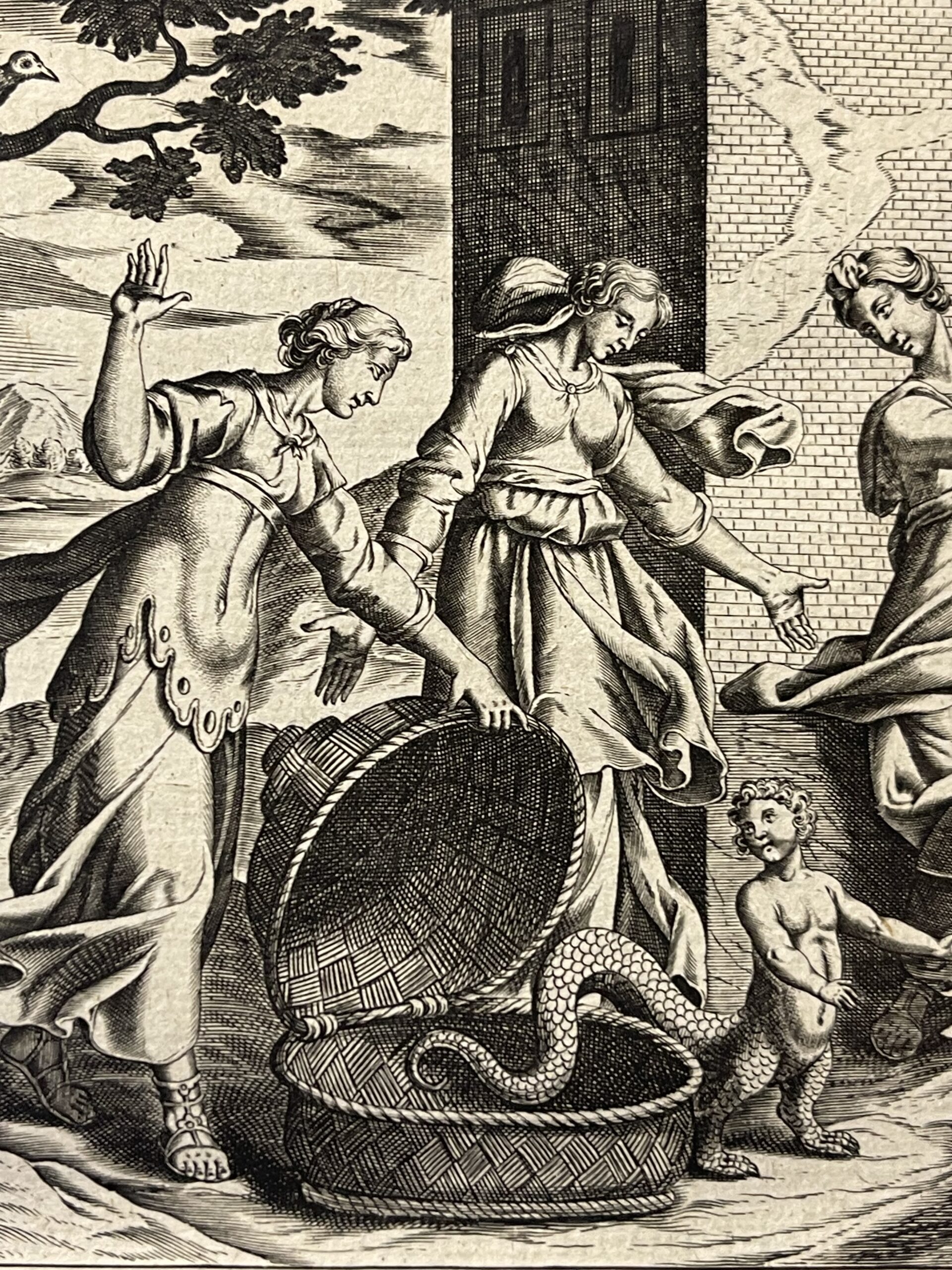
At the centre, a standing female figure lifts the lid of a large wicker basket.
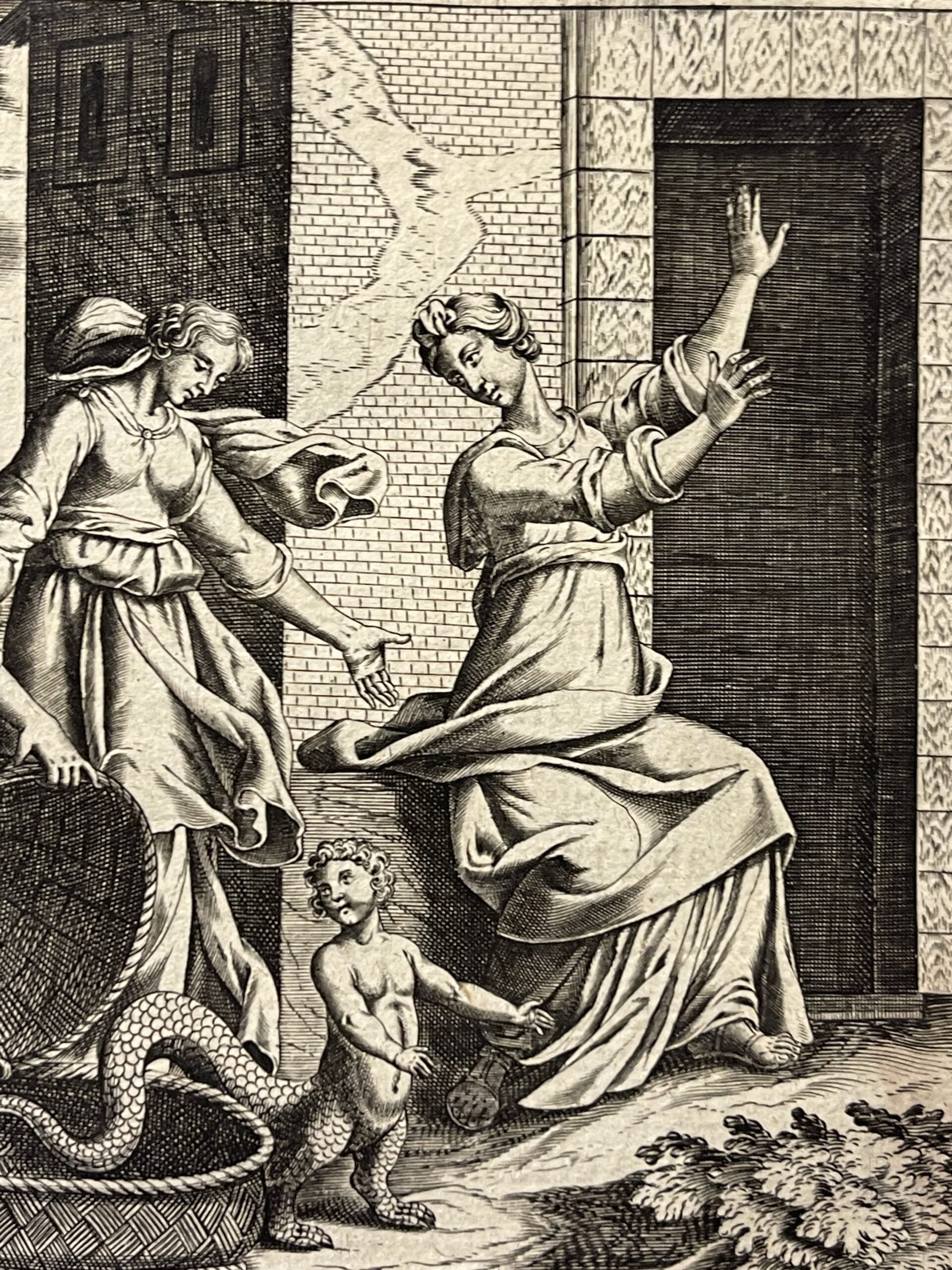
Her companions react with astonishment, their expressive gestures creating a lively and theatrical composition.
In front of the basket, the infant Erichthonius appears as a hybrid creature, with a human upper body and a serpent-like lower body.
The surrounding figures wear flowing classical garments, rendered through carefully engraved folds and delicate shading.
The scene takes place near a monumental architectural structure, with a doorway and decorated masonry visible on the right.
To the left, a large tree frames the composition, while a distant landscape of mountains and water extends towards the horizon.
A bird perched on a branch introduces an additional naturalistic detail.
Early 17th-Century Mythological Engraving
During the Renaissance and early Baroque period, ancient Greek and Roman mythology provided European artists with a rich source of dramatic and imaginative subjects.
The legends of Athens, its mythical kings and the extraordinary events surrounding the gods were especially well suited to narrative compositions.
Copperplate engraving allowed artists to reproduce these scenes with exceptional precision.
Fine engraved lines and carefully arranged crosshatching were used to create volume, movement, architectural detail and atmospheric effects.
The present composition demonstrates this tradition through its animated figures, detailed costumes and carefully constructed setting.
An Attractive Antique Mythological Print
This original 1619 engraving is particularly interesting for collectors of early European prints, Greek mythology, classical history and antique narrative engravings.
Its unusual subject, expressive figures and finely executed composition make it an attractive example of early 17th-century graphic art.
Dimensions
- Sheet: 15.6 × 13.3 cm
- Engraved image: 13.5 × 11 cm
Condition
An antique impression displaying the natural patina of the paper. Beautiful preservation of the engraved composition and original inscriptions.

Avis
Il n’y a pas encore d’avis.