
Description
SAINT ANDREW LED TO HIS CRUCIFIXION – ROBERT VAN AUDENAERD – AFTER DOMENICHINO
Large Antique Roman Baroque Etching and Engraving – Late 17th to Early 18th Century
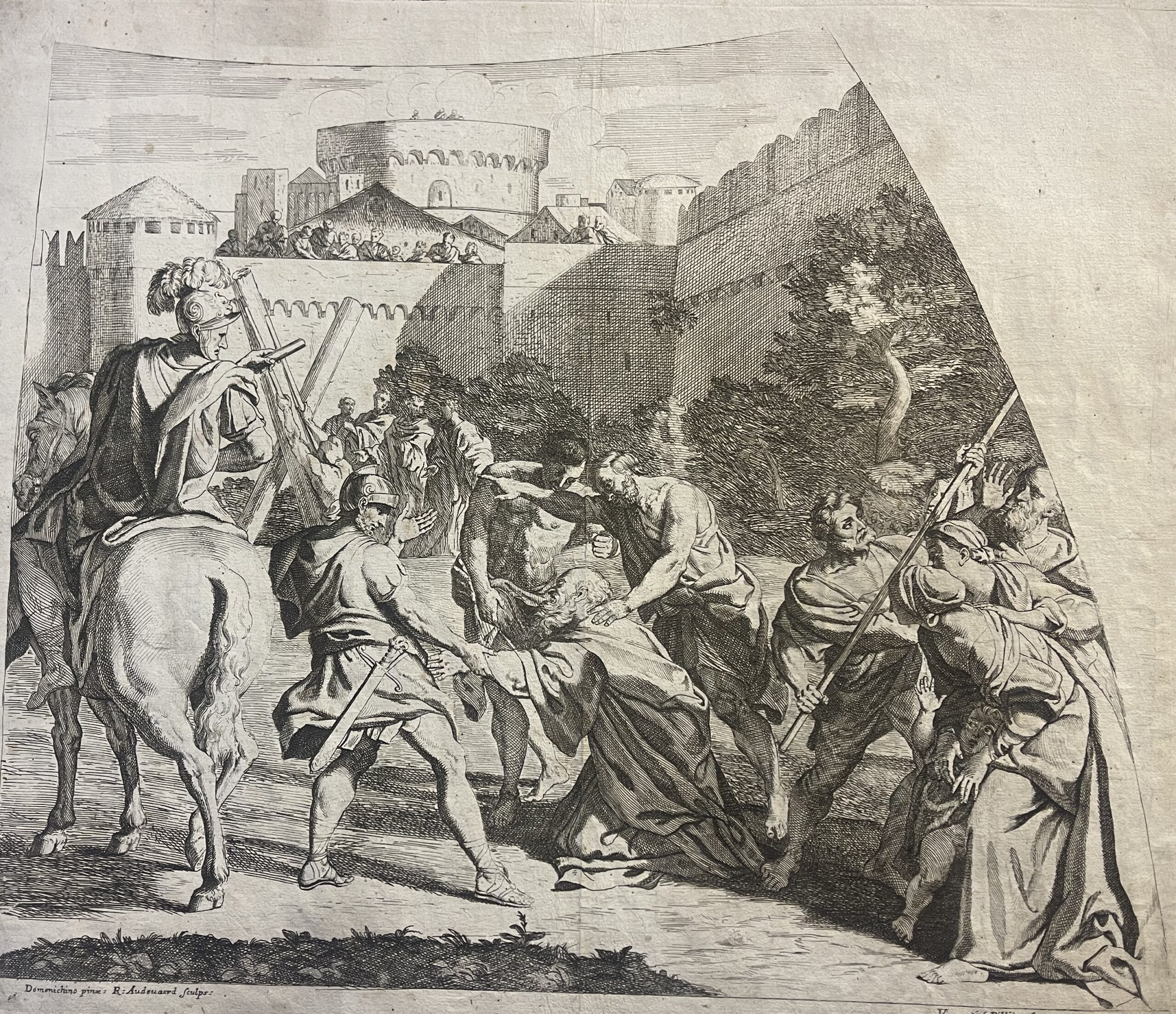
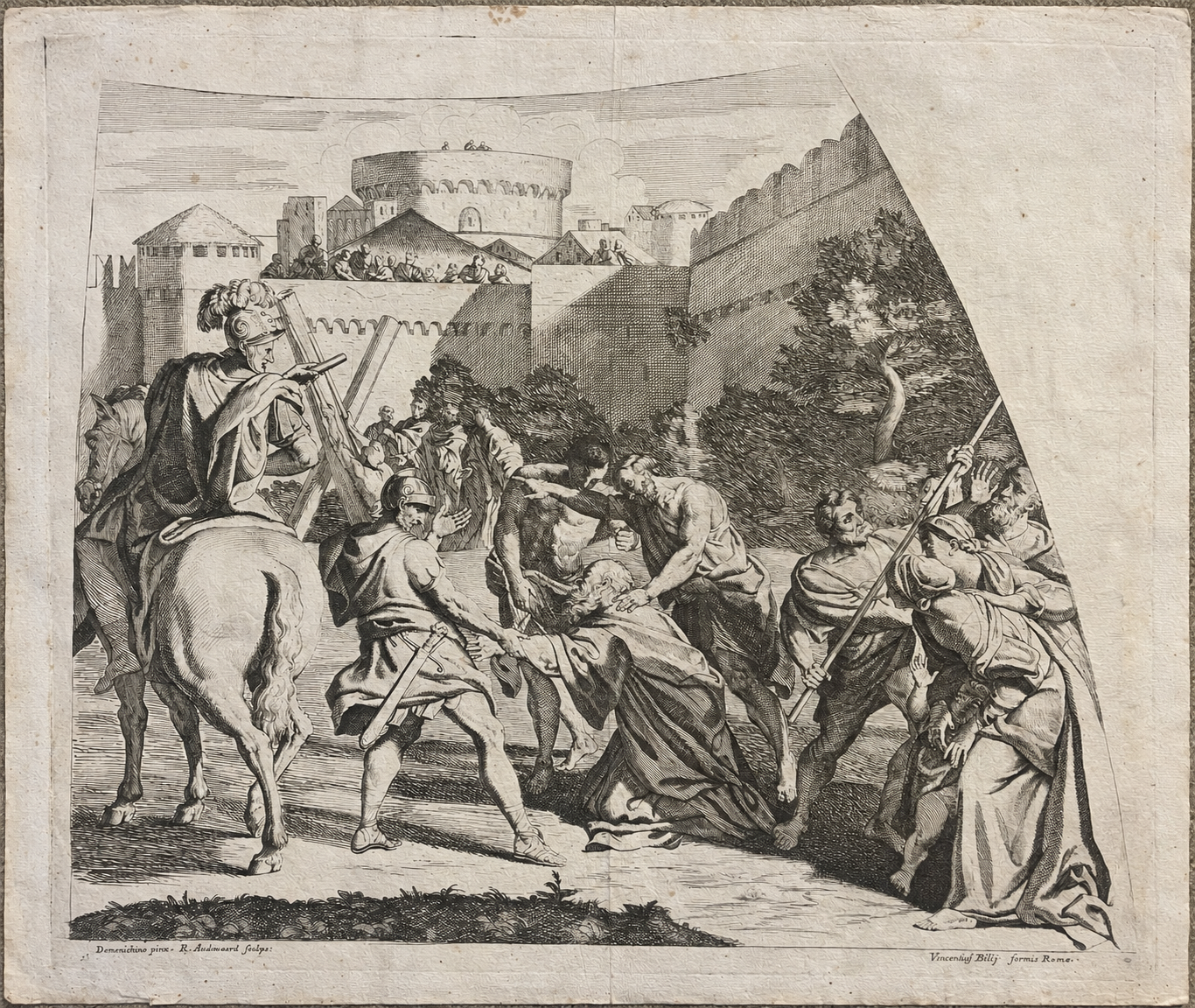
An impressive large-format antique engraving depicting Saint Andrew being led to the place of his martyrdom, engraved by Robert van Audenaerd (1663–1743) after the celebrated Italian Baroque painter Domenico Zampieri, known as Domenichino (1581–1641).
Published in Rome by Vincenzo Billi, this remarkable print reproduces a composition from Domenichino’s celebrated fresco cycle devoted to the life and martyrdom of Saint Andrew in the church of Sant’Andrea della Valle.
SAINT ANDREW LED TO HIS MARTYRDOM
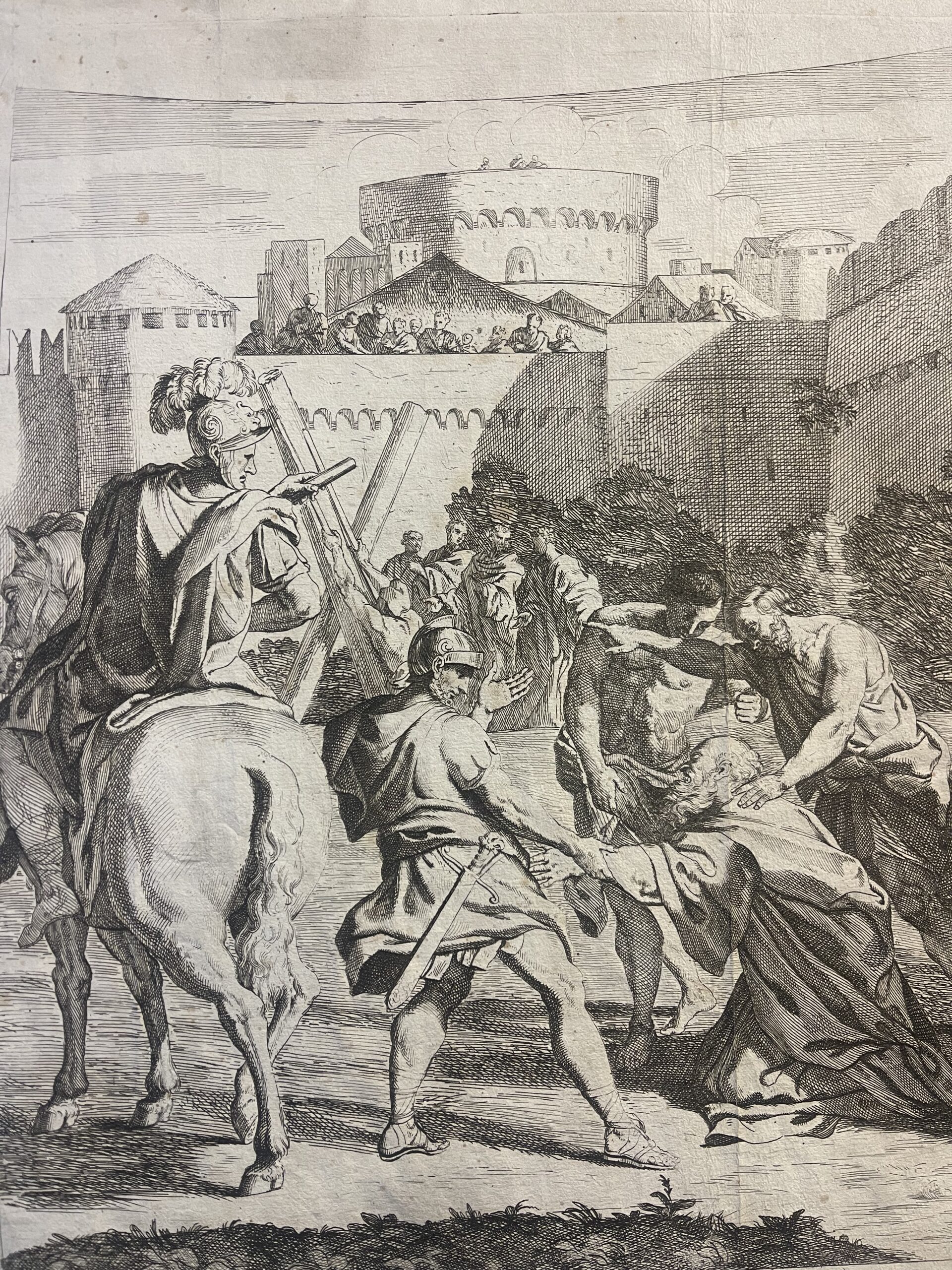
The composition represents the apostle Andrew being escorted towards his execution, surrounded by Roman soldiers and a gathering of witnesses.
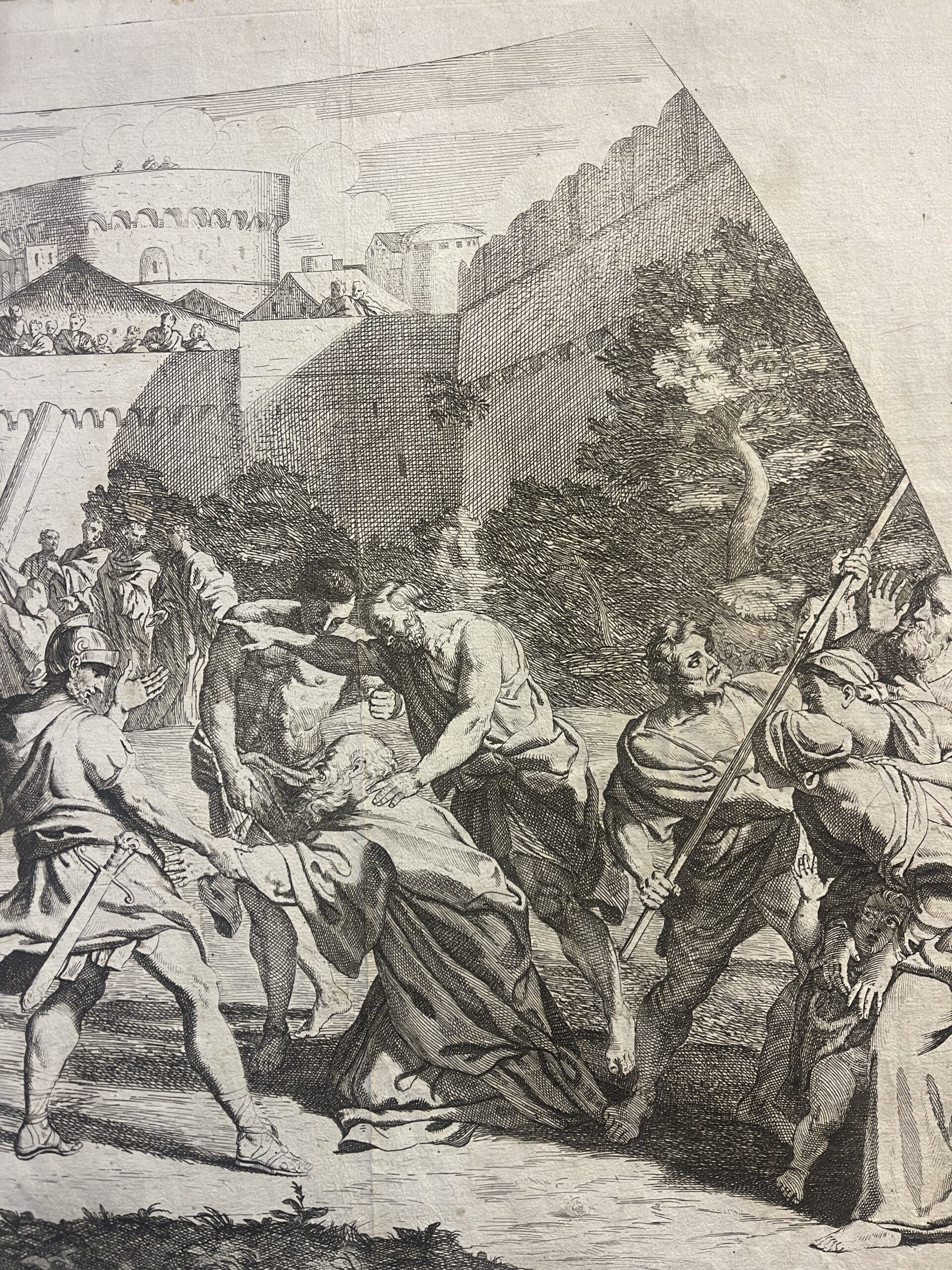
In the foreground, the elderly saint appears supported by several figures, his body bent forward in a dramatic gesture.
On the left, a Roman cavalry officer wearing an elaborate plumed helmet observes the scene from horseback, while armed soldiers stand nearby.
On the right, women and children express grief and distress as the procession advances.
Behind the figures rises a monumental fortified city, with massive walls, towers and crowded buildings.
The carefully constructed composition, expressive gestures and elaborate draperies are characteristic of the grand Italian Baroque tradition.
THE MARTYRDOM OF SAINT ANDREW
According to Christian tradition, Saint Andrew, one of the twelve apostles of Jesus Christ, was condemned to crucifixion in Patras, Greece.
He is traditionally associated with the X-shaped cross that bears his name.
The present engraving depicts the procession towards his execution rather than the crucifixion itself.
The dramatic narrative formed part of an important cycle of religious paintings devoted to the apostle’s life and martyrdom.
DOMENICHINO (1581–1641)
Domenico Zampieri, known as Domenichino, was one of the leading Italian painters of the seventeenth century.
Born in Bologna, he became an important representative of the classical tradition within Italian Baroque painting.
His frescoes for the church of Sant’Andrea della Valle in Rome, executed between 1623 and 1627, are among his most celebrated achievements.
The Saint Andrew cycle demonstrates his mastery of large-scale religious narrative, monumental architecture and expressive human figures.
ROBERT VAN AUDENAERD (1663–1743)
Robert van Audenaerd was a Flemish painter and engraver born in Ghent.
He spent many years working in Rome, where he studied under the influential painter Carlo Maratta.
His engravings after important Italian masters were admired for their precision, accomplished technique and ability to reproduce complex compositions.
Combining etching and engraving, Audenaerd achieved a rich variety of engraved lines, particularly suited to monumental religious scenes.
ROMAN PUBLICATION AND ORIGINAL INSCRIPTIONS
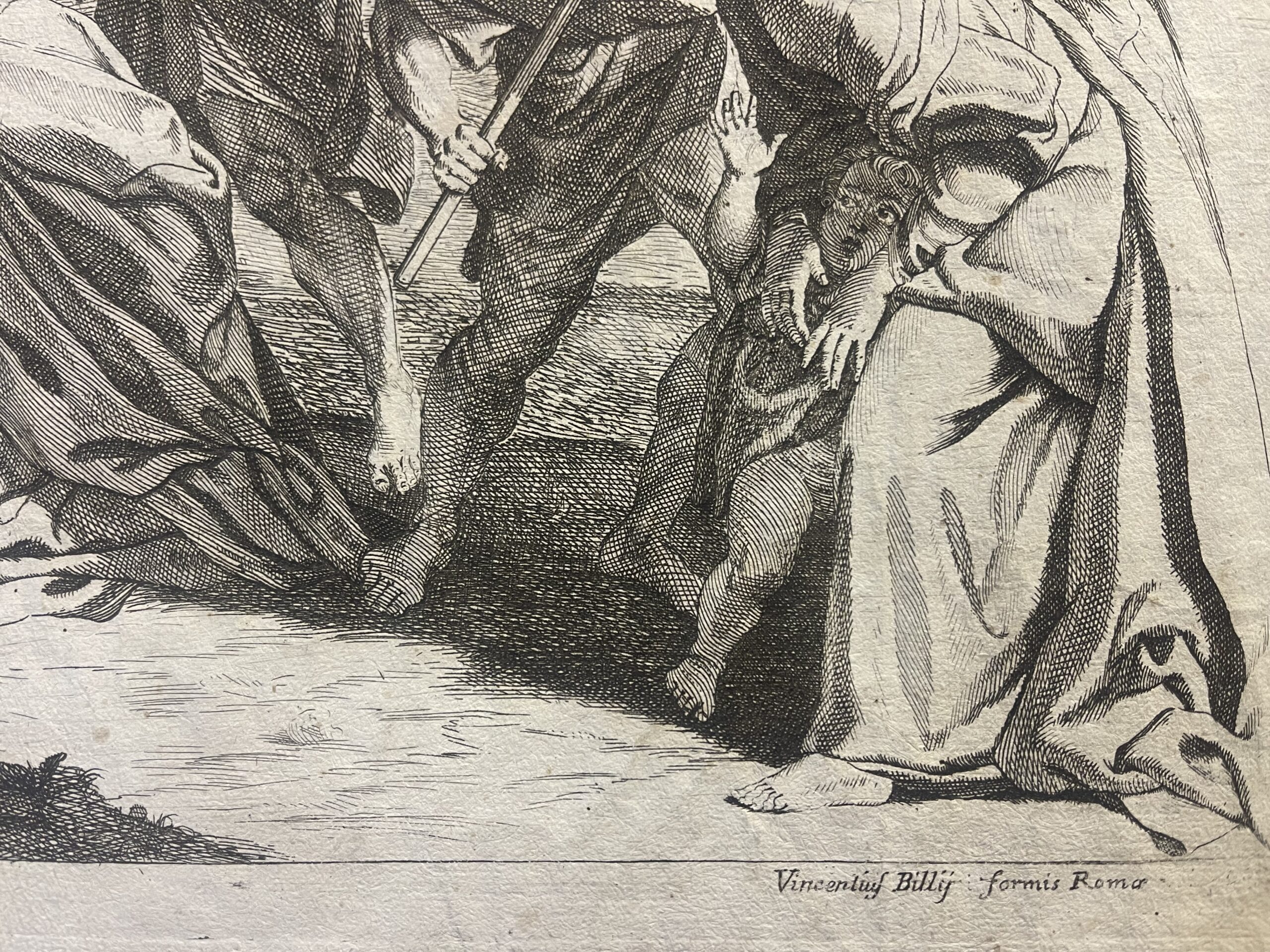
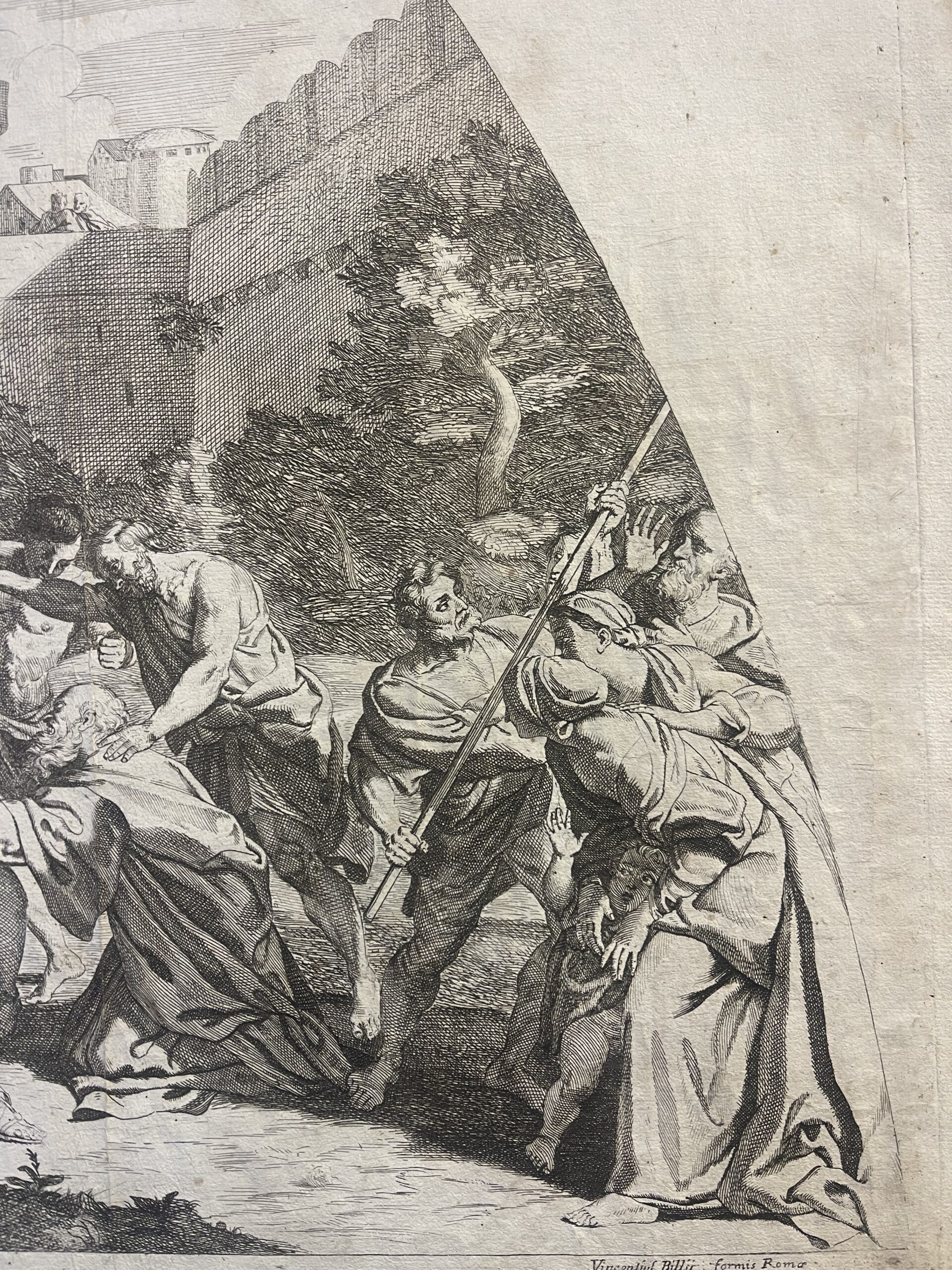
The lower margin bears the names of the original painter, engraver and Roman publisher:
Domenichino pinx.
R. Audenaerd Sculps.
Vincentius Billij formis Roma.
These inscriptions identify Domenichino as the painter of the original composition, Robert van Audenaerd as the engraver and Vincenzo Billi as the Roman publisher.
The same composition is represented in the collection of the Rijksmuseum, Amsterdam, and is recorded in historical catalogues of European engravings.
DETAILS
Subject: Saint Andrew Led to His Crucifixion.
Engraver: Robert van Audenaerd (1663–1743).
After: Domenico Zampieri, called Domenichino (1581–1641).
Publisher: Vincenzo Billi, Rome.
Date: Late 17th to early 18th century.
Technique: Etching and engraving.
Paper: Antique laid linen paper.
Sheet dimensions: 47.5 × 40.5 cm.
Plate mark dimensions: 44.5 × 37.8 cm.
Origin: Rome, Italy.
Period: Baroque.


Avis
Il n’y a pas encore d’avis.