Description
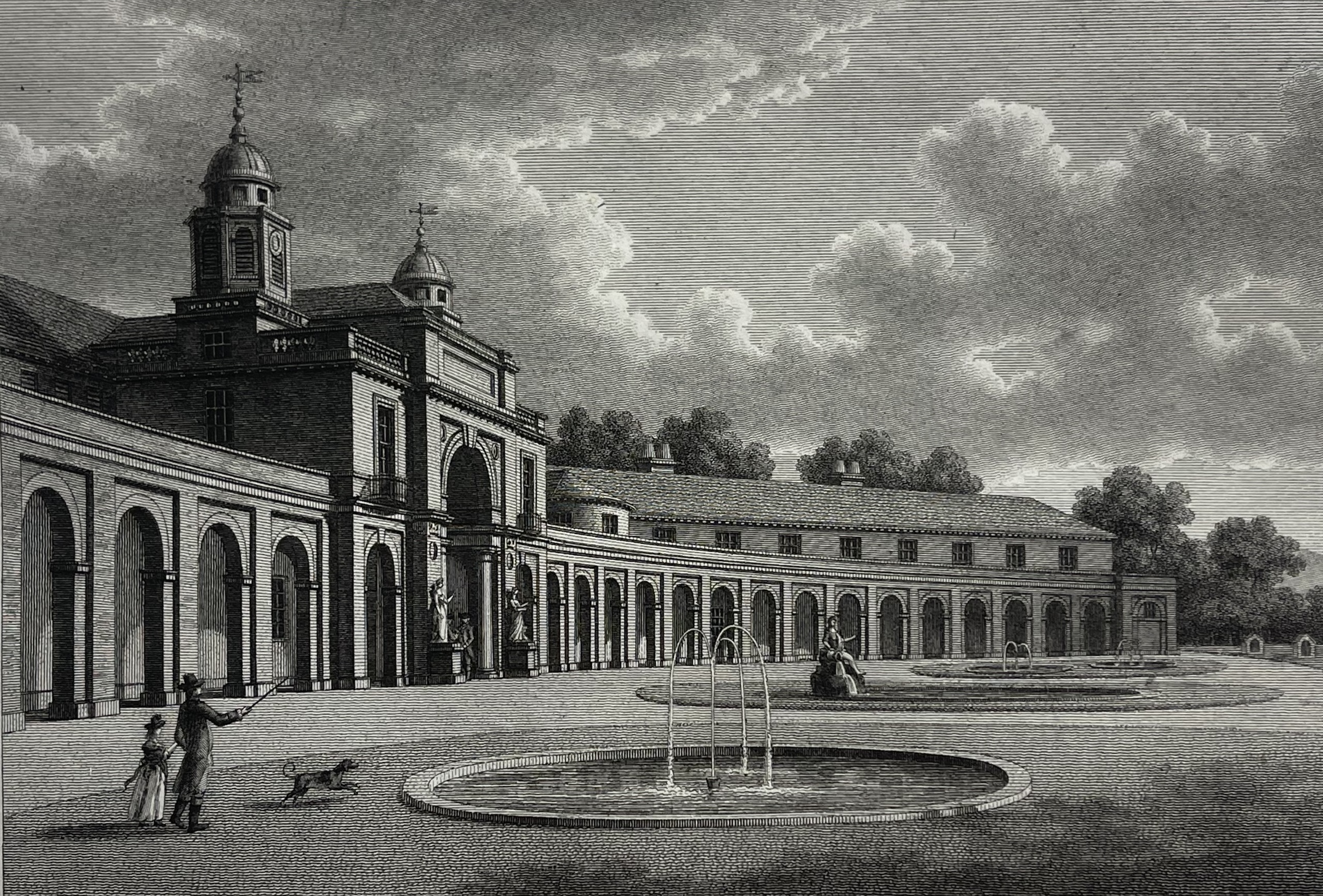
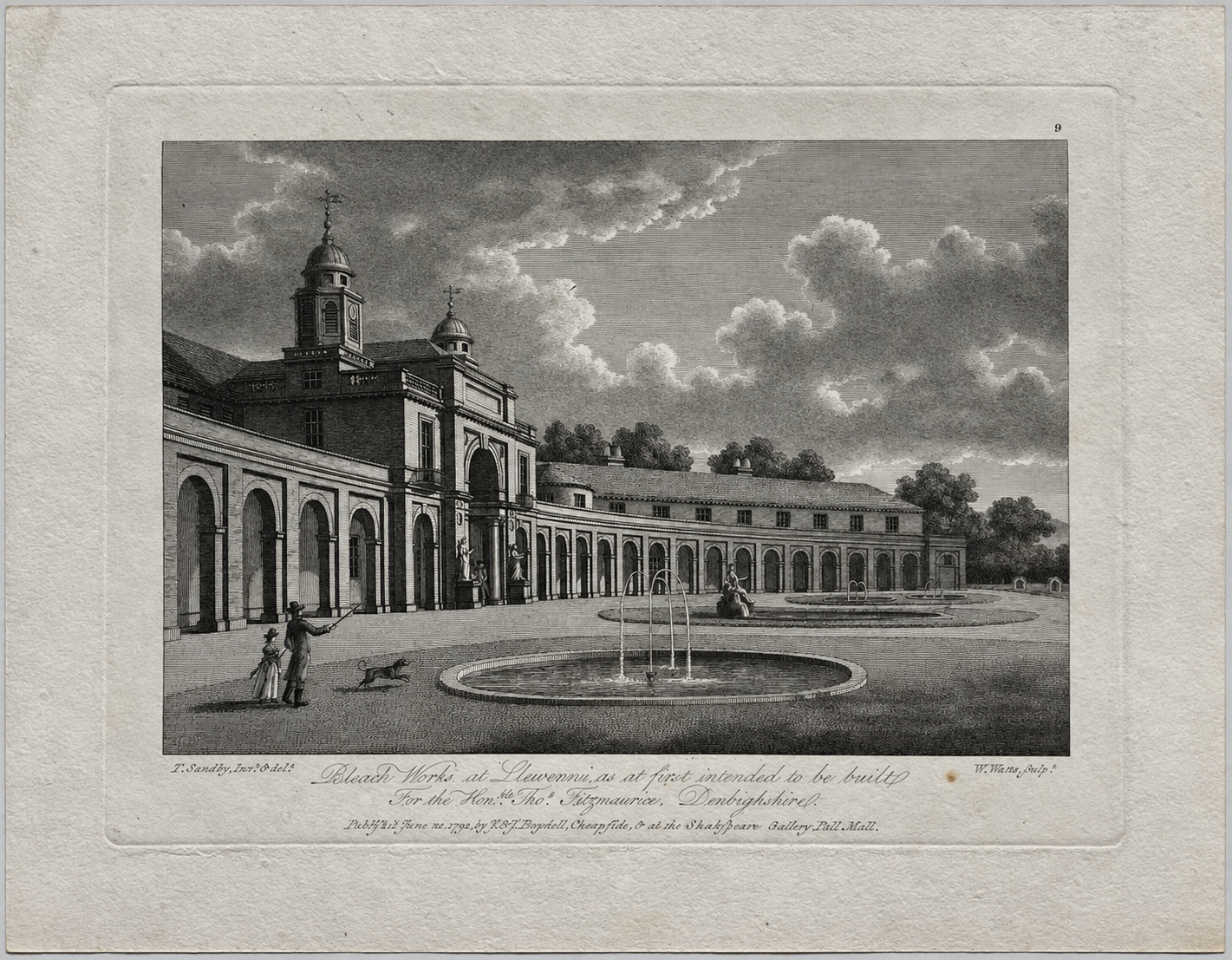
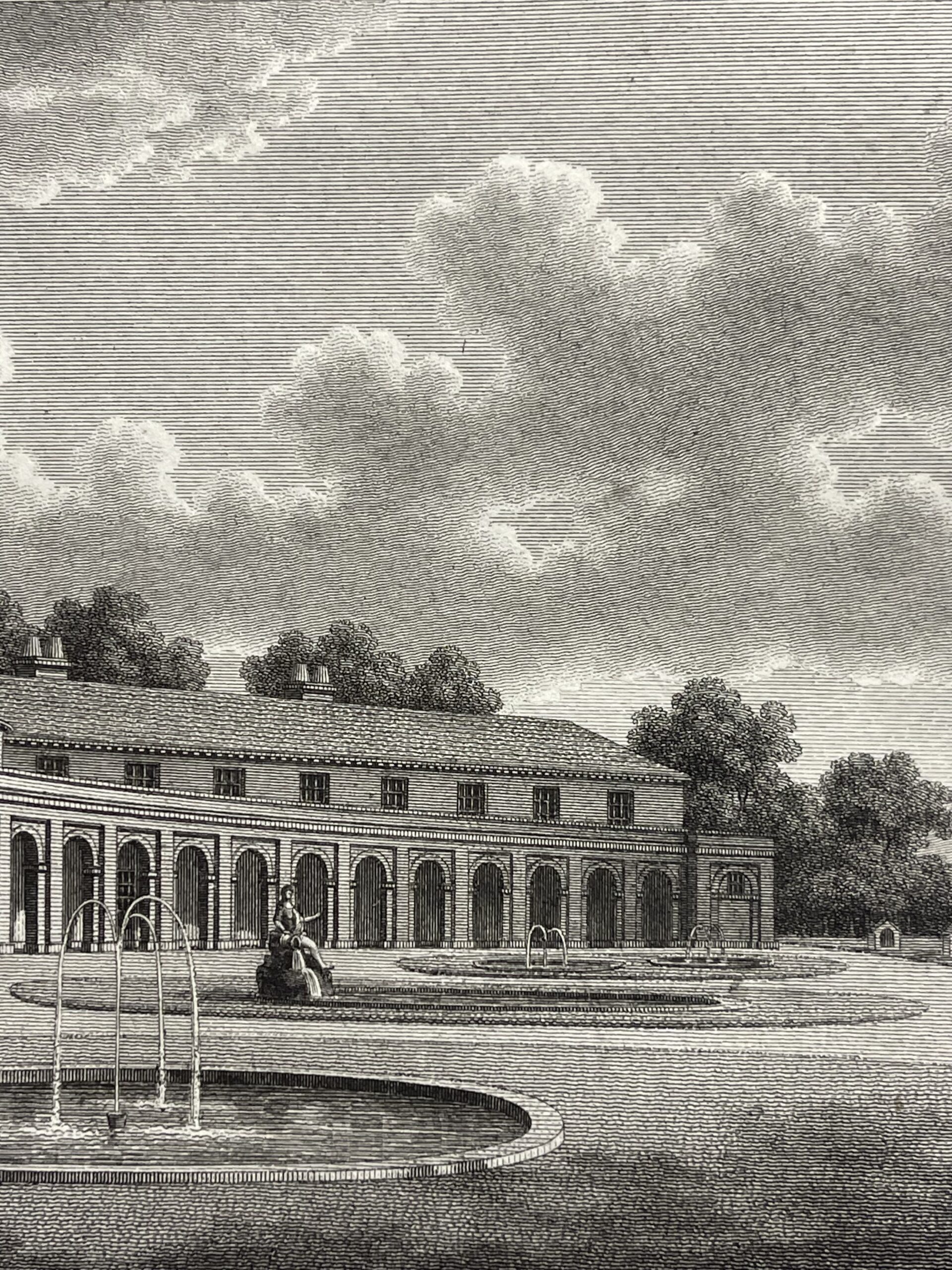
Llewenni Bleach Works engraving, a beautiful original 18th-century copperplate engraving dated 1792, depicting the original architectural design of the celebrated linen bleaching works at Llewenni, Denbighshire, North Wales, United Kingdom.
Drawn by Thomas Sandby (1721–1798), the distinguished British architect, and engraved by William Watts (1752–1851).
Published in London by John and Josiah Boydell, prominent British print publishers established in Cheapside and at the Shakespeare Gallery, Pall Mall.
The original inscription reads:
Bleach Works at Llewenni, as at first intended to be built for the Honble Thos Fitzmaurice, Denbighshire.
Llewenni Bleach Works – A Remarkable Industrial Architectural Project
This magnificent engraving presents an impressive architectural view of the linen bleaching establishment designed for the Honourable Thomas Fitzmaurice in Denbighshire, North Wales.
The composition depicts an extensive complex of buildings arranged around a monumental courtyard.
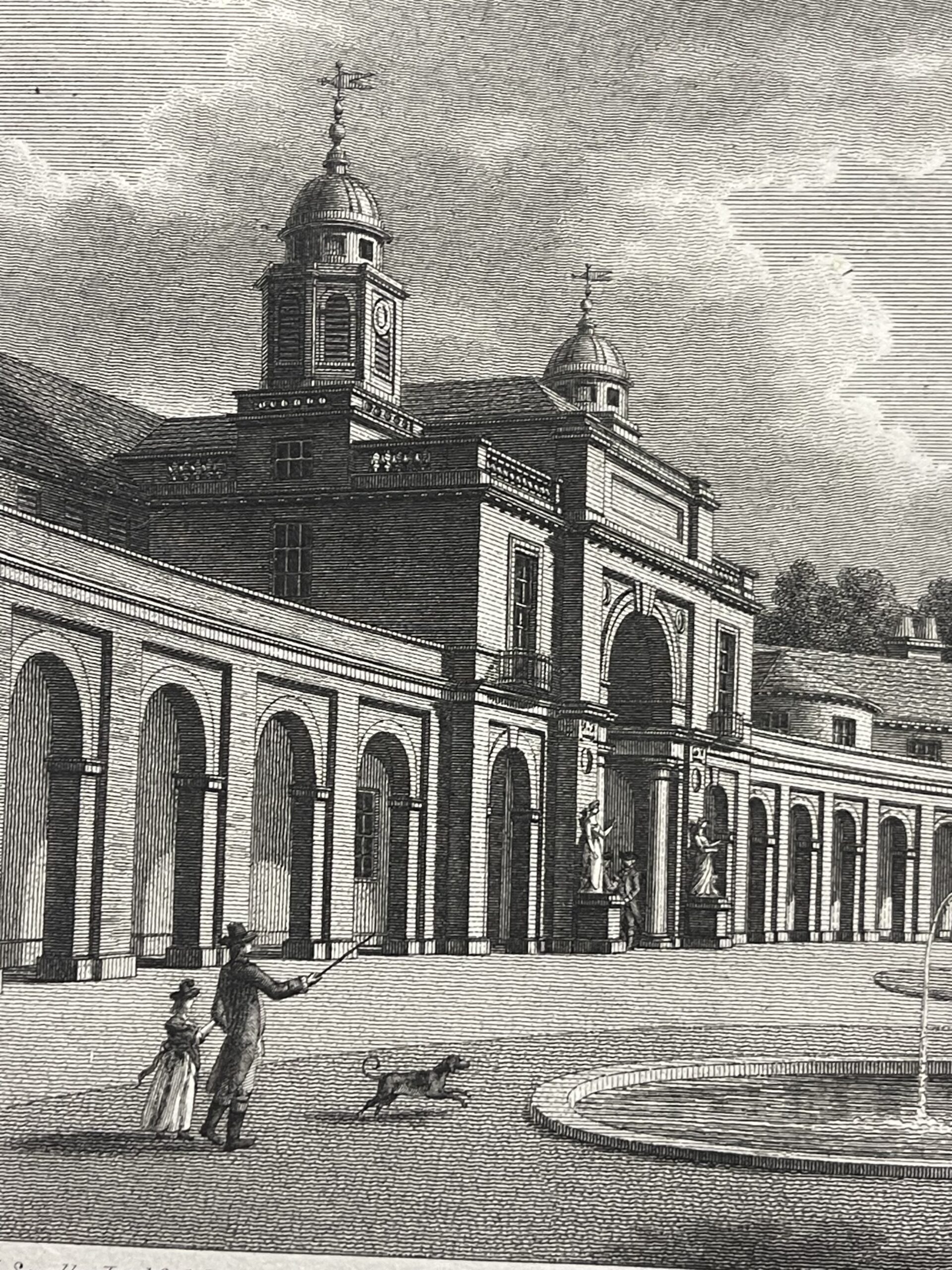
The principal structure features an impressive central entrance flanked by two towers crowned with elegant cupolas.
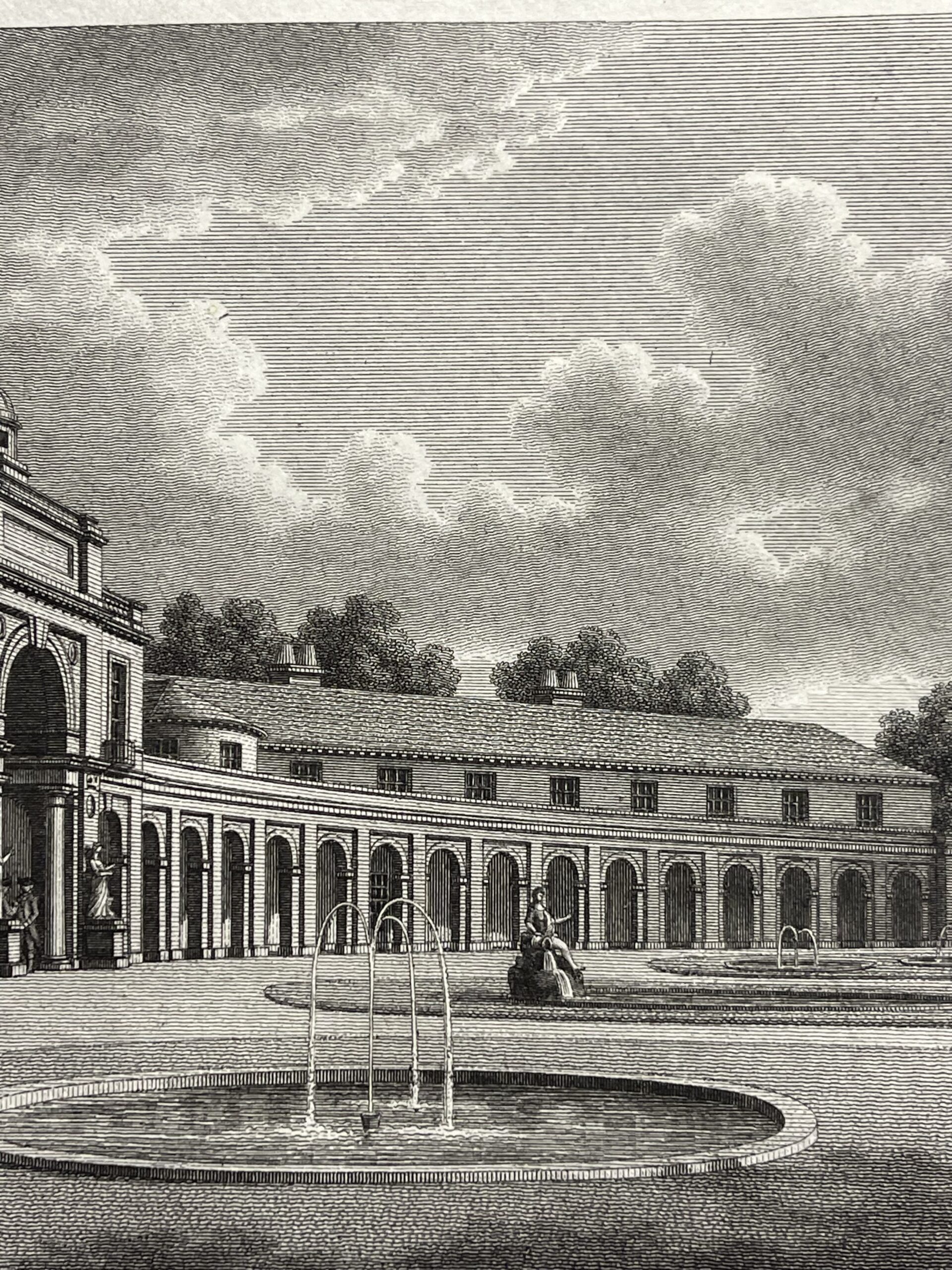
Long arcaded galleries extend from the main building, creating a remarkable architectural composition of exceptional scale.
The repeated arches, classical proportions and carefully organised façades reflect the influence of Palladian architectural principles.
In the foreground, several ornamental fountains and circular basins occupy the extensive courtyard.
Small figures, including a gentleman, a child and a dog, animate the composition and emphasise the monumental scale of the buildings.
Beyond the complex, mature trees and gently wooded hills create an attractive landscape setting.
The Development of Linen Bleaching in 18th-Century Wales
During the 18th century, the British textile industry experienced considerable expansion.
The bleaching of linen was an essential stage in preparing woven fabrics for domestic consumption and commercial distribution.
The Honourable Thomas Fitzmaurice developed an ambitious bleaching enterprise at Llewenni in Denbighshire.
The establishment processed substantial quantities of linen, including cloth supplied from Fitzmaurice’s Irish estates.
The enterprise contributed to local economic activity and represented an important example of industrial development in North Wales.
The celebrated naturalist and antiquarian Thomas Pennant described the bleaching works in 1783, praising the scale of the buildings, the organisation of the machinery and the economic importance of the establishment.
The architecture was particularly remarkable for combining an industrial function with monumental classical design.
Thomas Sandby (1721–1798) – Architect
Thomas Sandby was a distinguished British architect, draughtsman and landscape designer.
He became the first Professor of Architecture at the Royal Academy in London.
Sandby was associated with several important architectural and landscape projects, including works at Windsor Great Park.
His design for the Llewenni bleaching establishment demonstrates the architectural ambitions of the late Georgian period.
The combination of elegant arcades, ornamental fountains and imposing entrance towers transformed a functional industrial complex into a remarkable architectural composition.
William Watts (1752–1851) – Engraver
William Watts was an accomplished British engraver specialising in architectural and topographical subjects.
His finely executed copperplate engravings were particularly appreciated for their precision, delicate line work and refined treatment of perspective.
In this composition, Watts reproduces the complex architectural details of Sandby’s design with exceptional accuracy.
The numerous arches, classical towers, ornamental fountains and surrounding landscape are rendered through carefully controlled engraving.
An Important Historical Industrial Engraving
The Llewenni Bleach Works constitute an important episode in the architectural and industrial history of 18th-century Wales.
The original establishment was notable for the scale of its buildings and for the unusual elegance of its architectural design.
The engraving records the project as initially conceived, making it a particularly interesting document for the study of Georgian industrial architecture.
The combination of industrial history, classical architecture and fine copperplate engraving gives this print considerable documentary and decorative appeal.
It is particularly interesting for collectors of industrial history, Georgian architecture, historic Welsh views and 18th-century British engravings.
Dimensions
- Sheet: 24 × 19 cm
- Engraved image: 18 × 12.3 cm
Condition
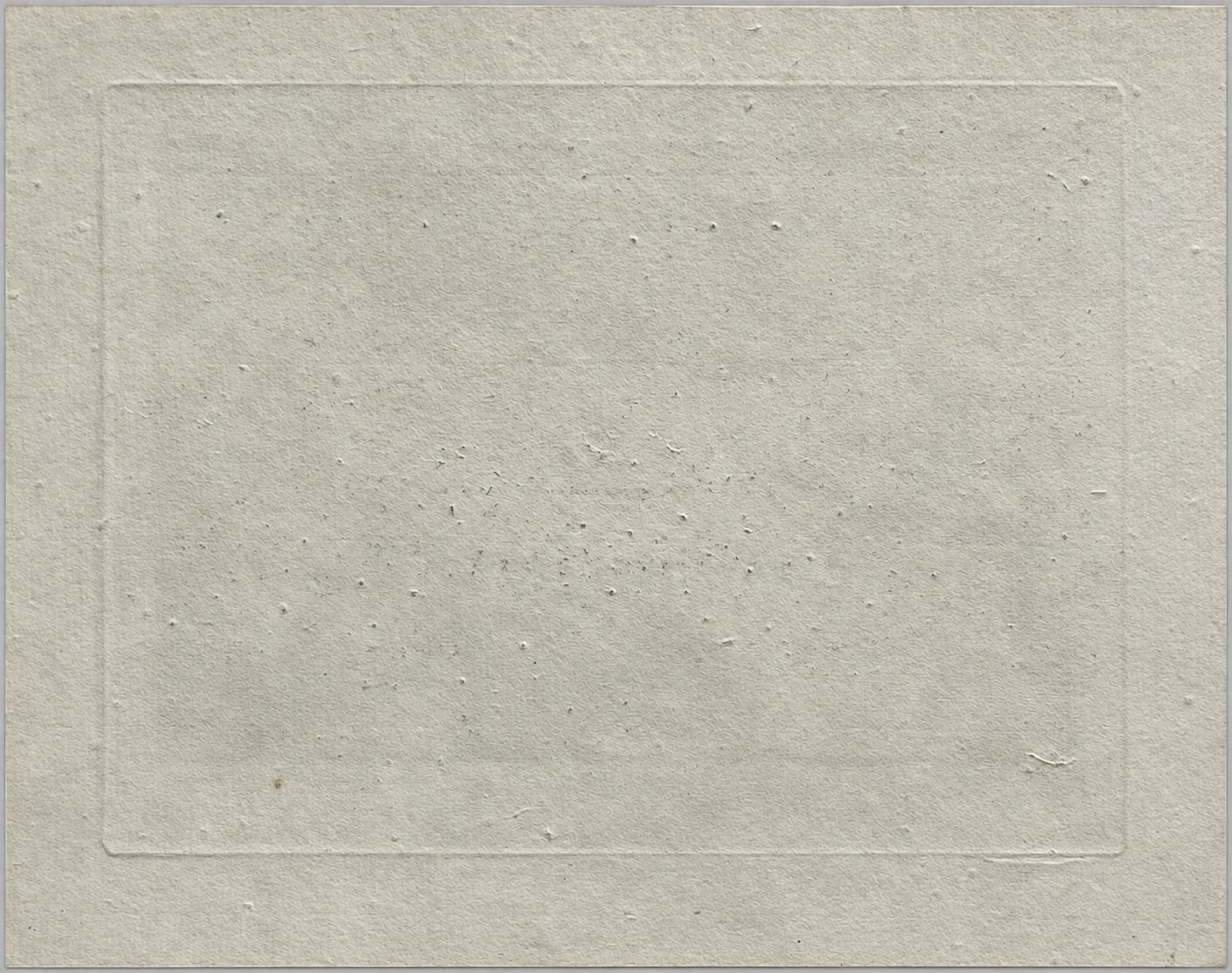
An antique impression displaying the natural patina of the paper. Beautiful preservation of the engraved composition and original inscriptions.

Avis
Il n’y a pas encore d’avis.