Description
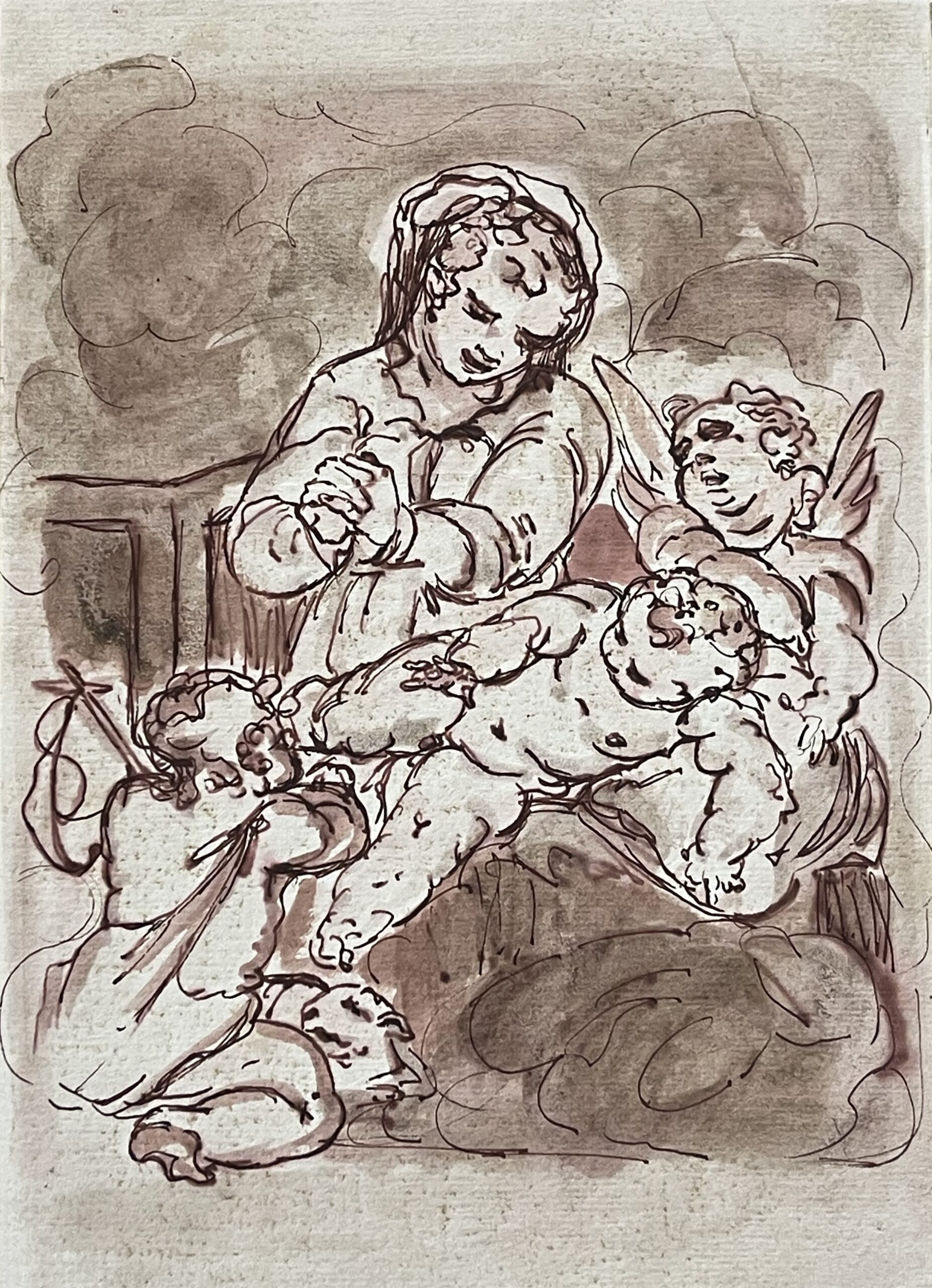
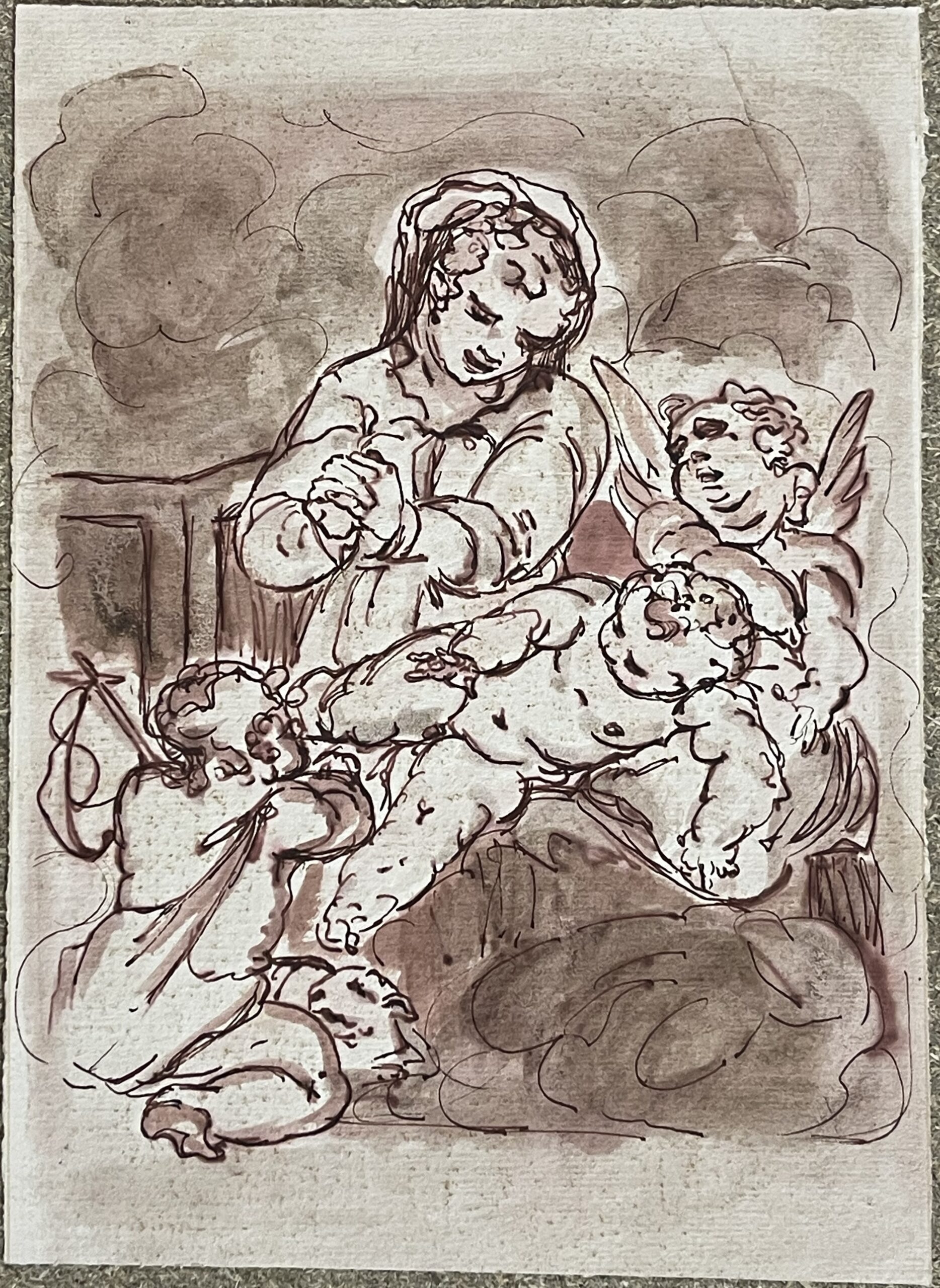
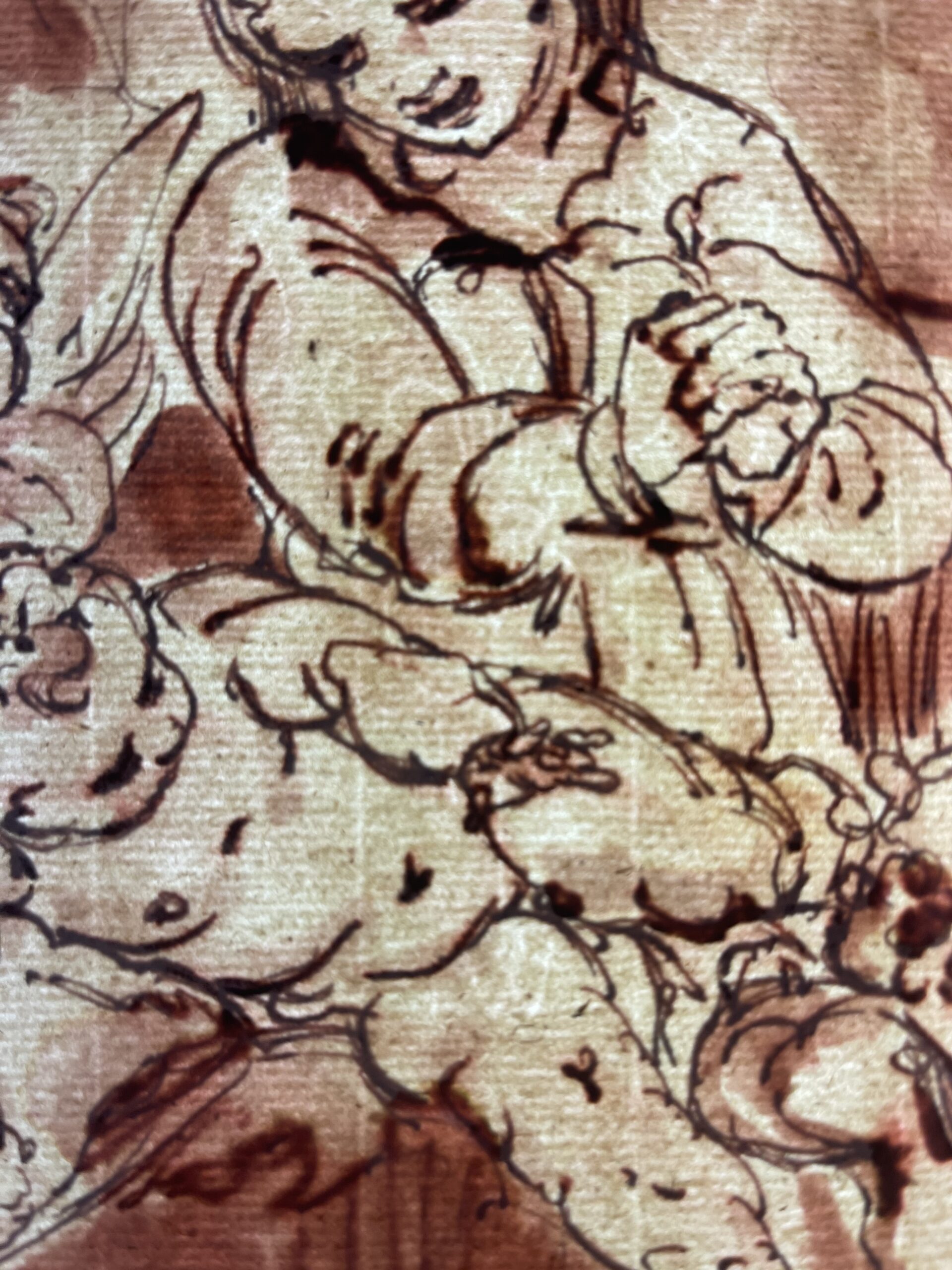
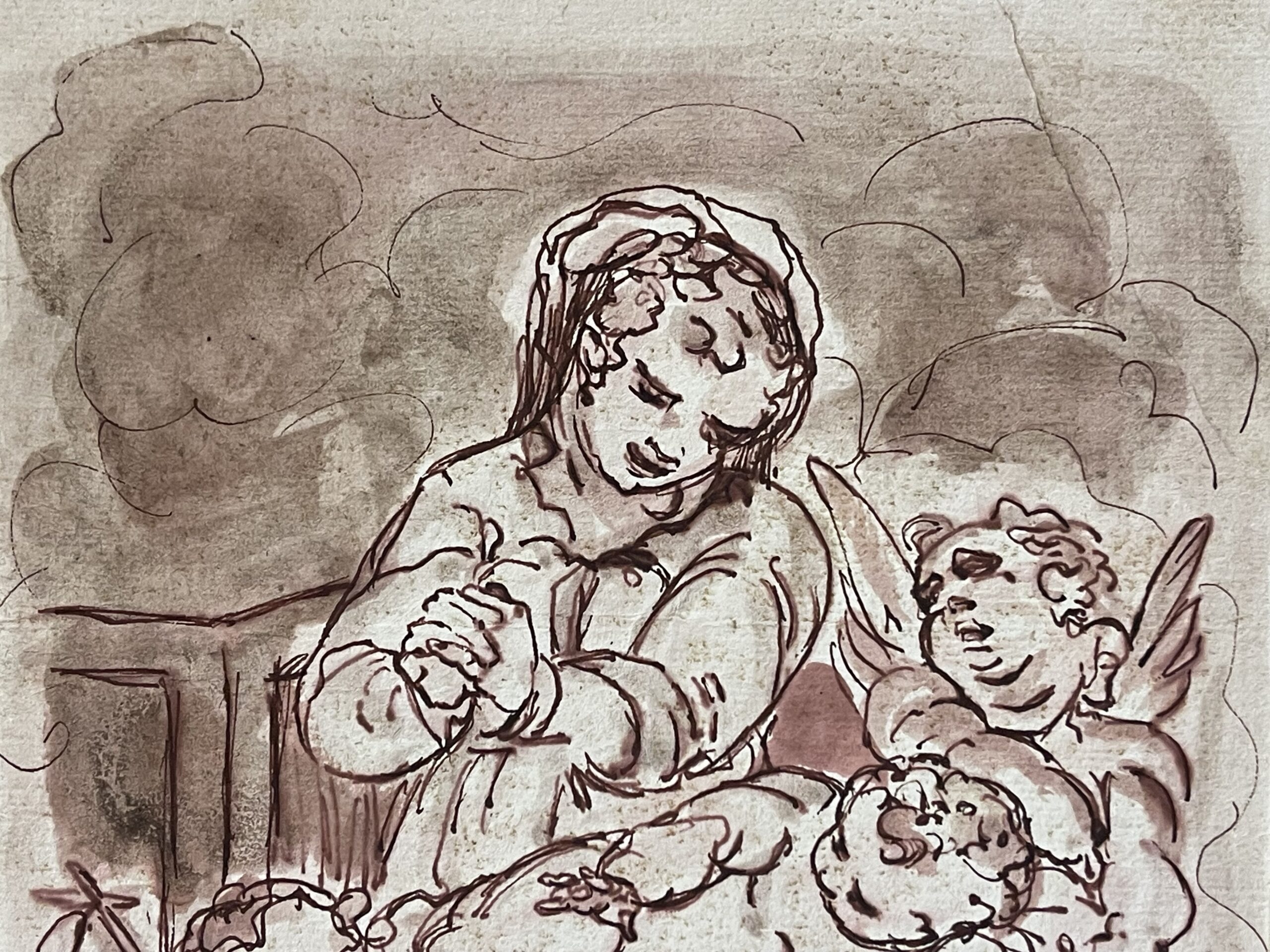
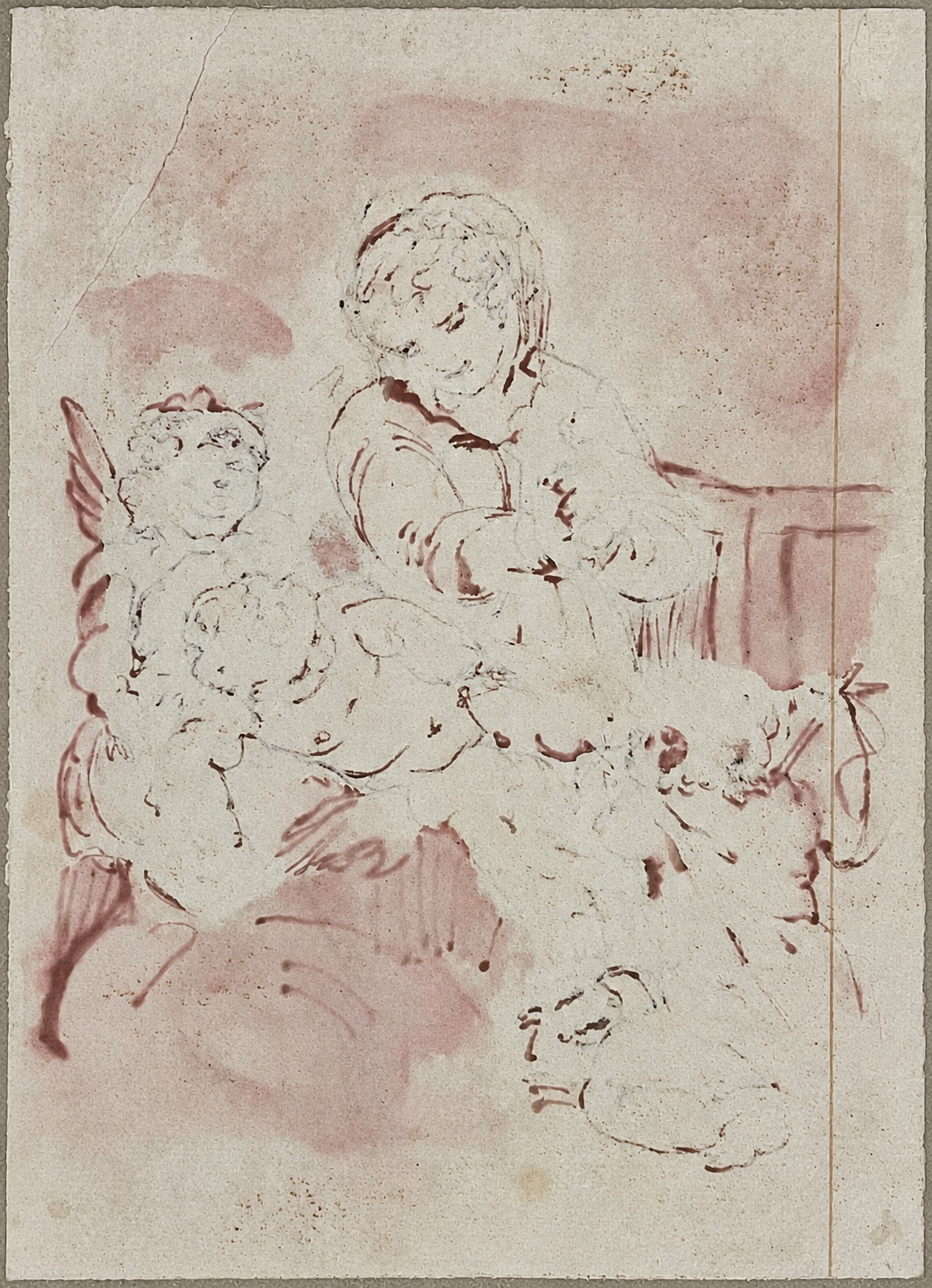
Italian Renaissance drawing depicting the Madonna and Child accompanied by the infant Saint John the Baptist and angels, executed in pen and brown ink with brown wash on 16th-century laid paper.
This expressive religious composition belongs to the Italian Old Master drawing tradition and displays notable stylistic affinities with the graphic work of Luca Cambiaso (1527–1585), one of the leading painters and draughtsmen of the Genoese Renaissance.
Anonymous Italian School, 16th century.
The Madonna and Child with Saint John the Baptist and Angels
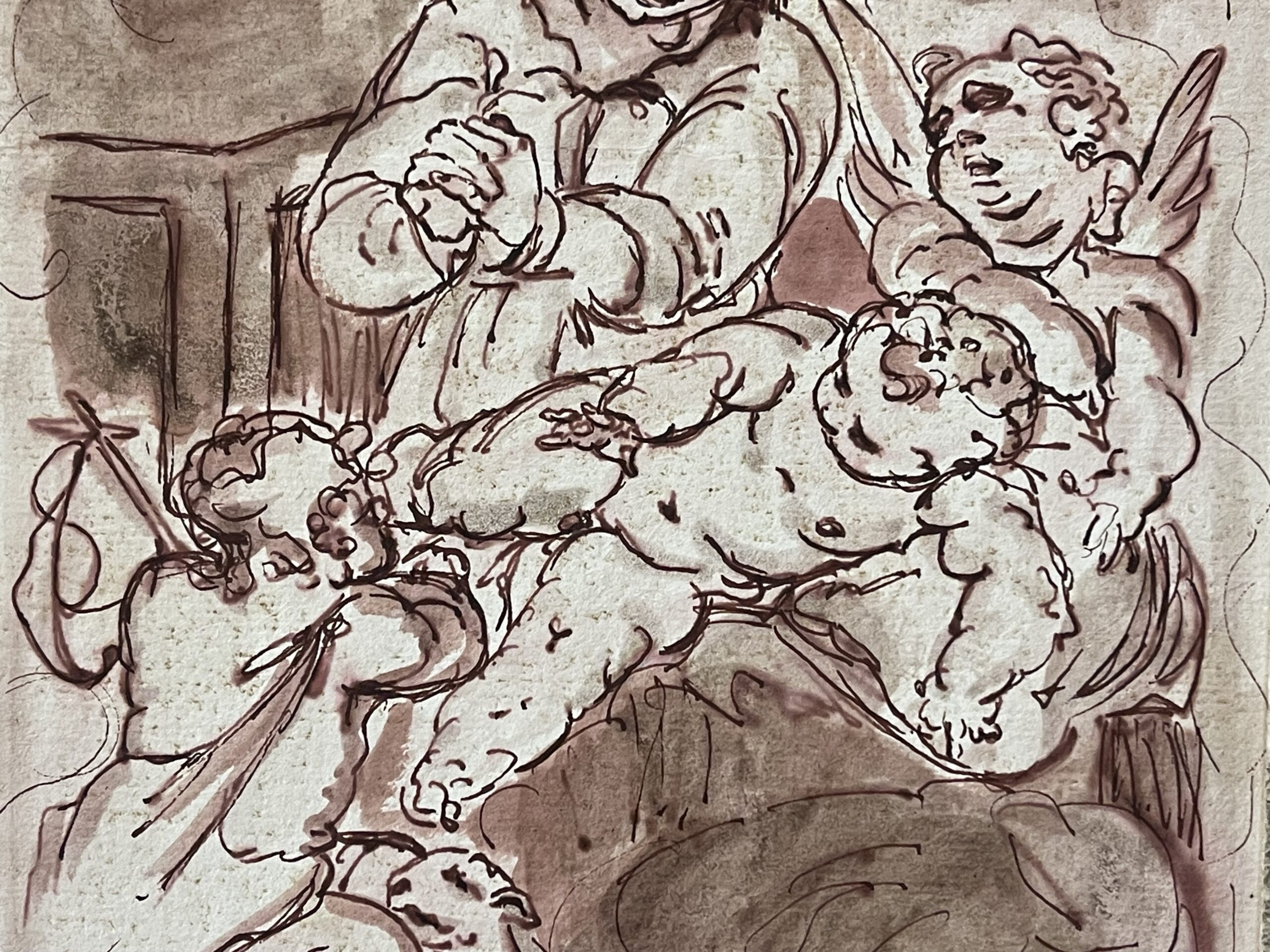
The drawing presents a lively and intimate religious scene centred on the Virgin Mary and the infant Christ.
The Virgin is seated with her head gently inclined, her hands clasped together in an attitude of prayer and contemplation.
Her peaceful expression contrasts beautifully with the animated gestures of the surrounding figures.
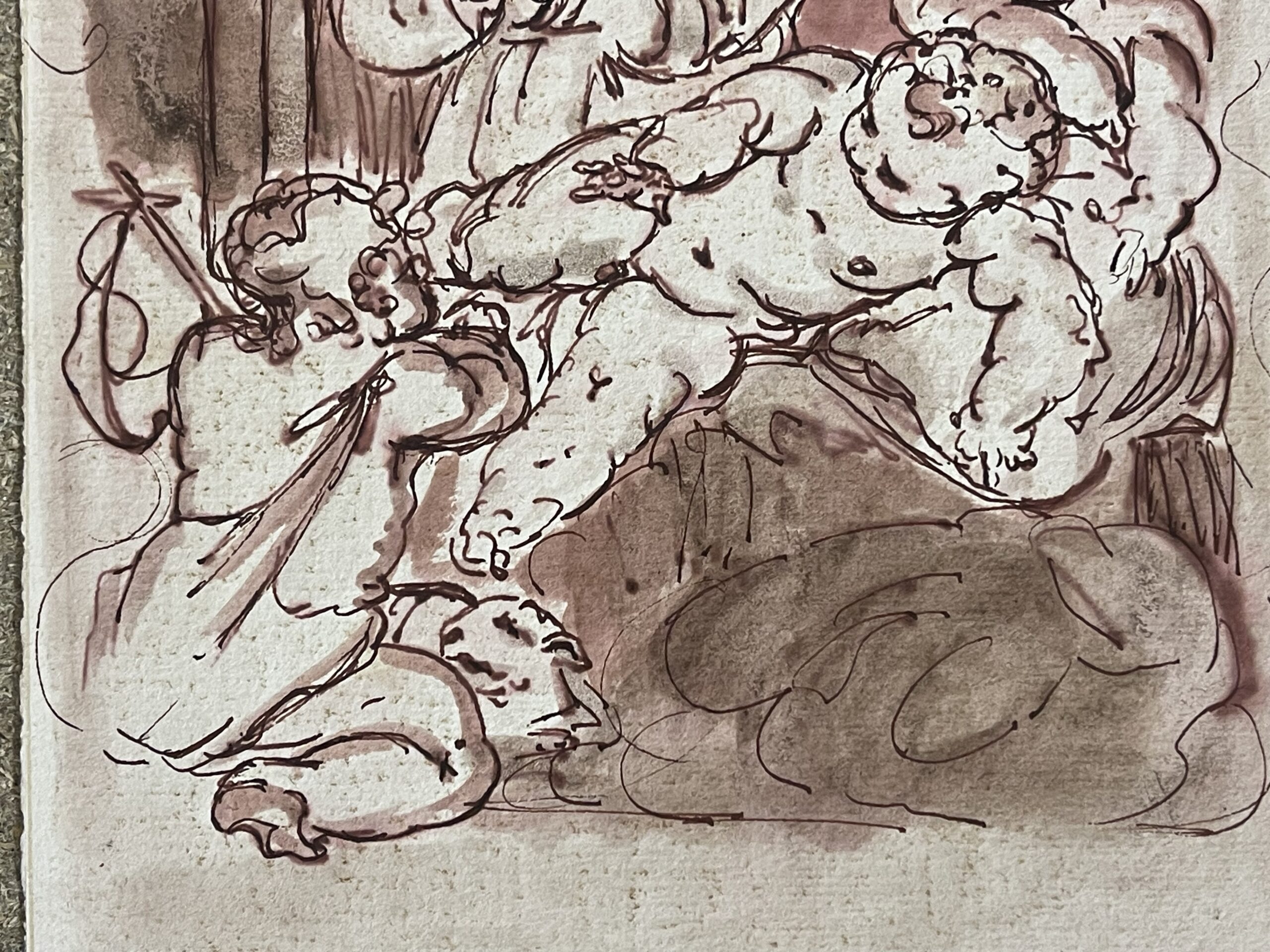
The Christ Child is represented reclining across the foreground, his body modelled through a series of energetic pen strokes and delicate passages of brown wash.
Several small angels surround the infant, creating a charming composition full of movement and expression.
To the left appears the young Saint John the Baptist, traditionally identified by his slender reed cross.
A lamb is depicted in the lower part of the composition, introducing an important symbol associated with Christ and his future sacrifice.
The background is suggested through freely drawn clouds and broad areas of brown wash, creating depth without distracting from the central figures.
Stylistic Affinities with Luca Cambiaso (1527–1585)
The drawing displays several characteristics associated with the graphic traditions of the Italian Renaissance.
The figures are constructed through rapid, energetic outlines, with expressive gestures and an economical treatment of anatomy and drapery.
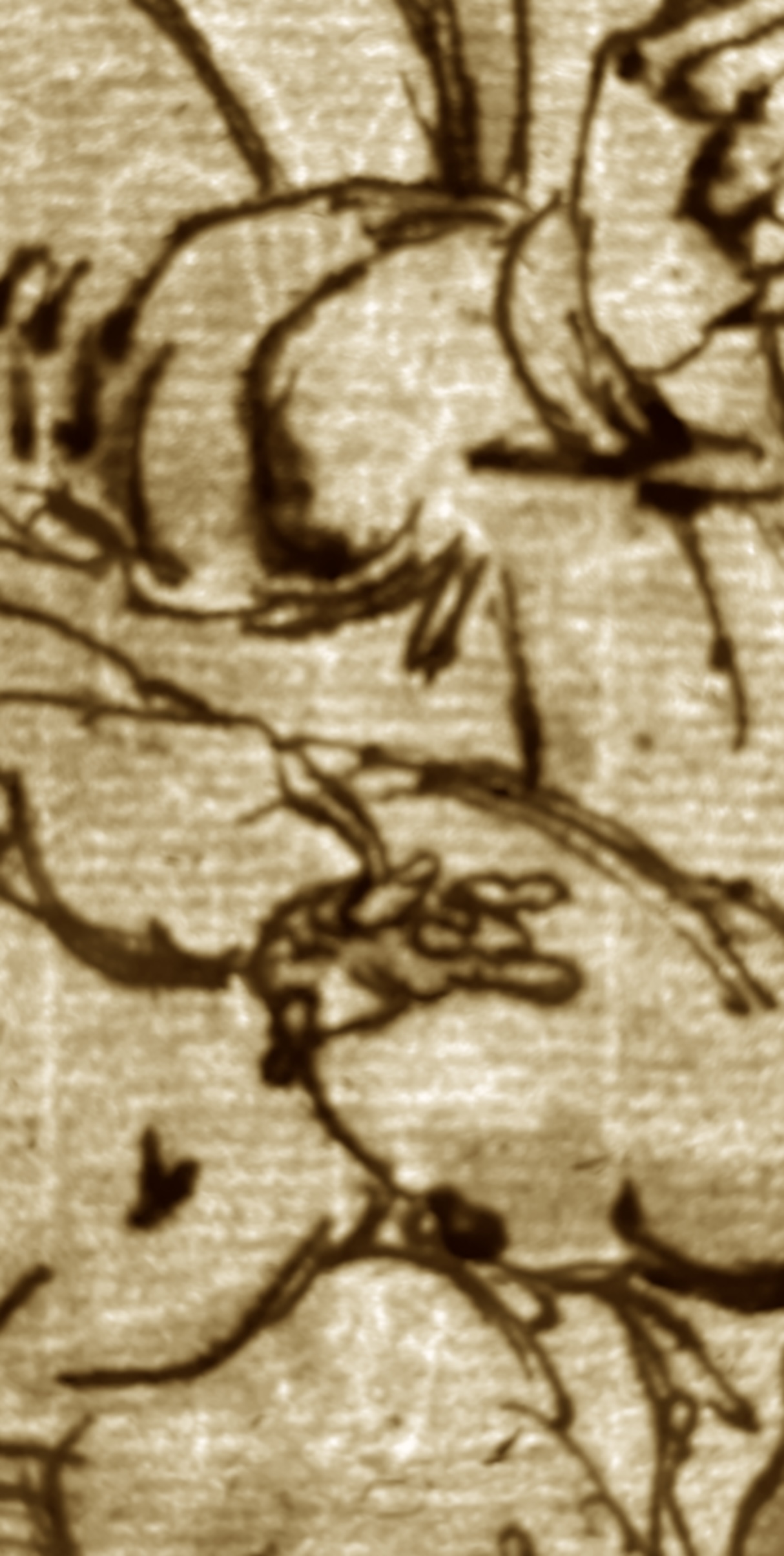
The artist uses confident pen strokes to define the principal forms, while darker accents emphasise the faces, hands and folds of the clothing.
Broad passages of brown wash establish the main areas of light and shadow.
This spontaneous and direct approach to drawing presents interesting affinities with the work of Luca Cambiaso, the celebrated Genoese painter and draughtsman.
Cambiaso was renowned for his extraordinary facility as a draughtsman and his ability to express complex compositions through simplified, vigorous forms.
His religious drawings frequently combine energetic penwork with broad applications of wash, creating a remarkable balance between movement, structure and atmosphere.
The present composition belongs stylistically to this important Italian drawing tradition.
Pen, Brown Ink and Wash
The drawing is executed in pen and brown ink, with additional brown wash.
The artist employs fluid and sometimes interrupted lines to establish the figures.
The contours of the faces, hands and garments are reinforced by darker ink accents, while the lighter passages remain largely defined by the natural tone of the paper.
The brown wash is used to model the clouds, draperies and surrounding space.
The result is a particularly expressive composition, combining spontaneity with a carefully organised arrangement of the principal figures.
16th-Century Laid Paper with Fleur-de-Lis Watermark
The drawing is executed on antique laid paper dating from the 16th century.
The sheet bears a watermark depicting a simple fleur-de-lis accompanied by an ornamental element.
This watermark is typologically very close to the example recorded by Charles-Moïse Briquet under reference 7046, documented at Cochem in 1574.
The watermark of the present sheet is not identical to Briquet 7046, but belongs to a closely related family of designs.
This comparison provides an important documentary reference for the study of the paper and supports its identification as a 16th-century sheet.
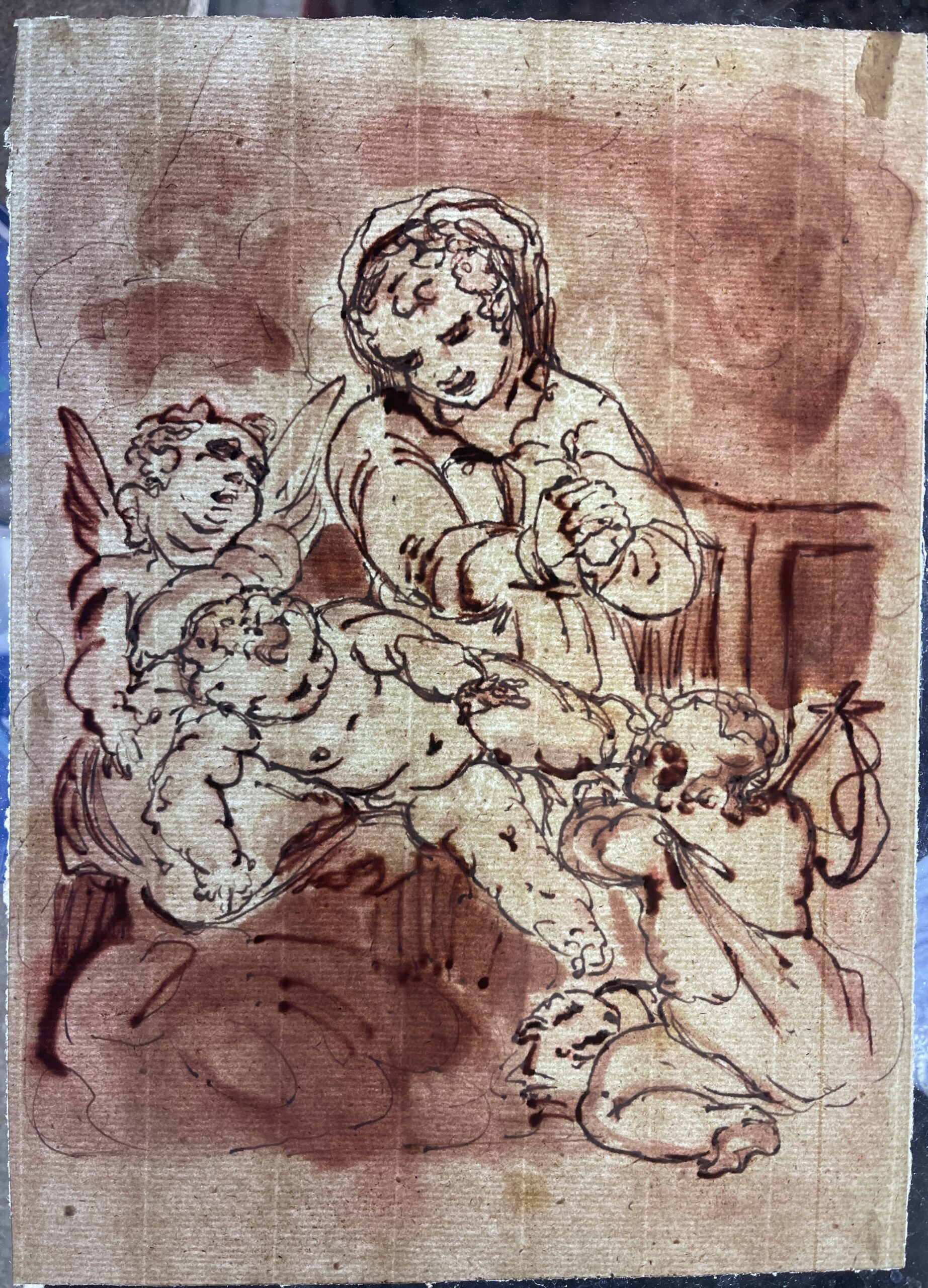
The reverse shows the penetration of the brown ink and wash through the fibres of the laid paper.
An Attractive Italian Renaissance Religious Drawing
The combination of expressive penwork, brown wash, antique laid paper and a historically significant watermark makes this drawing particularly interesting for collectors of Italian Old Master works on paper.
The religious subject, featuring the Madonna and Child, Saint John the Baptist, angels and the symbolic lamb, belongs to one of the major iconographic traditions of Renaissance art.
Characteristics
- School: Italian School
- Period: 16th century
- Artist: Anonymous
- Stylistic comparison: Close to Luca Cambiaso (1527–1585)
- Technique: Pen and brown ink with brown wash
- Support: 16th-century laid paper
- Watermark: Simple fleur-de-lis with ornamental element
- Watermark reference: Typologically close to Briquet 7046, Cochem, 1574
- Sheet dimensions: 25.3 × 18.4 cm
Condition
An antique drawing displaying the natural patina of the paper, variations in tone and irregularities along the edges.
The reverse retains visible traces of the ink and wash penetrating the paper.
The photographs provide detailed views of the composition, drawing technique, paper surface and reverse.

Avis
Il n’y a pas encore d’avis.