Description
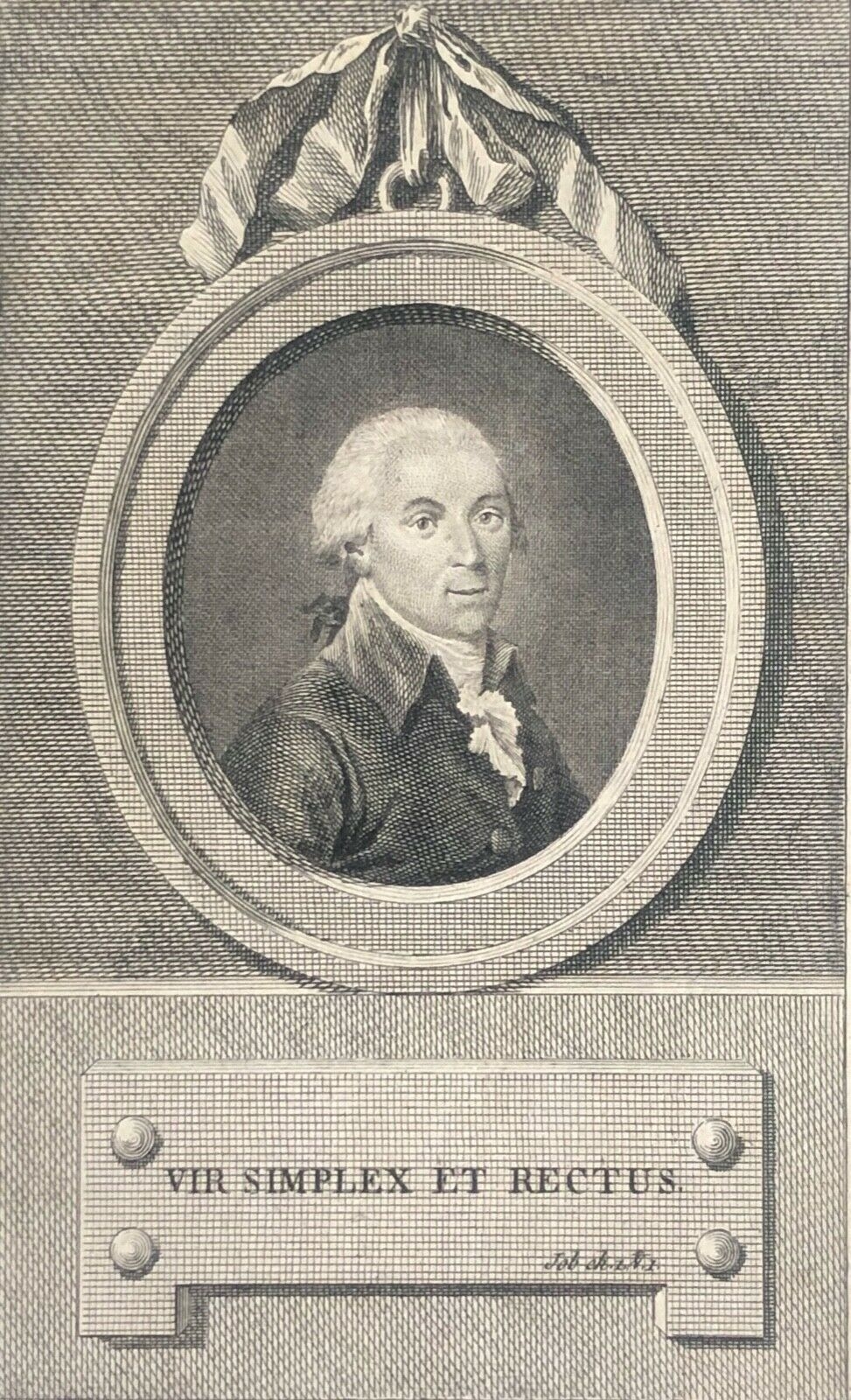
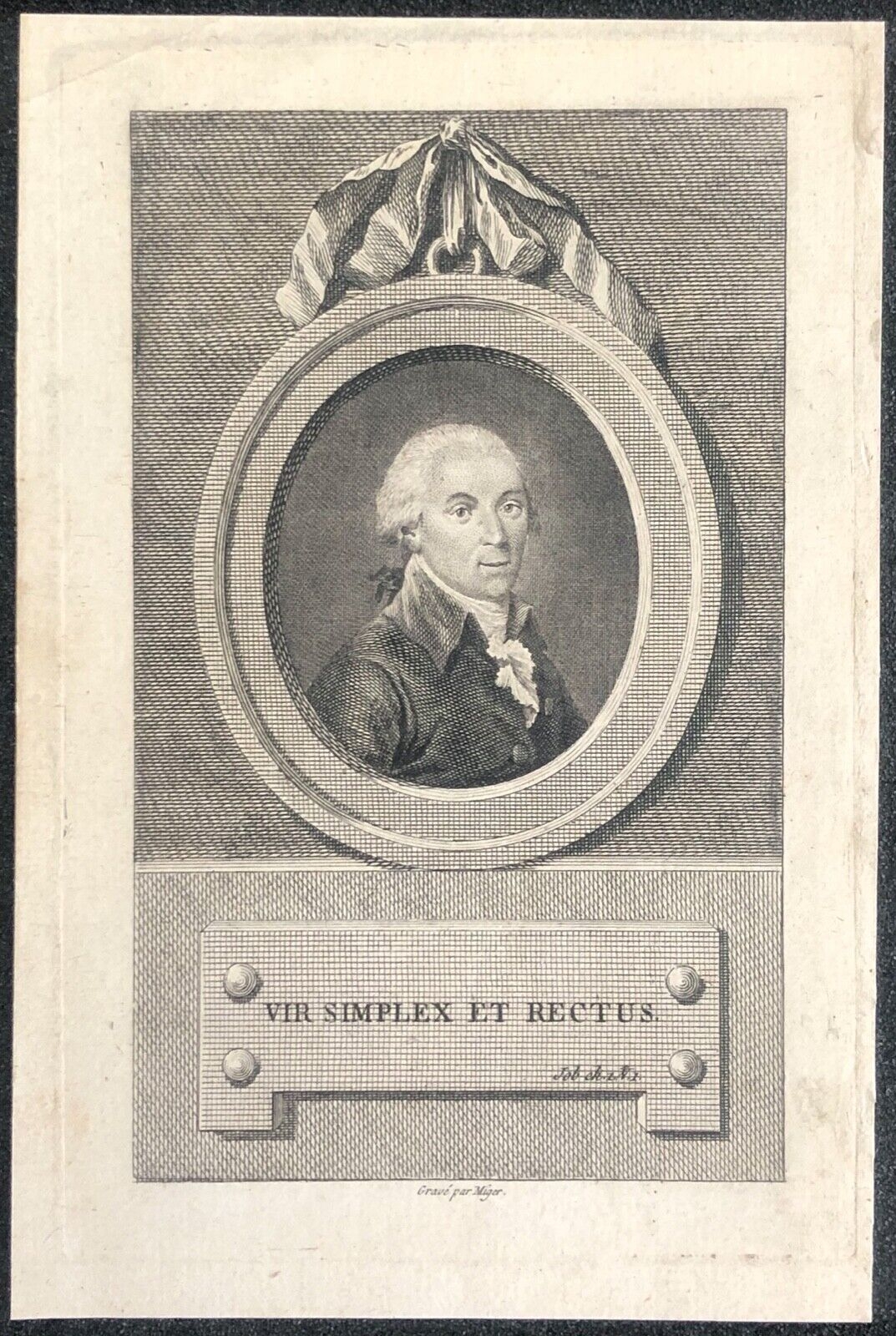
Christian Gellert antique portrait engraving from the 18th century, depicting the celebrated German poet, fabulist and moral philosopher Christian Fürchtegott Gellert (1715–1769).
Dating from the 18th century, traditionally described as circa 1760, this finely executed engraving presents an elegant oval portrait surrounded by a richly decorated architectural frame.
An Elegant Engraved Portrait
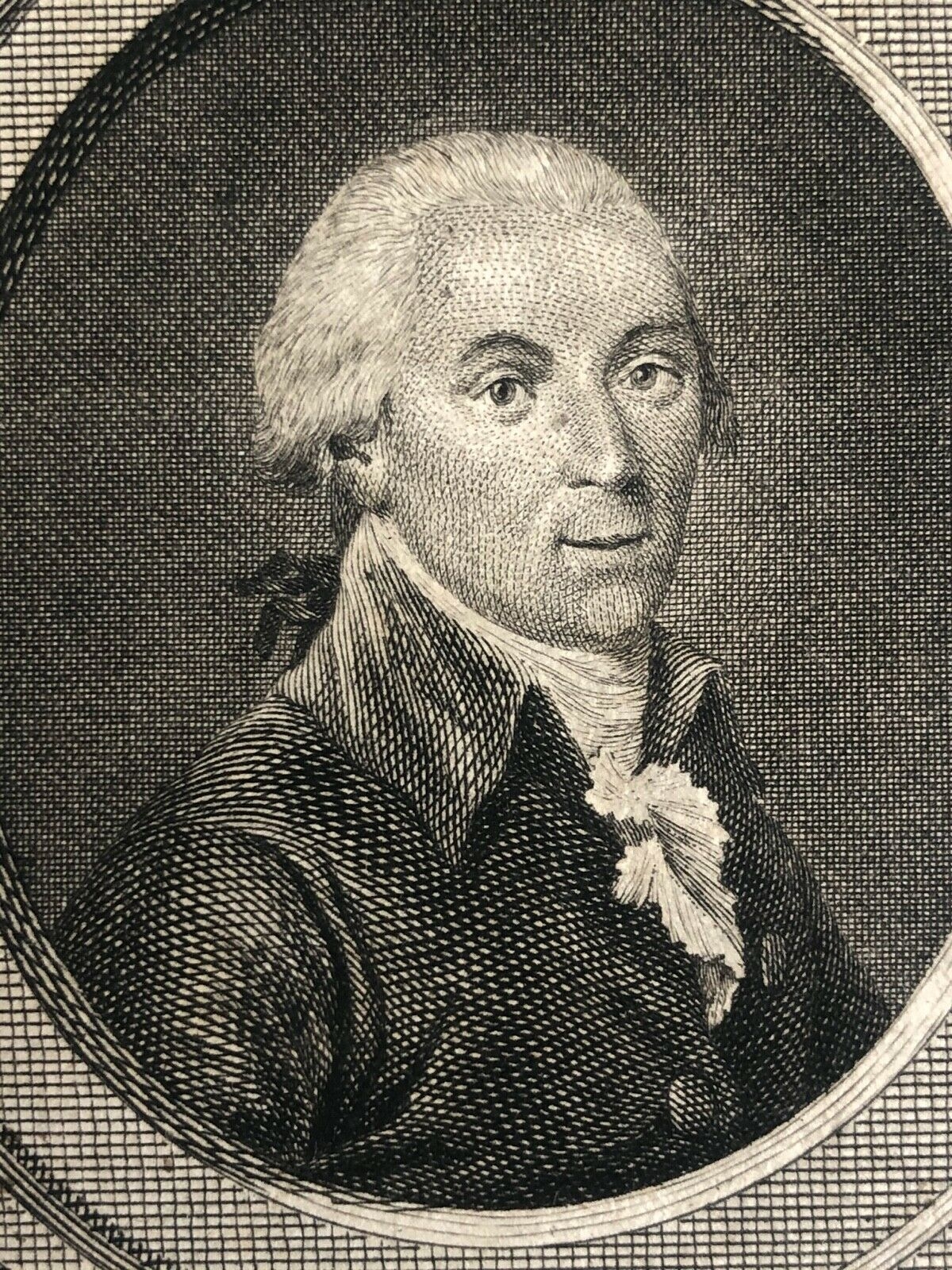
Gellert is represented in a three-quarter bust portrait, wearing a dark coat with a broad collar, a white shirt and a finely arranged neckcloth.
His carefully rendered facial features, expressive eyes and powdered hairstyle reflect the refined tradition of 18th-century European portrait engraving.
The portrait is enclosed within a large oval medallion, crowned by an elegant draped fabric tied at the top.
Beneath the portrait appears a rectangular architectural tablet bearing the Latin inscription:
VIR SIMPLEX ET RECTUS
Translated as « A simple and upright man », this motto celebrates the moral qualities traditionally associated with Gellert’s personality and literary teachings.
The beautifully engraved frame, architectural ornamentation and delicate crosshatching contribute to the elegance of the composition.
Christian Fürchtegott Gellert (1715–1769)
Christian Fürchtegott Gellert was born on July 4, 1715, in Hainichen, Saxony.
He became one of the most widely read German writers of the 18th century and played an important role in the development of German Enlightenment literature.
After studying at Leipzig University, Gellert devoted himself to literature, moral philosophy and education.
He later became a professor at the University of Leipzig, where his lectures attracted considerable attention.
His literary reputation was established through his fables, moral tales, poetry and religious writings.
Among his most celebrated works are the Fabeln und Erzählungen (Fables and Tales), which enjoyed great popularity throughout the German-speaking world.
Gellert’s writings emphasised moral integrity, kindness, modesty, education and the importance of virtuous conduct.
His accessible literary style helped introduce Enlightenment ideas to a broad readership.
He died in Leipzig on December 13, 1769.
The Art of 18th-Century Portrait Engraving
During the Enlightenment, engraved portraits became an important means of celebrating distinguished writers, philosophers, scientists and intellectual figures.
Copperplate engraving enabled artists to reproduce remarkably delicate details through the use of fine lines, parallel strokes and sophisticated crosshatching.
The present portrait is particularly attractive for the precision of its facial modelling, the elegant treatment of the clothing and the carefully engraved architectural frame.
The Latin inscription adds an important historical and literary dimension to the composition.
An Interesting German Enlightenment Portrait
This attractive antique engraving is particularly suitable for collectors of European portrait prints, German literature, Enlightenment philosophy and 18th-century historical illustrations.
Dimensions
- Sheet: 17.3 × 11.5 cm
- Engraved composition: 14.2 × 8.7 cm
Condition
Beautiful preservation of the engraved portrait and decorative composition.
An old fold mark is visible in the upper left margin, well away from the engraved image.

Avis
Il n’y a pas encore d’avis.