Description
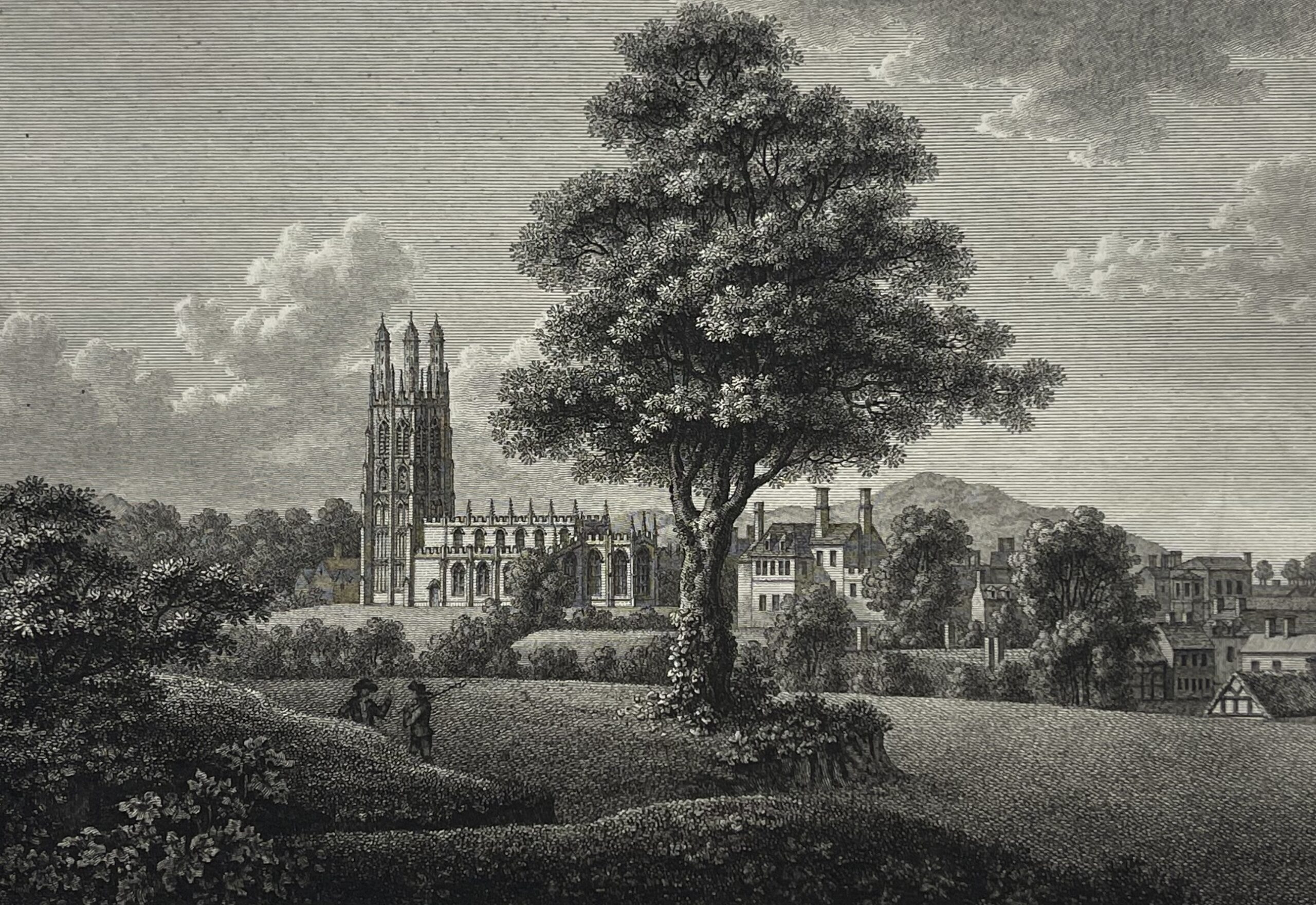
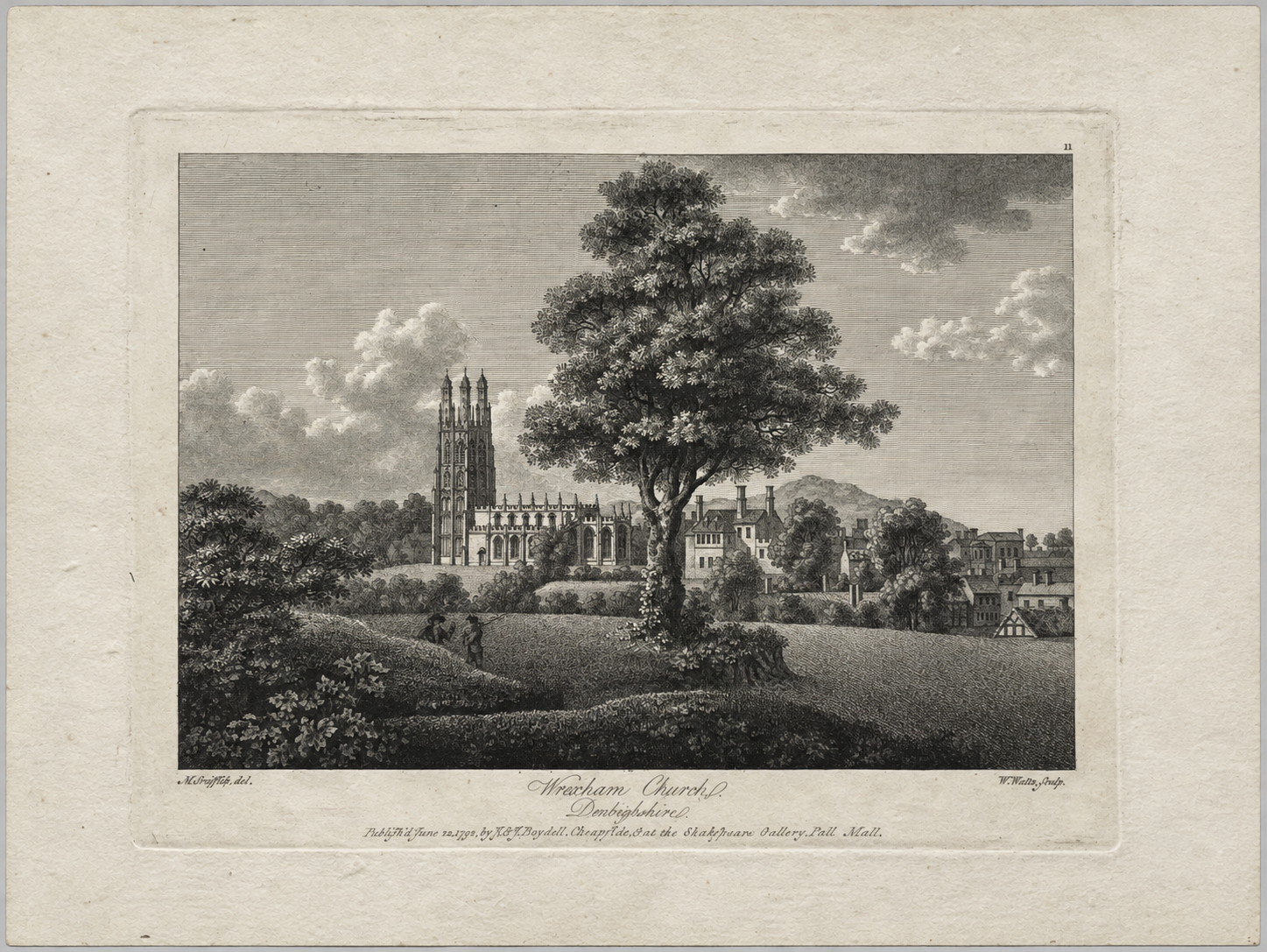
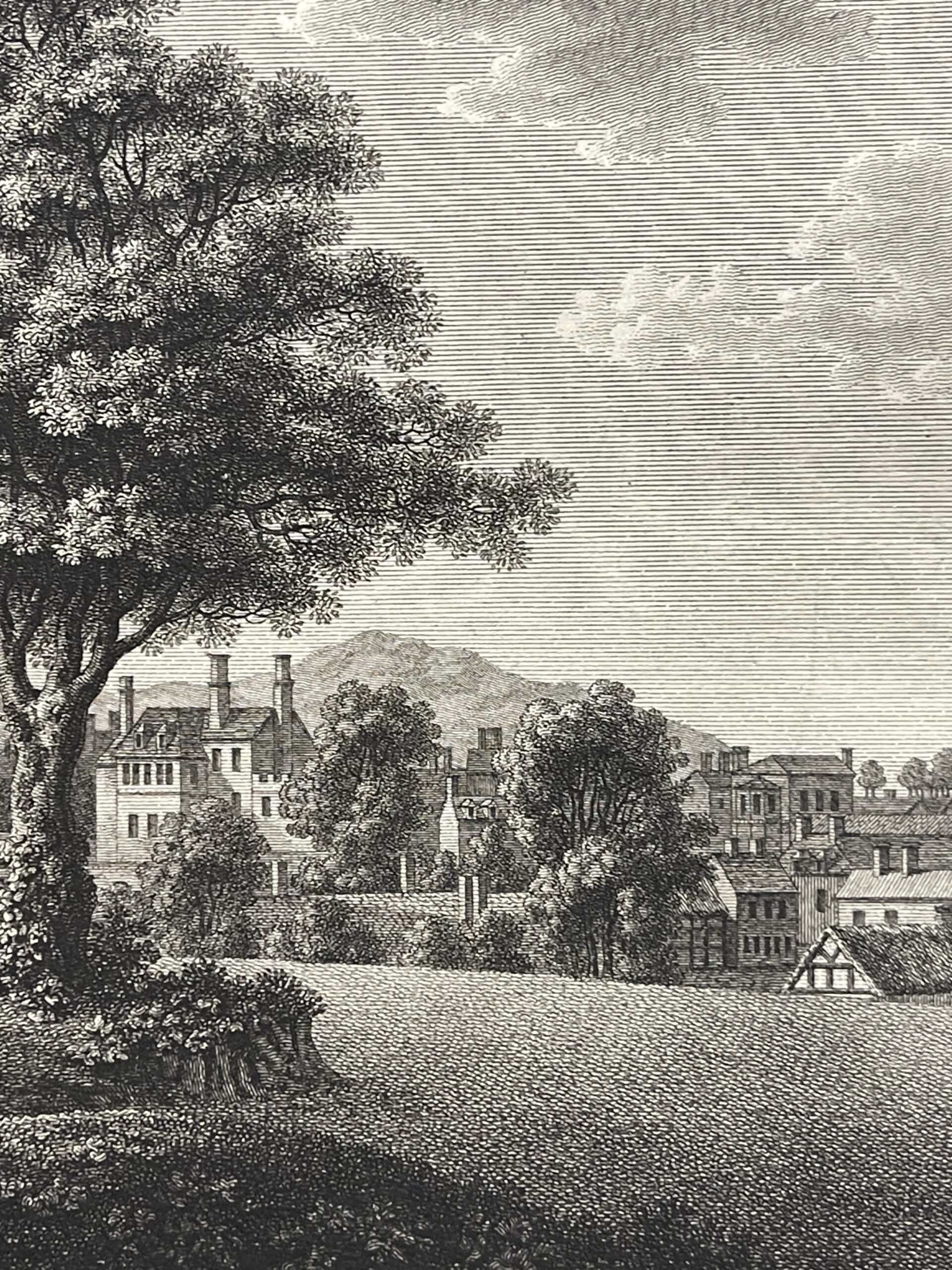
Wrexham Church antique engraving, a beautiful original 18th-century copperplate engraving dated June 22, 1792, depicting the historic St Giles’ Church in Wrexham, formerly Denbighshire, North Wales, United Kingdom.
Drawn by Moses Griffith (1747–1819), the distinguished Welsh landscape and architectural artist, and engraved by William Watts (1752–1851).
Published in London by John and Josiah Boydell, celebrated British print publishers established in Cheapside and at the Shakespeare Gallery, Pall Mall.
The original engraved inscription reads:
Wrexham Church. Denbighshire.
St Giles’ Church – A Magnificent Welsh Gothic Monument
This remarkable engraving presents an attractive historical view of St Giles’ Church, one of the most celebrated ecclesiastical buildings in North Wales.
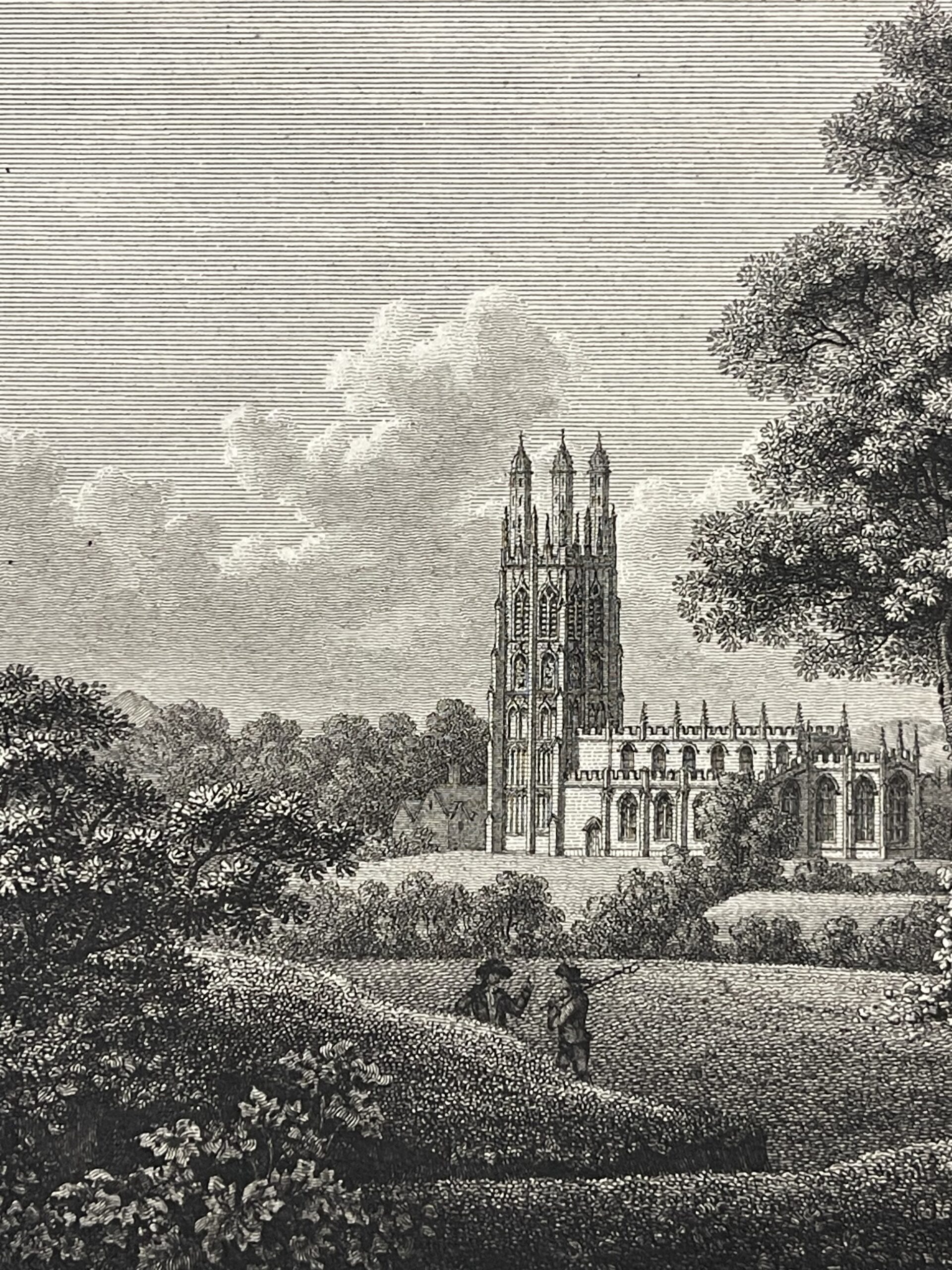
The church dominates the landscape with its magnificent western tower, a remarkable example of late medieval Gothic architecture.
The tower is distinguished by its impressive height, elaborate stonework, richly ornamented windows, decorative pinnacles and battlements.
The long body of the church extends horizontally towards the right, with tall Gothic windows and carefully defined architectural details.
Its elegant proportions and imposing tower create a striking landmark within the surrounding countryside.
A Picturesque View of 18th-Century Wrexham
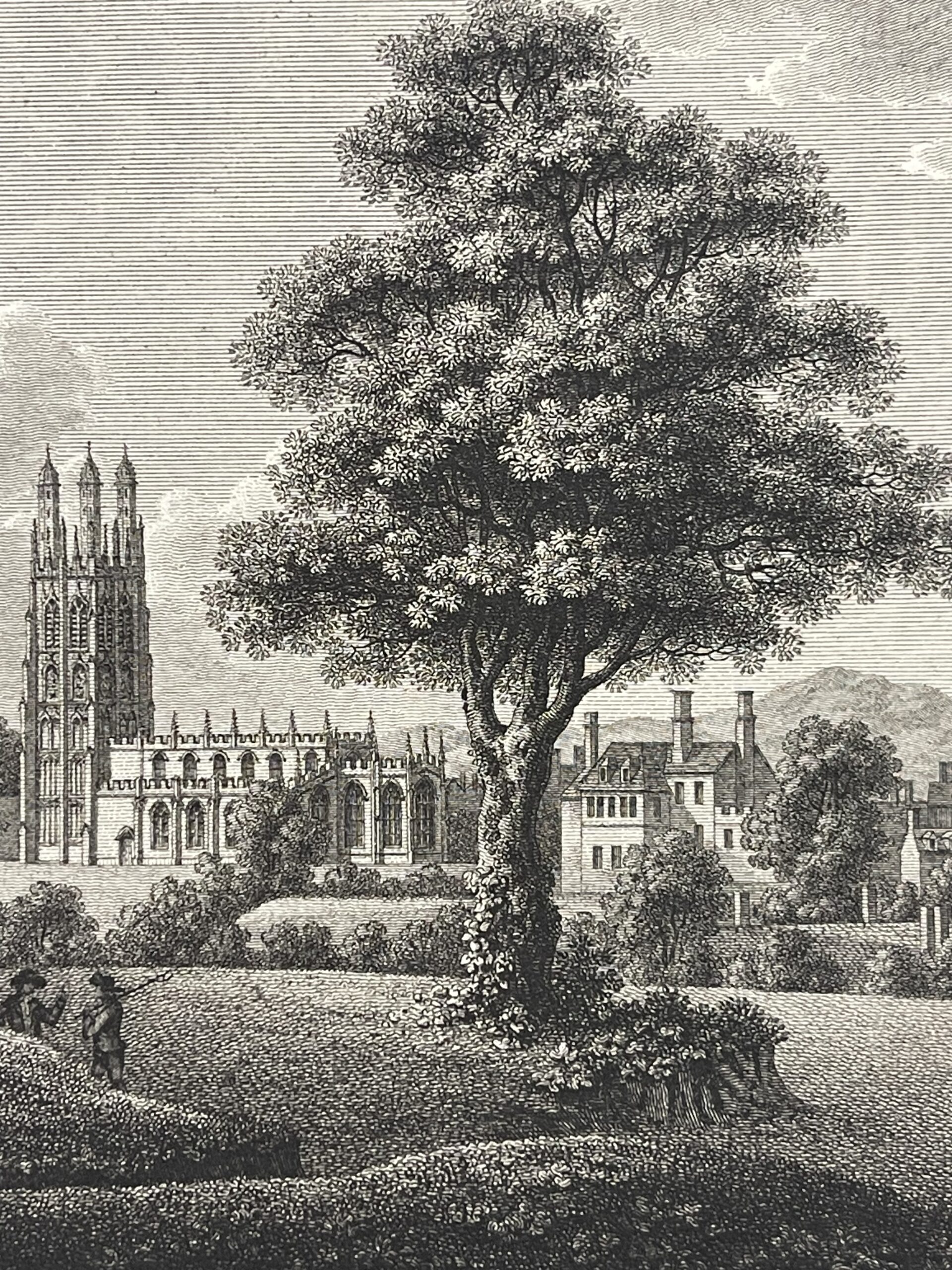
The composition presents the church within a beautifully balanced landscape of trees, gardens, fields and traditional buildings.
A magnificent mature tree dominates the centre of the engraving, its carefully rendered foliage providing an attractive contrast with the architectural lines of the church.
The foreground features an extensive meadow, with small figures walking through the landscape.
To the right, several houses and buildings illustrate the appearance of Wrexham during the late 18th century.
Wooded hills and distant countryside extend towards the horizon, while delicately engraved clouds animate the sky.
The composition combines architectural documentation with the picturesque landscape tradition of Georgian Britain.
The History of St Giles’ Church
St Giles’ Church is one of the most important historic landmarks of Wrexham.
The building is particularly renowned for its impressive late medieval tower, constructed during the late 15th and early 16th centuries.
The tower is distinguished by its elaborate Gothic decoration, sculptural details and remarkable architectural proportions.
The church has played an important role in the religious and civic history of Wrexham for several centuries.
During the Georgian period, the surrounding town was developing as an important commercial and regional centre in North Wales.
This original engraving preserves an attractive visual record of the church and its surroundings in 1792, before the extensive urban development of the 19th and 20th centuries.
Moses Griffith (1747–1819)
Moses Griffith was a distinguished Welsh draughtsman and landscape artist.
He is particularly celebrated for his long association with the naturalist, antiquarian and travel writer Thomas Pennant (1726–1798).
Griffith produced numerous detailed drawings of historic buildings, churches, castles, country houses and landscapes throughout Wales.
His works are valued for their artistic quality and considerable historical and topographical significance.
The present engraving reproduces his careful observation of the architectural details and surrounding landscape of Wrexham.
William Watts (1752–1851)
William Watts was an accomplished British engraver specialising in topographical and landscape subjects.
His finely executed engravings are characterised by precise architectural representation, delicate line work and a refined treatment of foliage, atmosphere and perspective.
In this view of St Giles’ Church, the intricate rendering of the Gothic tower, windows, buildings and trees demonstrates his technical skill.
An Important Georgian-Period Welsh Engraving
Published by the renowned Boydell publishing house in 1792, this original engraving represents an attractive example of late 18th-century British topographical art.
It is particularly appealing to collectors of historic Welsh views, Gothic architecture, British churches, Georgian-period engravings and antique architectural prints.
Dimensions
- Sheet: 25 × 19 cm
- Engraved image: 18.2 × 12.5 cm
Condition
An antique impression displaying the natural patina of the paper. Beautiful preservation of the engraved composition and original inscriptions.

Avis
Il n’y a pas encore d’avis.