France c.1790 – Antique Cameo with Hermaphroditus and Cherubs – Wicar Bertaux Duparc
39,00 €
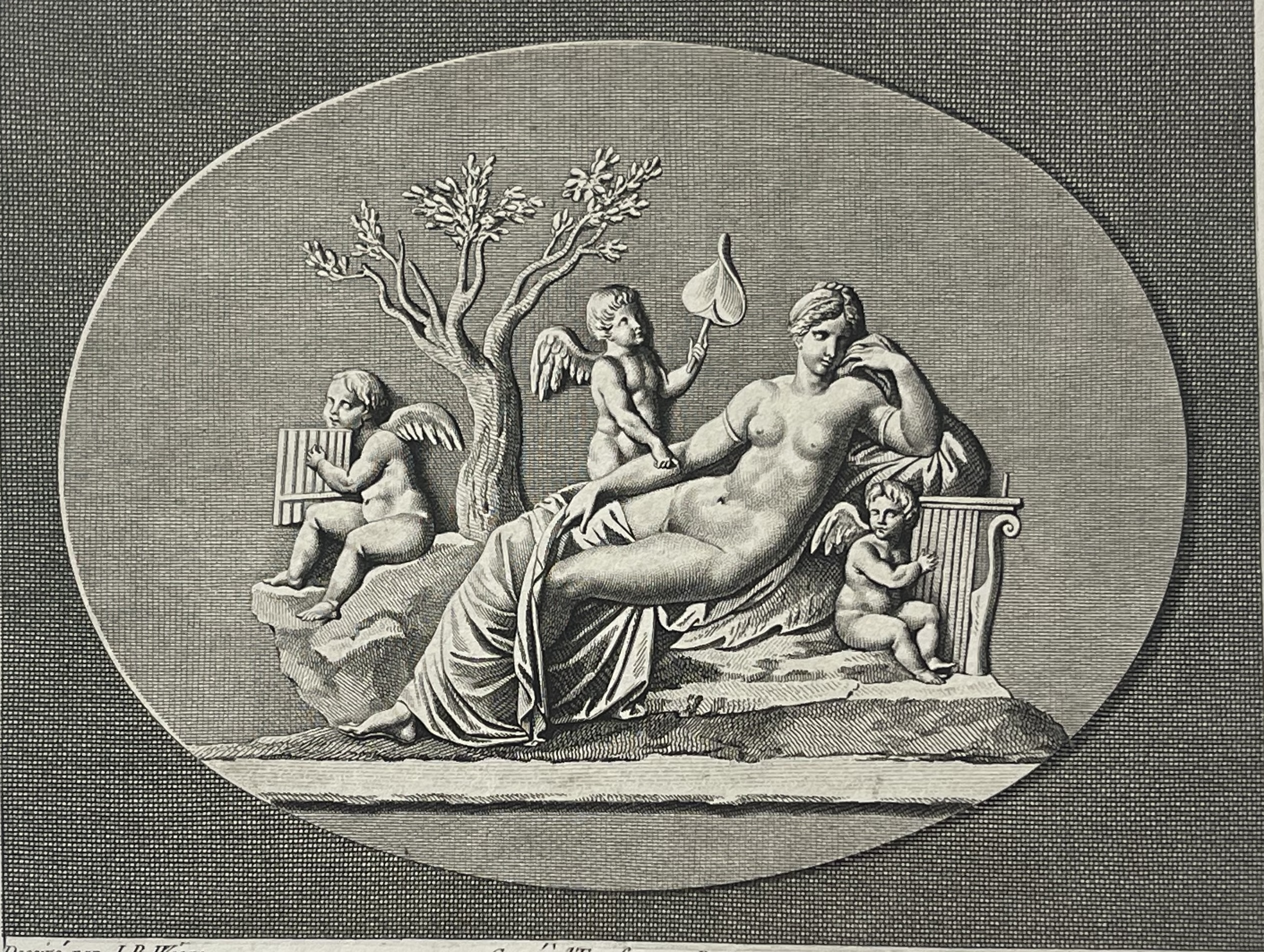
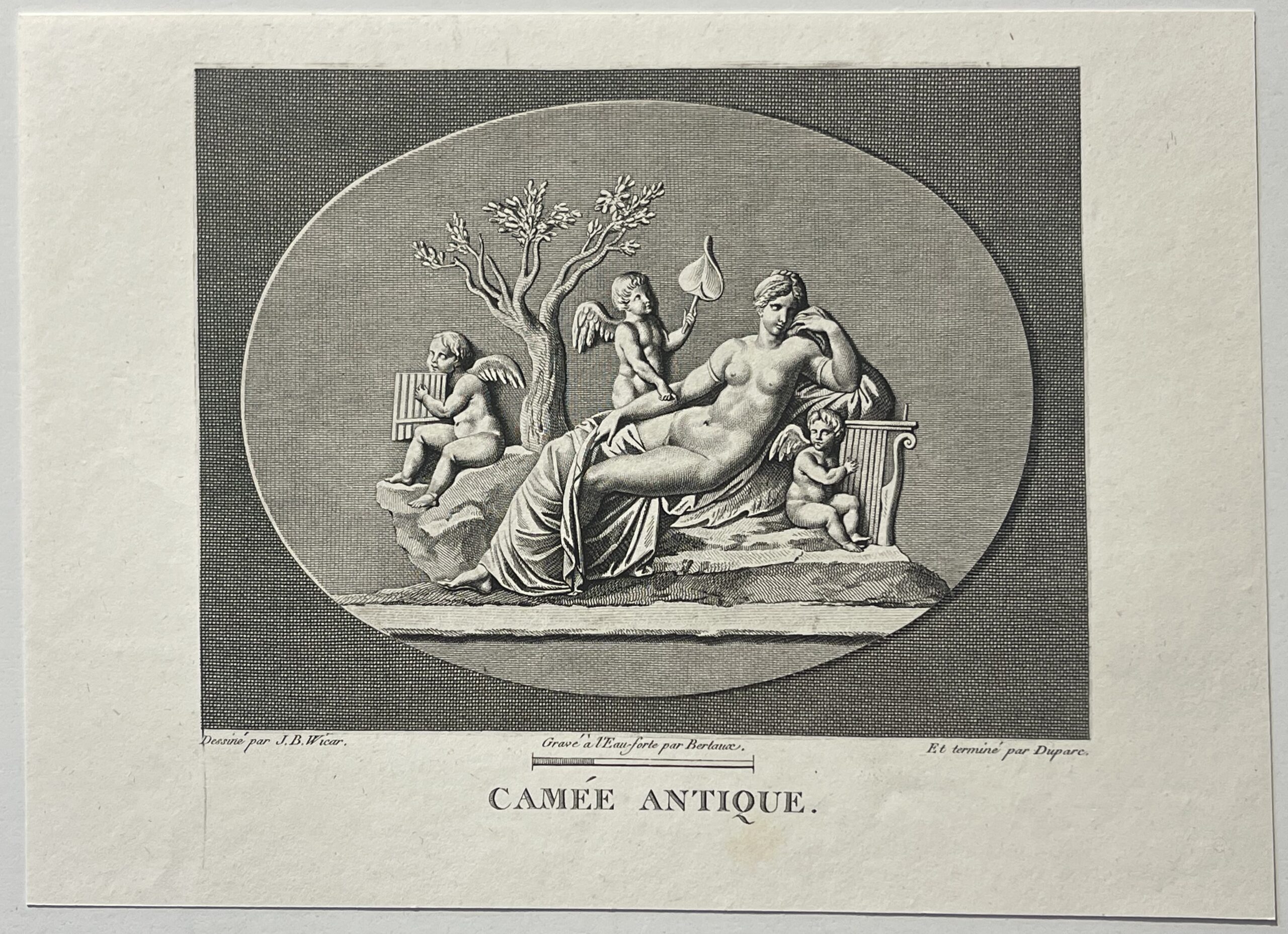
Beautiful antique French etching and burin engraving, circa 1790, depicting a classical cameo with Hermaphroditus reclining among three winged genii.
Drawn by Jean-Baptiste Wicar (1762–1834), etched by Jean Duplessi-Bertaux and finished by Marie-Alexandre Duparc.
An elegant Neoclassical composition with delicate figure modelling and a finely engraved oval medallion.
Date: Circa 1790 (documented 1789–1807).
Technique: Etching and burin.
Sheet: 21 × 15.3 cm.
Engraved image: 15 × 11.3 cm.
Reference: 4028-79R482
Description
Wicar antique cameo engraving – Hermaphroditus with three winged cherubs, French etching and burin engraving, circa 1790.
Artculture6 presents this beautiful antique French engraving after a drawing by Jean-Baptiste Wicar (1762–1834), etched by Jean Duplessi-Bertaux and finished by Marie-Alexandre Duparc.
The composition reproduces an ancient cameo depicting Hermaphroditus reclining among three winged genii.
Executed in the Neoclassical tradition, the engraving is distinguished by its finely modelled figures, elegant oval composition and remarkable cross-hatched background.
AN ANTIQUE CAMEO WITH HERMAPHRODITUS
The central figure is shown reclining upon elaborate drapery, with one hand supporting the head.
The body is represented in the elegant classical manner characteristic of ancient Greek and Roman art.
Three small winged figures surround Hermaphroditus.
On the left, a seated cherub plays a set of panpipes.
Behind the reclining figure, a second winged genius holds a fan.
On the right, a third cherub sits beside a lyre.
A small tree with delicately engraved branches completes the composition.
The scene is arranged inside a large oval medallion, reproducing the decorative appearance of an ancient carved gemstone.
HERMAPHRODITUS IN CLASSICAL MYTHOLOGY
Hermaphroditus was a figure of Greek mythology, traditionally described as the child of Hermes and Aphrodite.
According to the ancient myth recounted by Ovid, Hermaphroditus became united with the nymph Salmacis, forming a single being combining male and female characteristics.
The subject became particularly important in classical sculpture and the decorative arts.
Reclining representations of Hermaphroditus are among the characteristic subjects of ancient mythological imagery.
Such compositions were frequently reproduced in engraved gems, cameos and sculptures.
JEAN-BAPTISTE WICAR (1762–1834)
Jean-Baptiste Wicar was a French painter, draughtsman and collector.
Born in Lille in 1762, he developed an important artistic career in France and Italy.
He became particularly interested in classical antiquities, Renaissance art and the artistic collections of Florence.
His drawings after works of art preserved in Italian collections played an important role in making these treasures known to European audiences.
Wicar’s precise drawing and scholarly approach are particularly evident in his representations of ancient sculpture and engraved gemstones.
He died in Rome in 1834.
JEAN DUPLESSI-BERTAUX AND MARIE-ALEXANDRE DUPARC
The engraving was executed in two stages.
Jean Duplessi-Bertaux produced the original etching after Wicar’s drawing.
The plate was subsequently finished by the engraver Marie-Alexandre Duparc.
This combination of etching and burin engraving allowed the artists to achieve refined modelling and precise tonal effects.
The fine lines defining the bodies, the drapery and the musical instruments demonstrate the care devoted to the original design.
A BEAUTIFUL NEOCLASSICAL ENGRAVING
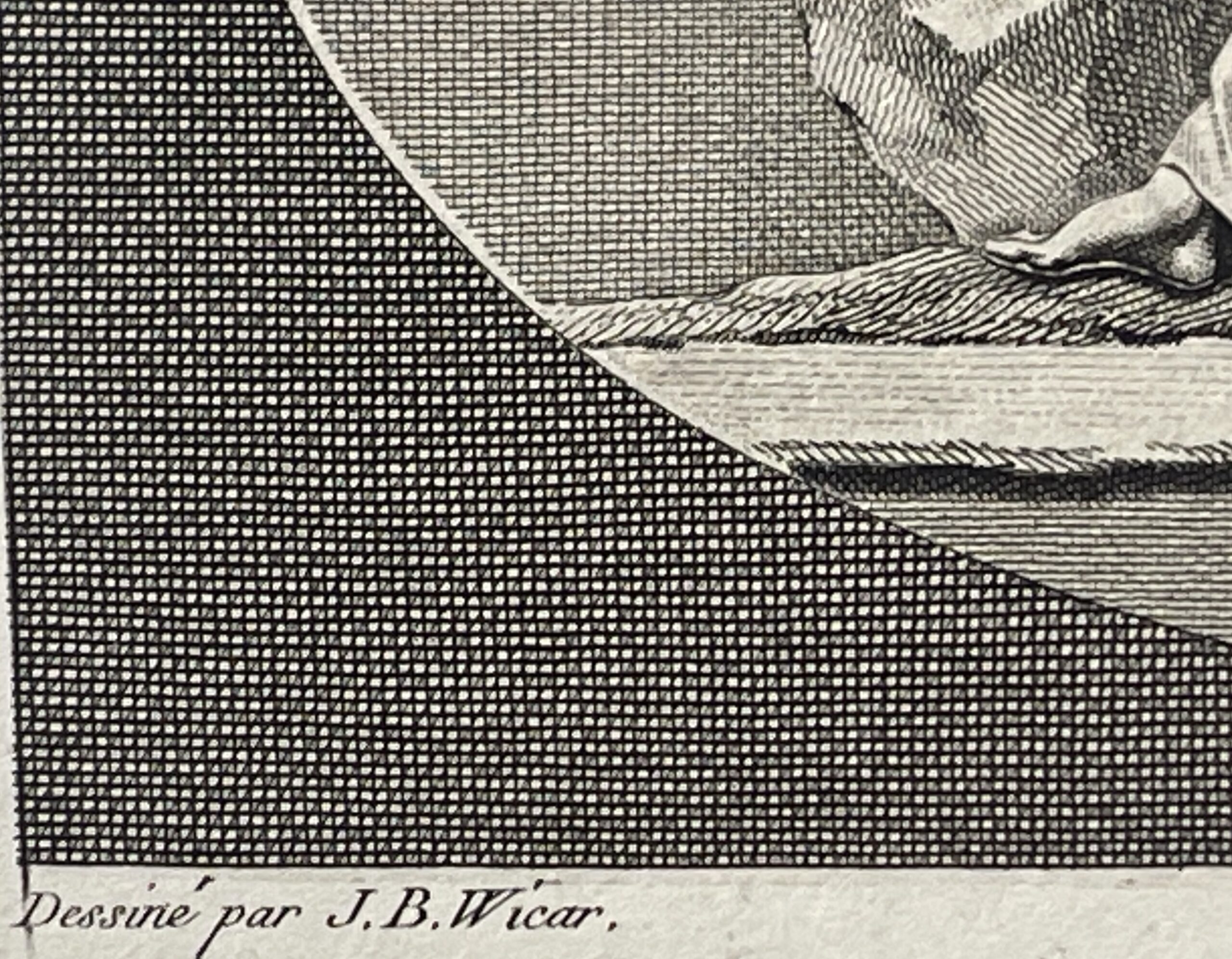
The oval composition is surrounded by a rectangular background composed of carefully engraved cross-hatching.
The contrast between the dense background and the delicately shaded figures gives the image a remarkable sculptural appearance.
The composition recalls the two-tone effects of classical cameos carved in layered gemstones.
The fine treatment of the reclining figure and the small winged genii reflects the artistic taste for classical antiquity during the late eighteenth century.
ORIGINAL ENGRAVED INSCRIPTIONS
The lower margin contains the original French inscriptions:
Dessiné par J. B. Wicar.
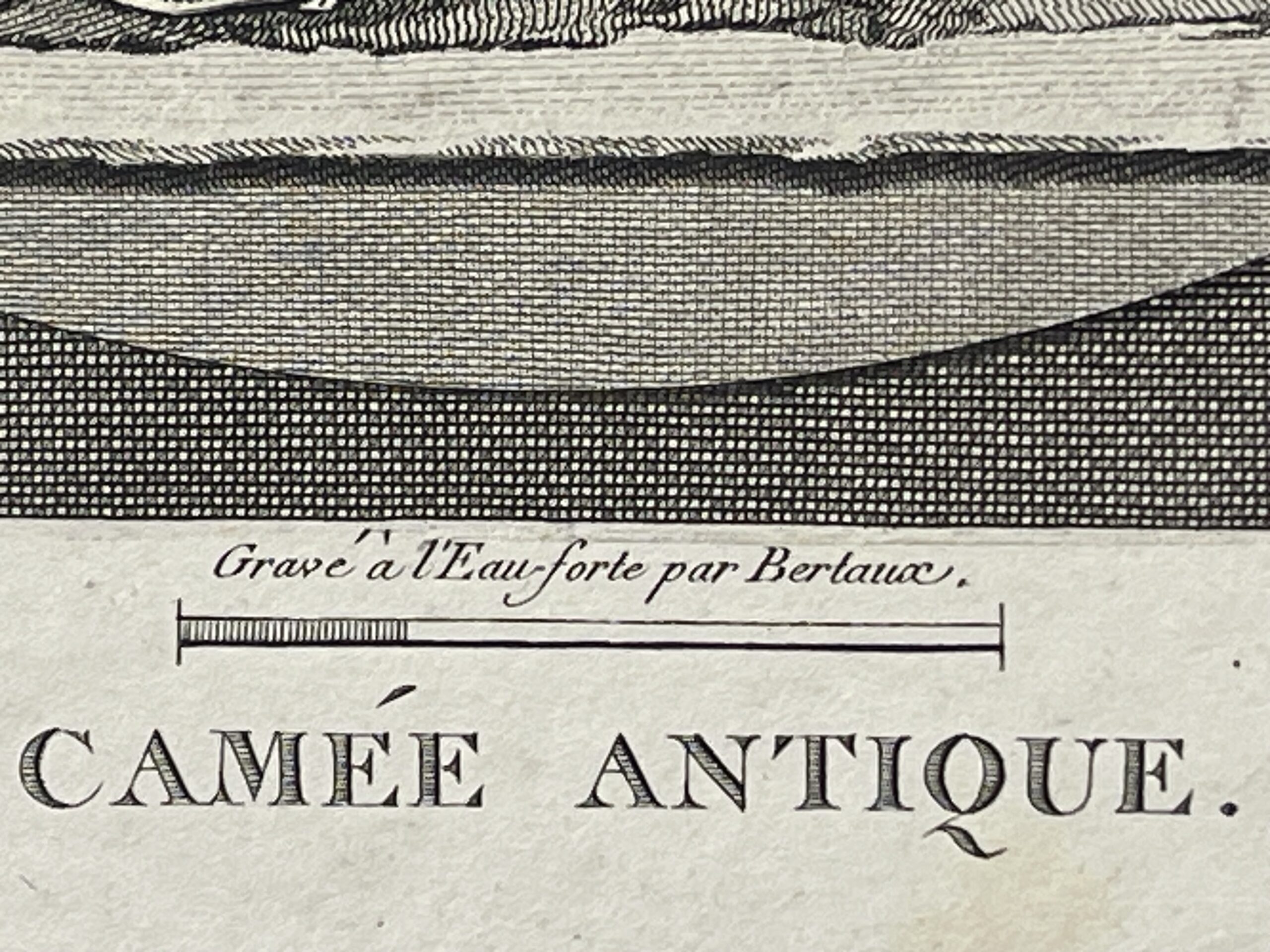
Gravé à l’Eau-forte par Bertaux.
Et terminé par Duparc.
The engraved title reads:
CAMÉE ANTIQUE.
A DOCUMENTED HISTORICAL PRINT
The Bibliothèque nationale de France records this composition under the title Camée antique — Hermaphrodite et génies.
The documented publication period extends from 1789 to 1807.
This engraving belongs to the French Neoclassical tradition of reproducing classical antiquities and works preserved in Italian art collections.
DETAILS
Country: France.
Title: Antique Cameo.
Subject: Hermaphroditus with three winged genii.
Draughtsman: Jean-Baptiste Wicar (1762–1834).
Etcher: Jean Duplessi-Bertaux.
Finishing engraver: Marie-Alexandre Duparc.
Date: Circa 1790, documented within 1789–1807.
Technique: Etching and burin engraving.
Period: Late 18th to early 19th century.
Sheet dimensions: 21 × 15.3 cm.
Engraved image: 15 × 11.3 cm.
Format: Landscape.
Reference: 4028-79R482.
CONDITION
Antique impression displaying the natural patina of aged paper.
The composition retains its fine engraved details, delicate figure modelling and original French inscriptions.
The sheet preserves its margins.
An attractive Neoclassical engraving after Jean-Baptiste Wicar, depicting a mythological antique cameo with Hermaphroditus and three winged genii.
Reference: 4028-79R482

Avis
Il n’y a pas encore d’avis.