Saint-André-sur-Sèvre 1860 – Château de Saint-Mesmin – French Medieval Castle Print
29,00 €
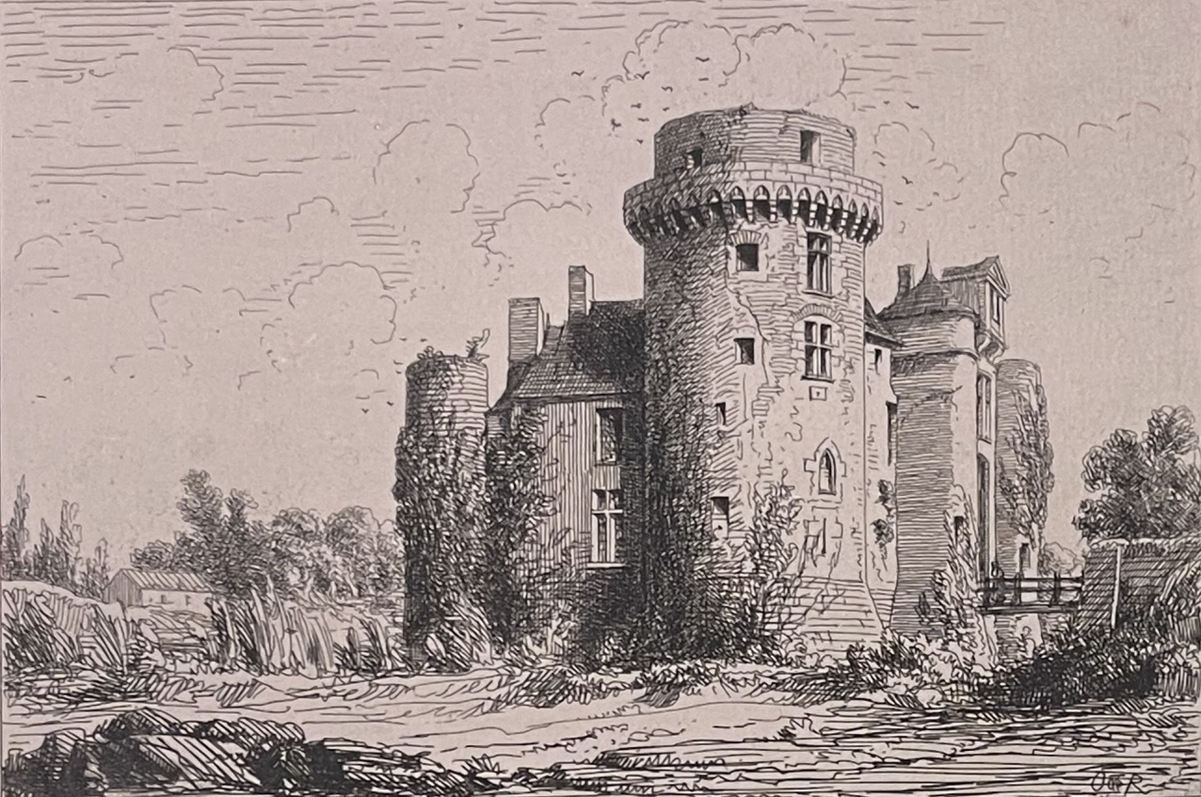
Antique French engraving circa 1860 depicting the medieval Château de Saint-Mesmin, located in Saint-André-sur-Sèvre, Deux-Sèvres, France.
A picturesque architectural view featuring the castle’s imposing cylindrical keep, defensive towers and historic buildings surrounded by trees.
Location: Saint-André-sur-Sèvre, Deux-Sèvres.
Date: Circa 1860.
Technique: Antique engraving.
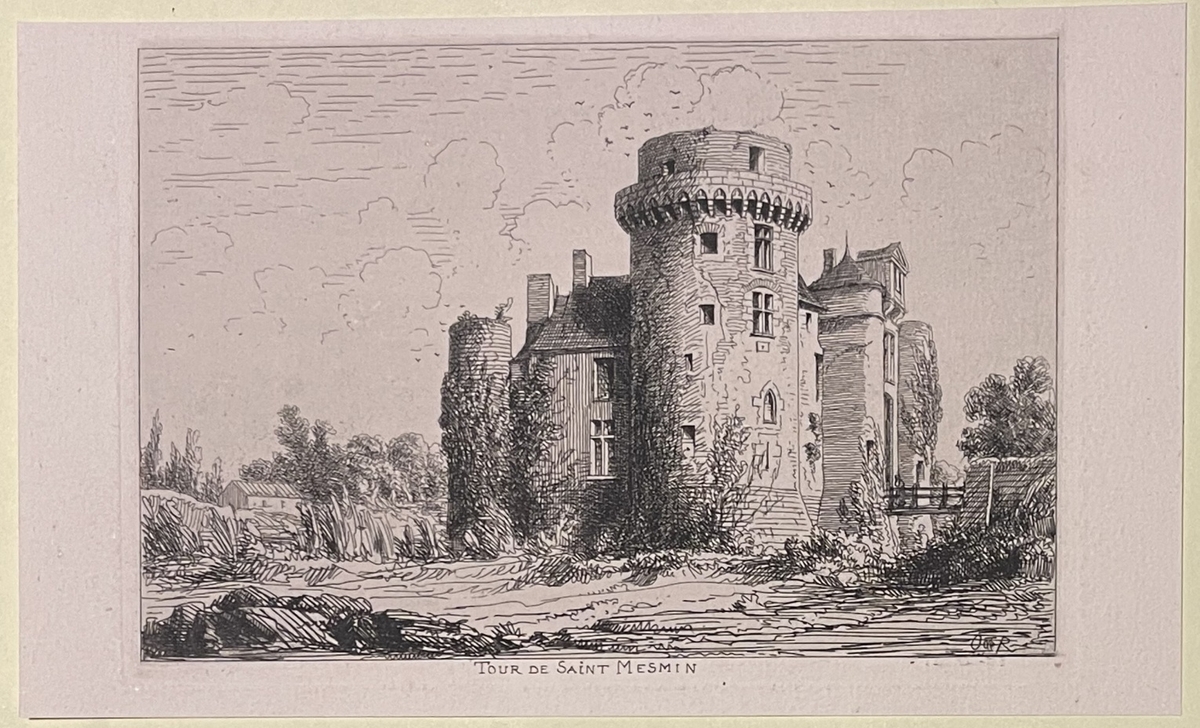
Original caption: Tour de Saint Mesmin.
Reference: 5329-60R744
Description
Saint Mesmin Castle antique engraving – Saint-André-sur-Sèvre, Deux-Sèvres, France – Circa 1860
An attractive nineteenth-century French engraving depicting the medieval Château de Saint-Mesmin, situated in Saint-André-sur-Sèvre, in the Deux-Sèvres department of western France.
This finely detailed architectural print presents a picturesque view of the historic castle, dominated by its imposing cylindrical keep and surrounding fortified buildings.
THE CHÂTEAU DE SAINT-MESMIN
The Château de Saint-Mesmin is a medieval fortress situated close to the historical border between Poitou and Vendée.
Although named after the nearby village of Saint-Mesmin, the castle is actually located within the commune of Saint-André-sur-Sèvre, in the Deux-Sèvres department.
Construction began around 1370, during the Hundred Years’ War.
Over the following centuries, the fortress was strengthened and adapted to changing military and residential requirements.
Its imposing cylindrical keep rises approximately 28 metres above the surrounding buildings.
The medieval complex includes towers, defensive walls, fortified entrances and residential structures.
A PICTURESQUE HISTORICAL VIEW
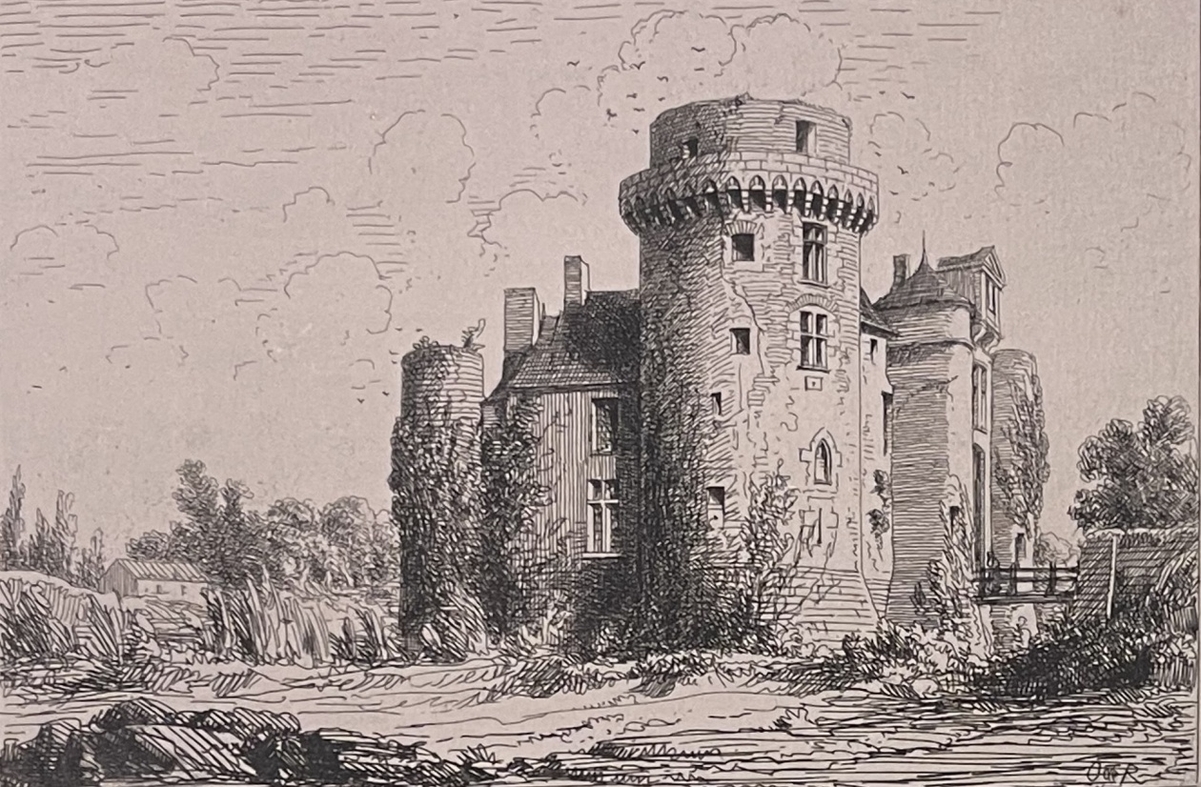
The engraving depicts the castle surrounded by trees and vegetation.
At the centre stands the massive cylindrical tower with its distinctive projecting machicolations.
A smaller tower appears to the left, partly concealed by trees.
The adjoining buildings display traditional roofs, stone walls and carefully drawn windows.
The foreground is occupied by uneven ground, stones and low vegetation.
The artist has given particular attention to the architectural details, creating an attractive composition combining medieval military architecture with a peaceful rural landscape.
THE CASTLE DURING THE FRENCH REVOLUTION
The Château de Saint-Mesmin also has historical associations with the Wars in the Vendée.
In February 1796, a group of approximately forty Vendéan royalists took refuge within the fortress.
They resisted Republican forces during a siege lasting several days.
This episode remains one of the most significant military events in the castle’s history.
The fortress subsequently underwent a long period of decline before extensive restoration work began during the late twentieth century.
A NINETEENTH-CENTURY ARCHITECTURAL ENGRAVING
The engraving displays fine linework and carefully arranged hatching.
The cylindrical tower, stone walls and surrounding buildings are represented with considerable detail.
Delicate shading creates depth throughout the architecture and landscape.
The composition also illustrates the picturesque interest in medieval castles that was characteristic of nineteenth-century French art.
The original printed title beneath the image reads:
TOUR DE SAINT MESMIN
AN ATTRACTIVE FRENCH HISTORICAL PRINT
This antique engraving is particularly appealing to collectors of French regional views, medieval architecture, historic castles and nineteenth-century European prints.
It is also of interest to collectors specialising in the heritage of Deux-Sèvres, Vendée and western France.
DETAILS
Location: Saint-André-sur-Sèvre, Deux-Sèvres, France.
Monument: Château de Saint-Mesmin.
Subject: Medieval fortified castle and cylindrical tower.
Date: Circa 1860.
Period: 19th century.
Technique: Antique black-and-white engraving.
Artist: Unidentified.
Original caption: Tour de Saint Mesmin.
Reference: 5329-60R744W.
CONDITION
Antique print displaying the natural patina of aged paper.
The architectural details, cylindrical keep, surrounding buildings and original caption remain clearly visible.
The sheet has broad margins with minor age-related marks visible in the photographs.
An attractive nineteenth-century engraving depicting an important medieval castle in western France.
Sheet dimensions: 18.9 × 11.3 cm
Engraved image: 15 × 10 cm

Avis
Il n’y a pas encore d’avis.