Rome 1704 – Ancient Temple of Nerva and Roman Architectural Ruins – Antique Engraving
49,00 €
Original antique engraving dated 1704, depicting monumental Roman architectural remains traditionally identified with the Temple of Nerva in Rome, Italy.
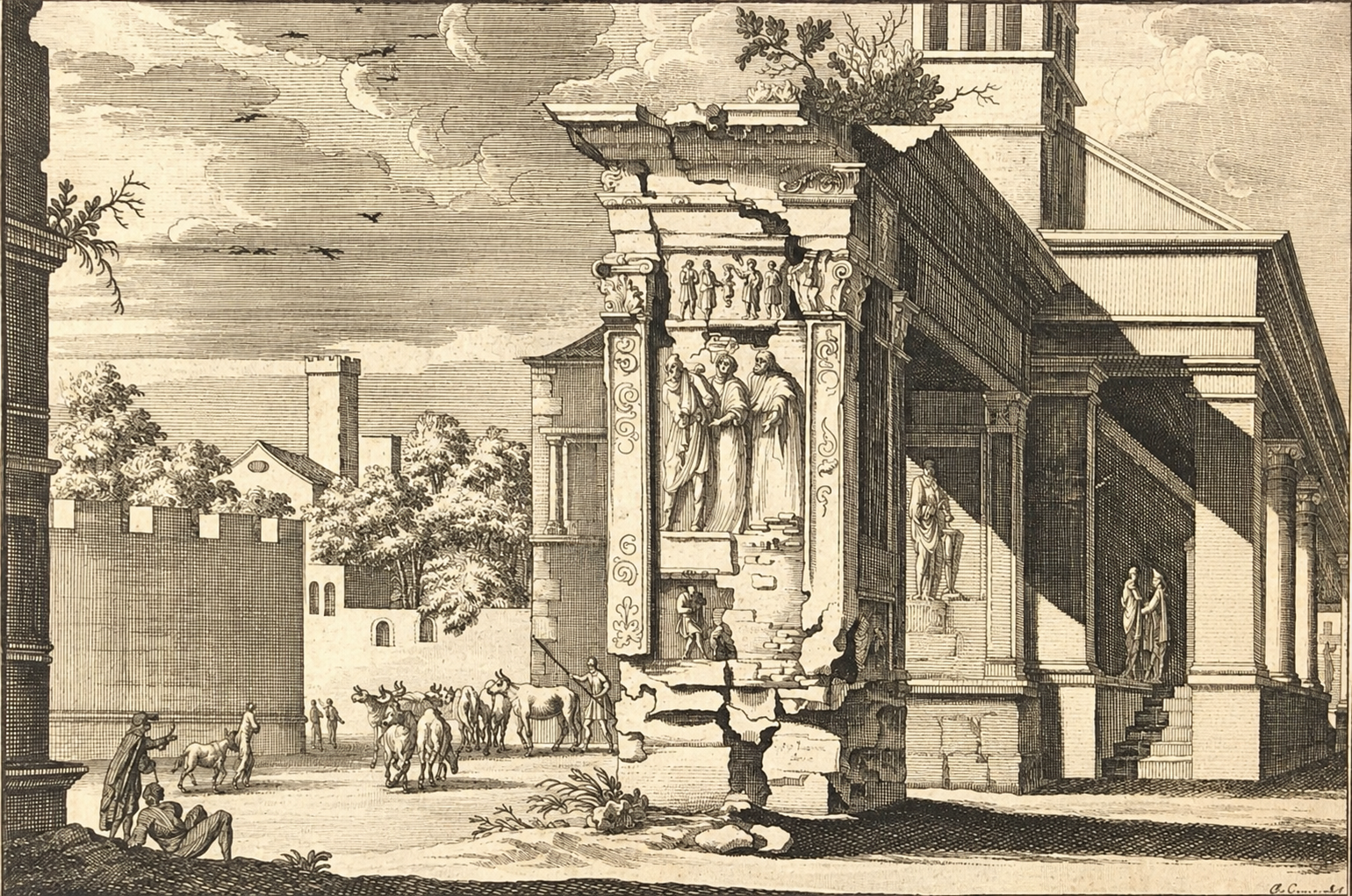
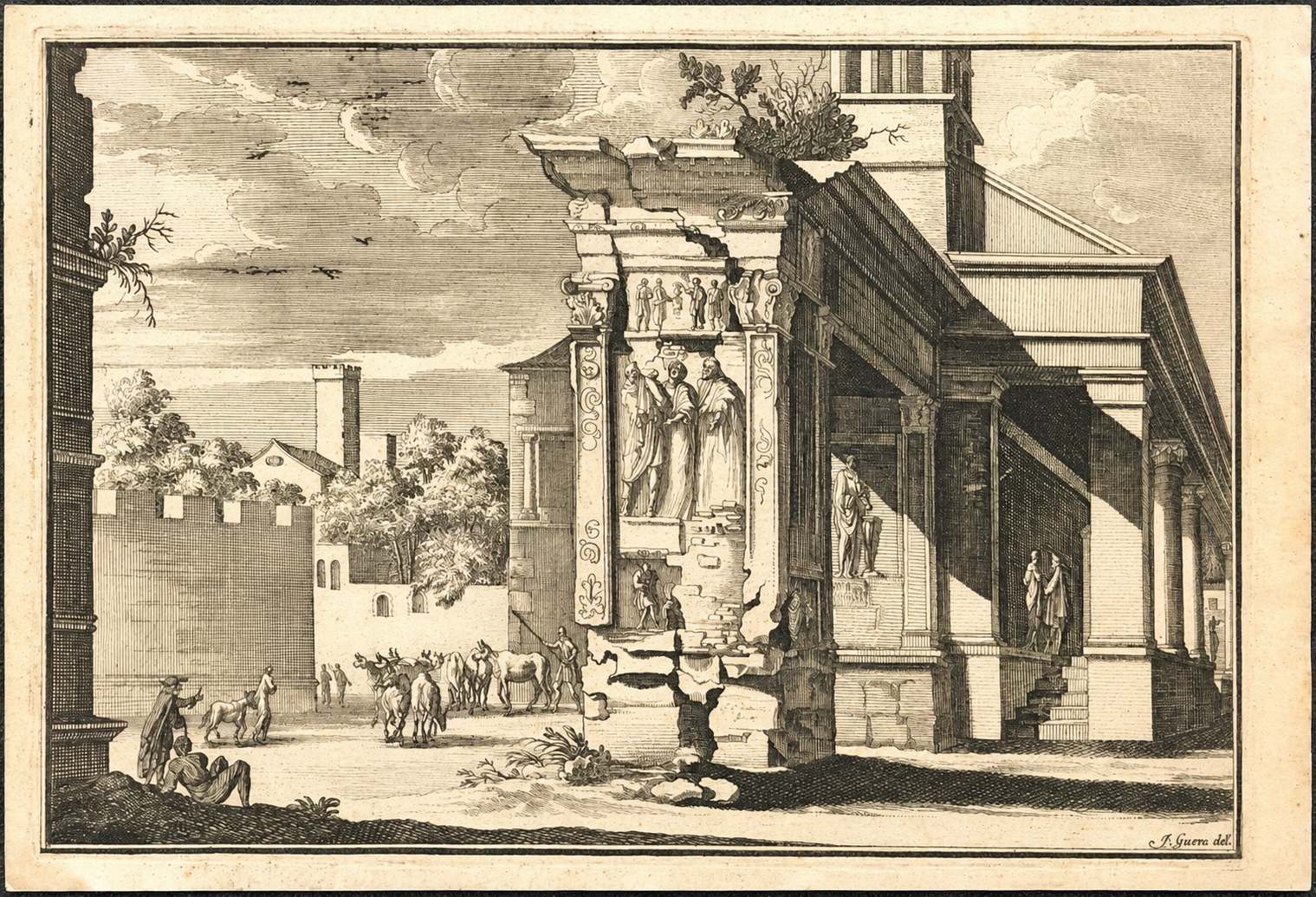
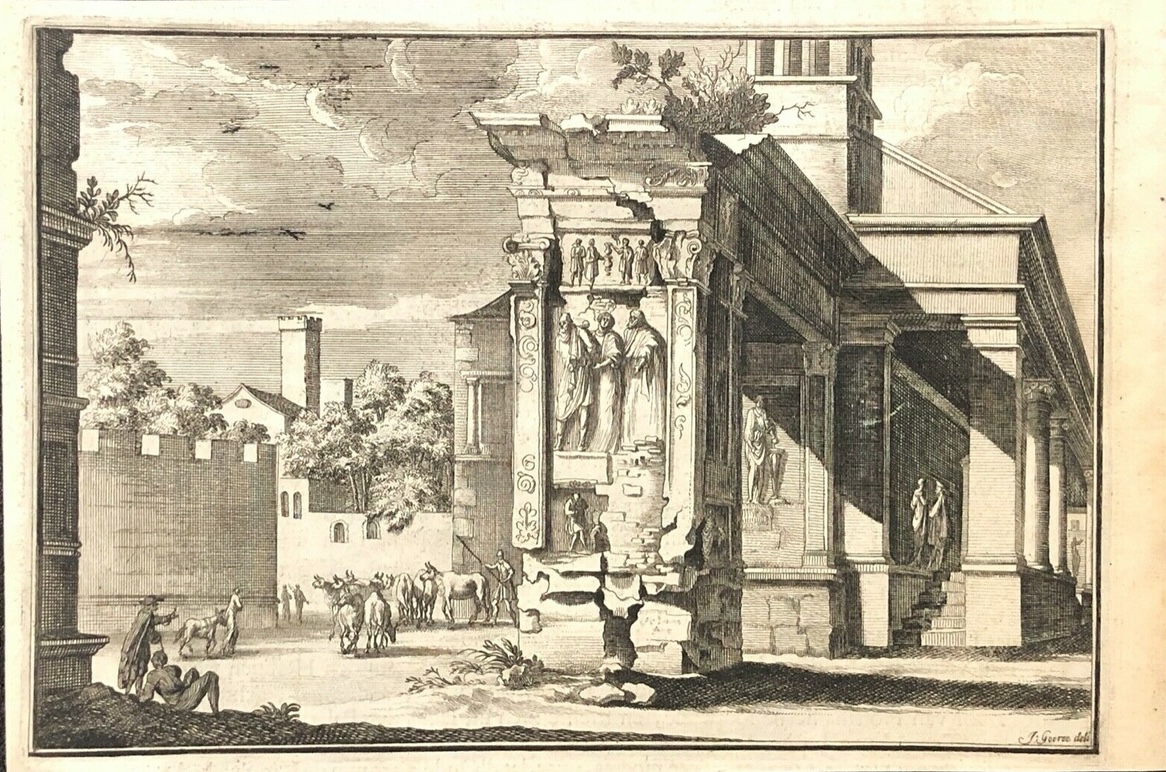
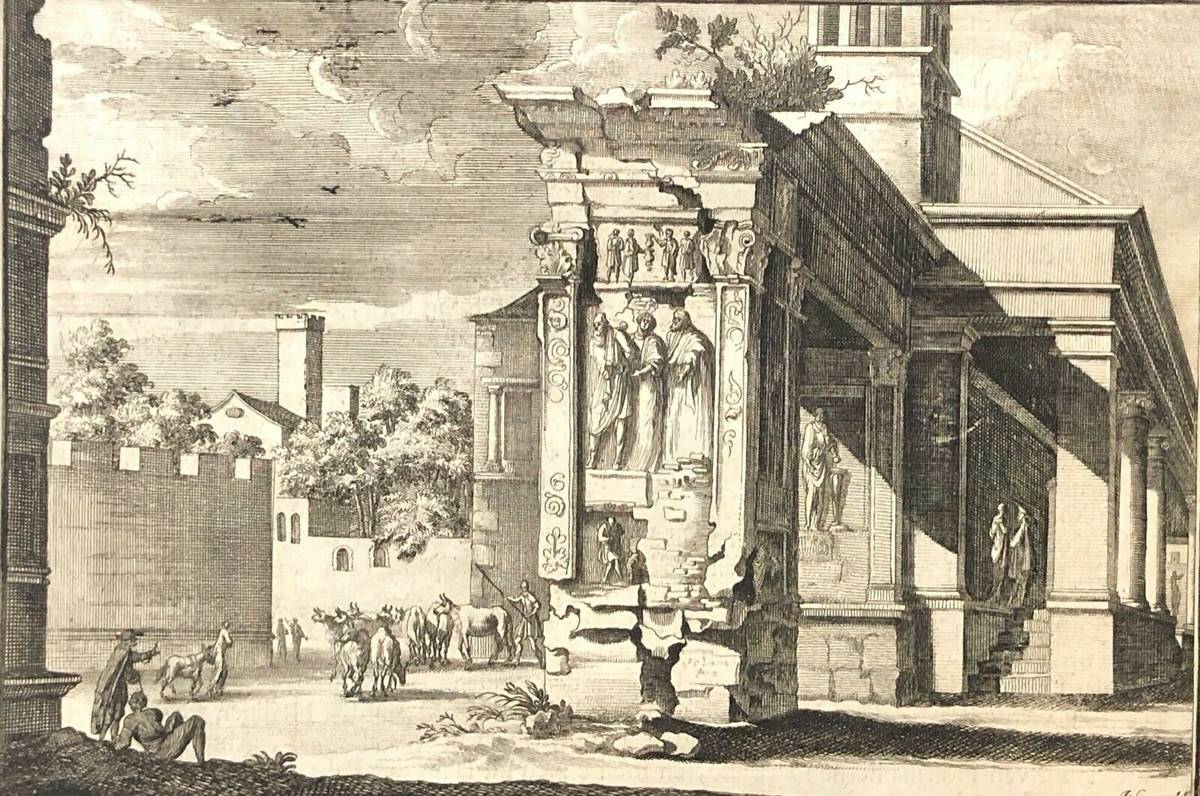
A finely engraved classical composition featuring sculptural reliefs, ancient columns, monumental ruins and figures in a picturesque landscape.
Sheet: 21 × 14.1 cm.
Engraved image: 19 × 13 cm.
Technique: Antique intaglio engraving.
Description
ROME TEMPLE OF NERVA ENGRAVING – ANCIENT ROMAN ARCHITECTURE – 1704
Original Early Eighteenth-Century Engraving of Classical Roman Monuments
An attractive antique engraving dated 1704, traditionally identified as a representation of the Temple of Nerva in Rome, Italy.
This elegant composition depicts monumental Roman architectural remains, decorated with sculptural reliefs, classical columns and figures in antique dress.
Published in the Netherlands, the engraving reflects the European fascination with ancient Roman architecture and historical ruins during the early eighteenth century.
AN IMPRESSIVE ROMAN ARCHITECTURAL COMPOSITION
At the centre stands a monumental fragment of ancient architecture, richly decorated with sculptural reliefs.
A narrow upper frieze contains several human figures, while a larger panel below depicts figures dressed in classical robes.
Cracks and missing sections emphasise the ruined condition of the masonry.
To the right, a substantial classical building features columns, steps, architectural niches and sculptural figures.
The strong perspective creates an impressive sense of scale and depth.
A PICTURESQUE ROMAN LANDSCAPE
The left side of the composition opens onto a landscape with ancient walls, trees and buildings.
Several figures and horses appear near the architectural remains.
Other people rest in the foreground, creating a lively contrast between the monumental ruins and everyday activity.
The engraving combines architectural interest with the picturesque atmosphere of historic Rome.
EMPEROR NERVA AND THE ROMAN EMPIRE
Marcus Cocceius Nerva (AD 30–98) was Roman emperor from AD 96 to 98.
He succeeded Domitian and played an important role in restoring political stability after a period of imperial conflict.
Although his reign was short, Nerva made a significant contribution to the succession of Roman emperors by adopting Trajan as his heir.
He is traditionally regarded as the first of the Five Good Emperors.
His name is associated with one of the great Imperial Forums of ancient Rome.
THE FORUM OF NERVA AND THE TEMPLE OF MINERVA
The Forum of Nerva, also called the Forum Transitorium, was begun under Emperor Domitian and inaugurated under Nerva in AD 97.
The forum occupied an important position between several of Rome’s major imperial monuments.
It contained a temple dedicated to Minerva, a goddess especially honoured by Domitian.
Much of this ancient temple was dismantled during the early seventeenth century.
Historical engravings and architectural drawings preserve valuable evidence of the monuments and the ways in which they were represented before and after their disappearance.
AN EARLY EIGHTEENTH-CENTURY ANTIQUE PRINT
The present engraving dates from 1704 and belongs to the European tradition of depicting Roman antiquities.
The composition combines monumental architecture, sculptural ornament and human figures.
Fine engraved lines reproduce the masonry, carved decoration, architectural shadows and surrounding vegetation.
The result is an attractive historical image of classical Rome.
A COLLECTABLE ANTIQUE ROMAN PRINT
This engraving is particularly appealing to collectors of Roman history, classical architecture, ancient monuments and early eighteenth-century European prints.
Its elaborate architectural details and association with Emperor Nerva give it both historical and decorative interest.
DETAILS
Subject: Temple of Nerva and ancient Roman architectural remains.
Location depicted: Rome, Italy.
Historical association: Emperor Marcus Cocceius Nerva.
Date of engraving: 1704.
Period: Early 18th century.
Technique: Antique intaglio engraving.
Paper: Antique laid paper.
Sheet dimensions: 21 × 14.1 cm.
Engraved image: 19 × 13 cm.
Artistic subject: Roman ruins, classical reliefs, monumental architecture and historical figures.
CONDITION
Antique impression showing the natural patina of aged paper.
The engraved architecture, sculptural details and figures remain well preserved and clearly visible.
An attractive early eighteenth-century engraving representing the architectural heritage of ancient Rome.
Reference: 4899-21R486

Avis
Il n’y a pas encore d’avis.