1871 Paris Commune – National Guard Artillery on Montmartre Hill – Antique Woodcut
59,00 €
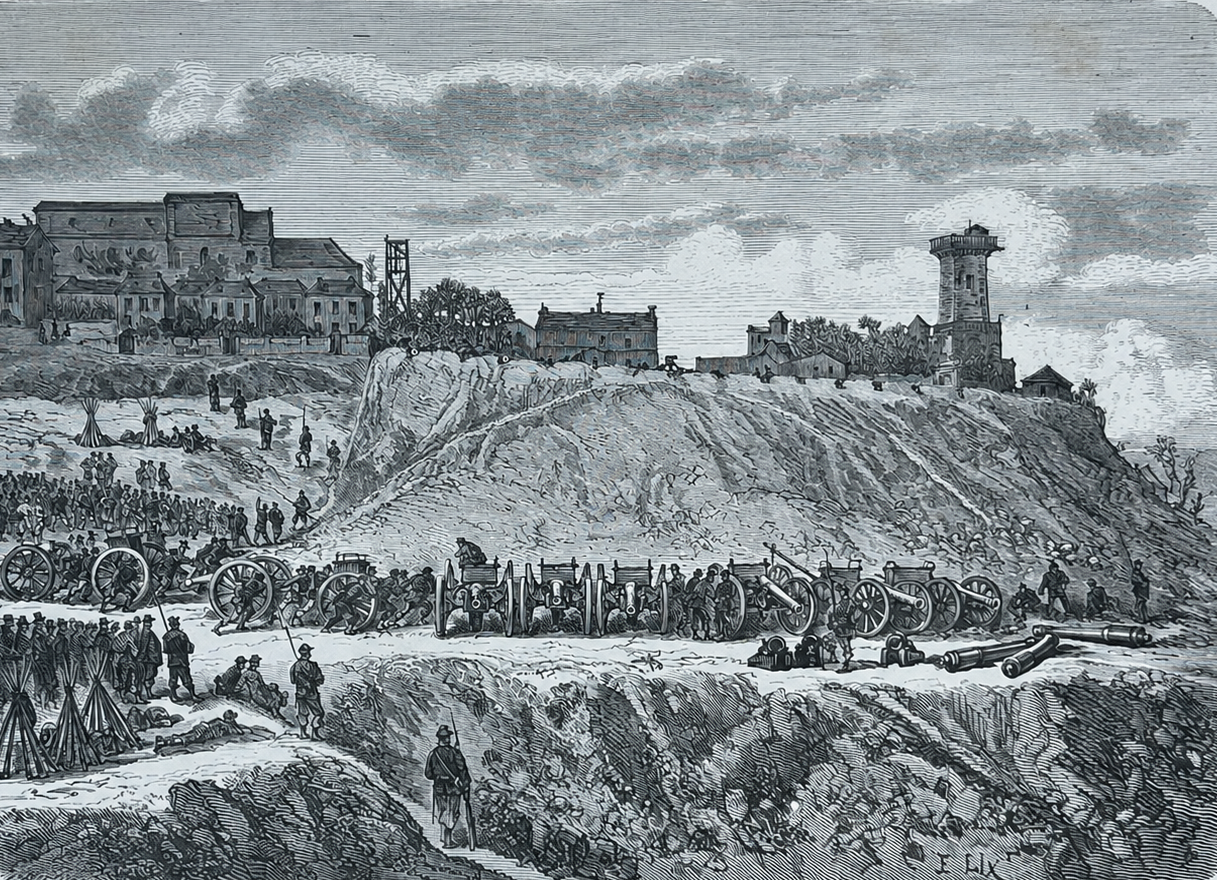
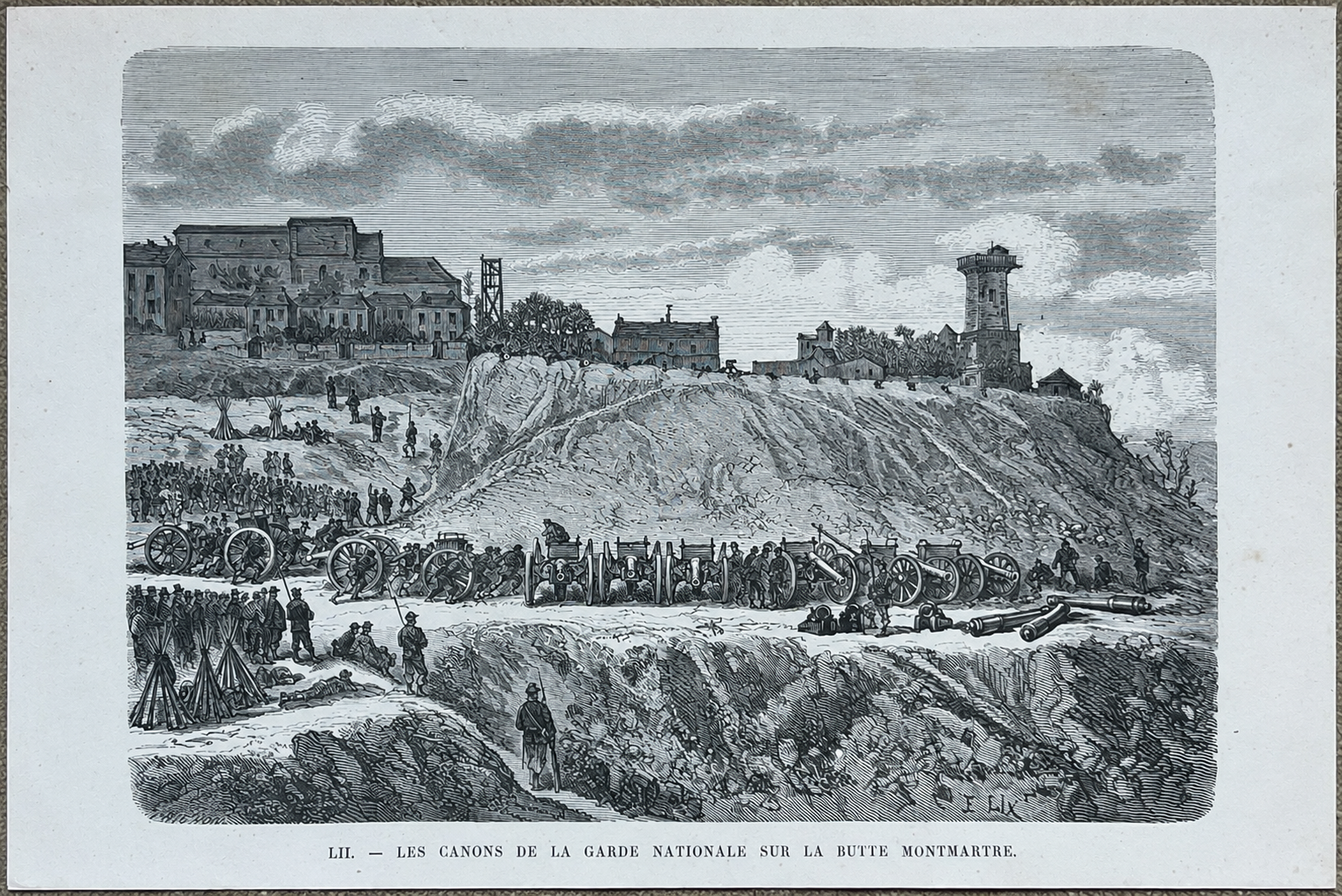
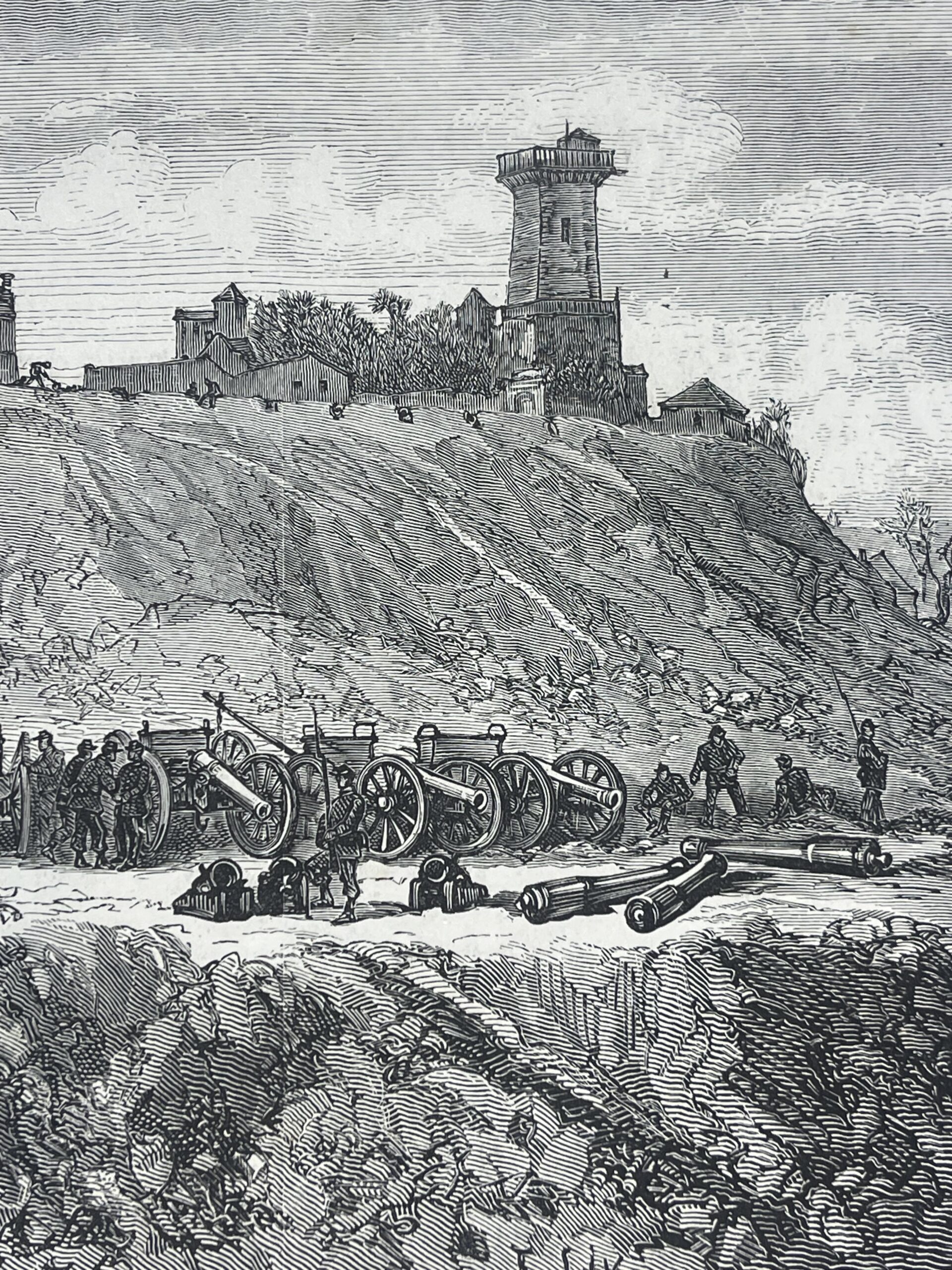
Original French wood engraving dated 1872, depicting the cannons of the National Guard assembled on Montmartre Hill during the events of the Paris Commune of 1871.
A detailed historical view of the artillery park associated with the uprising of 18 March 1871, showing numerous cannons, National Guardsmen and the buildings of Montmartre.
Sheet: 28.4 × 18.4 cm.
Engraved image: 23.3 × 16.5 cm.
Period: 19th century.
Description
PARIS COMMUNE 1871 ENGRAVING – NATIONAL GUARD CANNONS ON MONTMARTRE HILL
Original 19th-Century French Wood Engraving – 1872
An important historical French wood engraving dated 1872, depicting the cannons of the National Guard assembled on Montmartre Hill in Paris during the events surrounding the Paris Commune of 1871.
The composition presents a detailed view of an extensive artillery park, with numerous cannons, National Guardsmen and military equipment arranged beneath the heights of Montmartre.
The subject is particularly significant because the attempted seizure of these cannons by government troops on 18 March 1871 triggered the uprising that led to the establishment of the Paris Commune.
THE CANNONS OF MONTMARTRE – 18 MARCH 1871
Following the Franco-Prussian War of 1870 and the siege of Paris, tensions between the French government and the population of the capital increased considerably.
During the siege, many artillery pieces had been financed through public subscriptions to assist in the defence of Paris.
The National Guard regarded these weapons as belonging to the people of the city.
Large numbers of cannons were assembled on the heights of Montmartre and Belleville.
The French government, led by Adolphe Thiers, decided to recover the artillery.
During the night of 17–18 March 1871, regular army troops were sent to Montmartre to seize the cannons.
The operation encountered strong opposition from the local population and members of the National Guard.
Many women and other residents gathered around the soldiers, demanding that the artillery remain in Parisian hands.
When ordered to fire upon the crowd, some regular soldiers refused and fraternised with the population.
The failure of the operation became the immediate catalyst for the revolutionary uprising.
THE BEGINNING OF THE PARIS COMMUNE
The events of 18 March 1871 marked a decisive turning point in French history.
Following the uprising, the government withdrew from Paris to Versailles.
The Central Committee of the National Guard temporarily assumed authority in the capital.
Municipal elections were held on 26 March, and the Paris Commune was formally proclaimed on 28 March 1871.
The Commune subsequently governed Paris until its suppression during the Bloody Week of 21–28 May.
These events became one of the most significant episodes in the political and social history of nineteenth-century France.
A REMARKABLE VIEW OF THE MONTMARTRE ARTILLERY PARK
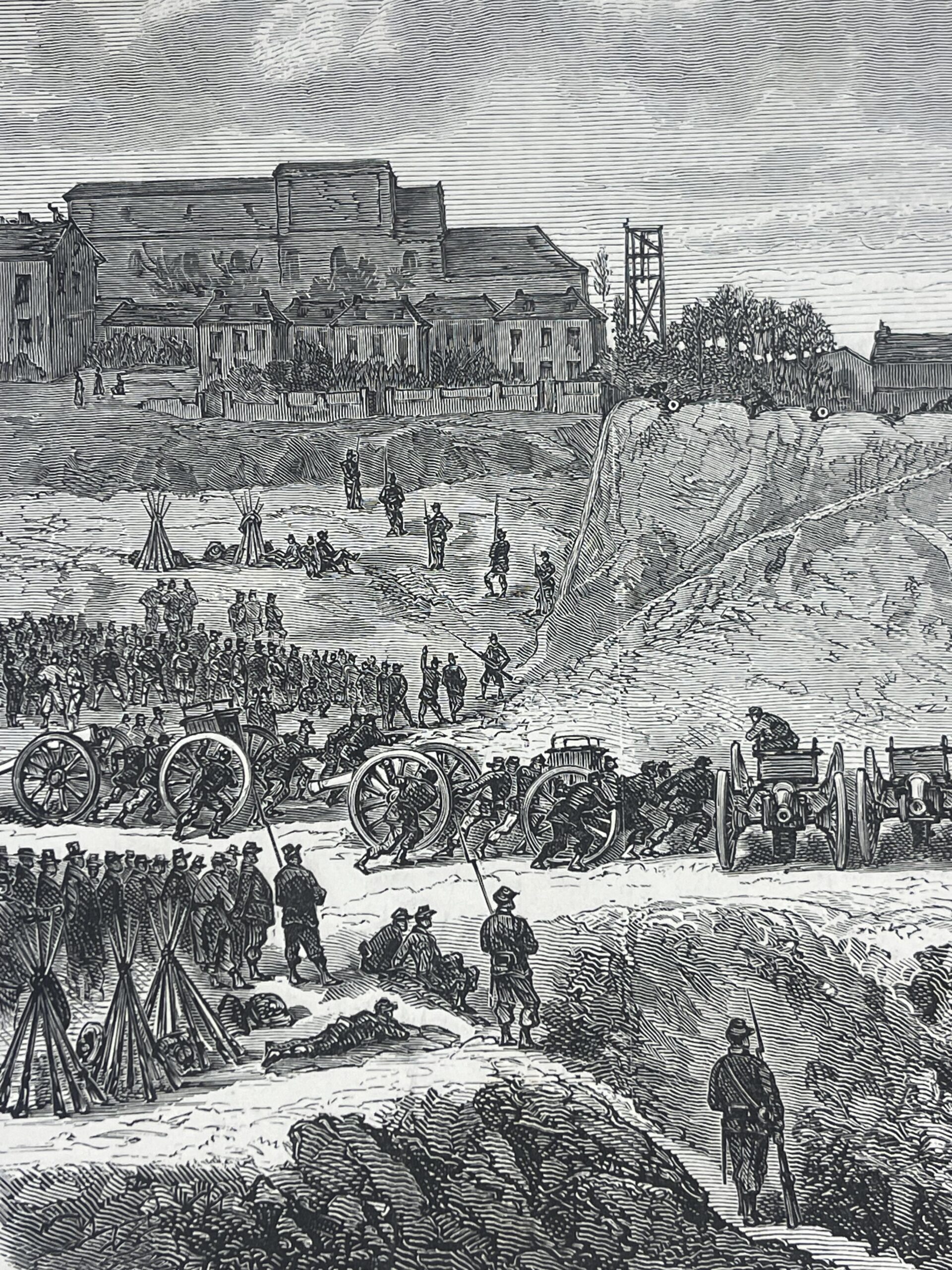
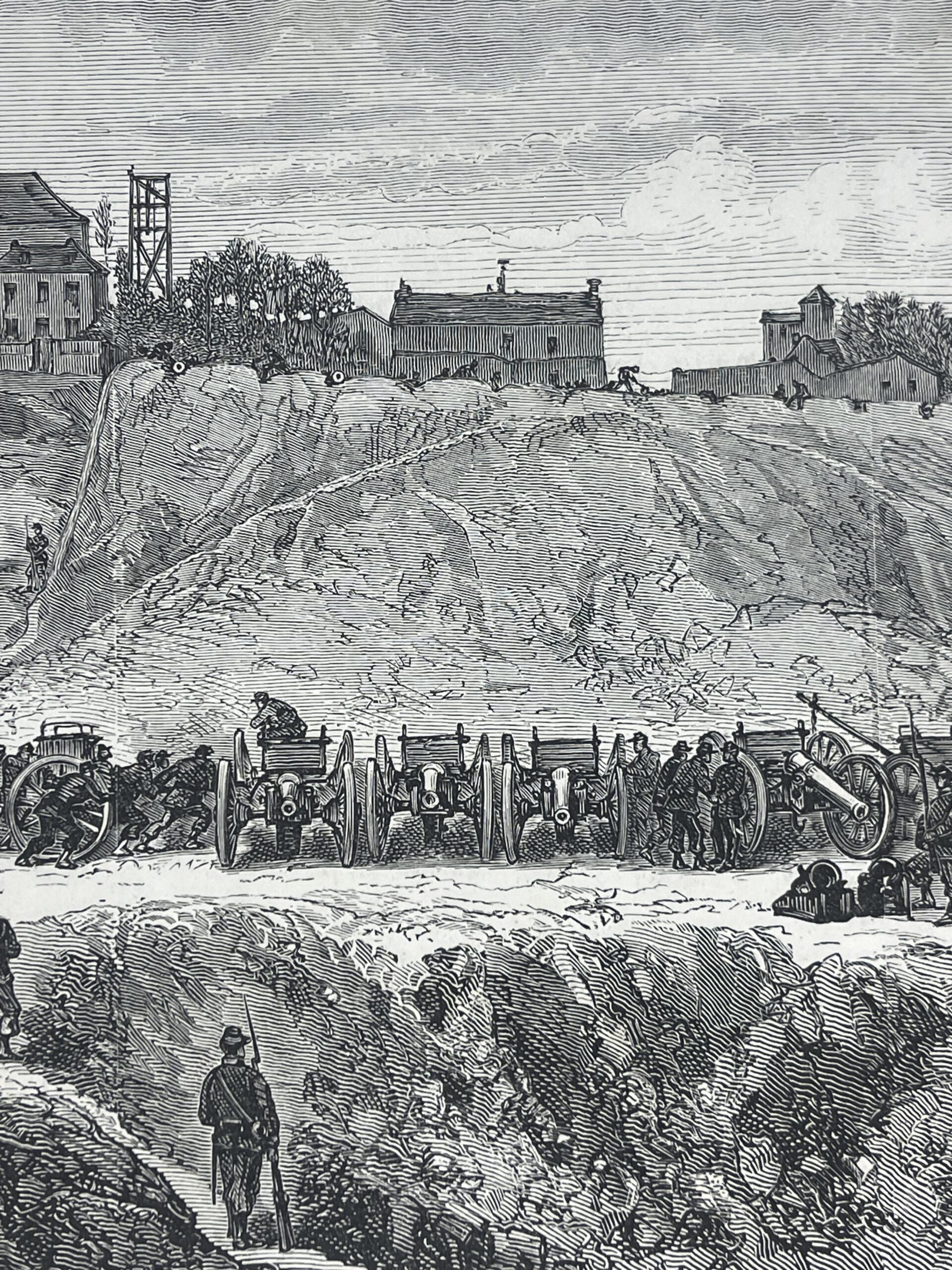
The engraving depicts an extensive collection of cannons positioned across an open area below Montmartre Hill.
Numerous artillery pieces are arranged in long rows, their wheels, gun barrels and carriages carefully represented.
Groups of National Guardsmen stand among the cannons, while other figures move across the surrounding ground.
Bundles of rifles are visible on the left side of the composition.
In the background, buildings and a prominent tower rise above the slope, giving the scene considerable architectural and topographical interest.
The panoramic arrangement allows the viewer to appreciate both the scale of the artillery park and the military organisation of the period.
THE NATIONAL GUARD DURING THE PARIS COMMUNE
The French National Guard played a central role in the political events of 1871.
Originally established as a citizen militia, it underwent significant expansion during the Franco-Prussian War and the siege of Paris.
Many Parisian battalions became increasingly opposed to the government’s decisions following the armistice.
Their organisation into a federation helped establish the Central Committee of the National Guard as a major political force.
The cannons assembled at Montmartre came to symbolise the conflict between the national authorities and the revolutionary population of Paris.
AN IMPORTANT HISTORICAL DOCUMENT
This antique engraving provides a fascinating visual representation of the artillery associated with the origins of the Paris Commune.
Its historical subject makes it particularly attractive to collectors interested in revolutionary movements, the Franco-Prussian War, military history and nineteenth-century French political events.
The detailed treatment of the artillery, military figures and Montmartre landscape adds considerable documentary and decorative interest.
DETAILS
Original title: Les canons de la Garde nationale sur la butte Montmartre.
English title: National Guard Cannons on Montmartre Hill.
Historical event: Paris Commune of 1871.
Location: Montmartre, Paris, France.
Date of engraving: 1872.
Technique: Original wood engraving.
Period: 19th century.
Sheet dimensions: 28.4 × 18.4 cm.
Engraved image: 23.3 × 16.5 cm.
Subject: National Guard, artillery, Montmartre and the Paris Commune.
CONDITION
Antique impression showing the natural patina of aged paper.
The engraved composition and its extensive military details remain well preserved.
An attractive historical wood engraving documenting one of the most significant events associated with the beginning of the Paris Commune.
Reference: 5123-8R614




Avis
Il n’y a pas encore d’avis.