Marseille Clerissy Faience Tile — Saint-Jean-du-Desert, Floral Decoration c.1700
149,00 €
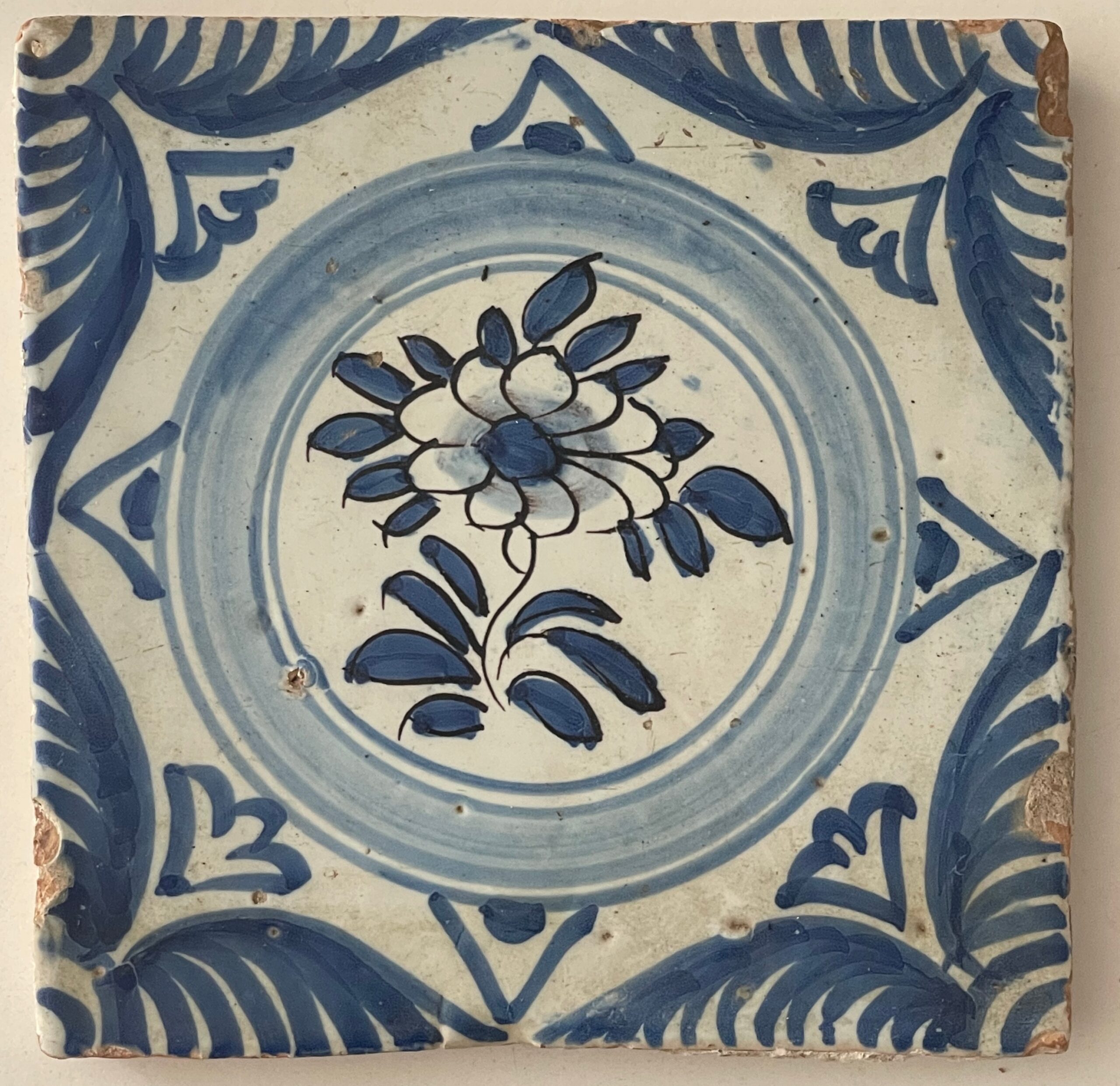
Rare Marseille faience tile from the Clerissy factory at Saint-Jean-du-Desert, late 17th–early 18th century. Hand-painted floral decoration in blue and manganese brown. A matching design is held at the Musée Borély. Measures 12.5 × 12.7 × 1.2 cm; weight 320 g. Edge chips, glaze losses and deposits on the reverse.
Description
Marseille Clerissy faience tile, made at Saint-Jean-du-Desert in the late 17th or early 18th century.
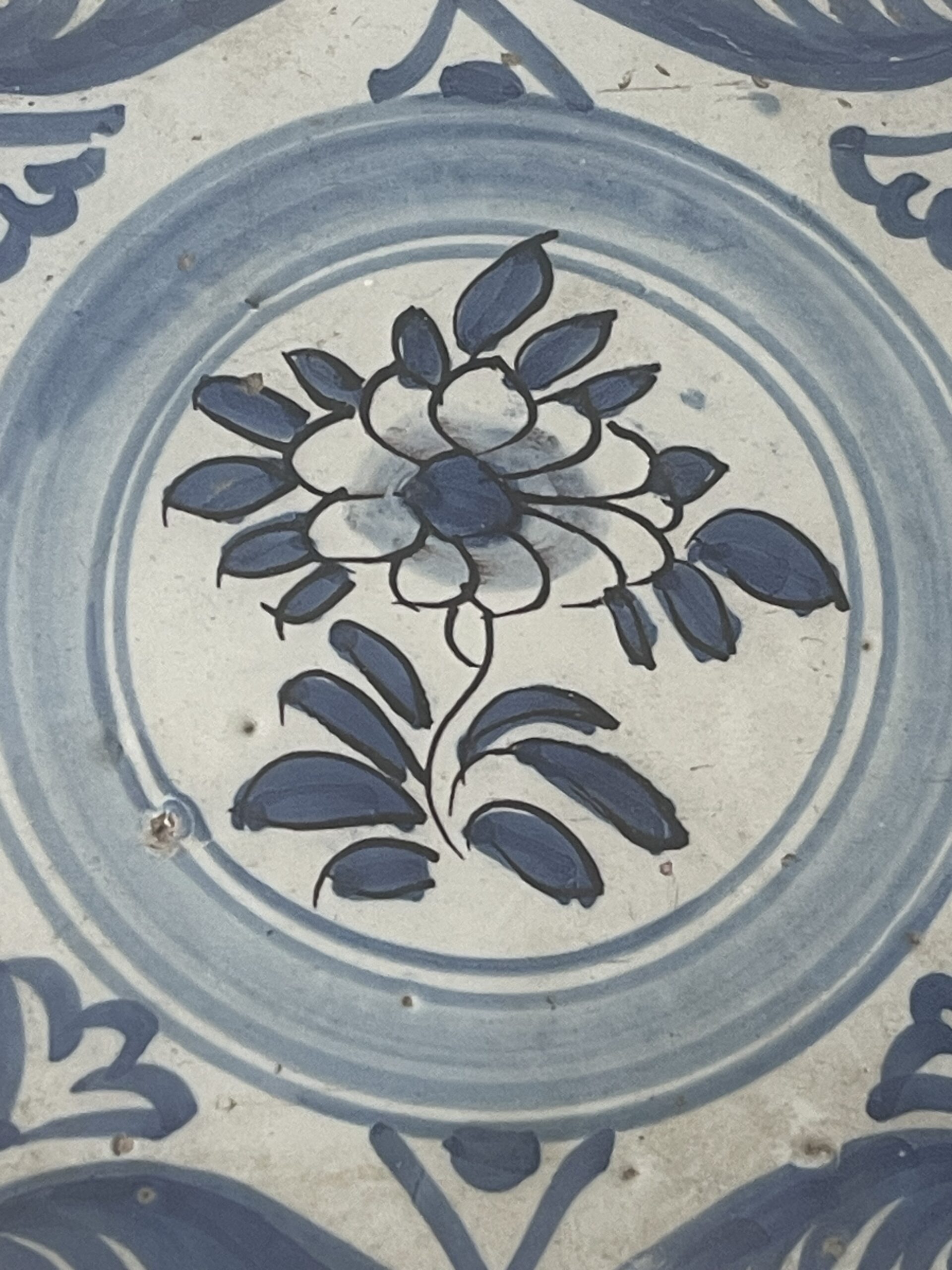
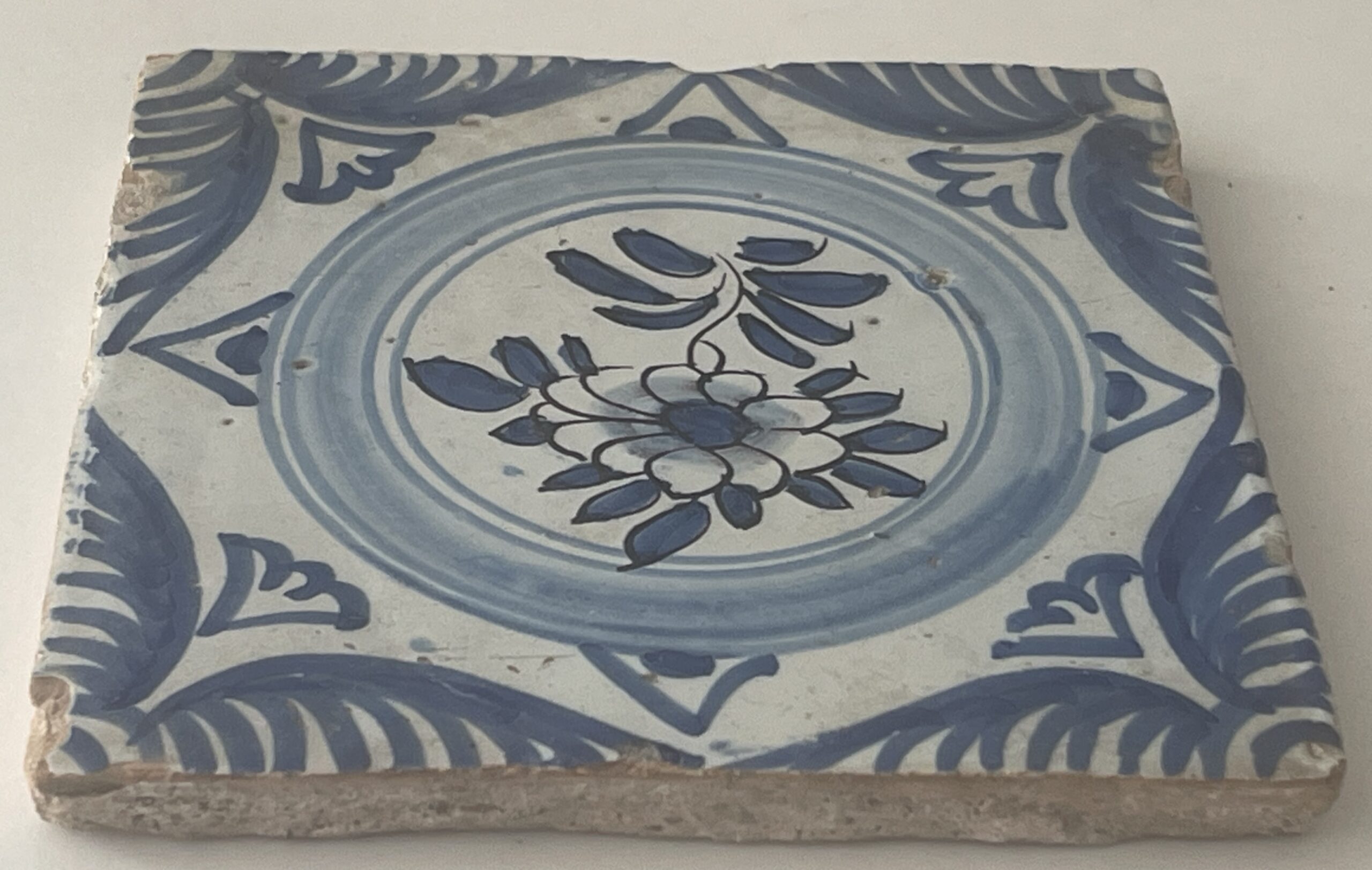
This rare architectural tile features a hand-painted floral design in blue and manganese brown against a creamy white glazed ground. A flowering stem with spreading leaves fills the central circular medallion, framed by fine concentric lines and a broad blue band. Sweeping stylised palmettes and small geometric ornaments complete the surrounding decoration.
The different shades of blue, dark floral outlines and visible variations in the brushwork give the tile a lively decorative character. Its compact dimensions make it suitable for display within a collection of early French ceramics or antique architectural tiles.
Documented design
This pattern is recorded in Marguerite Desnuelle’s publication on Saint-Jean-du-Desert faience, in Hervé Hardouin’s study of the district’s faience factories and pottery workshops, and in an archaeological report. An example of the same pattern is held in the collections of the Musée Borély in Marseille. These references relate to the design; the tile offered here is not presented as having museum provenance.
Details
Origin: Saint-Jean-du-Desert, Marseille, Bouches-du-Rhone, France.
Factory: Clerissy.
Period: late 17th to early 18th century, circa 1700.
Material: faience with hand-painted blue and manganese-brown decoration.
Dimensions: 12.5 × 12.7 cm.
Thickness: 1.2 cm.
Weight: 320 g.
Condition
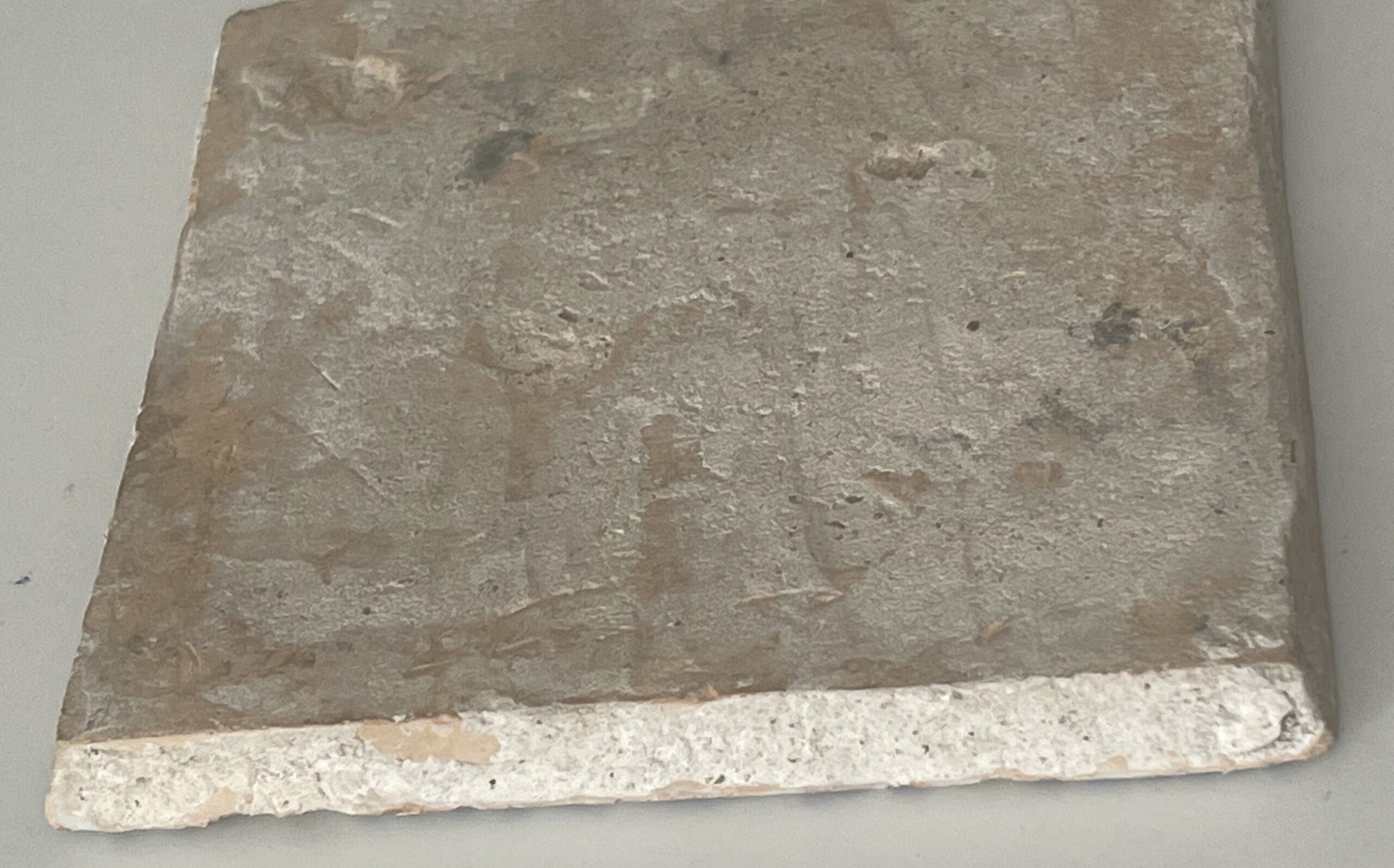
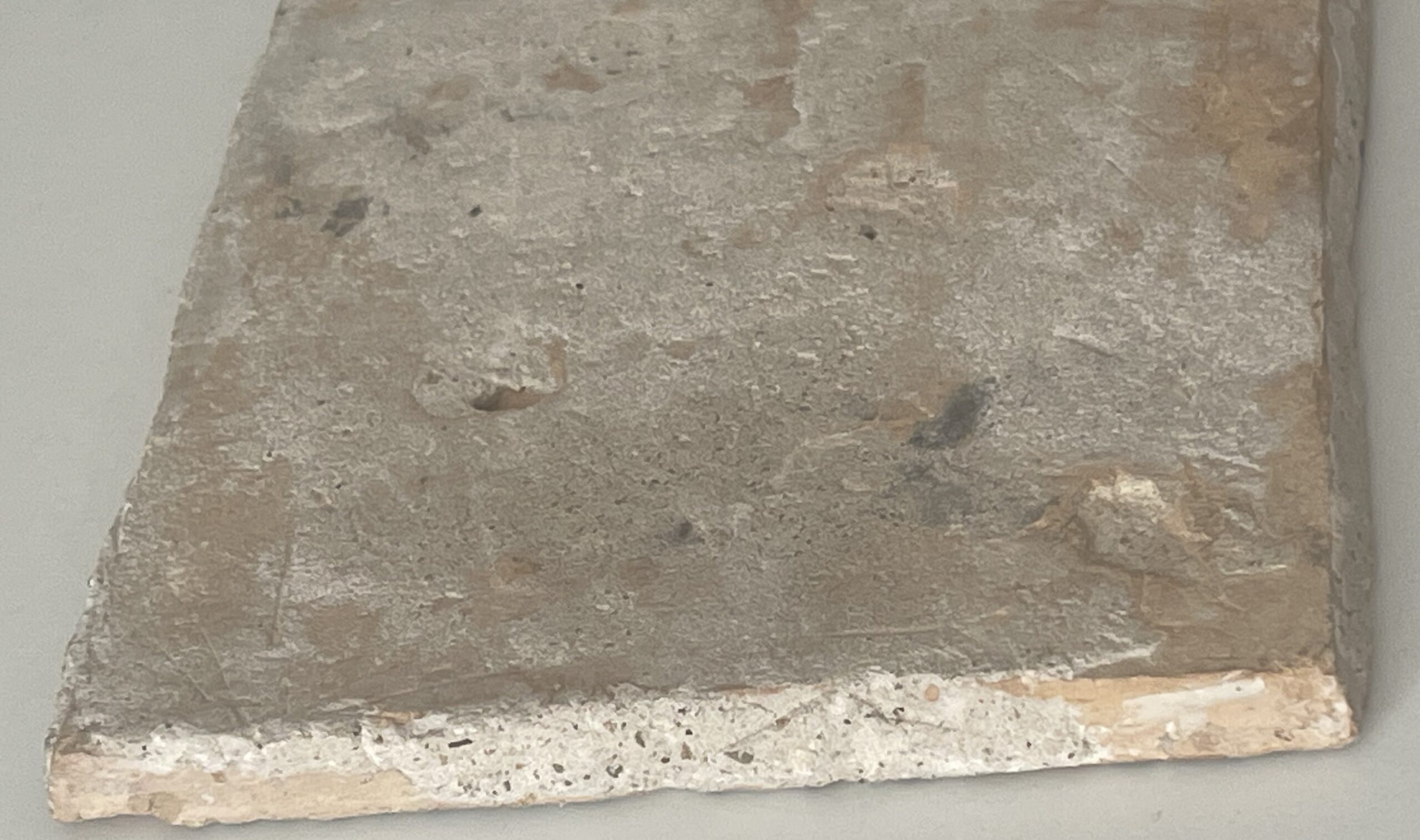
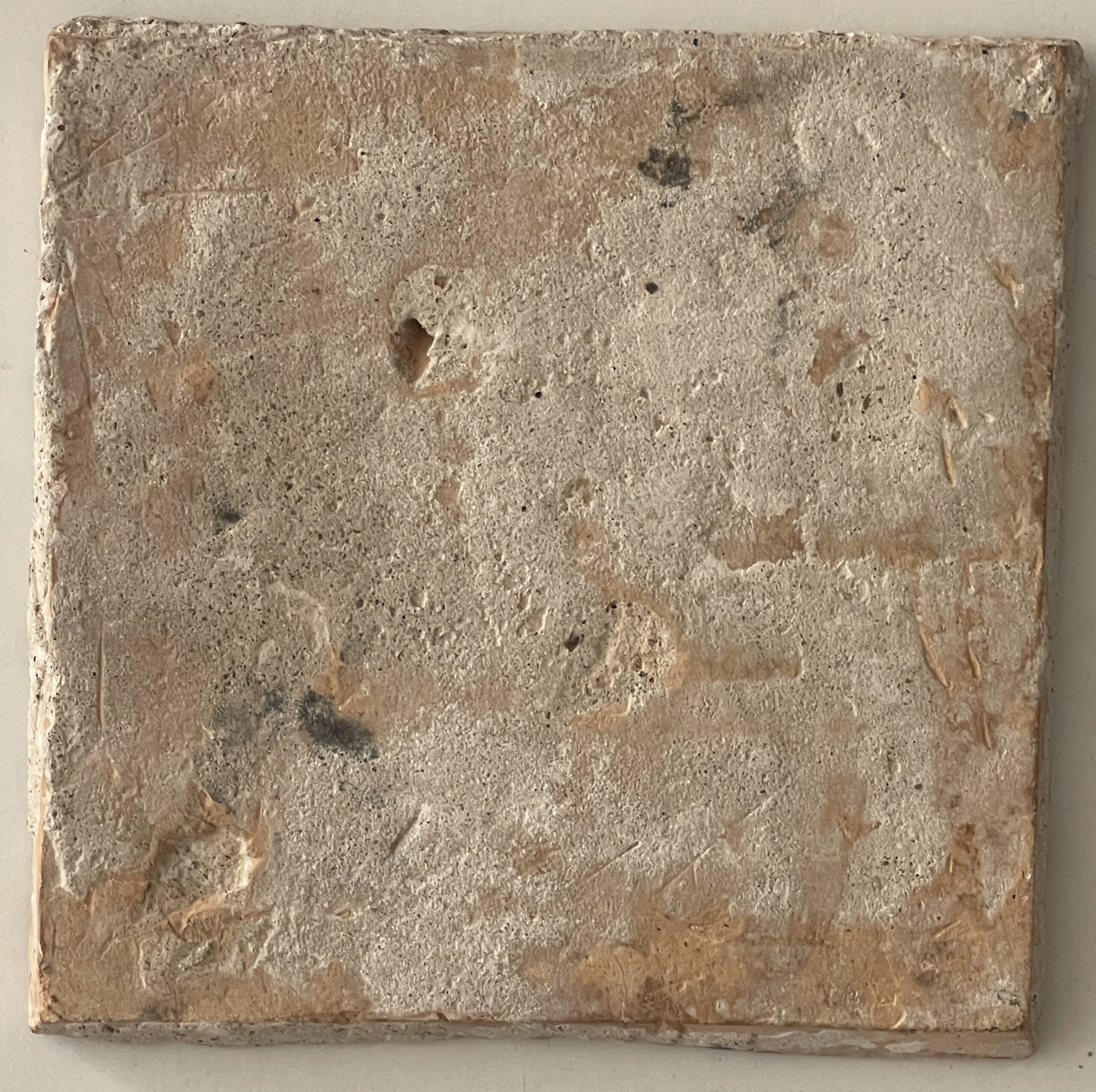
Chips and glaze losses are visible along the edges and at the corners, with smaller scattered losses to the decorated surface. There are scratches and surface irregularities. The unglazed reverse retains deposits and traces of former installation. Please examine the photographs for the decoration and condition details.
An example of early Marseille faience, combining floral ornament with the appeal of an architectural ceramic made around 1700.


Avis
Il n’y a pas encore d’avis.