Ladakh India 1993 – Moonlit Himalayan Monastic Village – Original Ink Drawing
59,00 €
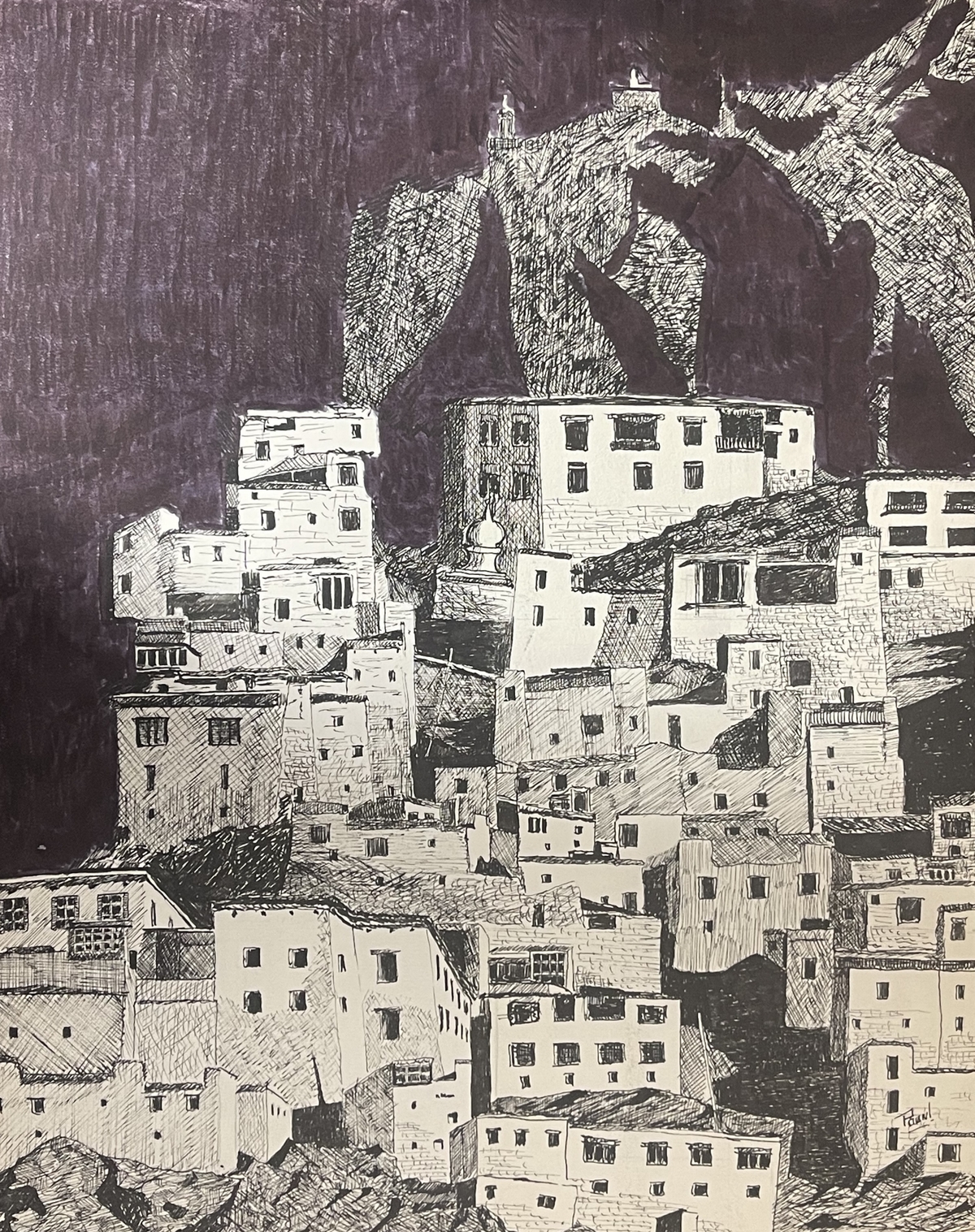
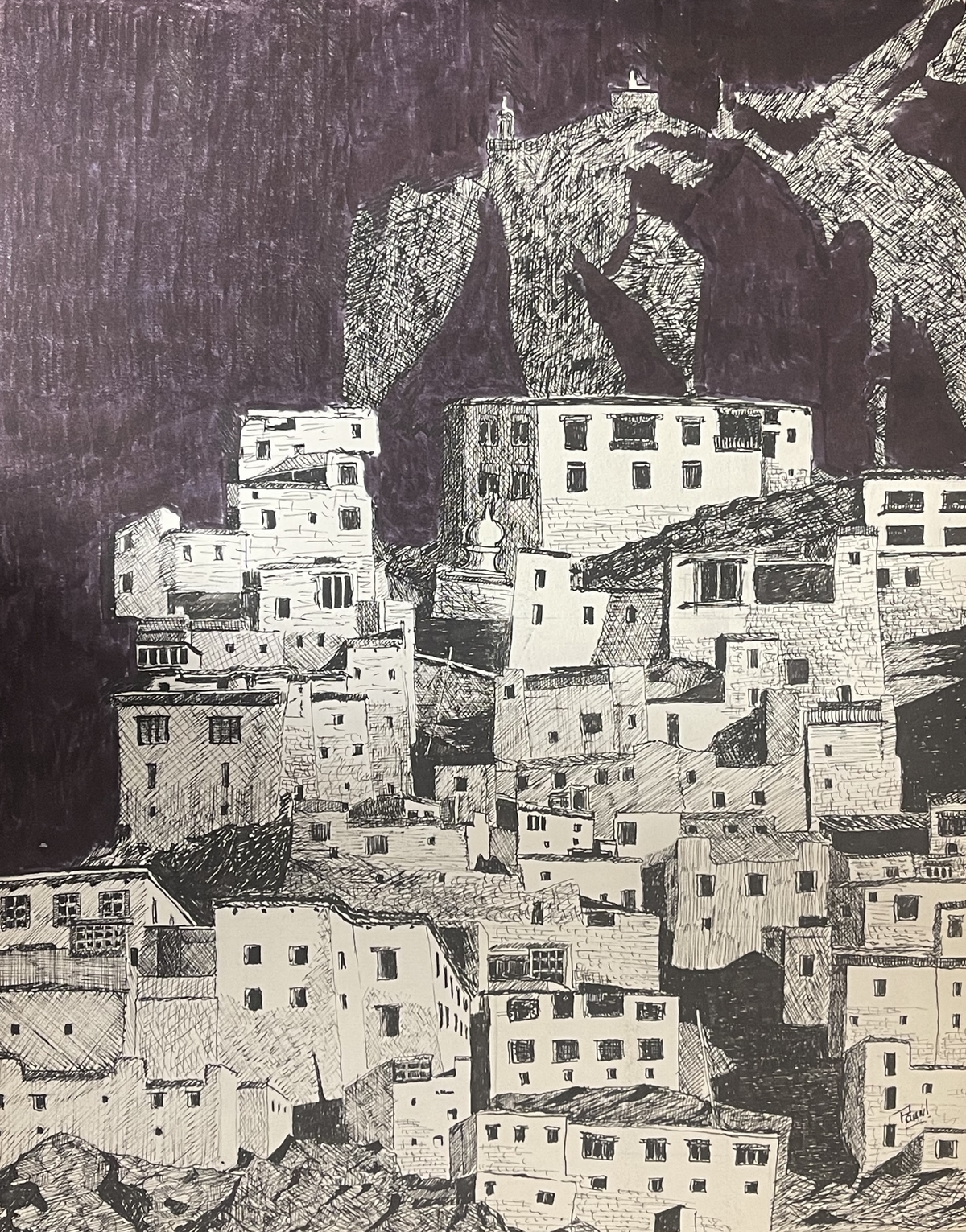
Original ink drawing dated 11 November 1993, entitled Clair de lune (Moonlight), depicting a traditional Himalayan mountain settlement in India, probably in the Ladakh region.
The composition recalls the historic architecture of Leh, with densely clustered white buildings, flat roofs, small windows and a Buddhist-style chorten beneath towering rocky cliffs.
A dramatic nocturnal artwork with intricate cross-hatching and powerful black-and-white contrasts.
Artist: Unidentified.
Date: 11 November 1993.
Technique: Original ink drawing on paper.
Sheet dimensions: 34 × 26 cm.
Location: Ladakh, India, probably near Leh.
Reference: 5340-1R749
Description
Ladakh India moonlight ink drawing – Original Himalayan mountain village artwork dated 11 November 1993.
An impressive original ink drawing depicting a traditional mountain settlement in the Indian Himalayas, probably in the Ladakh region.
Entitled Clair de lune (Moonlight) and dated 11 November 1993, this remarkable architectural composition features densely clustered white buildings beneath enormous rocky cliffs.
The unusual arrangement of the houses, their flat roofs and narrow windows, together with a small structure resembling a Buddhist chorten, strongly recalls the historic architecture of Leh and its surrounding Himalayan settlements.
The dramatic contrast between the illuminated buildings and the almost black mountainous background gives the artwork a particularly striking atmosphere.
A MOONLIT HIMALAYAN VILLAGE
The drawing presents an extraordinary concentration of traditional houses arranged at different levels on a steep mountainside.
The numerous buildings appear to overlap, creating a dense and visually complex architectural composition.
Their pale walls contrast sharply with the deep shadows surrounding the settlement.
Small rectangular windows, balconies, roof terraces and irregular masonry are represented through carefully executed ink lines.
In the upper part of the composition, massive rock formations tower above the village.
Their powerful silhouettes dominate the buildings below, emphasising the dramatic relationship between human architecture and the Himalayan landscape.
LEH AND THE TRADITIONAL ARCHITECTURE OF LADAKH
Ladakh is a mountainous region of northern India, situated in the western Himalayas.
Its dramatic landscapes, high-altitude settlements and Buddhist monasteries have long attracted travellers, artists and historians.
Leh, the historic capital of the former Kingdom of Ladakh, is especially renowned for its traditional architecture.
The old town consists of closely grouped buildings, many constructed on steep slopes beneath the historic Leh Palace.
The palace, dating from the seventeenth century, rises above the older residential quarters.
Higher on the same hill stands the Namgyal Tsemo religious complex.
The combination of traditional houses, religious monuments and towering rocky slopes creates a distinctive architectural landscape.
The arrangement of the buildings in the present drawing recalls the old town of Leh and similar monastic settlements in the Ladakh region.
BUDDHIST MONASTERIES AND CHORTENS
Ladakh possesses an important tradition of Tibetan Buddhist religious architecture.
Buddhist monasteries, commonly known as gompas, are frequently located on hillsides, rocky elevations and strategic mountain sites.
Many combine prayer halls, residential buildings, courtyards and religious structures.
Chortens, also known as stupas, are characteristic monuments of the region.
They form an important part of the religious and architectural landscape of Ladakh.
The small dome-shaped architectural element visible near the centre of the drawing resembles a traditional chorten.
Together with the dense mountain architecture, this detail contributes to the work’s distinctive Himalayan character.
CLAIR DE LUNE — MOONLIGHT
The handwritten inscription beneath the drawing reads:
“CLAIR de LUNE — INDE — 11.11.93”
The French title translates as Moonlight.
The artist has created a powerful nocturnal composition through the contrast between illuminated architectural surfaces and large areas of darkness.
The houses appear almost luminous against the black sky and mountains.
The use of light and shadow produces a dramatic atmosphere, suggesting a settlement illuminated by moonlight.
The effect is particularly striking in the upper part of the composition, where the enormous cliffs seem to emerge from the surrounding darkness.
The scene conveys an impression of silence, isolation and mystery.
AN EXPRESSIVE ORIGINAL INK DRAWING
The drawing is executed in black ink on paper.
The artist uses a combination of fine parallel strokes, cross-hatching and large dark areas to construct the composition.
The buildings are represented with an impressive wealth of architectural detail.
Individual windows, wall surfaces, rooflines and terraces can be distinguished throughout the densely populated settlement.
The mountains and rocky formations are treated through strong contrasts and energetic hatching.
Large areas of almost solid black create the night sky and the deepest shadows.
The illuminated walls are left comparatively light, producing a dramatic visual effect.
This contrast gives the drawing an expressive quality reminiscent of black-and-white graphic illustration.
A DISTINCTIVE ARCHITECTURAL COMPOSITION
The vertical format emphasises the height of the settlement and the monumental rocky landscape.
The lower part of the composition contains an intricate arrangement of houses.
The central area introduces larger buildings and architectural details.
The upper part is dominated by massive cliffs and dark mountain silhouettes.
The progression from the small buildings to the vast rocky background creates a remarkable sense of scale.
The careful rendering of architectural forms makes the drawing especially attractive to collectors interested in traditional Himalayan settlements.
AN ORIGINAL ARTWORK DATED 1993
This is an original ink drawing, not a printed reproduction.
The artwork is dated 11 November 1993.
Its handwritten title identifies the subject as a moonlit scene in India.
The artist has not been identified.
The architectural features suggest the Ladakh region, possibly the historic town of Leh or a neighbouring mountain settlement.
DETAILS
Country depicted: India.
Probable region: Ladakh.
Possible location: Leh and surrounding Himalayan settlements.
Subject: Traditional Himalayan mountain village and monastic architecture.
Title: Clair de lune (Moonlight).
Artist: Unidentified.
Date: 11 November 1993.
Technique: Original ink drawing.
Material: Paper.
Sheet dimensions: 34 × 26 cm.
Format: Vertical.
Period: Late 20th century.
Inscription: Clair de lune – Inde – 11.11.93.
CONDITION
Original drawing displaying light handling marks and the natural characteristics of the paper.
The architectural composition, detailed ink lines and strong contrasts remain well preserved.
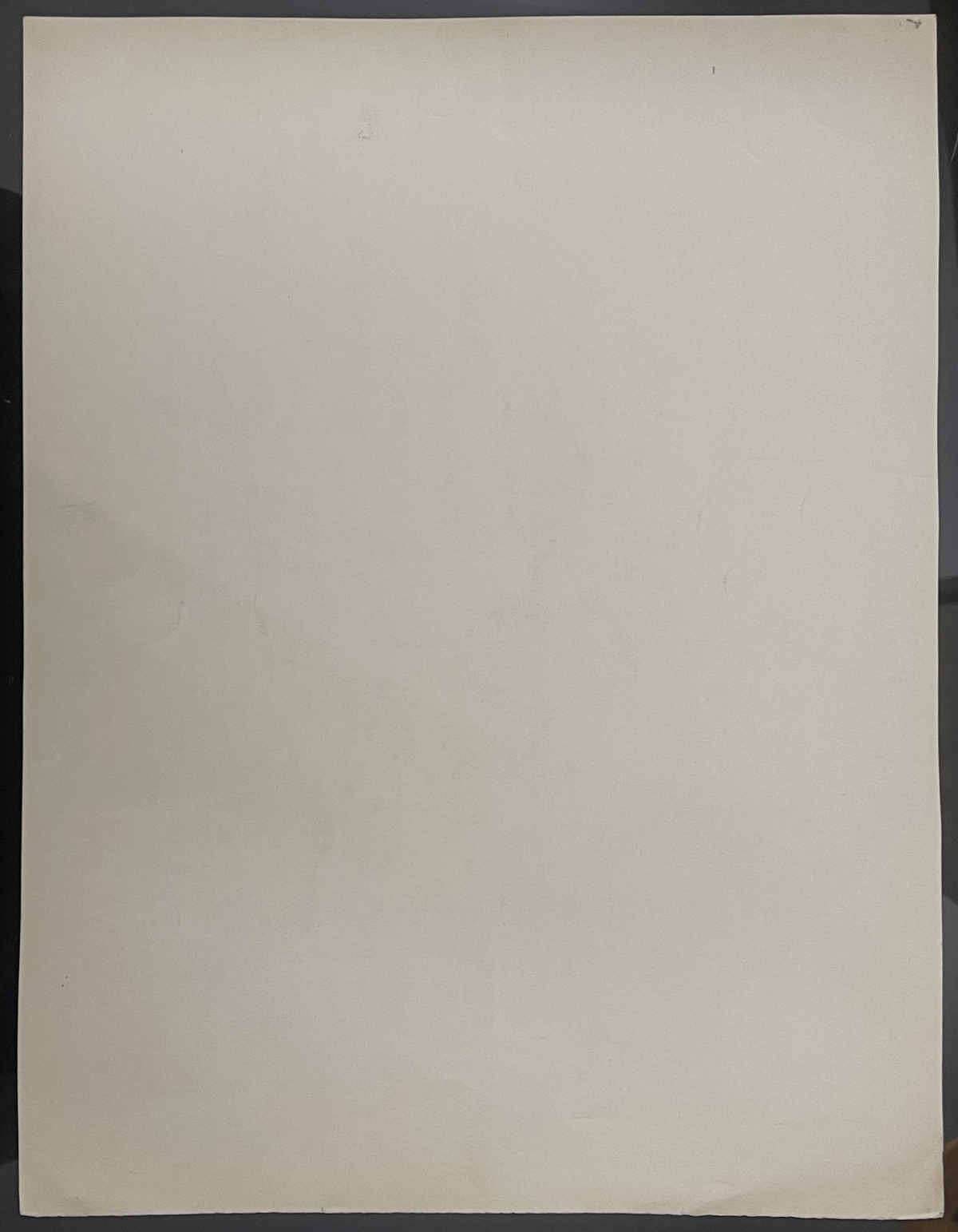
The reverse of the sheet is illustrated in the photographs.
An attractive original twentieth-century drawing combining Himalayan architecture, dramatic mountain scenery and a remarkable moonlit atmosphere.
Reference: 5340-1R749


Avis
Il n’y a pas encore d’avis.