
Description
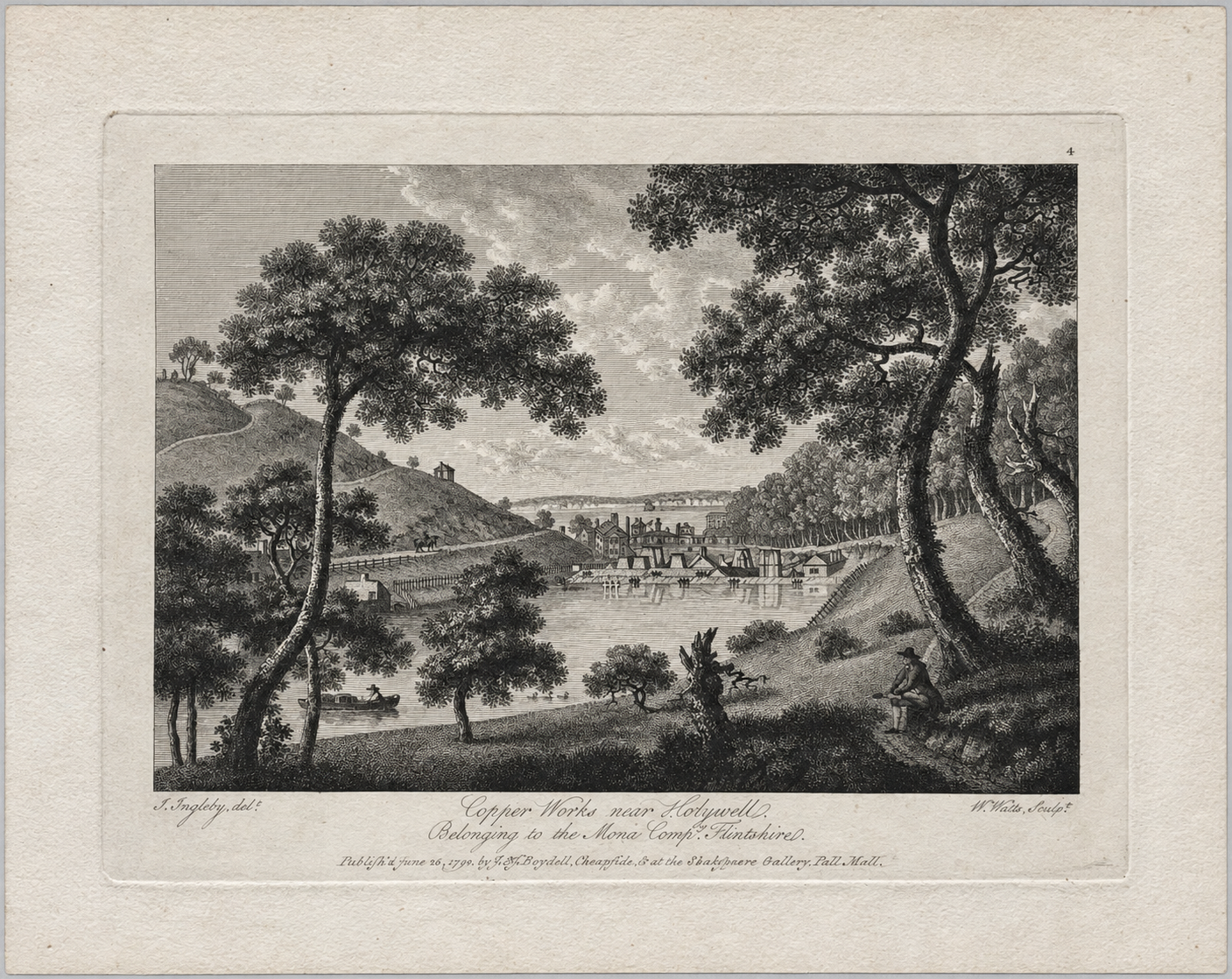
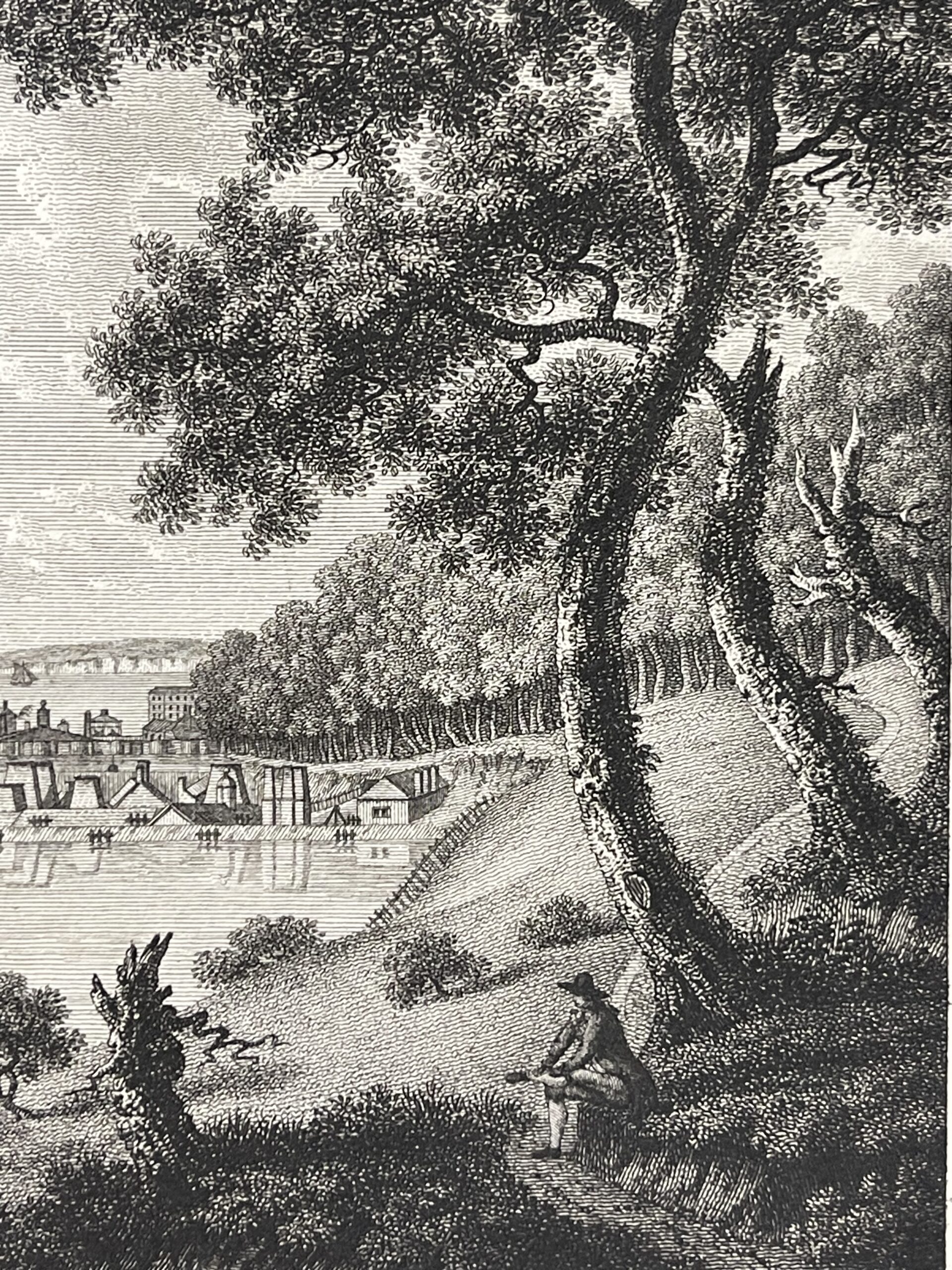
Beautiful original 18th-century engraving dated 1792, depicting the historic copper works of the Mona Company near Holywell, Flintshire, North Wales, United Kingdom.
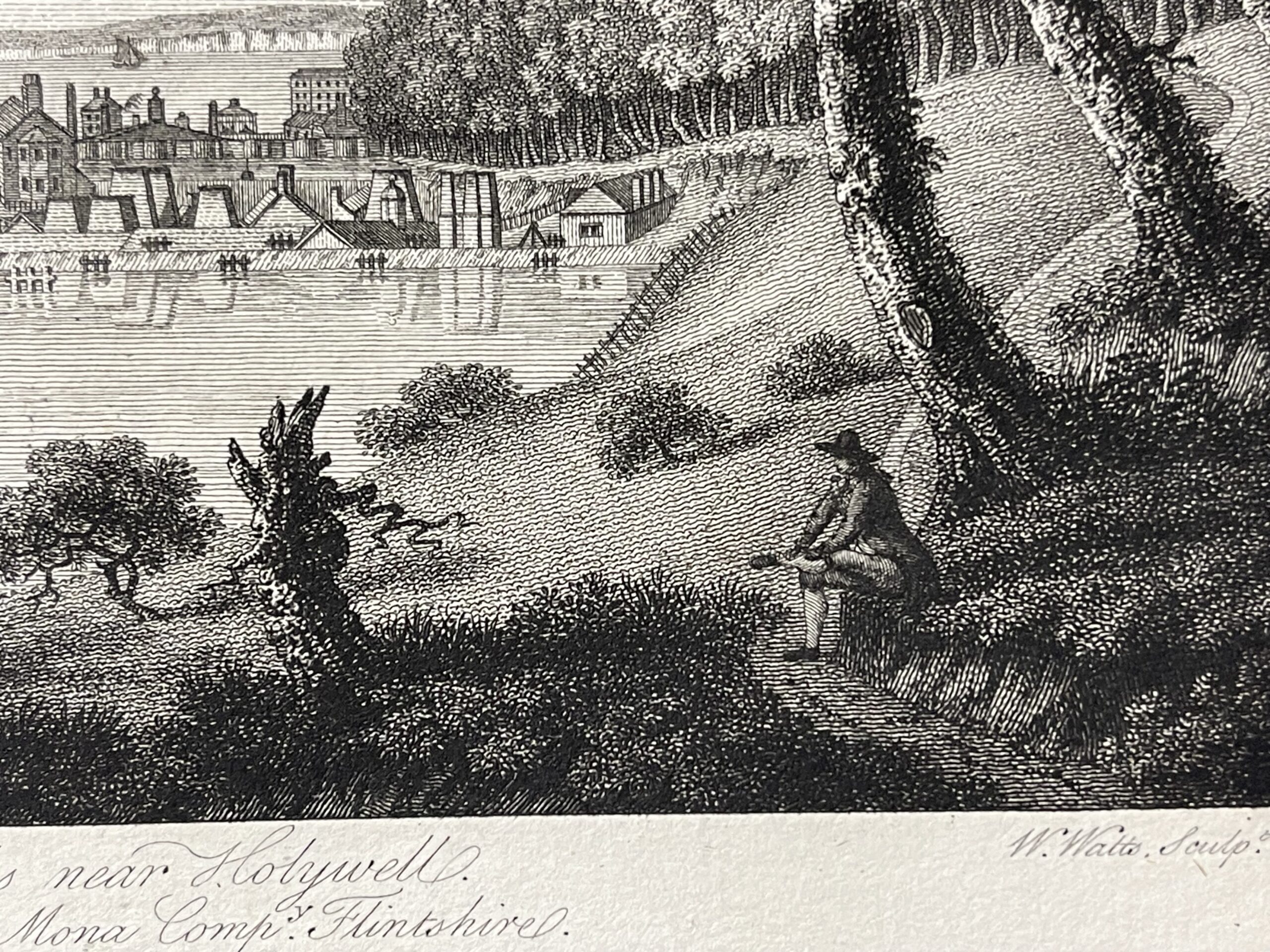
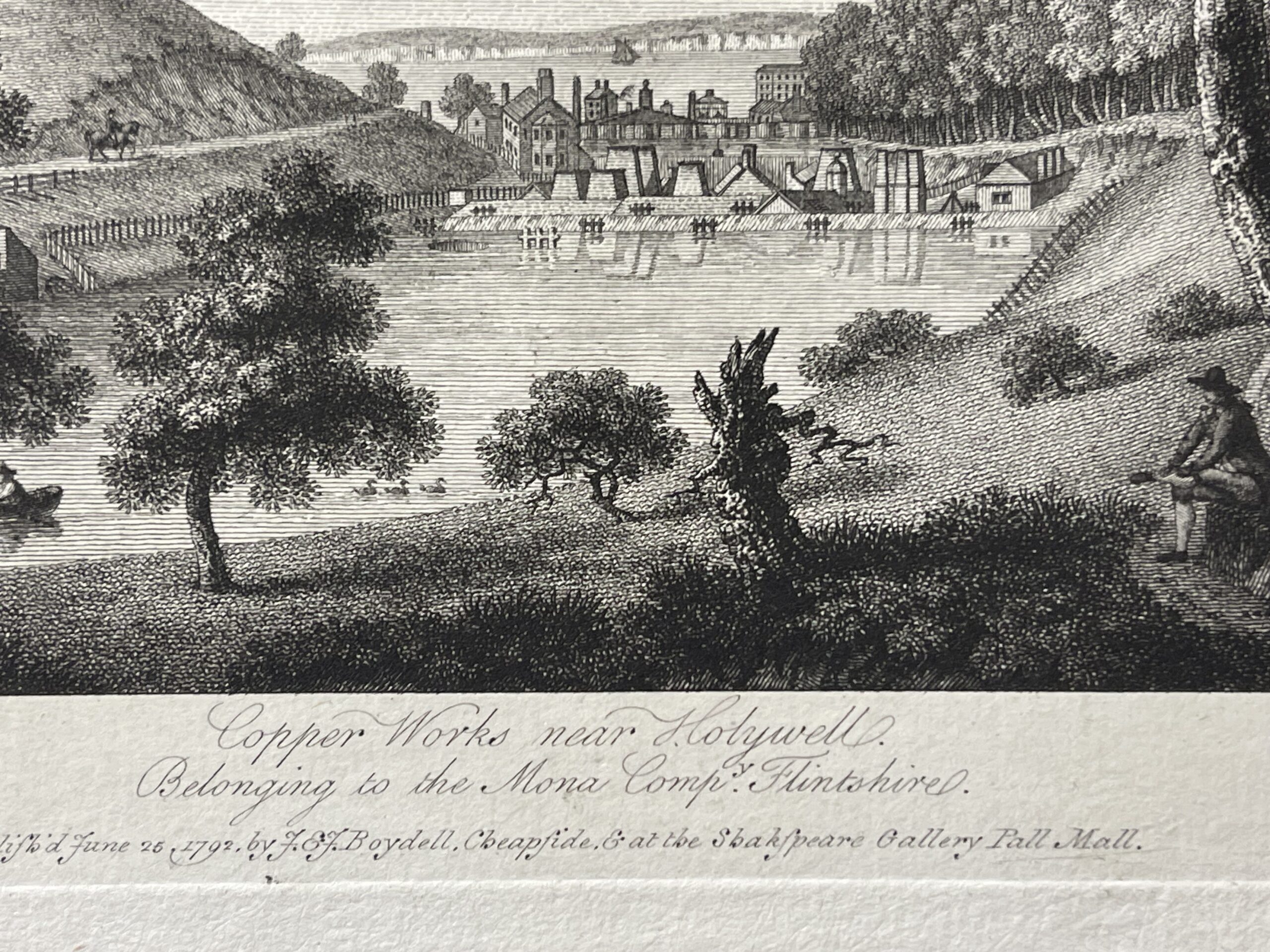
The original inscription reads:
Copper Works near Holywell. Belonging to the Mona Compy. Flintshire.
Artist: John Ingleby (1749–1808).
Engraver: William Watts (1752–1851).
Publisher: John and Josiah Boydell, London.
Publication date: June 1792.
The Mona Company Copper Works – An Important Industrial Landscape
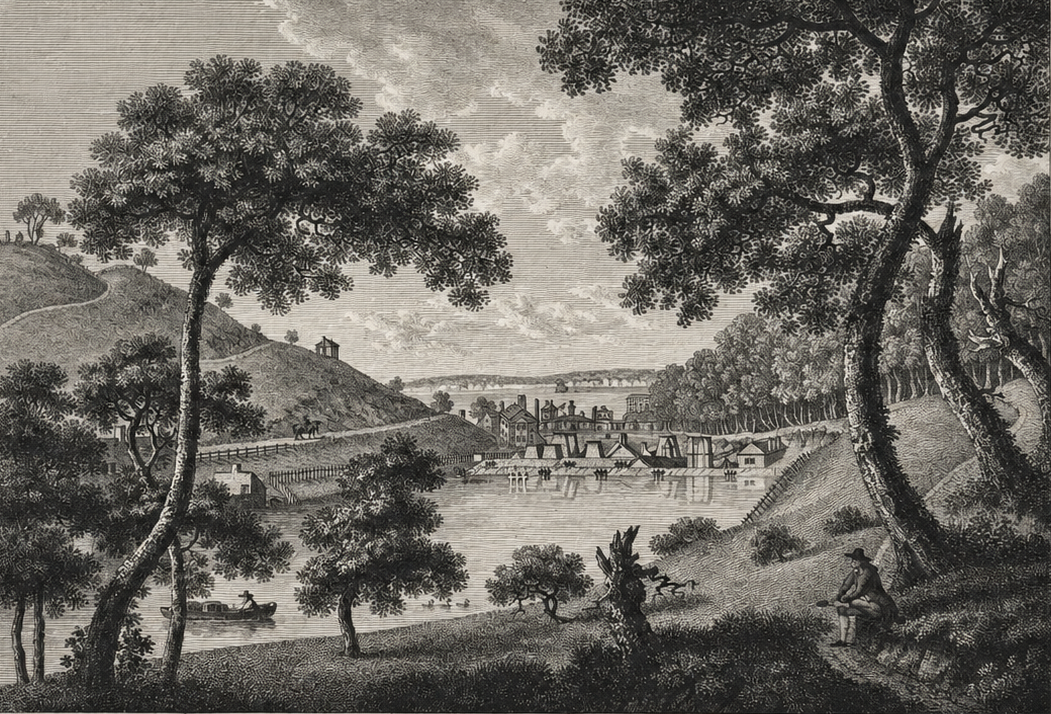
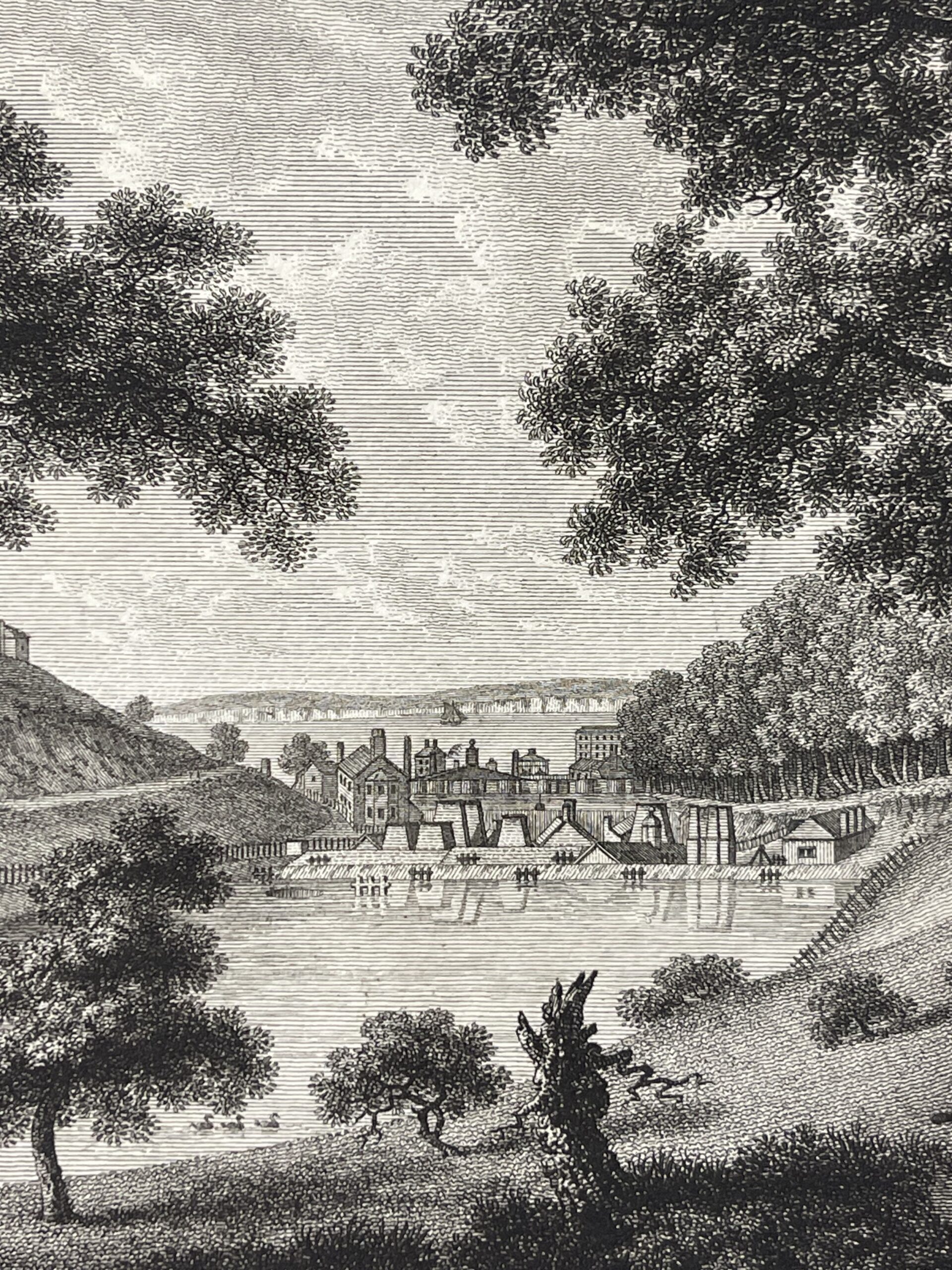
This remarkable engraving presents a detailed panoramic view of the copper-processing establishments operated by the Mona Company near Holywell in Flintshire.
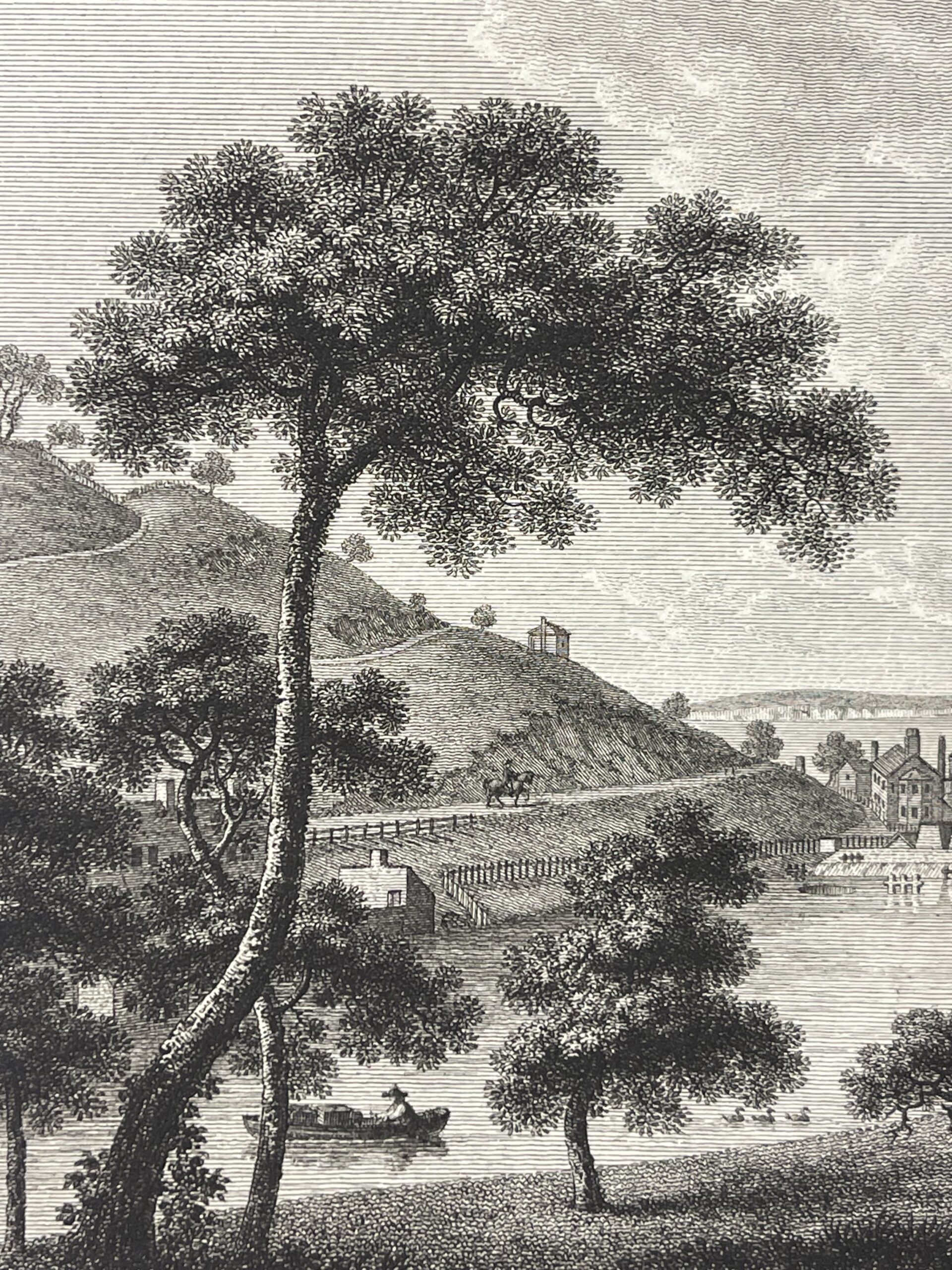
The extensive industrial complex occupies the centre of a picturesque Welsh valley, surrounded by wooded hills, mature trees and gently sloping countryside.
Numerous factory buildings, workshops and chimneys extend along the waterfront, illustrating the considerable scale of industrial activity in the late 18th century.
A broad expanse of water dominates the foreground, with a small boat navigating near the industrial buildings.
Majestic trees frame the composition, while a seated figure rests beneath the woodland on the right.
The carefully balanced composition creates a fascinating contrast between the beauty of the natural landscape and the growing importance of industrial manufacturing.
Holywell and the British Industrial Revolution
During the second half of the 18th century, Flintshire became an important centre for metalworking and industrial development.
The district around Holywell benefited from water resources, transportation routes and the expansion of copper and brass manufacturing.
The Mona Company was associated with the substantial copper industry developed by Welsh industrial entrepreneur Thomas Williams (1737–1802), one of the leading figures in Britain’s copper trade.
The copper-processing establishments near Holywell formed part of this expanding network of industrial enterprises.
This engraving therefore constitutes an important historical record of the early Industrial Revolution in Wales.
John Ingleby (1749–1808)
John Ingleby was a Welsh artist and draughtsman particularly associated with the landscapes, historic buildings and industrial sites of North Wales.
His detailed drawings provide valuable visual documentation of the Welsh countryside during a period of considerable economic and architectural transformation.
William Watts (1752–1851)
William Watts was a distinguished British engraver, celebrated for his finely executed landscape and topographical prints.
His work is characterised by delicate line engraving, precise architectural representation and a refined treatment of vegetation, atmospheric effects and distant scenery.
The present engraving demonstrates his ability to combine detailed industrial architecture with the traditional picturesque landscape.
An Important Historical Industrial Print
Published in London by the celebrated Boydell publishing house in 1792, this original engraving is of particular interest to collectors of British industrial history, antique Welsh views, historical metallurgy and 18th-century topographical prints.
Dimensions
- Sheet: 23.7 × 19 cm
- Engraved image: 18 × 12.2 cm
Condition
An antique impression displaying the natural patina of the paper. Beautiful preservation of the engraved composition and original inscriptions.


Avis
Il n’y a pas encore d’avis.