Hesse Germany 1913 – A Village at the Edge of the Woods – Original Graphite Landscape Drawing
79,00 €
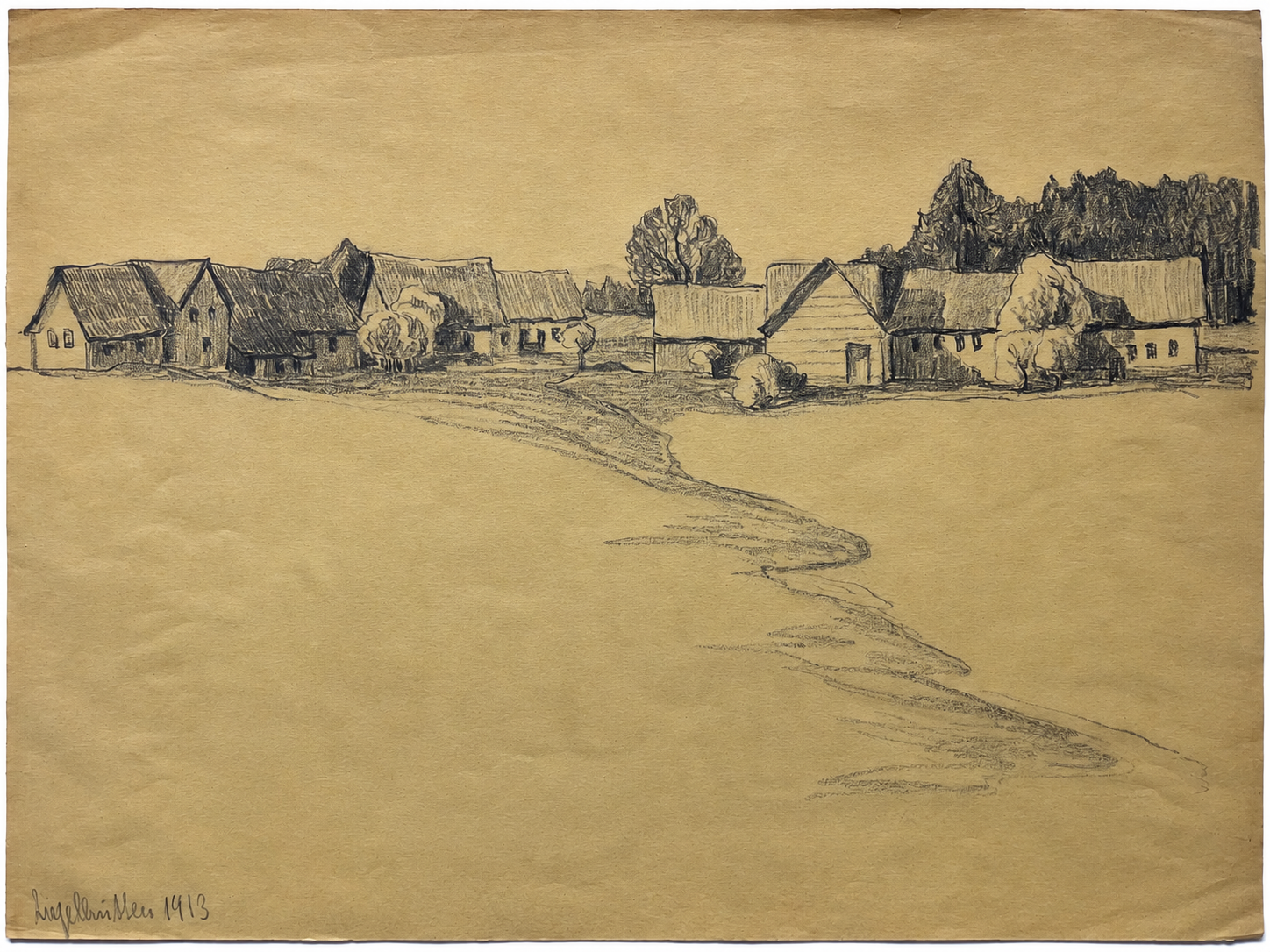
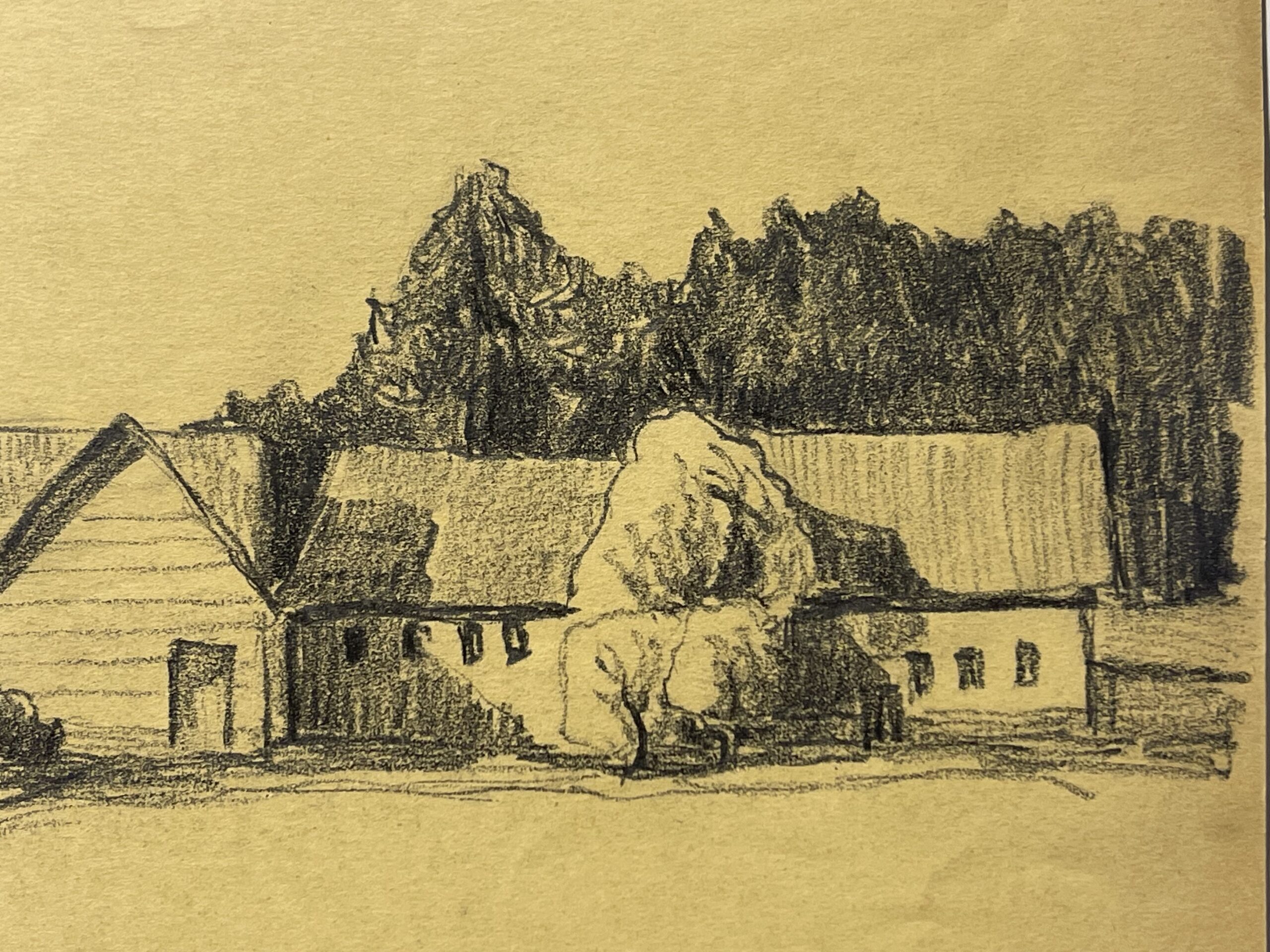
An original graphite view of a Hessian village dated 1913. A winding track leads between two groups of gabled houses, with open fields in the distance and woodland behind the roofs. Inscribed at lower left on a horizontal sheet measuring 44 × 31.3 cm.
Description
HESSE GERMANY 1913 – A VILLAGE SEEN FROM THE FIELDS
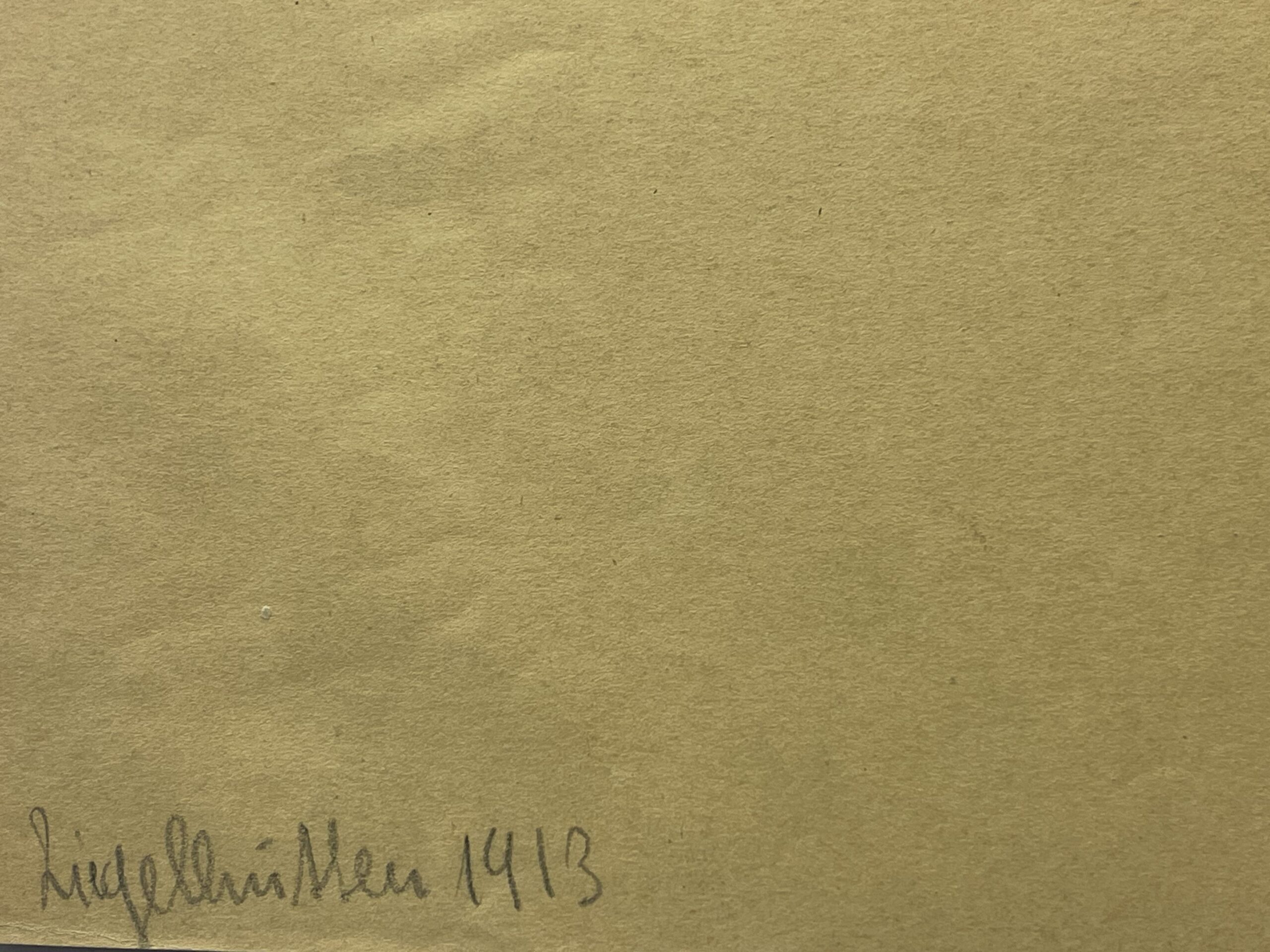
ARTCULTURE6 presents this original graphite drawing of a village in Hesse, Germany, dated 1913. The landscape extends across a horizontal sheet measuring 44 × 31.3 cm. Two groups of rural buildings stand on either side of an opening in the village, with trees among the houses and a belt of woodland behind the roofs. At the lower left, a handwritten inscription is followed by the date 1913.
The anonymous artist chose a viewpoint far enough from the nearest house to take in the whole settlement at a glance. The drawing preserves details that give the place its individual character: the uneven heights of neighbouring gables, a doorway set low in a broad wall, and a single small tree standing in the gap between the buildings.
THE APPROACH TO THE VILLAGE
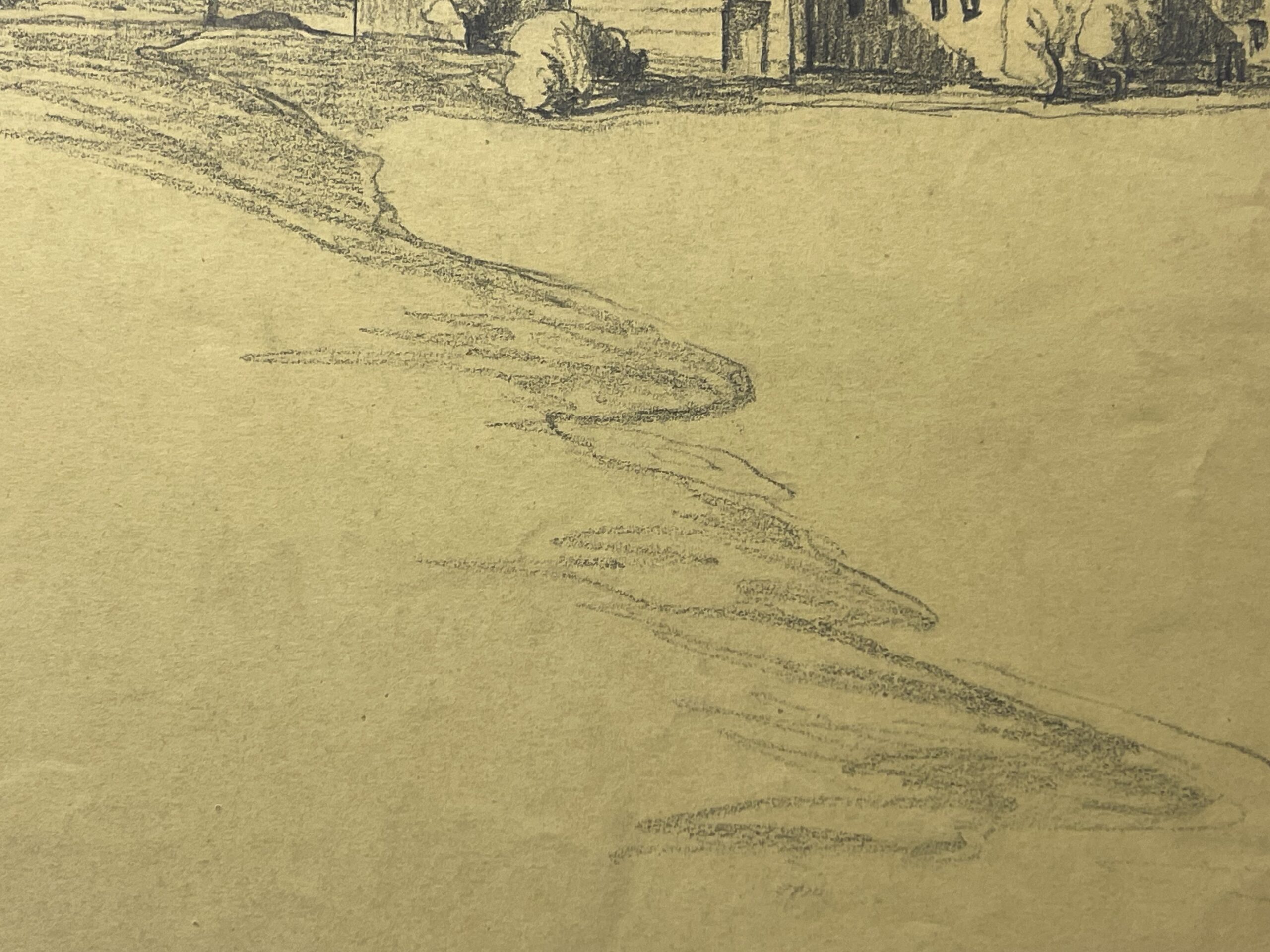
A winding track enters from the lower right. Its nearest edge is drawn with a long, light stroke, accompanied by short passages of shading. As the track turns towards the houses, the marks come closer together. By the time it reaches the village, its outline merges with the shadows beneath the eaves.
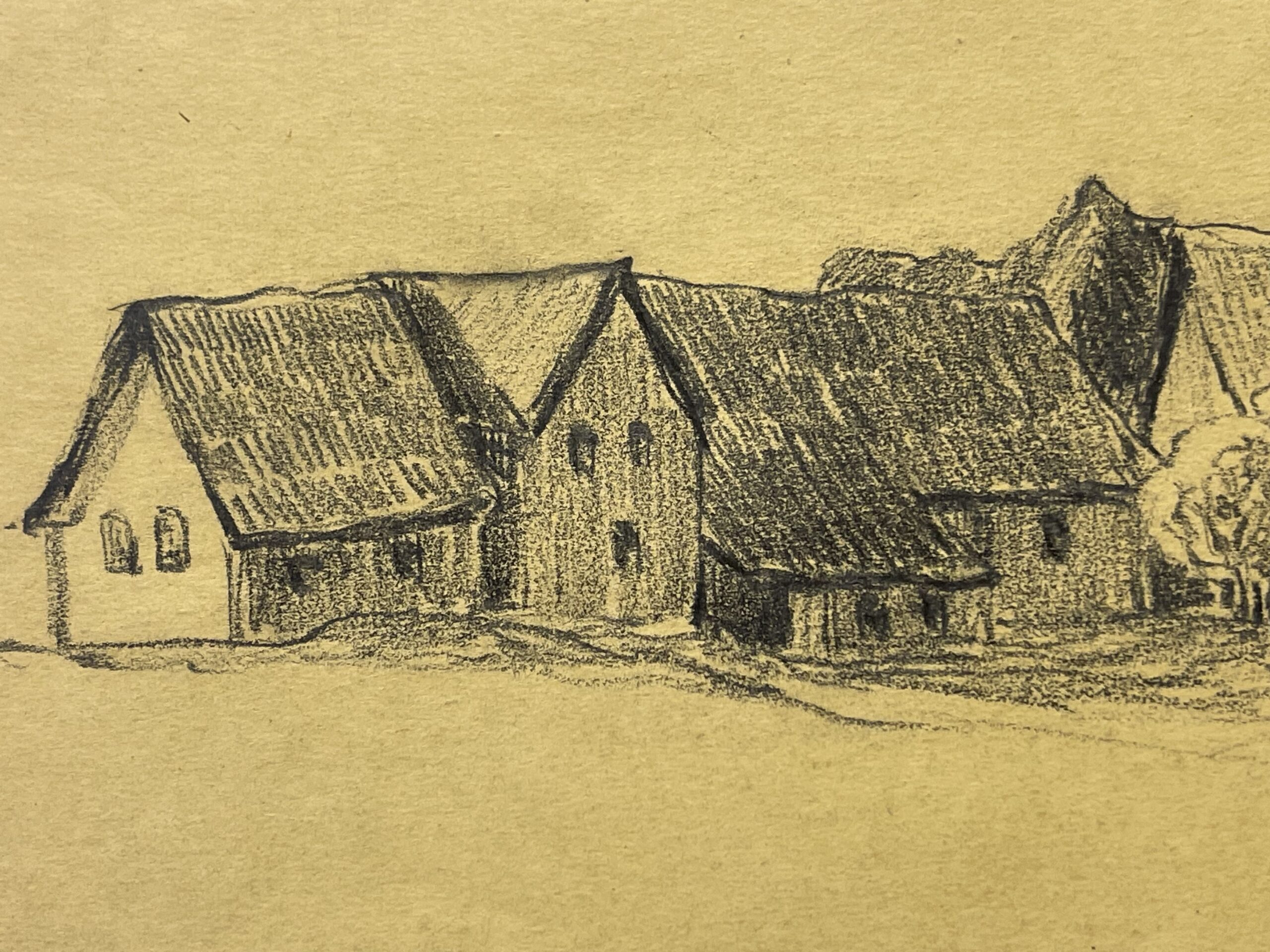
The nearest group on the left begins with a pale gable containing two small windows. Its roof slopes towards the viewer, the graphite laid in close rows that follow the pitch. Beside it stands a taller, narrower gable with dark openings on two levels. Although the two buildings are close together, each has its own outline. The artist distinguishes them through the angle of a roof, the width of a wall and the depth of the shadow at its base.
GABLES AND FARM BUILDINGS
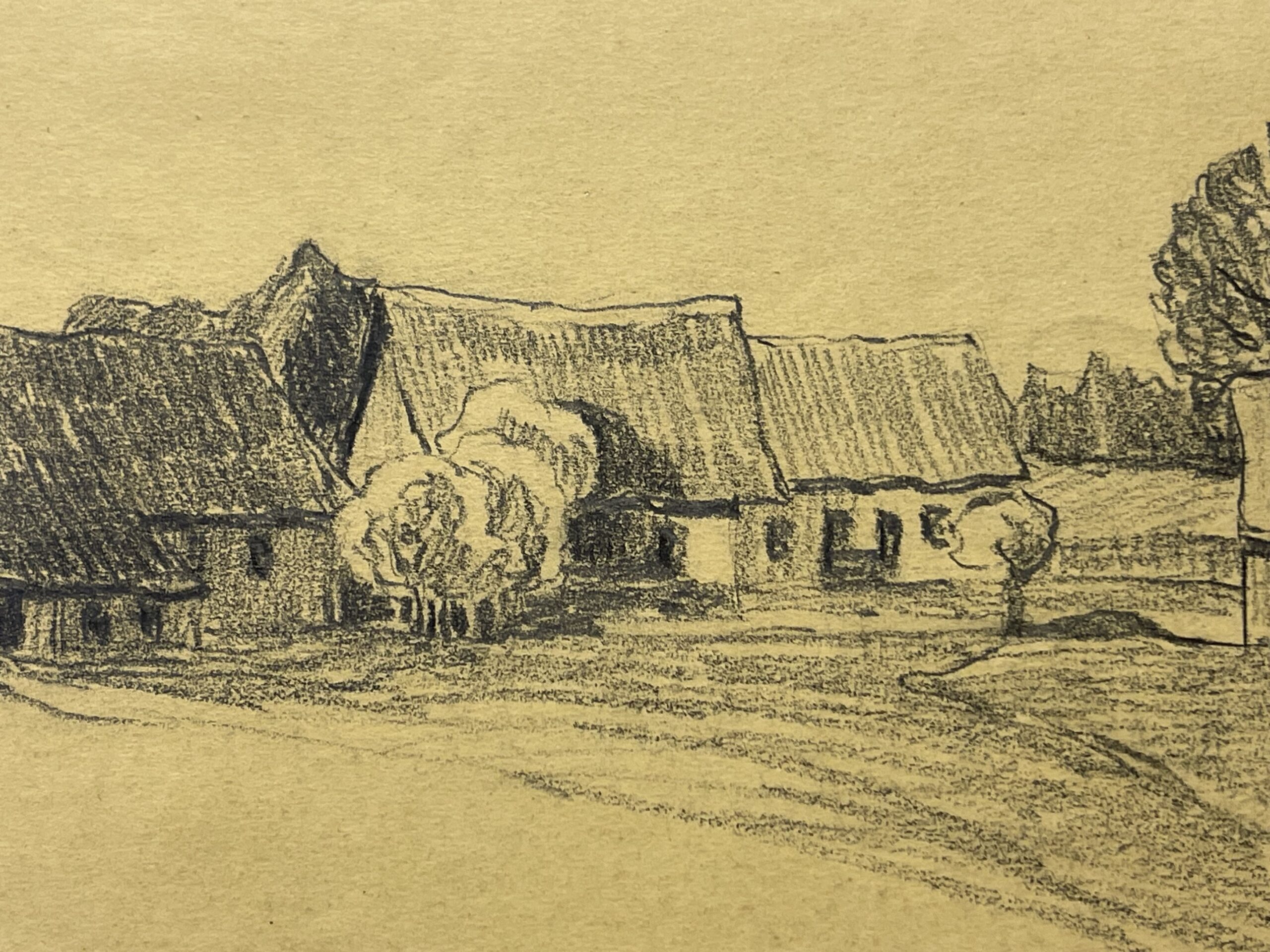
Farther along the same row, a cluster of rounded trees partly conceals the front of a house. Its broad roof is still visible above the foliage. Beyond it, the buildings give way to a light strip of open ground. A small tree stands alone here, with its trunk clearly marked against the fields behind. This is the point at which the drawing offers its longest view into the distance.
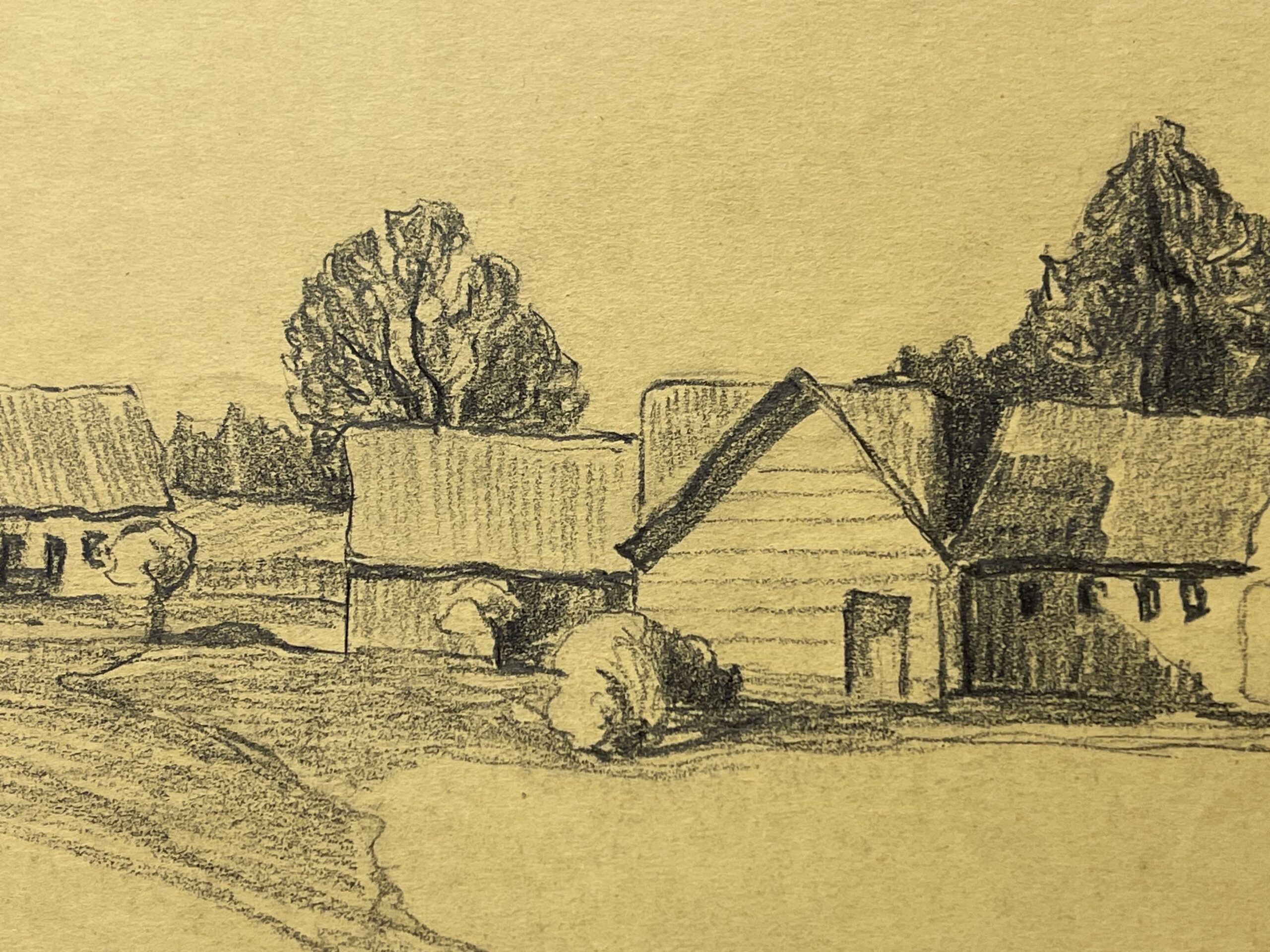
The right-hand group has a different arrangement. A building faces the viewer squarely, its triangular gable outlined by a dark roof edge. Horizontal lines cross the front and stop at a tall rectangular doorway. Beside it stretches a low building with several small openings under the eaves. A diagonal patch of shade falls across its wall. Farther right, pale trees overlap another long façade and break the otherwise straight line of the roof.
THE WOODLAND BEYOND THE ROOFS
A single broad-crowned tree rises near the centre. Its limbs can be followed upwards from the roofline into separate groups of leaves. Behind the houses on the right, the trees grow close enough together to form a continuous dark background. Against this woodland, the lightly shaded roofs stand out with particular clarity.
The artist lets the height of the skyline change gradually. The low buildings at the centre leave space around the solitary tree. The taller trees gather towards the right edge, where the village meets the wood. Much of the sky is open paper, allowing the shapes of the roofs and treetops to carry the composition.
GRAPHITE ON WARM-TONED PAPER
The closest pencil work is concentrated in the buildings. Parallel strokes run down the roof slopes. Short dark accents mark a window recess or the underside of an overhang. In the trees, the pencil moves in curves around the larger branches, then changes to denser shading along the woodland edge.
Across the foreground, the handling is much lighter. Only a few lines are needed to carry the track across the open ground. On a sheet of this size, the stretch of paper between the viewer and the houses gives the village a convincing sense of distance while keeping even its smaller architectural details legible.
A HESSIAN LANDSCAPE DATED 1913
The handwritten year places the drawing in the last full calendar year before the First World War. Within this group of Hessian views, it makes an interesting companion to the drawings of Schlitz dated 1916. Those sheets explore a town from its streets. This earlier landscape records the approach from the fields and the outline the village presents to someone arriving on foot.
DETAILS
Region and country: Hesse, Germany.
Subject: rural village with gabled houses, a winding track and woodland.
Artist: anonymous.
Inscribed date: 1913.
Medium: original graphite drawing on paper.
Sheet dimensions: 44 cm wide × 31.3 cm high.
Format: horizontal.
ARTCULTURE6 reference: 4937-25R500.
CONDITION
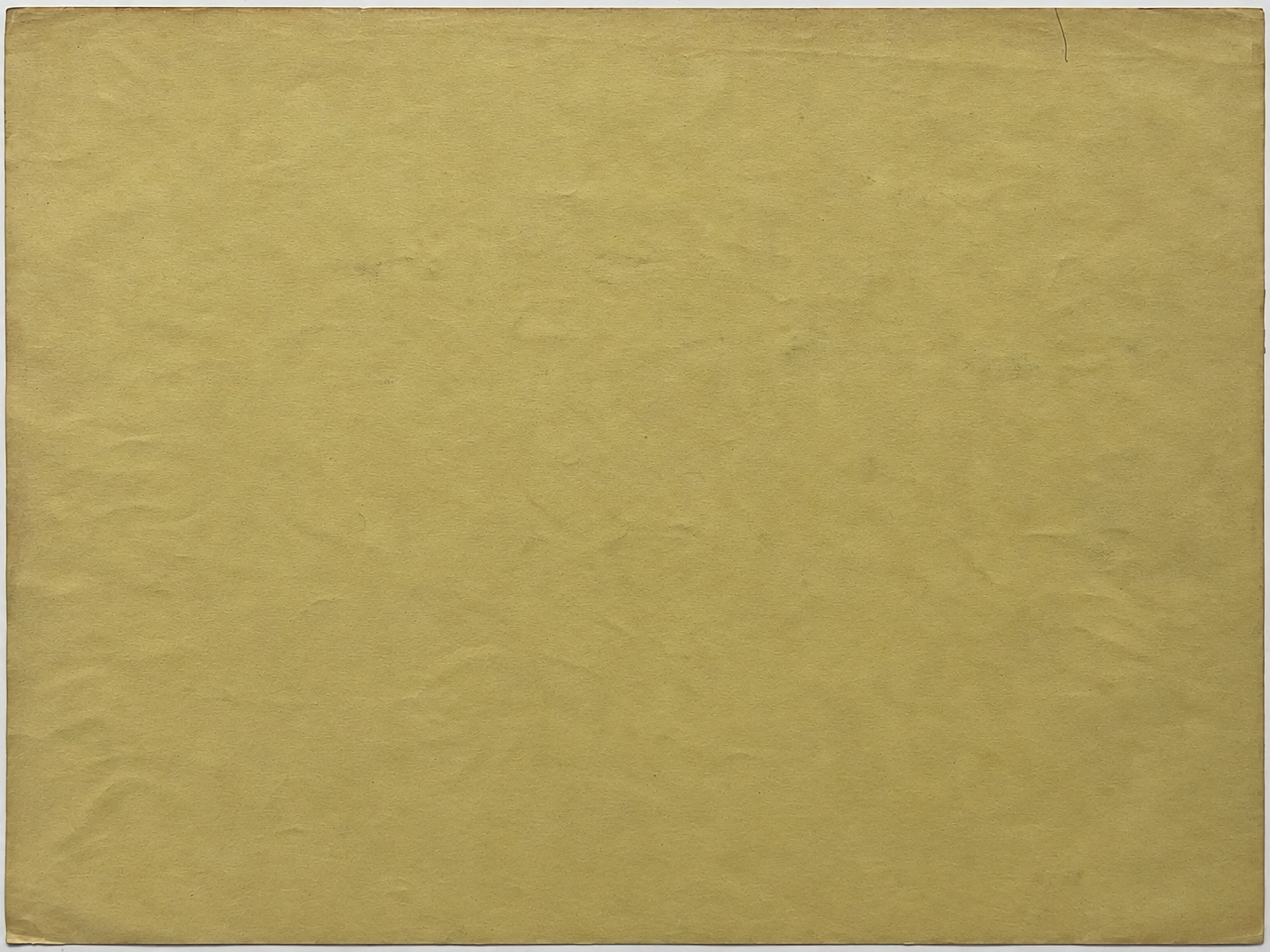
The paper has a warm tone. The pencil work remains clearly visible, from the fine hatching on the roofs to the darker passages in the woodland. The date can be read at the lower left. The photograph shows the full sheet and its edges.


Avis
Il n’y a pas encore d’avis.