
Description
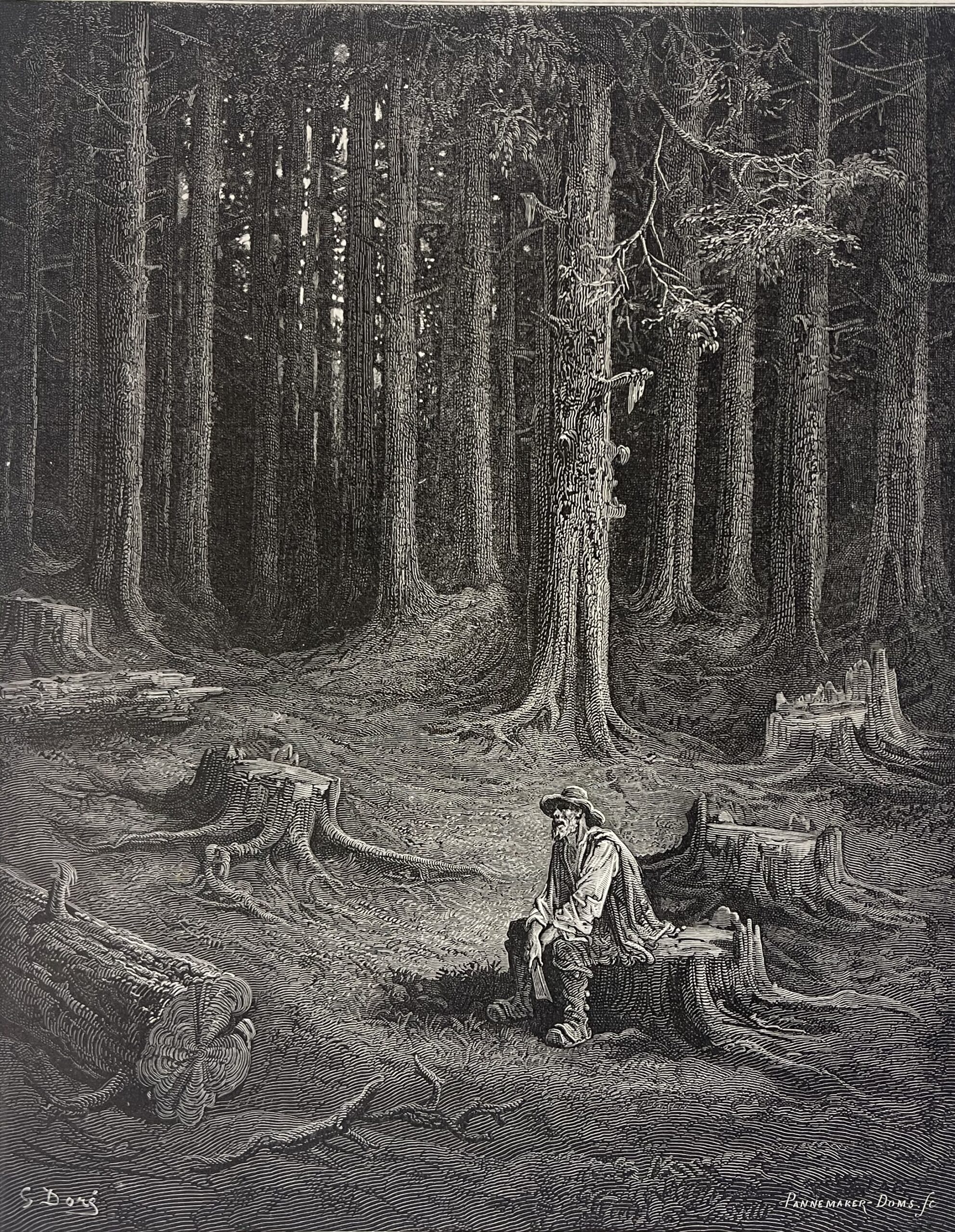
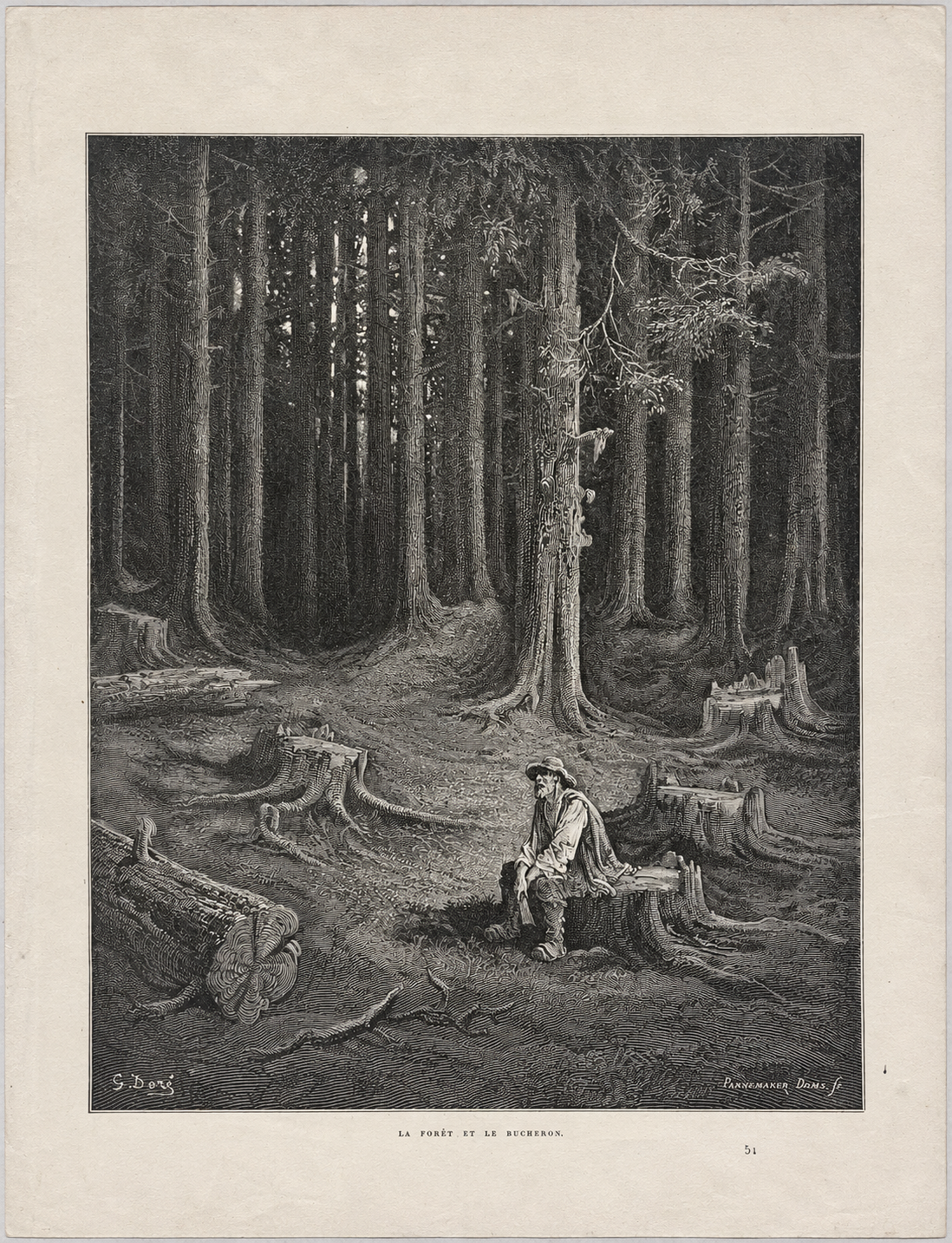
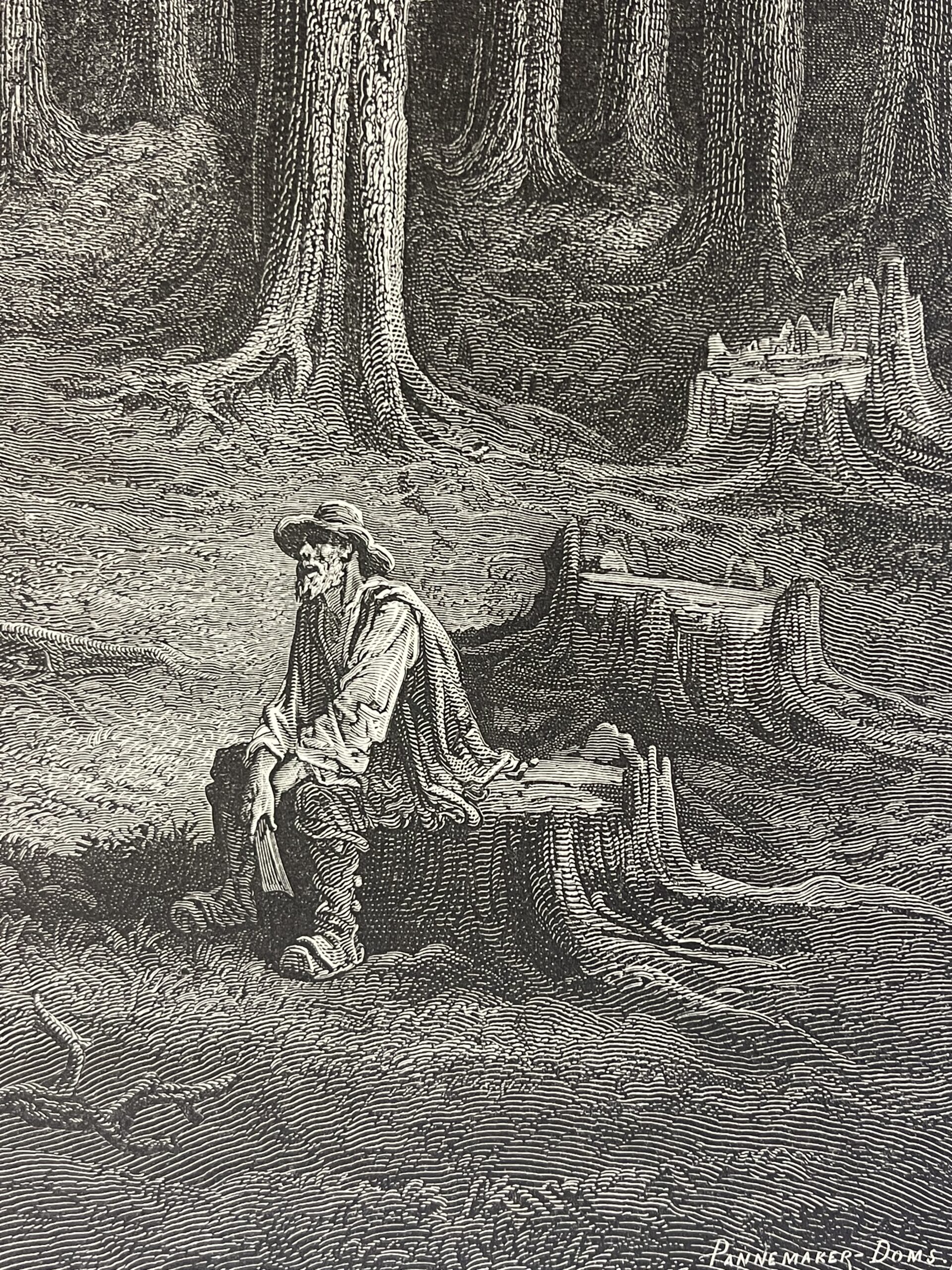
Gustave Doré 1868 wood engraving, a remarkable original 19th-century illustration depicting La Forêt et le Bûcheron(The Forest and the Woodcutter), one of the celebrated fables written by Jean de La Fontaine (1621–1695).
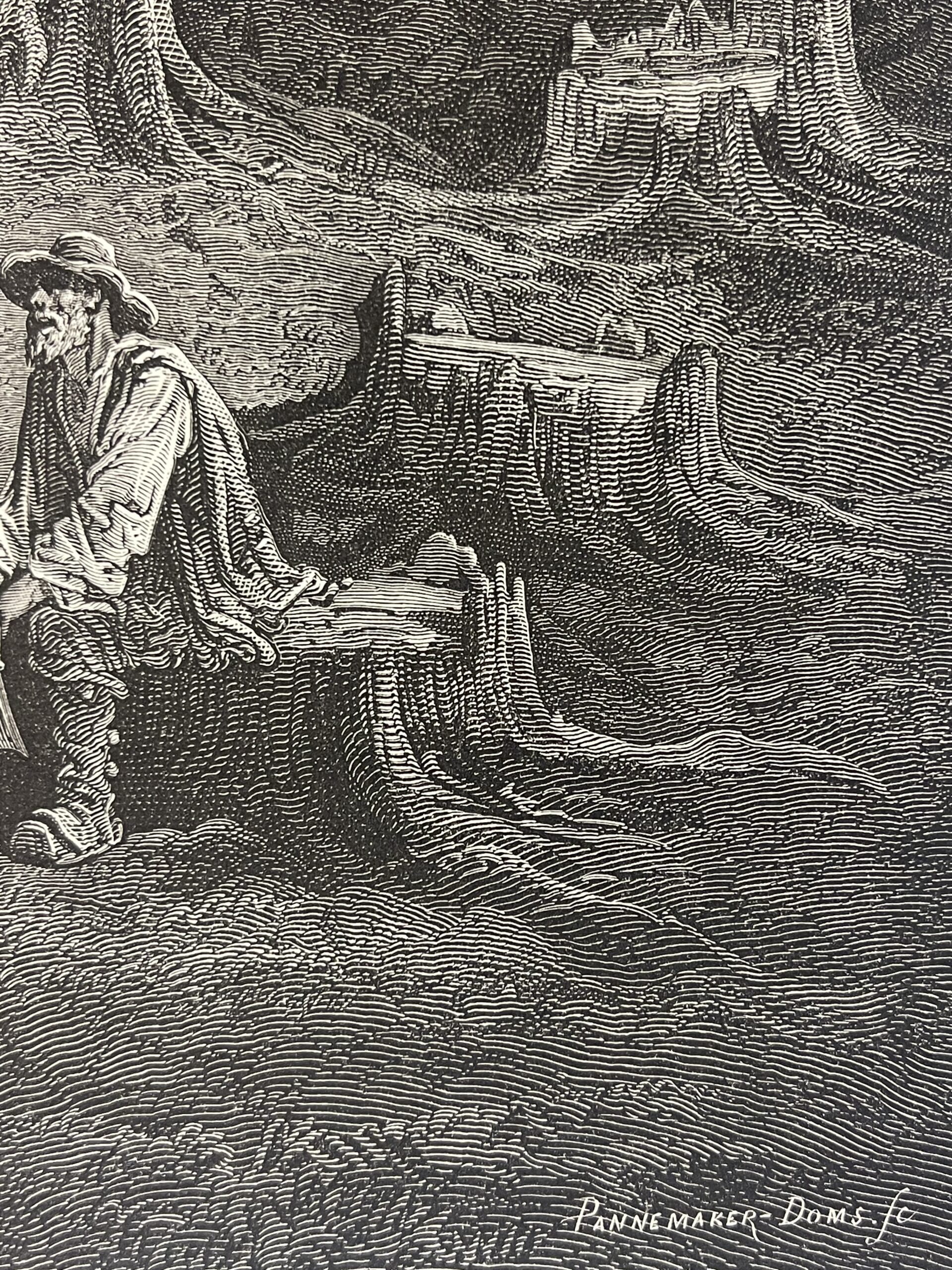
Drawn by Gustave Doré (1832–1883) and engraved on wood by Pannemaker and Doms.
Dating from 1868, this magnificent composition demonstrates Doré’s extraordinary ability to transform a short moral fable into a powerful and atmospheric work of art.
The Forest and the Woodcutter – A Fable by Jean de La Fontaine
La Fontaine’s fable tells the story of a woodcutter who asks the trees of a forest to provide him with a small piece of wood to replace the handle of his axe.
The trees agree to this apparently harmless request.
However, once the woodcutter has repaired his axe, he begins cutting down the very trees that helped him.
The forest discovers too late that its own generosity has provided the means of its destruction.
The story offers a powerful reflection on ingratitude, misplaced trust and the dangers of giving an adversary the means to cause harm.
Its moral remains strikingly relevant, addressing questions of human behaviour, power and the relationship between humanity and nature.
A Magnificent Forest Composition by Gustave Doré
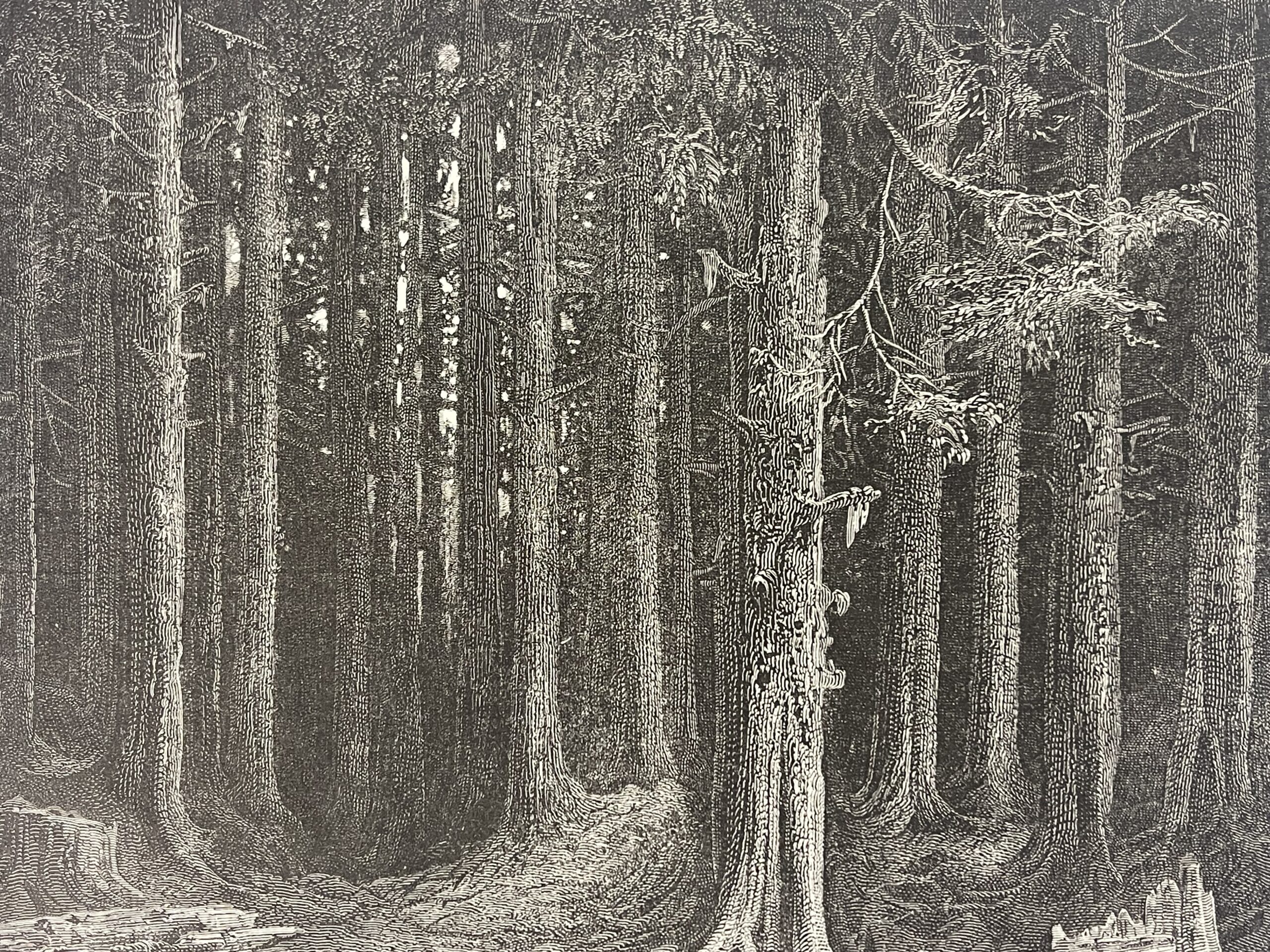
The engraving presents an immense and mysterious woodland, dominated by towering trees whose trunks rise towards a dense canopy.
The forest appears almost cathedral-like, with vertical trunks creating an extraordinary architectural rhythm.
Deep shadows fill the background, while narrow openings of light penetrate the woodland.
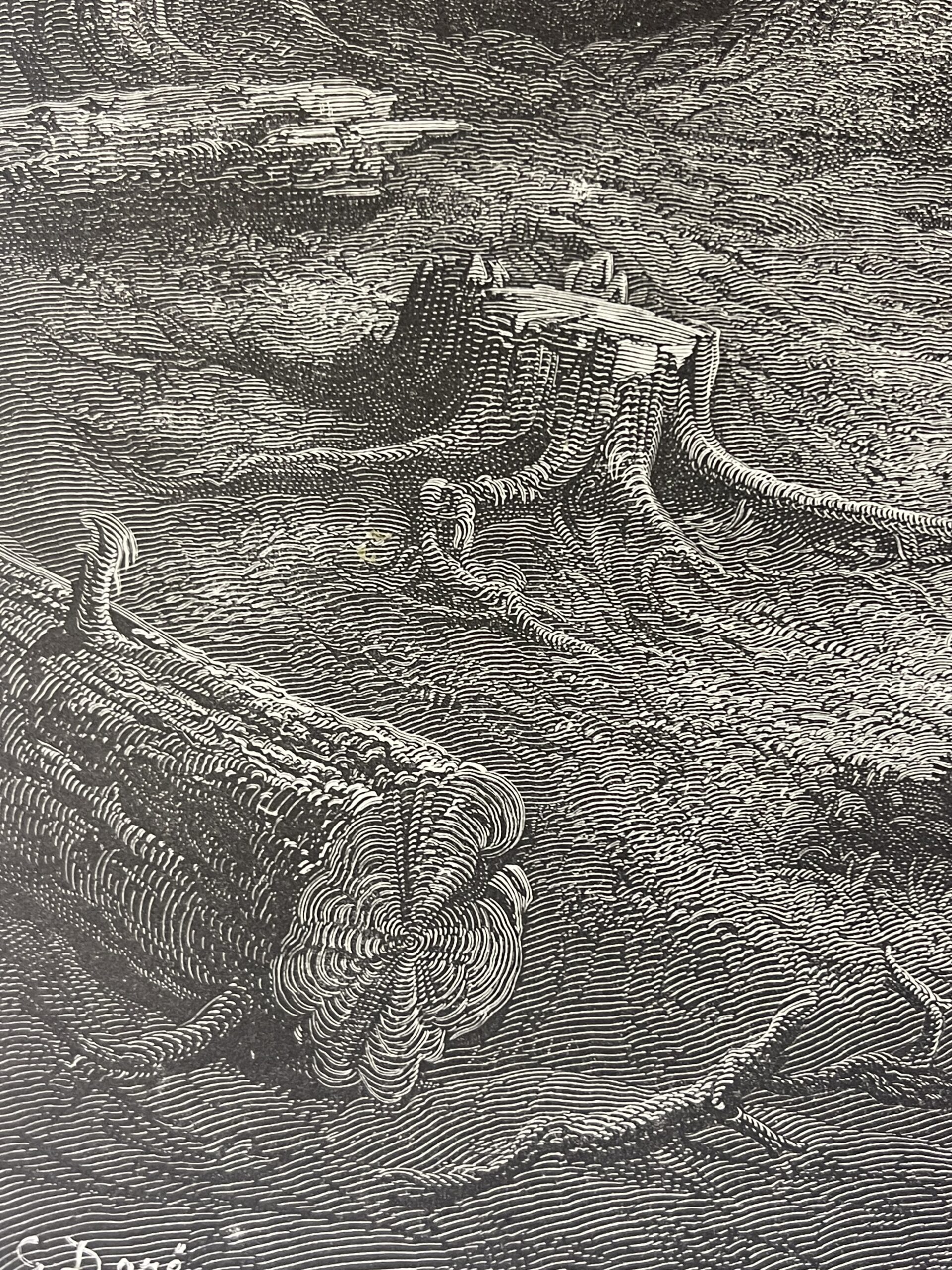
The ground is covered with roots, branches, fallen timber and numerous tree stumps.
In the foreground, a solitary woodcutter sits upon a stump in a contemplative position.
Beside him, felled trunks and freshly cut wood provide unmistakable evidence of human intervention.
The contrast between the small human figure and the monumental trees gives the composition its dramatic power.
Doré transforms the landscape into a symbolic representation of the fable’s moral message.
Light, Shadow and the Art of Wood Engraving
One of the most remarkable qualities of this print is its extraordinary treatment of light and shadow.
The engravers use an intricate network of fine lines to reproduce the textures of bark, foliage, exposed roots and the forest floor.
Delicate vertical openings of light create depth within the otherwise dark woodland.
The composition demonstrates the technical possibilities of 19th-century wood engraving, allowing detailed illustrations to be reproduced with remarkable precision.
The names of Pannemaker and Doms appear engraved within the composition.
Their work faithfully reproduces the dramatic atmosphere and intricate drawing characteristic of Gustave Doré.
Gustave Doré (1832–1883)
Gustave Doré was one of the greatest French illustrators of the 19th century.
He became internationally celebrated for his extraordinary illustrations of major literary works.
Among his most famous achievements are his illustrations for Dante’s Divine Comedy, Cervantes’ Don Quixote, the Bible and Jean de La Fontaine’s Fables.
Doré’s artistic style is distinguished by dramatic compositions, monumental landscapes, imaginative figures and extraordinary effects of light.
His illustrations of La Fontaine’s fables brought a new visual dimension to these celebrated works of French literature.
Rather than simply depicting the narrative, Doré frequently developed compositions that reinforced the symbolic and moral meaning of the text.
Jean de La Fontaine (1621–1695)
Jean de La Fontaine was one of the greatest French poets and fabulists of the 17th century.
His Fables, published in successive collections between 1668 and 1694, became masterpieces of French literature.
Drawing on classical traditions, La Fontaine used animals, plants and human figures to explore moral and political questions.
His stories often combine humour, irony and sharp observations of human behaviour.
The Forest and the Woodcutter is a particularly striking example of his ability to express a profound moral lesson through a simple narrative.
An Exceptional 19th-Century Literary Illustration
This antique wood engraving combines the literary importance of La Fontaine with the extraordinary graphic imagination of Gustave Doré.
Its dramatic forest setting, detailed execution and powerful symbolism make it particularly attractive to collectors of French literature, Victorian-era illustration, antique wood engravings and 19th-century landscape art.
Dimensions
- Sheet: 29.6 × 22 cm
- Engraved image: 23.5 × 18.7 cm
Condition
An antique impression displaying the natural patina of the paper.
Beautiful preservation of the engraved composition and original inscriptions.


Avis
Il n’y a pas encore d’avis.