Edfu Egypt 1850 – Temple of Horus Pylons and Pronaos – Hector Horeau Architectural Print
49,00 €
Antique Egyptian architectural print, circa 1850, after Hector Horeau (1801–1872), depicting the Temple of Horus at Edfu, Upper Egypt.
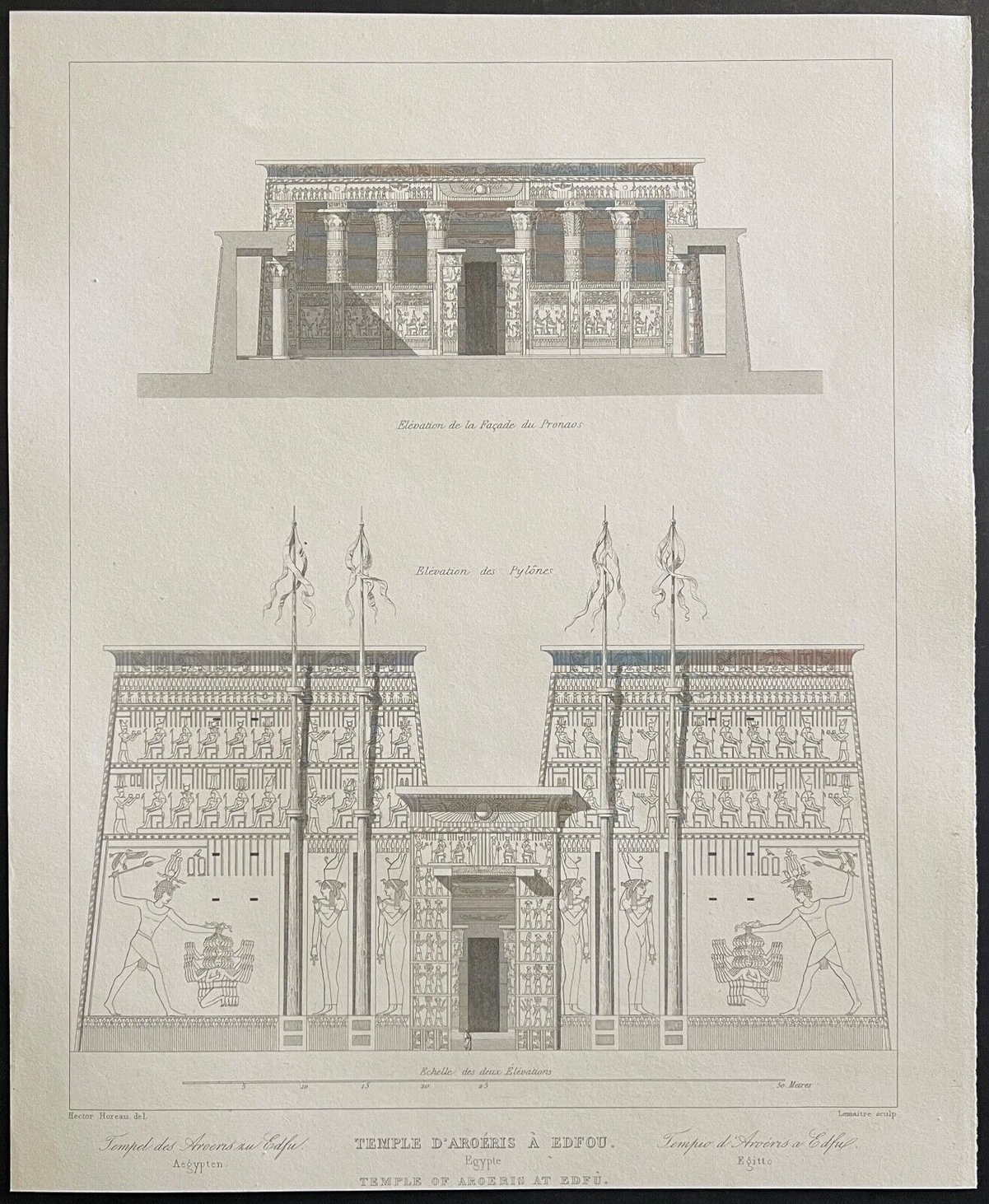
Two detailed architectural elevations showing the pronaos façade and the monumental entrance pylons, decorated with Egyptian reliefs, hieroglyphs and ceremonial flagpoles.
Sheet: 29.3 × 24 cm.
Period: 19th century.
Reference: 5215-319R672
Description
EDFU EGYPT TEMPLE OF HORUS ENGRAVING – HECTOR HOREAU – CIRCA 1850
Antique Nineteenth-Century Architectural Print – Temple Pylons and Pronaos
An attractive nineteenth-century architectural print, circa 1850, after drawings by the French architect Hector Horeau (1801–1872), depicting the monumental Temple of Horus at Edfu in Upper Egypt.
This finely detailed composition presents two architectural elevations: the façade of the pronaos and the great entrance pylons.
The print is particularly interesting for its precise representation of ancient Egyptian architecture, monumental reliefs, hieroglyphic decoration and ceremonial structures.
THE TEMPLE OF HORUS AT EDFU
The Temple of Horus at Edfu is one of the best-preserved ancient Egyptian temples.
Located on the western bank of the Nile between Luxor and Aswan, the temple was dedicated to Horus, the falcon-headed god associated with kingship and divine protection.
Its construction began in 237 BC under Ptolemy III Euergetes and continued during the Ptolemaic period.
The temple is celebrated for its monumental pylons, decorated columns, extensive religious reliefs and inscriptions.
Its remarkable state of preservation makes it an essential monument for understanding the architecture and religious traditions of ancient Egypt.
THE PRONAOS FAÇADE
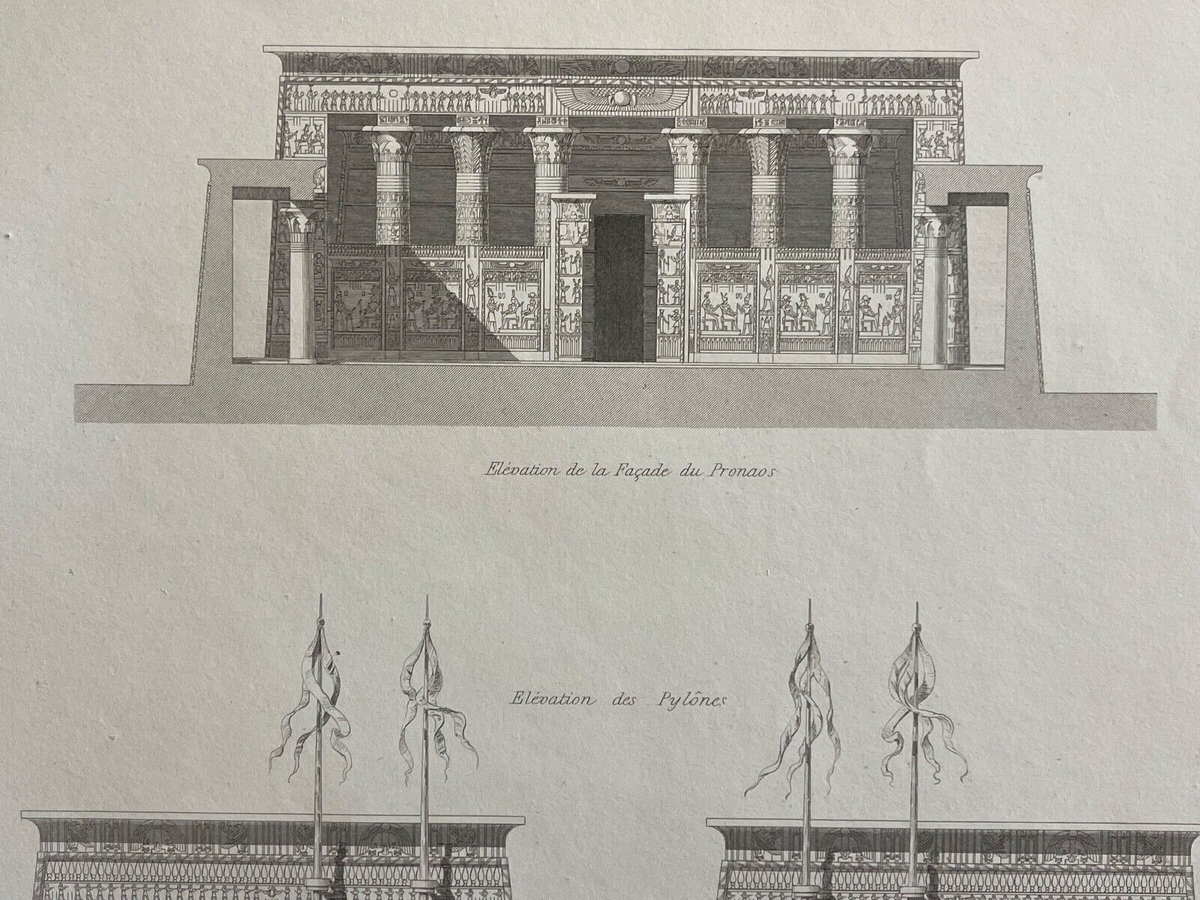
The upper composition represents an architectural elevation of the pronaos façade.
The design shows a symmetrical arrangement of columns with richly decorated capitals.
The spaces between the columns contain architectural screens adorned with religious scenes and ornamental details.
A central doorway gives access to the interior of the temple.
The upper cornice contains carefully reproduced decorative elements.
The elevation provides a valuable view of the complex relationship between architectural structure and religious decoration in Egyptian temples.
THE GREAT PYLONS OF EDFU
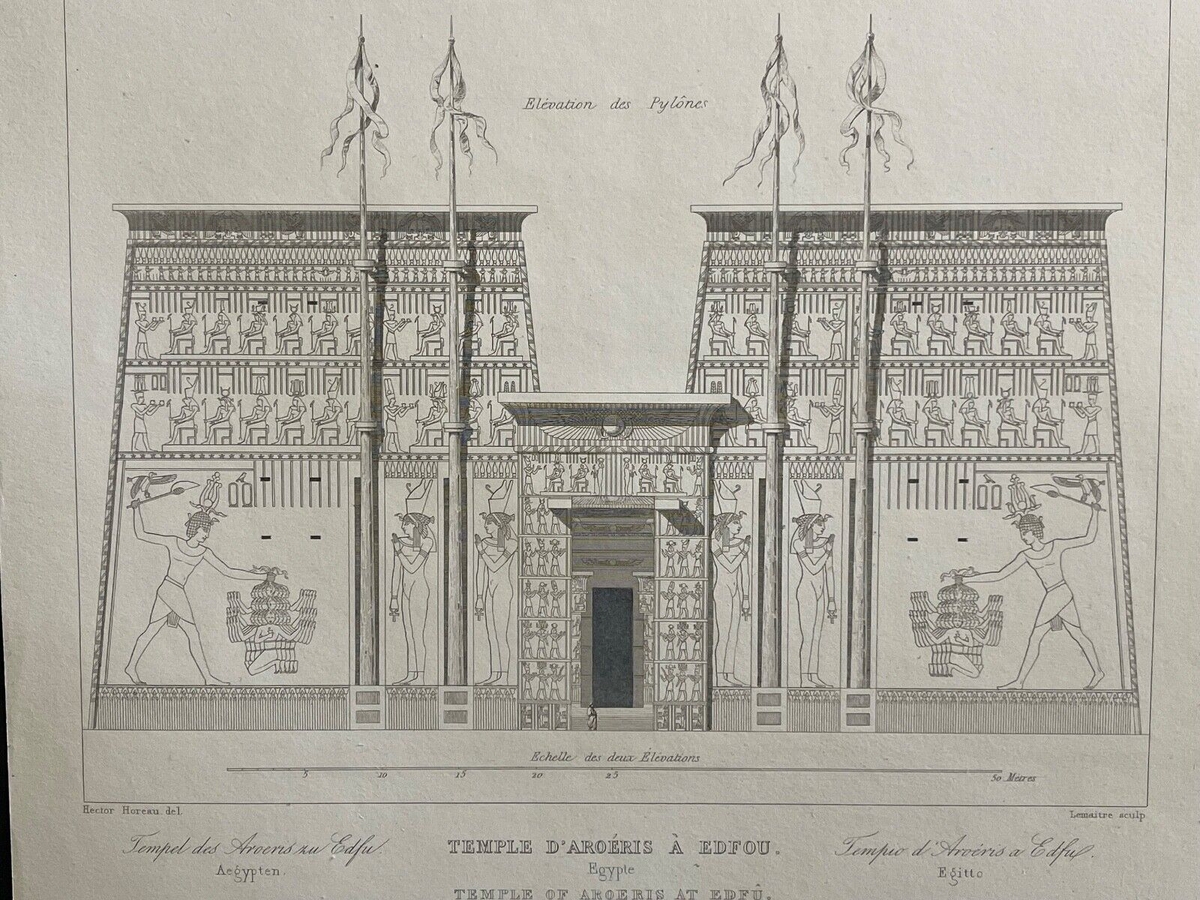
The lower composition depicts the monumental entrance pylons of the Temple of Horus.
Two massive towers rise on either side of the central gateway.
Their surfaces are decorated with extensive reliefs representing the pharaoh and Egyptian deities.
Rows of religious figures and ceremonial scenes cover the upper registers.
Four tall flagpoles with flowing banners stand in front of the entrance, emphasising the ceremonial character of the monument.
A graduated scale beneath the architectural drawings provides information about the proportions of the structure.
HECTOR HOREAU (1801–1872)
Hector Horeau was a French architect known for his architectural studies, historical research and interest in monumental construction.
His work included detailed representations of ancient buildings and architectural structures.
His studies of Egyptian monuments contributed to the nineteenth-century European fascination with the architecture and artistic achievements of ancient Egypt.
The present composition demonstrates his precise observation of structural forms, decorative reliefs and monumental proportions.
EGYPTOLOGY AND ARCHITECTURAL STUDIES IN THE NINETEENTH CENTURY
The nineteenth century was a particularly important period in the development of Egyptology.
Following Napoleon’s Egyptian expedition and Jean-François Champollion’s decipherment of hieroglyphs in 1822, European interest in ancient Egyptian civilisation expanded considerably.
Architects, artists and scholars produced detailed surveys of temples, tombs and monuments.
Architectural elevations became essential tools for documenting the structure and decoration of ancient buildings.
This print reflects that important period of scientific and artistic exploration.
AN ATTRACTIVE ANTIQUE ARCHITECTURAL PRINT
The composition is especially appealing to collectors of Egyptology, ancient architecture, historical monuments and nineteenth-century prints.
Its two carefully arranged architectural elevations provide an elegant presentation of the Temple of Horus.
The detailed reliefs, monumental pylons and precise architectural proportions make the print both historically interesting and decorative.
DETAILS
Location depicted: Edfu, Upper Egypt.
Monument: Temple of Horus.
Artist: After Hector Horeau (1801–1872).
Date: Circa 1850.
Period: 19th century.
Type: Antique architectural print.
Subject: Pronaos façade and monumental entrance pylons.
Sheet dimensions: 29.3 × 24 cm.
Architectural details: Egyptian columns, carved reliefs, hieroglyphs and ceremonial flagpoles.
CONDITION
Antique impression showing the natural patina of aged paper.
Both architectural elevations, their inscriptions and decorative details remain well preserved.
An elegant nineteenth-century architectural print documenting one of the most important temples of ancient Egypt.
Reference: 5215-319R672



Avis
Il n’y a pas encore d’avis.