Description
Deep Sea Diver WWI Aquatint
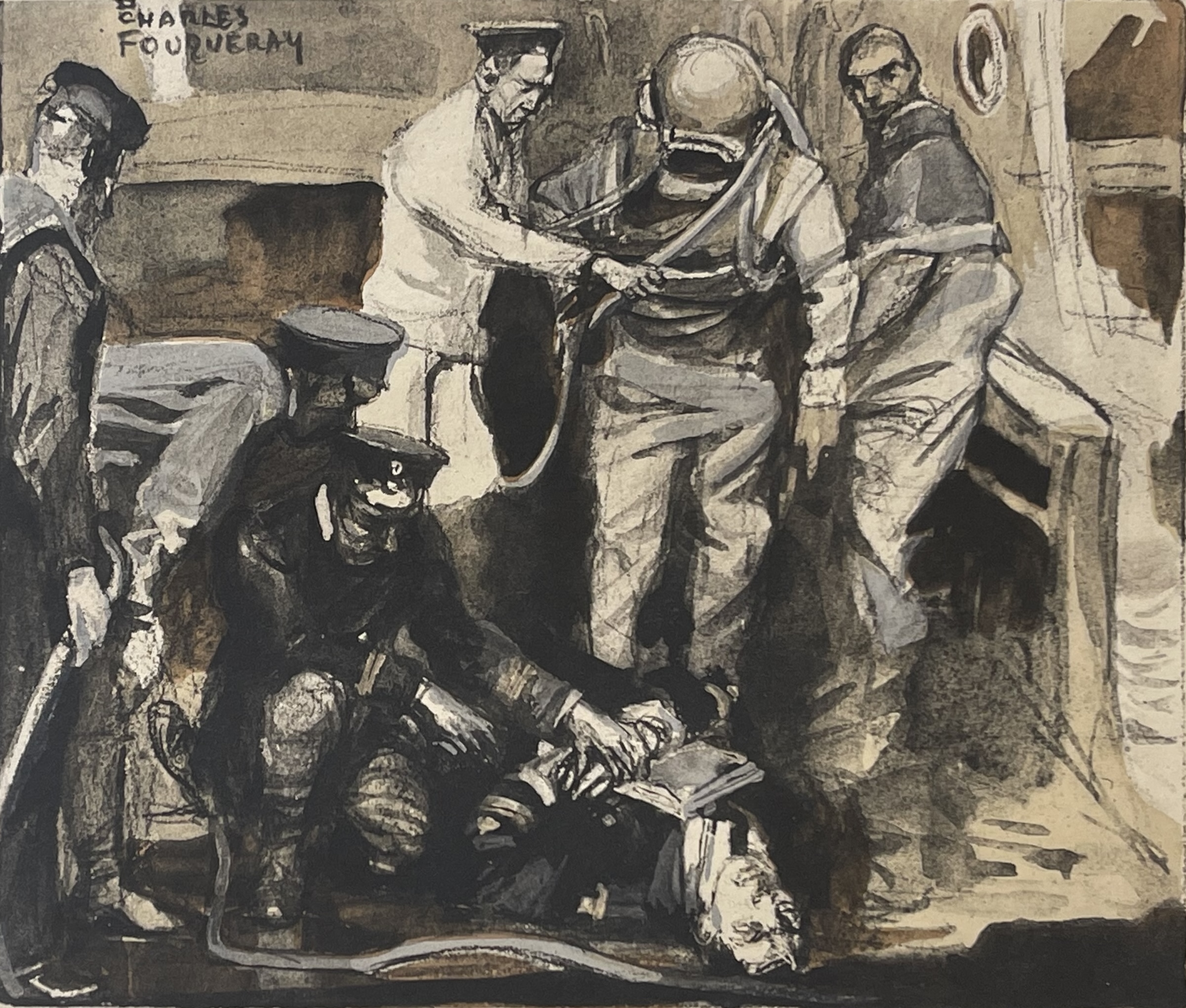
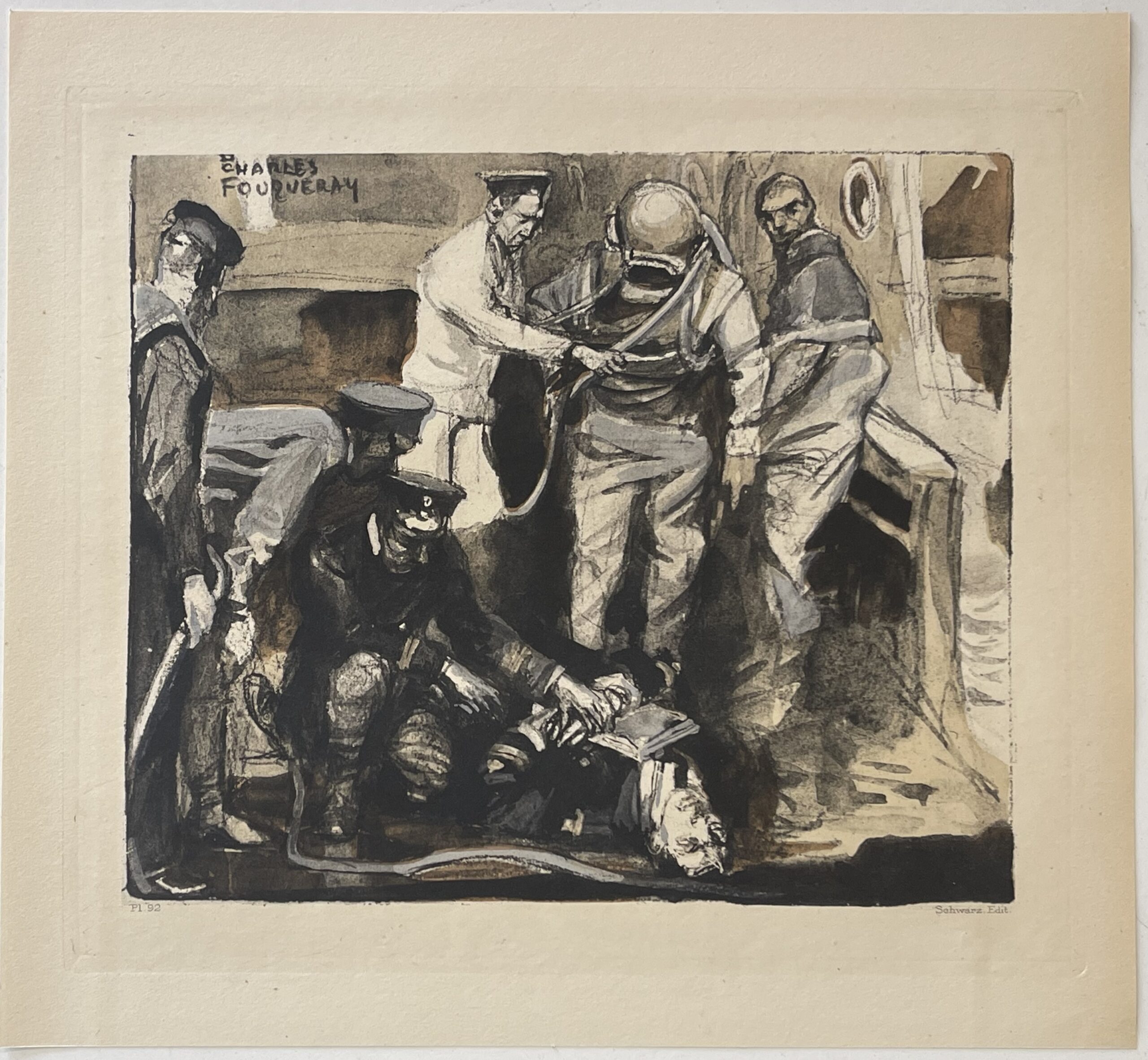
This WWI deep sea diver aquatint depicts a dramatic underwater intelligence mission involving the recovery of secret military documents.
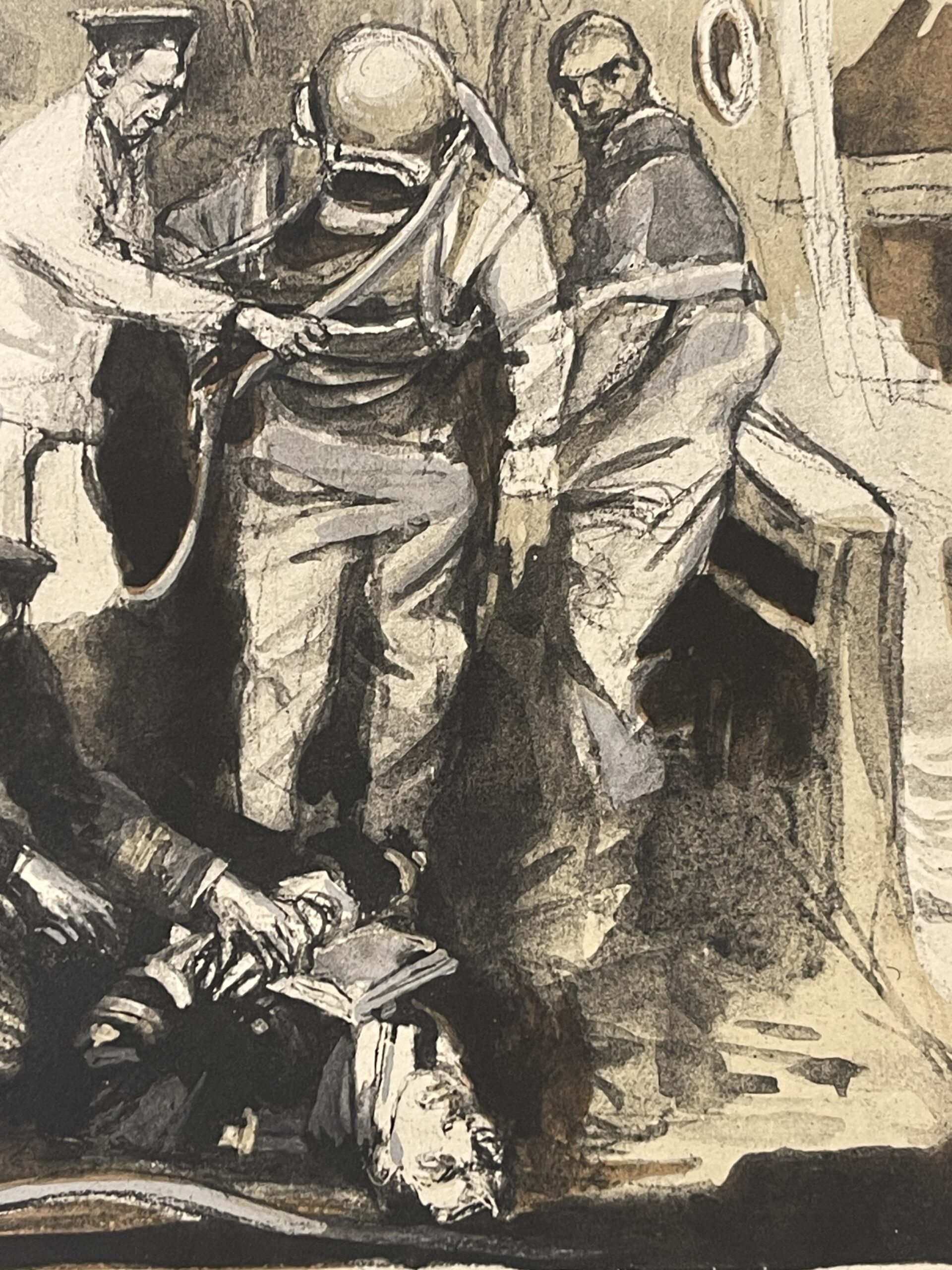
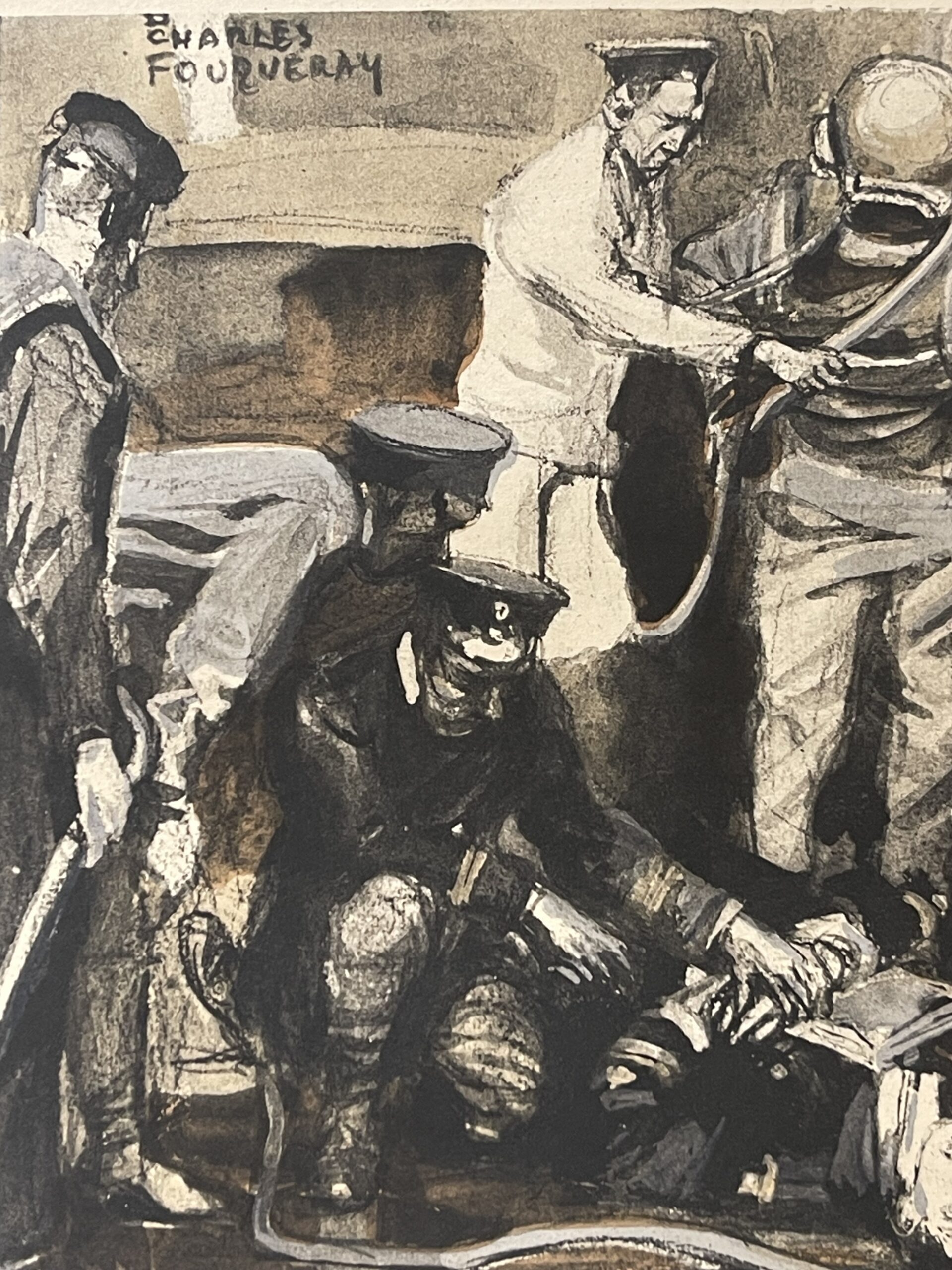
The scene takes place aboard a naval vessel during the First World War. At the centre, a deep-sea diver wearing a heavy metal helmet has apparently just returned from an underwater search. Sailors help him remove his cumbersome equipment while another man examines the documents recovered during the operation.
A Secret War Beneath the Sea
Naval warfare was not limited to battleships, submarines, mines and torpedoes. A parallel intelligence war was fought to obtain enemy codebooks, charts, written orders and confidential correspondence.
Documents recovered from a sunken or abandoned warship could reveal naval positions, operational plans and encrypted communications. Deep-sea divers therefore played a discreet but potentially decisive role in examining wrecks and recovering strategically important material.
The historical account associated with this aquatint refers in particular to the celebrated case of the German light cruiser Magdeburg.
In August 1914, shortly after the outbreak of the First World War, the Magdeburg ran aground in the Baltic near the Russian-controlled coast. Russian forces recovered German naval codebooks and other confidential documents from the vessel.
According to the traditional account, some of these documents were discovered during searches conducted on or around the wreck. Copies of the captured codes were subsequently delivered to the British Admiralty.
The material helped British naval intelligence decipher German wireless communications. The codebooks became an important resource for the Admiralty’s cryptanalytic organisation, later famous as Room 40, and contributed to the monitoring of German naval movements.
The aquatint should be understood as an evocative representation of underwater intelligence gathering rather than as a strictly documentary record of one specific recovery operation.
The Early Deep-Sea Diver
The diver wears the characteristic equipment used during the early twentieth century: a rigid metal helmet, a heavy watertight suit and surface-supplied air hoses.
Working in this equipment was difficult and dangerous. Divers were employed to inspect hulls, clear underwater obstructions, recover valuable objects and explore damaged or sunken vessels. During wartime, such missions could also involve weapons, military equipment and secret documents.
Details
Main subject: deep-sea diver
Theme: recovery of secret naval documents
Historical period: First World War
Date: circa 1920
Technique: aquatint
Original French title: Recherche des documents secrets
Publisher: Schwarz
Plate number: 92
Artist’s name printed within the image: Charles Fouqueray
Sheet dimensions: 23.5 × 21.5 cm
Image dimensions: 18.4 × 15.6 cm
Framing: unframed
Avis
Il n’y a pas encore d’avis.