Danzig Gdansk Poland 1807 Napoleon Siege Marshal Lefebvre Swebach Engraving c1850
49,00 €
Danzig Poland Napoleon Siege 1807 – Large Antique French Engraving after Swebach, circa 1850.
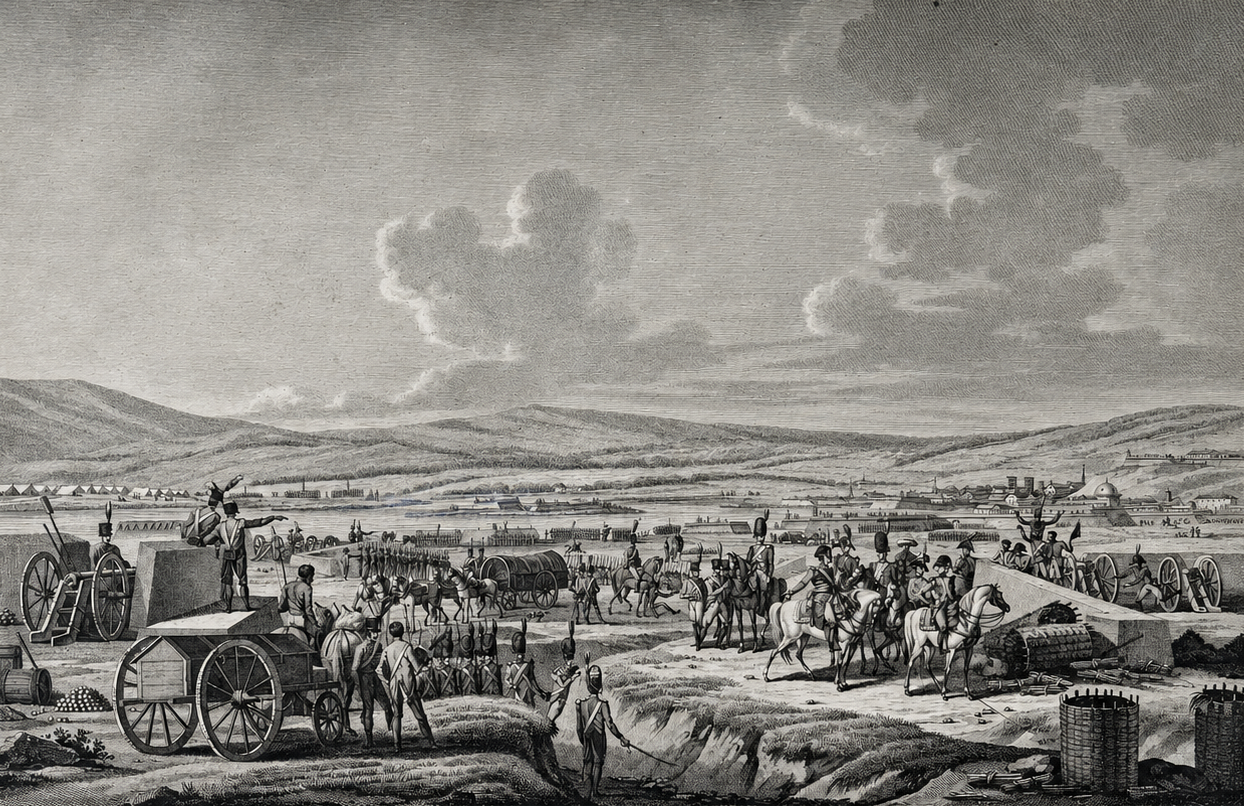
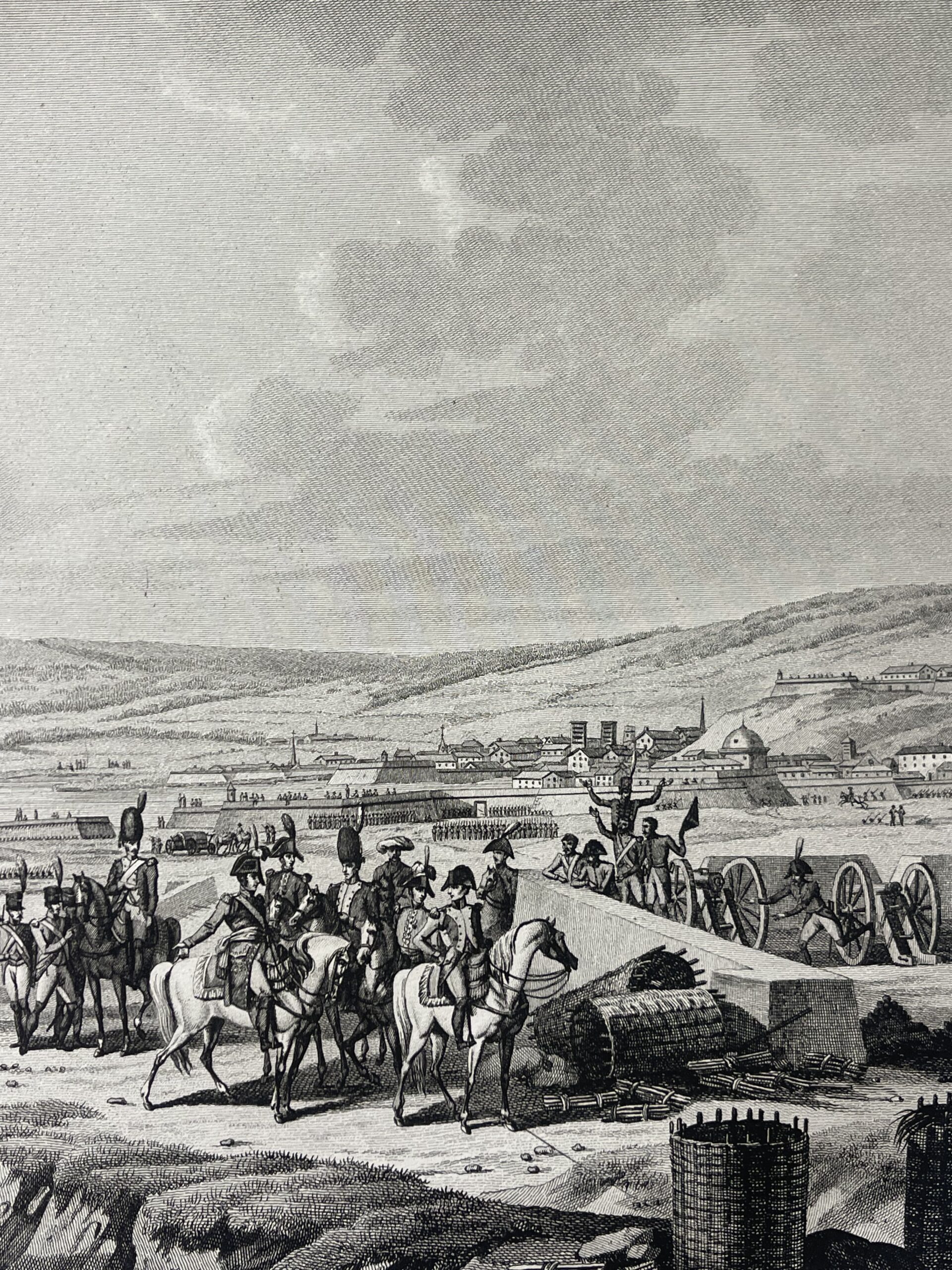
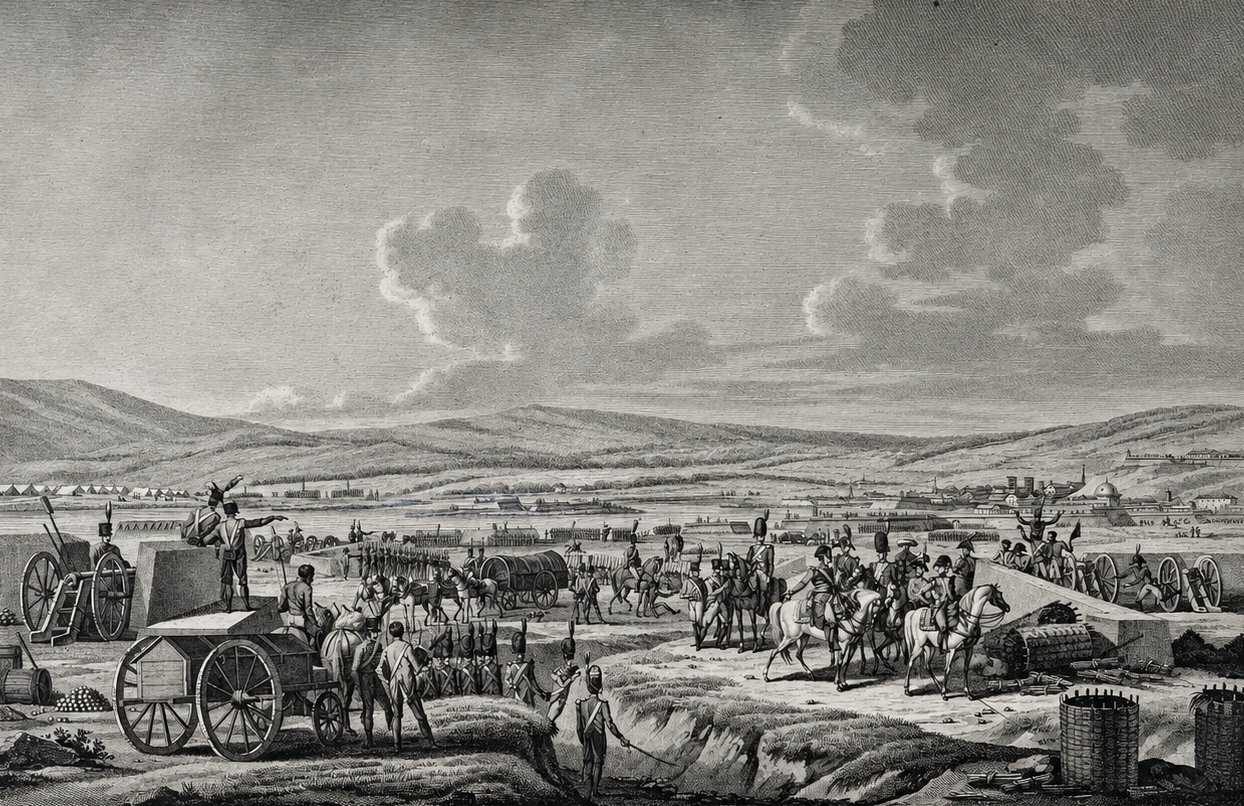
Impressive nineteenth-century French etching and burin engraving depicting Napoleon I inspecting the siege works of Danzig, today Gdańsk, Poland, on 9 May 1807.
A richly detailed military panorama featuring artillery batteries, French infantry, cavalry officers, military horses, cannons, supply wagons and the distant fortified city.
The siege was directed by Marshal François Joseph Lefebvre, subsequently created Duke of Danzig.
Original artist: Jacques François Joseph Swebach-Desfontaines (1769–1823).
Engravers: Couché fils and Dequevauviller.
Date: Circa 1850.
Sheet: 46.5 × 30 cm.
Engraved image: 38.1 × 24.8 cm.
Reference: 4401-93R324D25.
Description
Danzig Poland Napoleon Siege 1807 – Marshal Lefebvre – Large French Military Engraving after Swebach circa 1850
Danzig Poland Napoleon Siege 1807 – Large nineteenth-century French historical engraving after Jacques François Joseph Swebach-Desfontaines (1769–1823), depicting Emperor Napoleon I inspecting the military works during the Siege of Danzig on 9 May 1807.
Artculture6 presents this impressive antique French engraving, traditionally dated circa 1850, illustrating one of the important military operations of Napoleon’s campaign in Poland and East Prussia.
The original composition was drawn by Swebach-Desfontaines, etched by Louis-François Couché, known as Couché fils, and finished in burin by Dequevauviller.
The engraving portrays Napoleon and his officers inspecting the siege works directed by Marshal François Joseph Lefebvre.
Its elaborate panoramic composition includes artillery batteries, military horses, cavalry officers, infantry formations, supply wagons, fortifications and the distant city of Danzig.
DANZIG POLAND – THE SIEGE OF 1807
Danzig, today known as Gdańsk in Poland, was an important fortified Baltic port during the Napoleonic Wars.
Its strategic position near the mouth of the Vistula made the city valuable for military communications, supplies and maritime trade.
Following Napoleon’s victories over Prussia in 1806, French forces continued their operations in Central and Eastern Europe.
The capture of Danzig became an important objective during the 1807 campaign.
The siege began in March 1807, with French and allied forces conducting operations against the city’s defences.
The command was entrusted to Marshal François Joseph Lefebvre, one of Napoleon’s senior military officers.
NAPOLEON INSPECTS THE SIEGE WORKS – 9 MAY 1807
On 9 May 1807, Napoleon visited the works of the siege of Danzig.
This event provided the subject for the remarkable historical composition reproduced in the present engraving.
The scene shows an extensive military landscape filled with officers, soldiers, artillery pieces and horses.
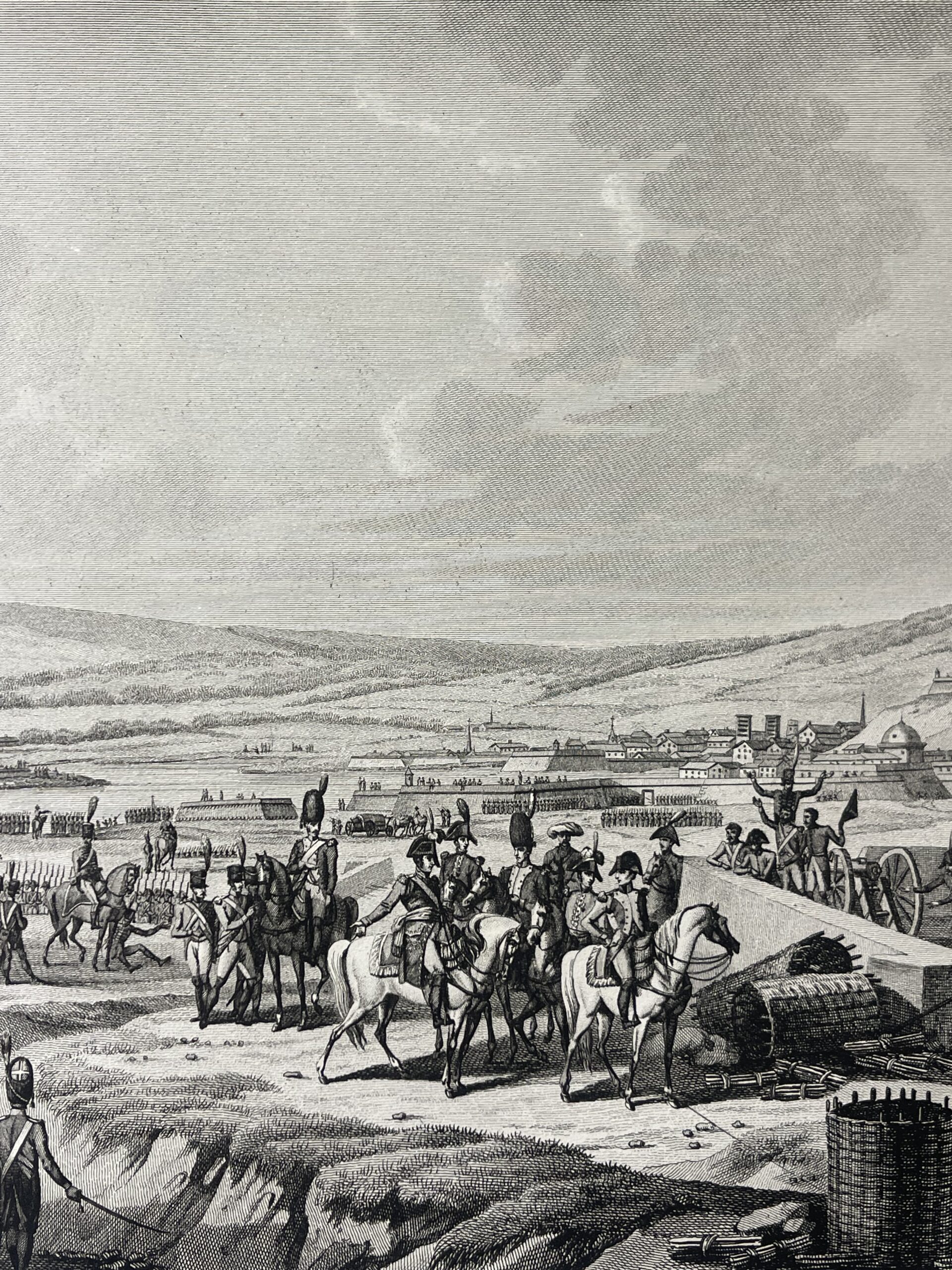
In the foreground, mounted officers inspect the positions occupied by the French army.
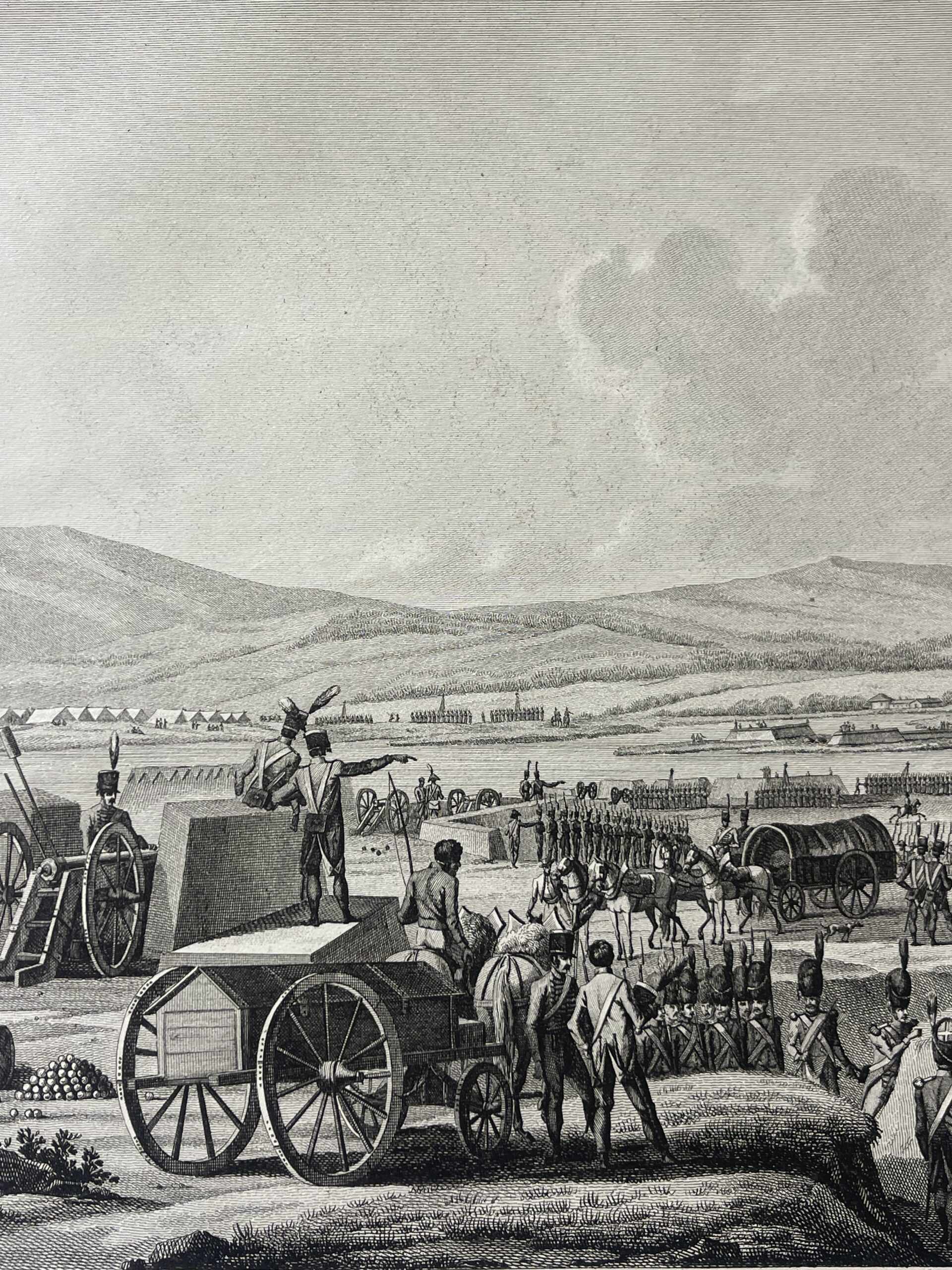
To the left stands a large artillery battery, where soldiers and officers are gathered around several cannons.
A military figure standing upon an elevated platform gestures towards the distant positions.
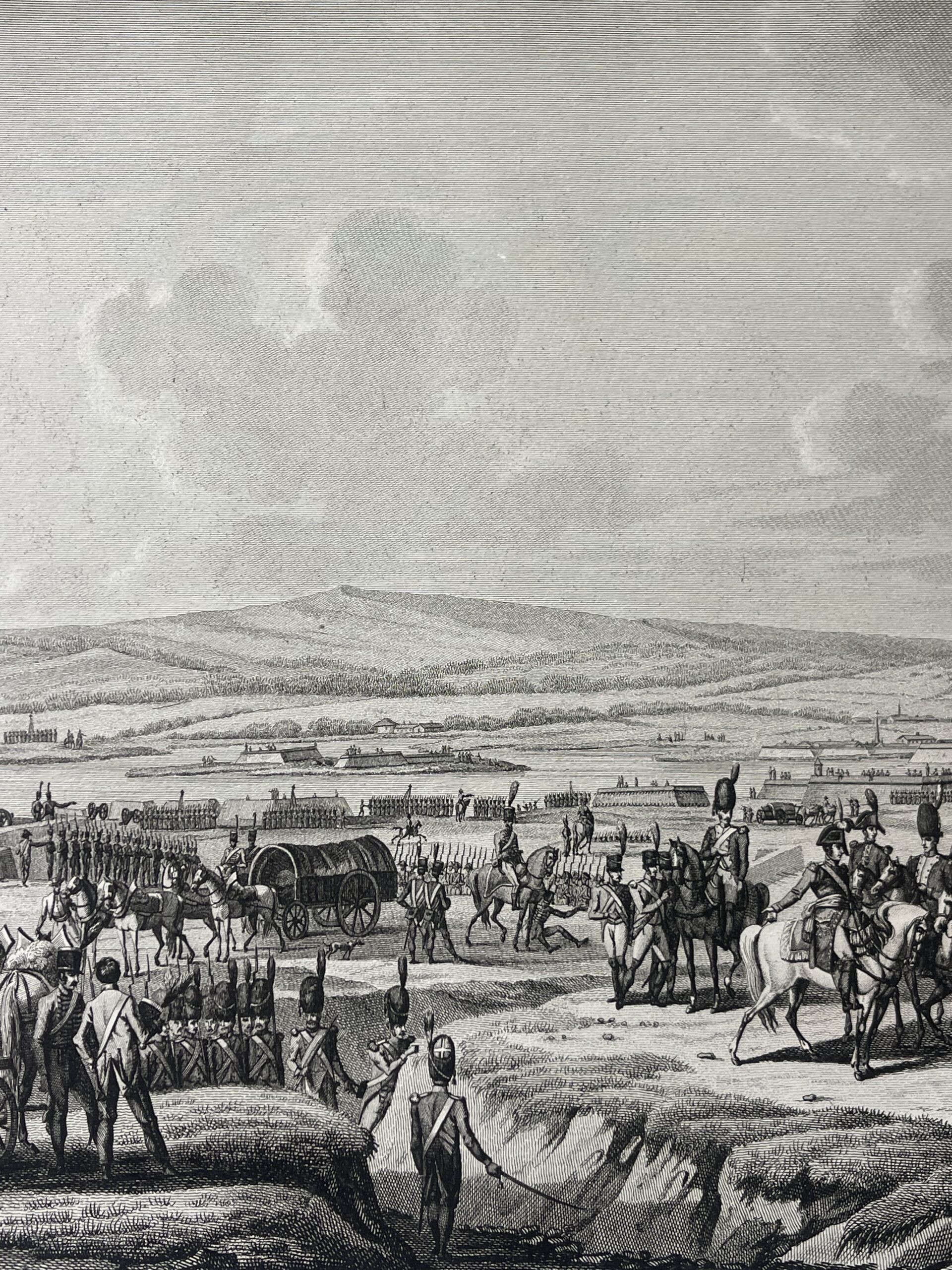
In the centre, infantry and cavalry formations move across the landscape.
Additional officers on horseback appear on the right, accompanied by soldiers and military equipment.
The distant city, military camps and fortifications establish the scale of the siege.
The composition combines a major historical event with an exceptionally detailed representation of Napoleonic military life.
ARTILLERY BATTERIES AND MILITARY ENGINEERING
One of the most interesting aspects of the engraving is its representation of siege artillery and military engineering.
Several cannons are positioned in prepared batteries overlooking the surrounding terrain.
Large artillery wheels, gun carriages, earthworks and ammunition supplies appear throughout the composition.
The engraver has carefully reproduced the equipment used by the military forces of the period.
Soldiers and officers are shown examining the works, standing beside the batteries or moving between different positions.
These details illustrate the extensive preparations required to besiege a fortified city during the Napoleonic era.
MARSHAL FRANÇOIS JOSEPH LEFEBVRE
François Joseph Lefebvre (1755–1820) was one of Napoleon’s celebrated Marshals of the Empire.
Born in Rouffach, Alsace, he began his military career before the French Revolution.
He distinguished himself during the Revolutionary Wars and became a Marshal of the Empire in 1804.
In 1807, Lefebvre commanded the forces besieging Danzig.
The operation required the coordination of artillery, engineering units and infantry against the city’s fortified defences.
Danzig capitulated on 24 May 1807.
Following the successful siege, Napoleon rewarded Lefebvre with the title Duke of Danzig.
The campaign represented one of the major achievements of Lefebvre’s military career.
A PANORAMIC MILITARY LANDSCAPE
The landscape occupies an important place in this large engraving.
The foreground is animated by military officers, mounted cavalrymen, artillery pieces and soldiers.
Across the middle distance, the ground is occupied by infantry formations, wagons and defensive works.
The city of Danzig can be distinguished on the distant horizon.
Low hills and broad open spaces create a remarkable impression of depth.
The sky occupies much of the upper composition and is rendered with delicate engraved lines and softly modelled clouds.
The overall effect is both documentary in character and highly decorative.
MILITARY HORSES AND CAVALRY
Swebach-Desfontaines was particularly admired for his representation of horses and military subjects.
This composition offers several attractive examples of his equestrian draughtsmanship.
Mounted officers appear throughout the foreground and middle distance.
The horses are shown from different angles, displaying varied movements and postures.
Their carefully engraved bodies, saddles, harnesses and equipment contribute to the richness of the scene.
The artist has successfully combined a large number of figures without losing the clarity of the principal military groups.
JACQUES FRANÇOIS JOSEPH SWEBACH-DESFONTAINES
Jacques François Joseph Swebach-Desfontaines was born in Metz, France, in 1769 and died in Paris in 1823.
He was a French painter, draughtsman and printmaker particularly celebrated for military scenes, cavalry and historical subjects.
He studied with his father and subsequently with Michel Hamon-Duplessis.
His artistic career began at an early age, and he participated in the Paris Salon from 1791.
Swebach became closely associated with the representation of events from the French Revolution and the First Empire.
From 1802 to 1813, he served as principal painter at the Sèvres porcelain manufactory.
After the fall of Napoleon, he worked in Russia, where he was invited to Saint Petersburg during the reign of Alexander I.
His works are especially admired for their lively representations of horses, detailed military costumes and carefully constructed landscapes.
COUCHÉ FILS AND DEQUEVAUVILLER
The composition was etched by Louis-François Couché, known as Couché fils (1782–1849).
The burin engraving was executed by Dequevauviller.
Both artists contributed to the production of historical prints devoted to the Napoleonic period.
The combination of etching and burin allowed the composition to reproduce both fine linear details and deeper contrasts.
The figures, artillery, horses and distant landscape are carefully distinguished through their engraved textures.
The result is a richly detailed historical print celebrating an important episode in Napoleon’s military career.
THE CAPTURE OF DANZIG
The siege concluded with the capitulation of Danzig on 24 May 1807.
The French victory secured an important strategic position on the Baltic coast.
The capture of the city contributed to Napoleon’s military success during the 1807 campaign.
Only weeks later, Napoleon defeated the Russian army at the Battle of Friedland on 14 June.
The campaign subsequently culminated in the Treaties of Tilsit in July 1807.
The engraving therefore represents an important stage in the sequence of events leading to one of the major diplomatic settlements of the First Empire.
NINETEENTH-CENTURY NAPOLEONIC PRINTMAKING
During the nineteenth century, French publishers produced numerous historical engravings devoted to Napoleon’s campaigns and military achievements.
These prints preserved the memory of important battles, sieges, troop movements and diplomatic events.
The Siege of Danzig was a significant subject because of its strategic importance and the recognition subsequently awarded to Marshal Lefebvre.
The present engraving combines military history with a detailed panoramic landscape.
It is particularly attractive for its rich representation of artillery equipment, mounted officers and Napoleonic uniforms.
TECHNICAL DETAILS
Subject: Napoleon inspecting the works of the Siege of Danzig.
Historical event: 9 May 1807.
Location: Danzig, now Gdańsk, Poland.
Military commander: Marshal François Joseph Lefebvre (1755–1820).
Original draughtsman: Jacques François Joseph Swebach-Desfontaines (1769–1823).
Etcher: Louis-François Couché, known as Couché fils (1782–1849).
Burin engraver: Dequevauviller.
Period: Nineteenth century.
Date of this impression: Circa 1850, as catalogued.
Technique: Antique French etching and burin engraving.
Sheet dimensions: 46.5 × 30 cm.
Engraved image dimensions: 38.1 × 24.8 cm.
Reference: 4401-93R324D25.
CONDITION
Antique example displaying the natural patina of aged paper. The engraved composition and original inscriptions remain well preserved.
COLLECTOR’S INTEREST
An attractive large nineteenth-century French military engraving depicting Napoleon Bonaparte during the Siege of Danzig in 1807.
Particularly interesting for collectors of Napoleonic history, the First French Empire, Marshal Lefebvre, Polish history, artillery, military engineering, cavalry and antique French engravings.
The extensive panoramic landscape, detailed cannons, mounted officers and numerous soldiers make this an impressive historical and decorative composition.
An appealing addition to a collection devoted to Napoleon I and the military history of nineteenth-century Europe.
Offered by Artculture6 – Antique Prints, Drawings and Works of Art.

Avis
Il n’y a pas encore d’avis.