Conrad Faber von Kreuznach – Roman Military History – German Renaissance Woodcut c.1523
149,00 €
Original early sixteenth-century German woodcut, circa 1523, attributed to Conrad Faber von Kreuznach.
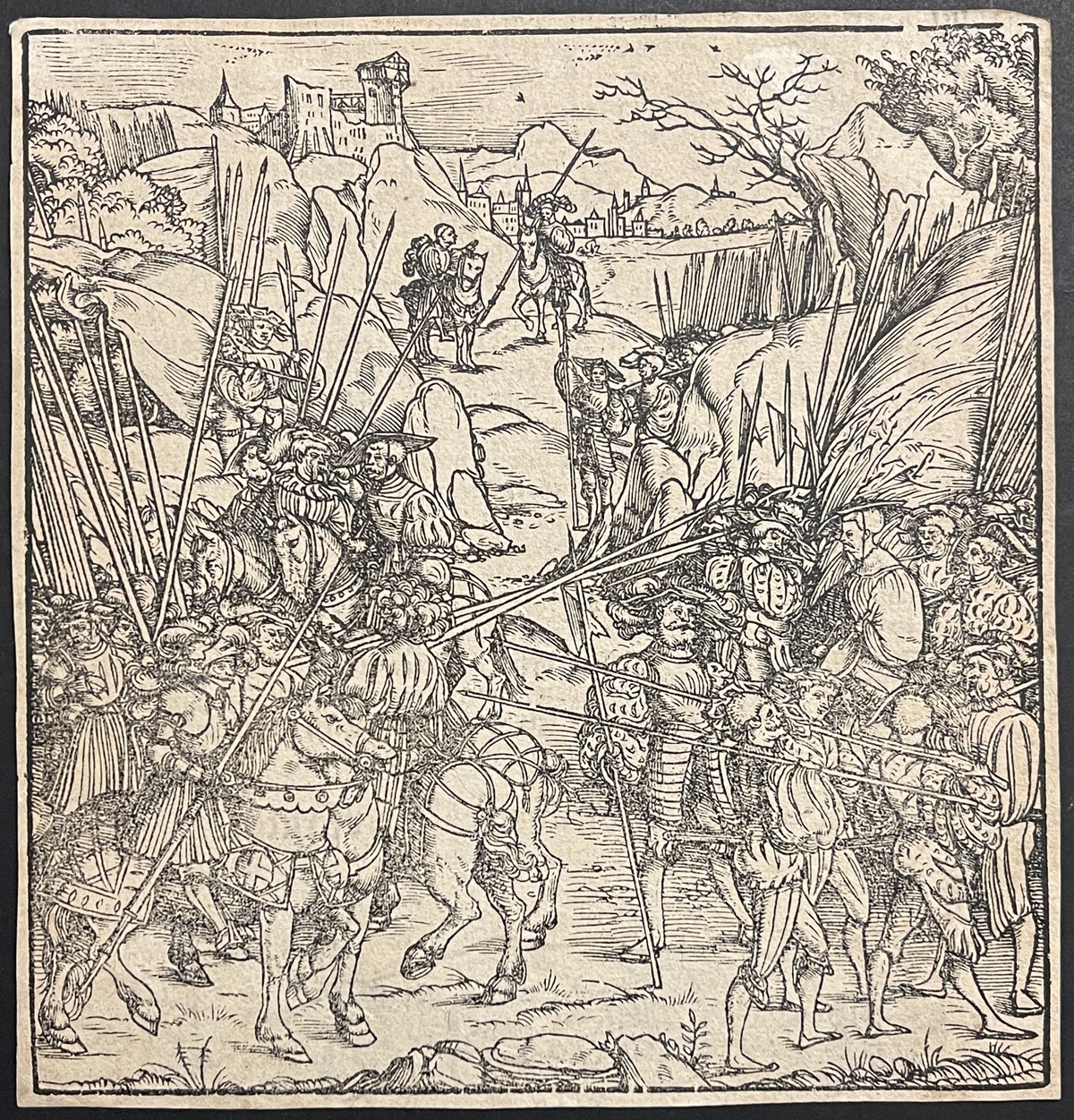
A richly detailed scene from Roman military history, depicting horsemen and armed soldiers in German Renaissance costumes, with long pikes, elaborate garments and a fortified mountain landscape.
Printed on antique laid paper, with early German Gothic text on the reverse.
Sheet: 17.9 × 17 cm.
Woodcut: 17.5 × 16.6 cm.
Small tear in the upper right corner.
Description
CONRAD FABER VON KREUZNACH – ROMAN HISTORY – ORIGINAL GERMAN RENAISSANCE WOODCUT
Early Sixteenth-Century Antique Woodcut – Circa 1523
An impressive original German Renaissance woodcut from the early sixteenth century, attributed to Conrad Faber von Kreuznach.
This remarkable engraving depicts an episode from Roman military history, represented with the elaborate costumes, weapons and architectural settings of Renaissance Germany.
The composition is distinguished by its exceptional wealth of detail, numerous figures, richly dressed horsemen, long pikes and dramatic fortified landscape.
A CONFRONTATION BETWEEN MILITARY GROUPS
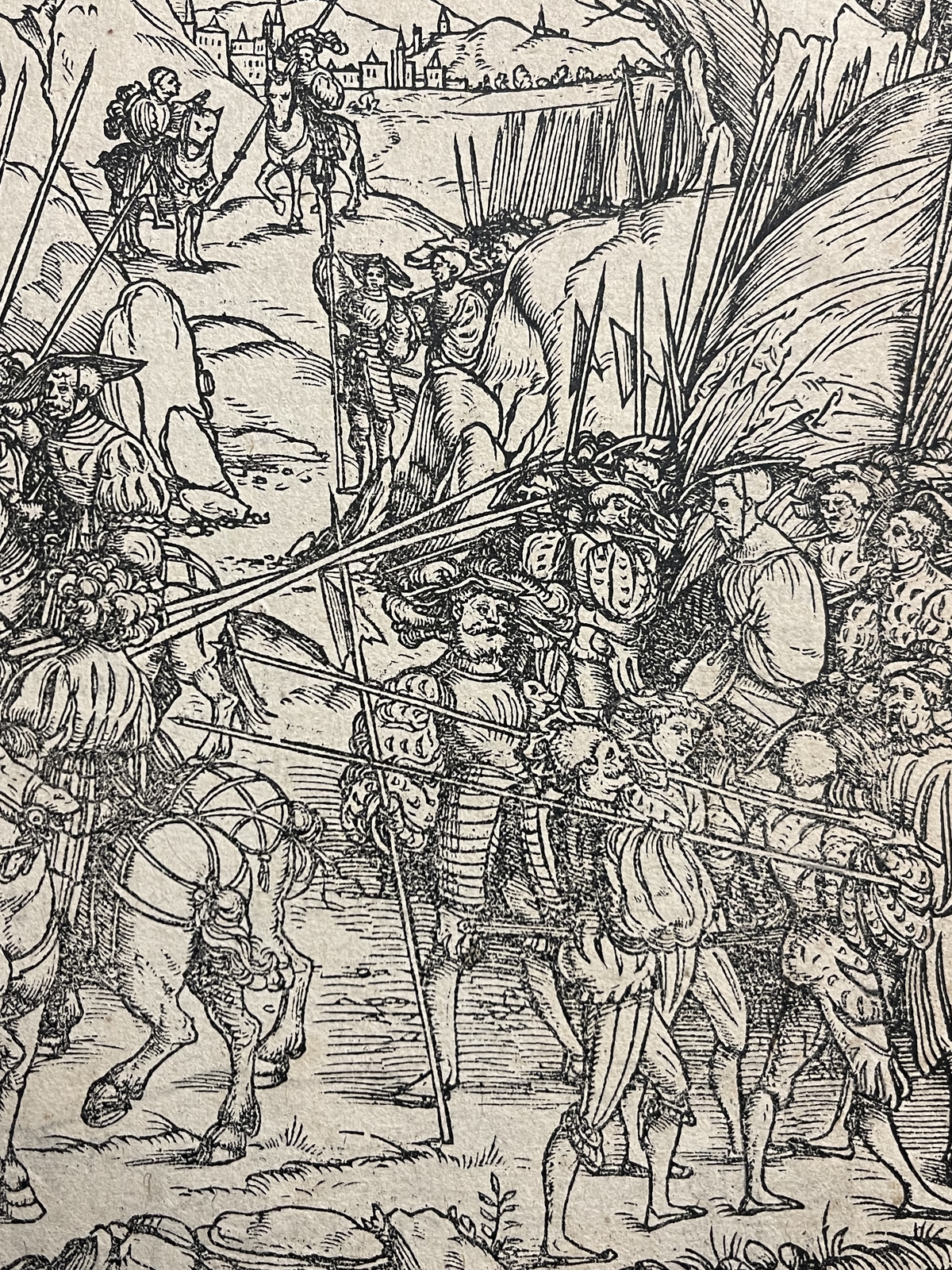
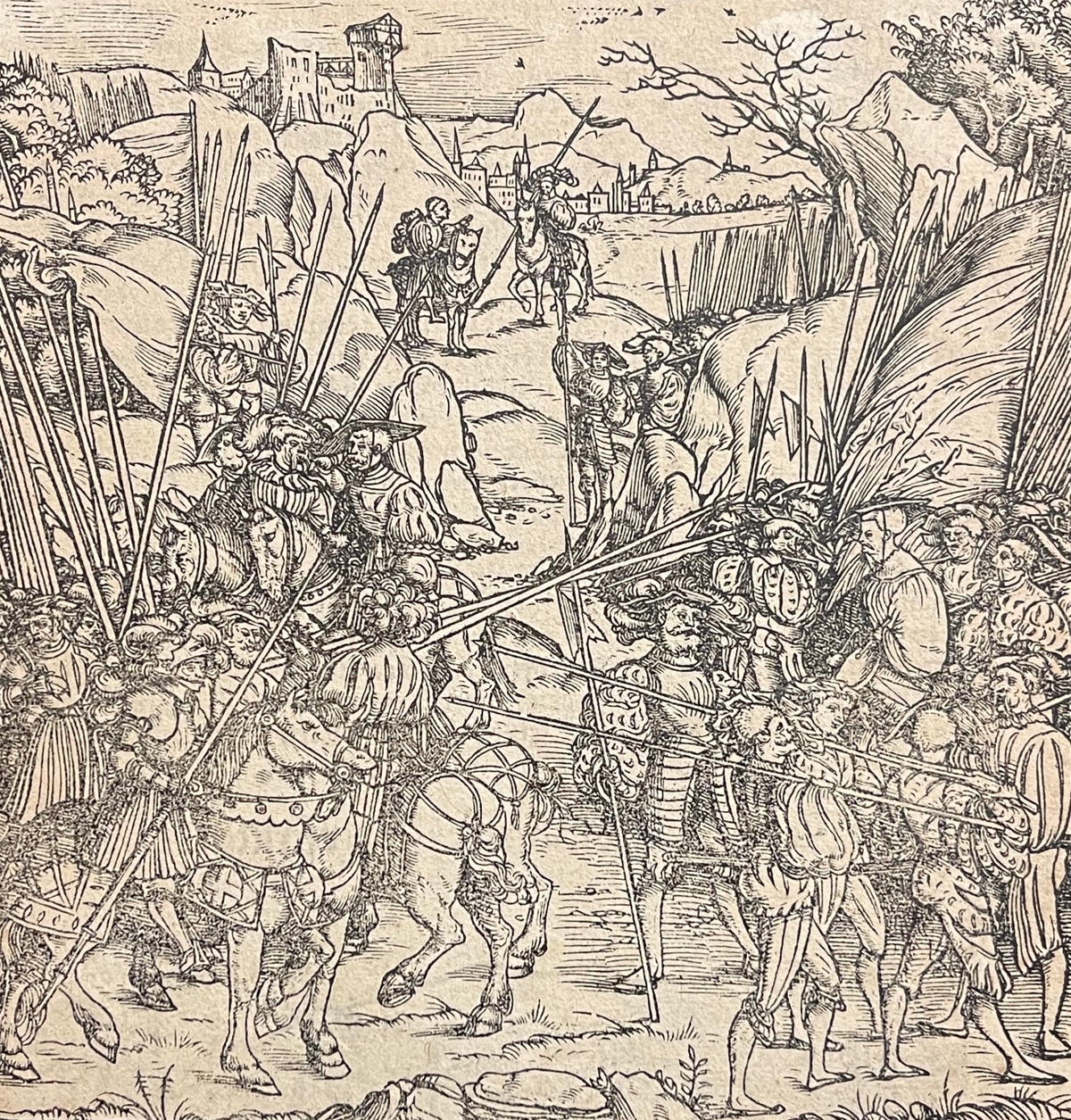
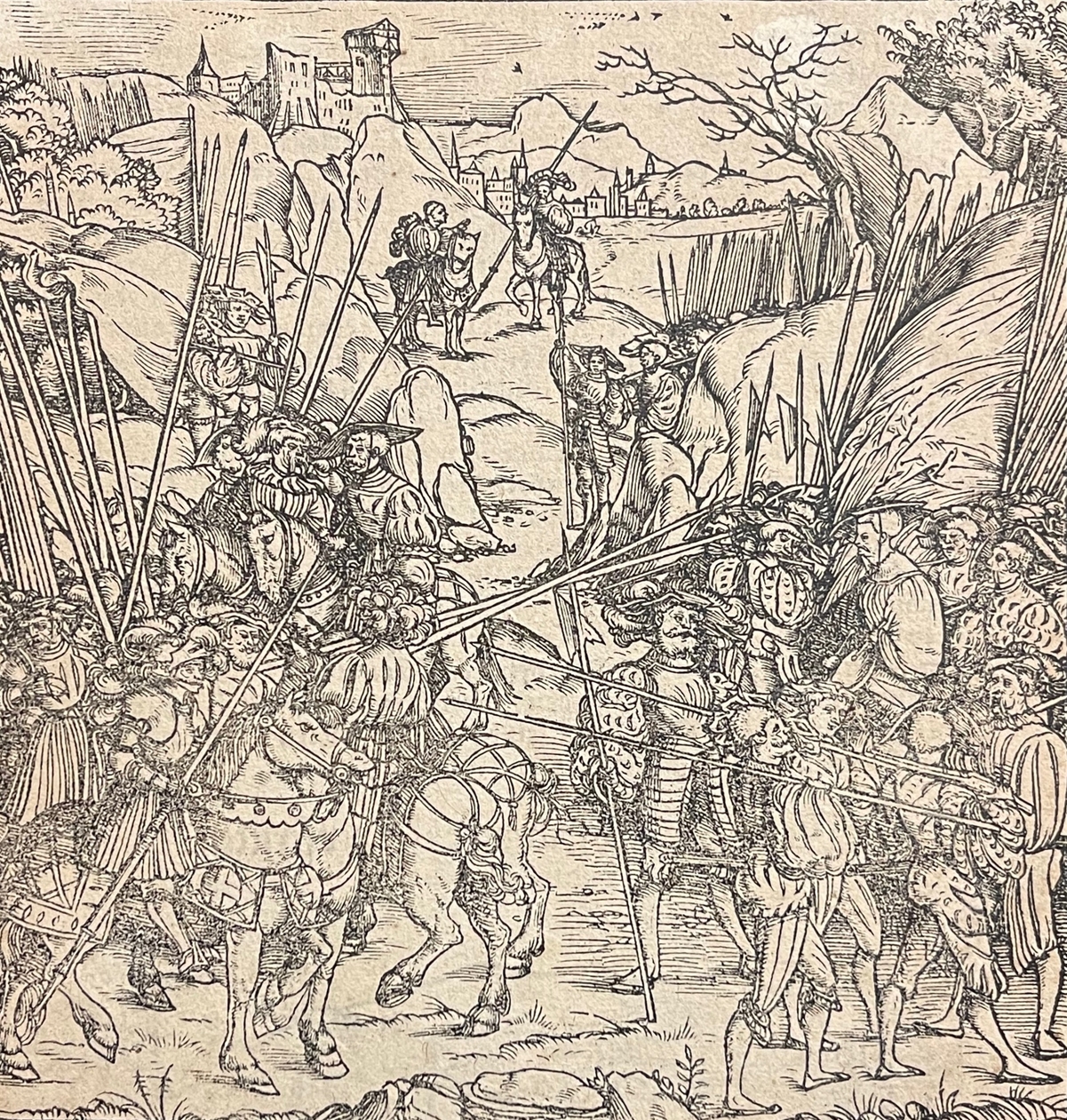
The foreground is occupied by two groups of armed men and mounted figures facing one another.
Several leading characters appear engaged in conversation, while other soldiers observe the encounter.
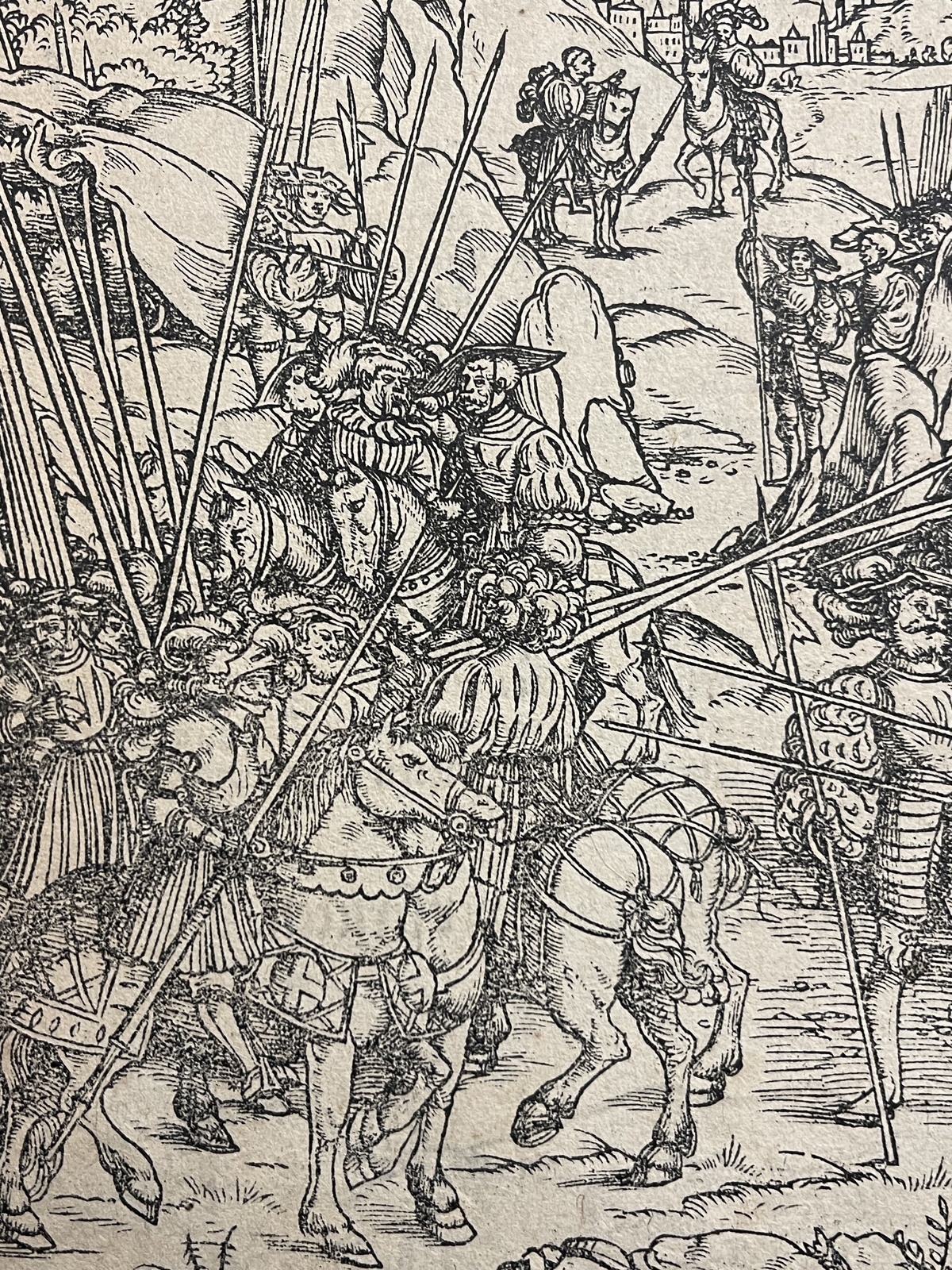
The horsemen wear elaborate Renaissance clothing, including feathered hats, puffed sleeves, slashed garments and ornamental fittings.
Their horses are equipped with carefully detailed bridles, harnesses and decorative accessories.
Around them, groups of infantrymen hold long pikes, spears and polearms.
The numerous weapons create a striking arrangement of diagonal and vertical lines throughout the composition.
The expressive faces, detailed clothing and lively gestures demonstrate the draughtsman’s close attention to the visual culture of his time.
ROMAN HISTORY REPRESENTED THROUGH RENAISSANCE GERMANY
One of the most fascinating characteristics of this woodcut is the way an ancient historical episode is represented through contemporary sixteenth-century European imagery.
During the Renaissance, artists frequently illustrated events from classical antiquity using the military equipment, architecture and clothing familiar to their own audiences.
Roman commanders could therefore resemble German noblemen or military officers, while soldiers appeared in costumes associated with Renaissance infantry.
This artistic convention brought historical narratives closer to contemporary readers.
The present engraving provides an engaging example of this relationship between classical history and German Renaissance visual culture.
A DETAILED FORTIFIED LANDSCAPE
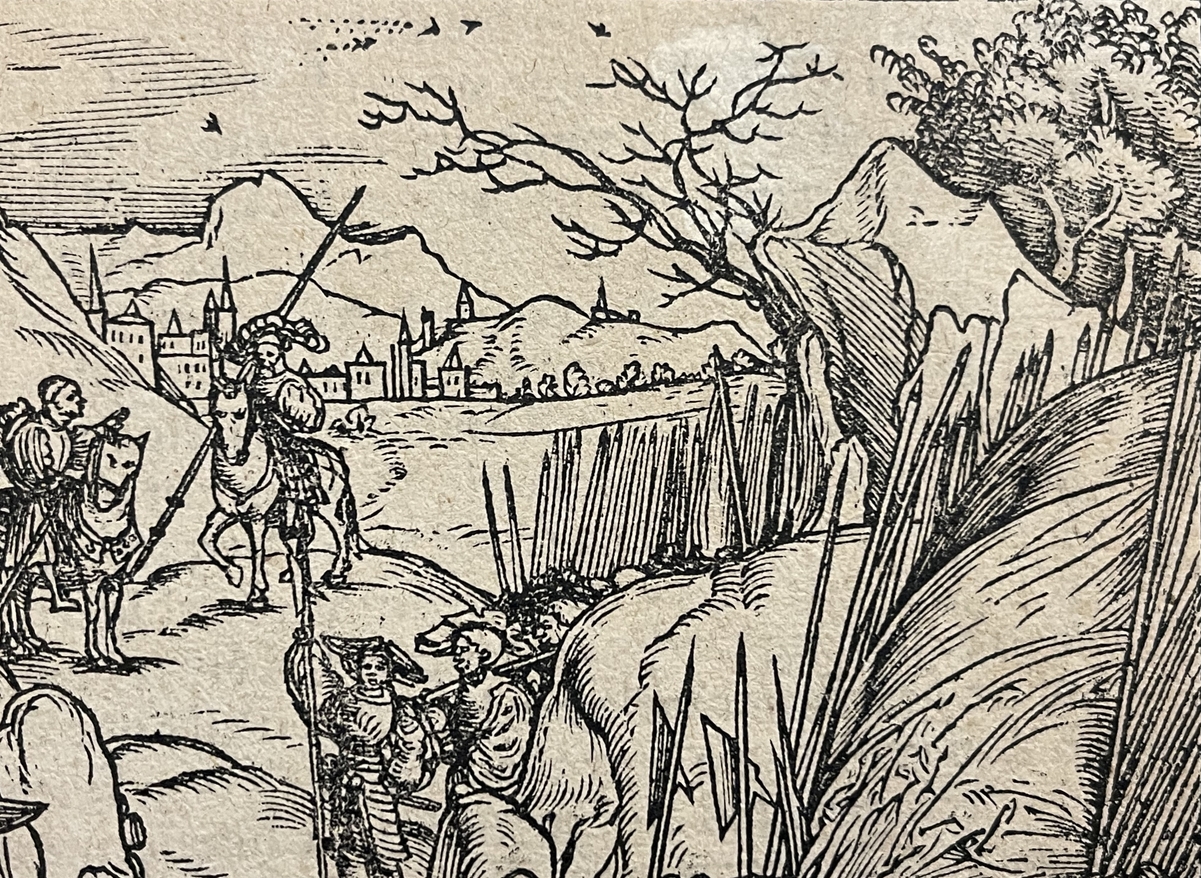
Beyond the military figures, the scene opens onto a dramatic mountainous landscape.
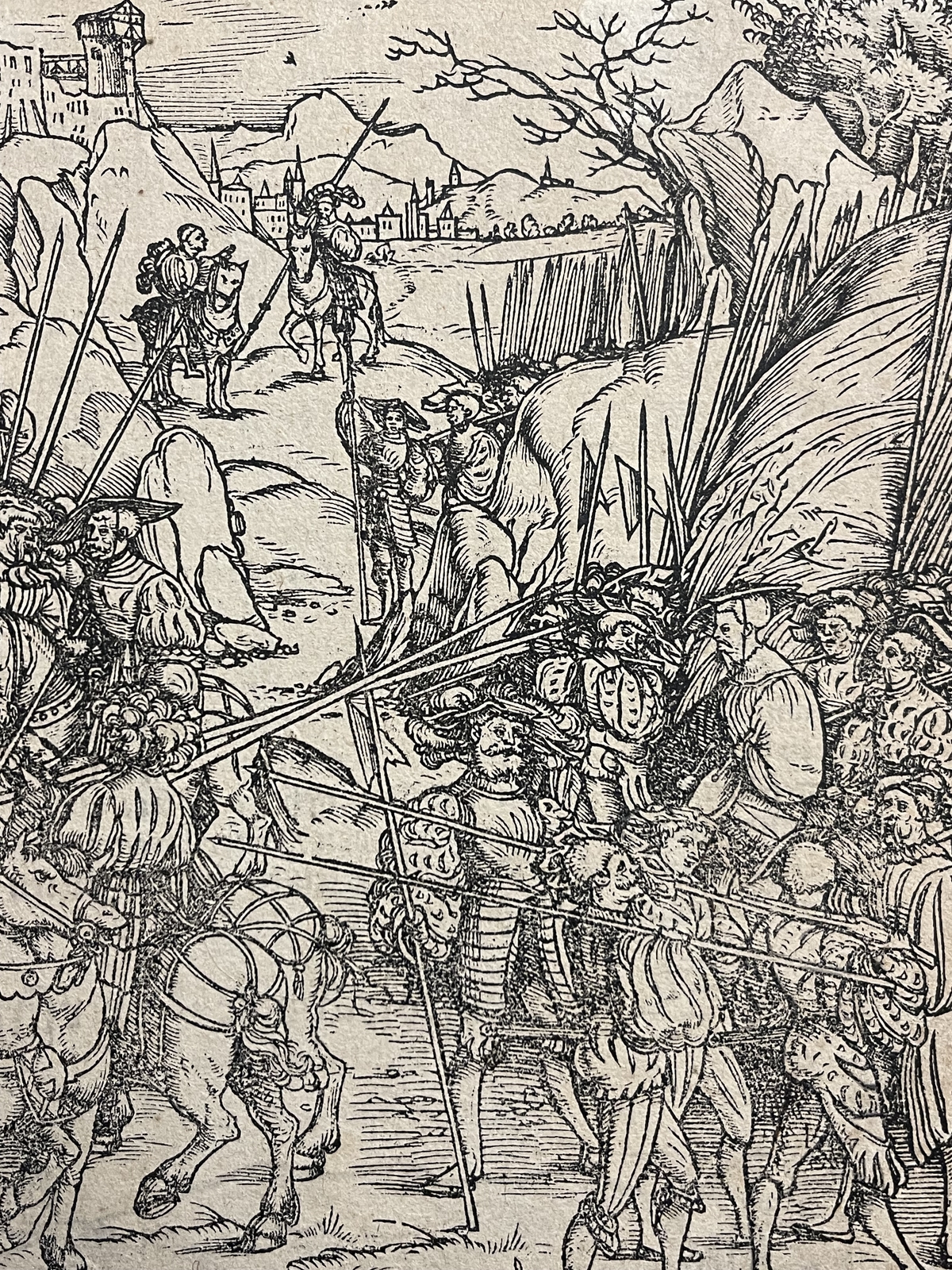
A castle rises above a rocky hill on the left, while a fortified town occupies the distant valley.
Numerous buildings, towers and church spires appear along the horizon.
Two mounted figures stand on a road leading towards the town.
Large rock formations, steep slopes and trees frame the composition, creating a remarkable sense of depth.
The architecture and landscape are rendered with precise black lines and carefully arranged areas of white paper.
CONRAD FABER VON KREUZNACH
Conrad Faber von Kreuznach was a German Renaissance painter and draughtsman active during the first half of the sixteenth century.
He is especially celebrated for his portraits of prominent citizens of Frankfurt am Main.
His artistic production reflects the development of German Renaissance portraiture and the close observation of contemporary clothing, social customs and architectural settings.
A group of early historical woodcut compositions has traditionally been associated with his name.
The present engraving is attributed to Conrad Faber von Kreuznach on the basis of established iconographic comparisons.
AN ORIGINAL RENAISSANCE WOODCUT
Woodcut was one of the principal methods of producing printed images in Renaissance Europe.
The artist’s design was transferred to a wooden block, from which the non-printing areas were removed.
The remaining raised lines were inked and printed onto paper.
This technique allowed the creation of remarkably elaborate compositions, even within relatively small formats.
The present engraving displays intricate lines throughout the costumes, weapons, horses, faces and architecture.
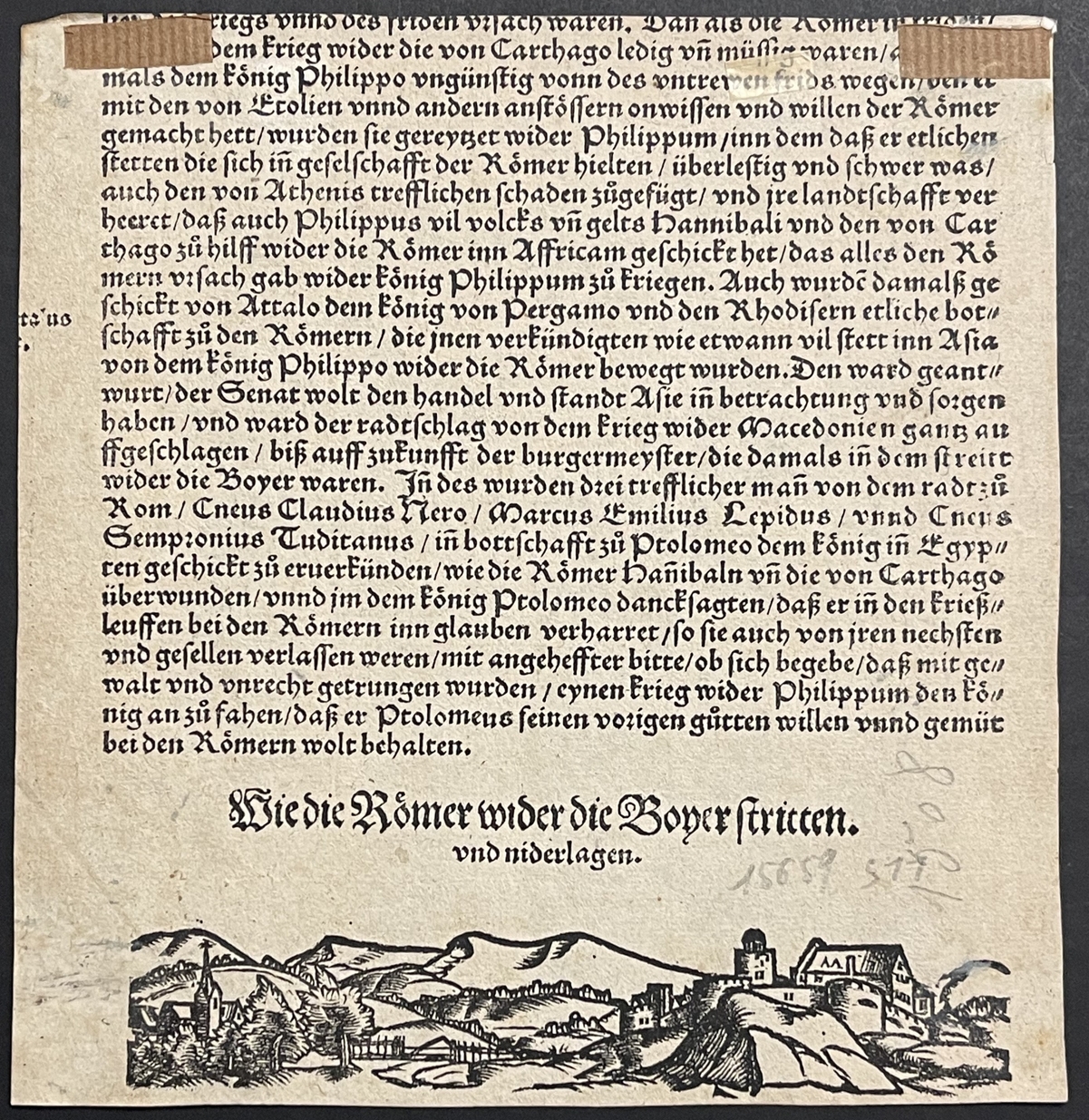
The reverse of the sheet bears early German text printed in Gothic type.
The combination of original woodcut and contemporary typography gives the surviving sheet considerable historical interest.
A COLLECTABLE EXAMPLE OF EARLY GERMAN GRAPHIC ART
This original sixteenth-century woodcut is particularly attractive to collectors of Renaissance engravings, early printed art, Roman history and historical military imagery.
The elaborate composition, numerous figures and rich architectural background make it a fine example of the visual imagination of the German Renaissance.
DETAILS
Artist: Attributed to Conrad Faber von Kreuznach.
School: German.
Period: Early 16th century.
Date: Circa 1523.
Technique: Original woodcut.
Subject: Roman military history represented in Renaissance costume.
Figures: Horsemen, officers and infantry with long pikes.
Paper: Antique laid paper.
Sheet dimensions: 17.9 × 17 cm.
Woodcut image: 17.5 × 16.6 cm.
Reverse: Early German text printed in Gothic type.
Origin: Germany.
CONDITION
Antique impression displaying the natural patina of aged laid paper.
The woodcut retains fine details throughout the figures, military equipment, horses and landscape.
A very small tear is present in the upper right corner of the sheet, as shown in the photographs.
An attractive original German Renaissance woodcut of considerable artistic and historical interest.
Reference: 4660-2R415


Avis
Il n’y a pas encore d’avis.