Battle of Eylau 1807 – Napoleon’s Grande Armée in the Snow – Siméon Fort c.1840
39,00 €
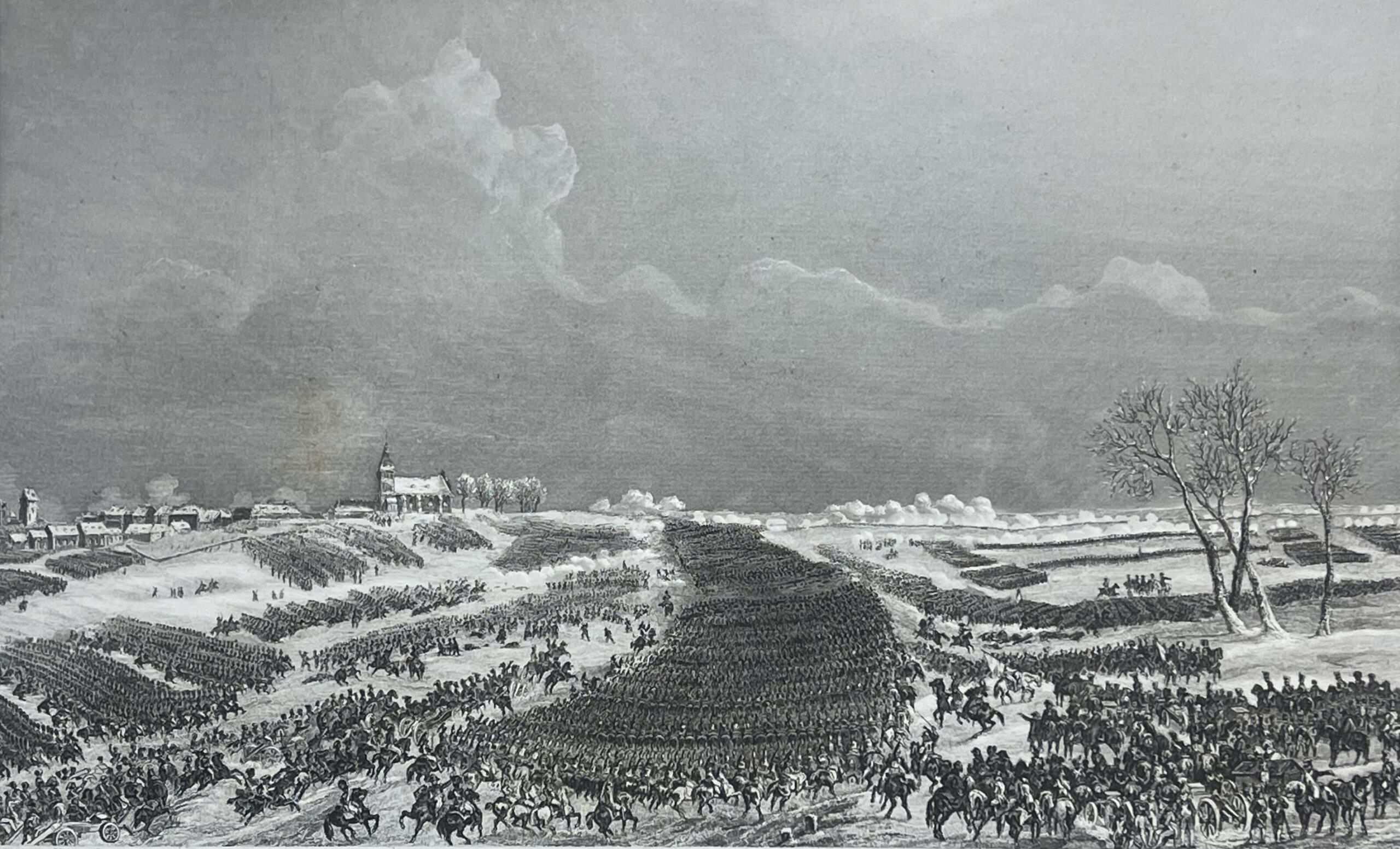
Original nineteenth-century French engraving, circa 1840, depicting the Battle of Eylau fought on 8 February 1807 between Napoleon Bonaparte’s Grande Armée and Russian forces.
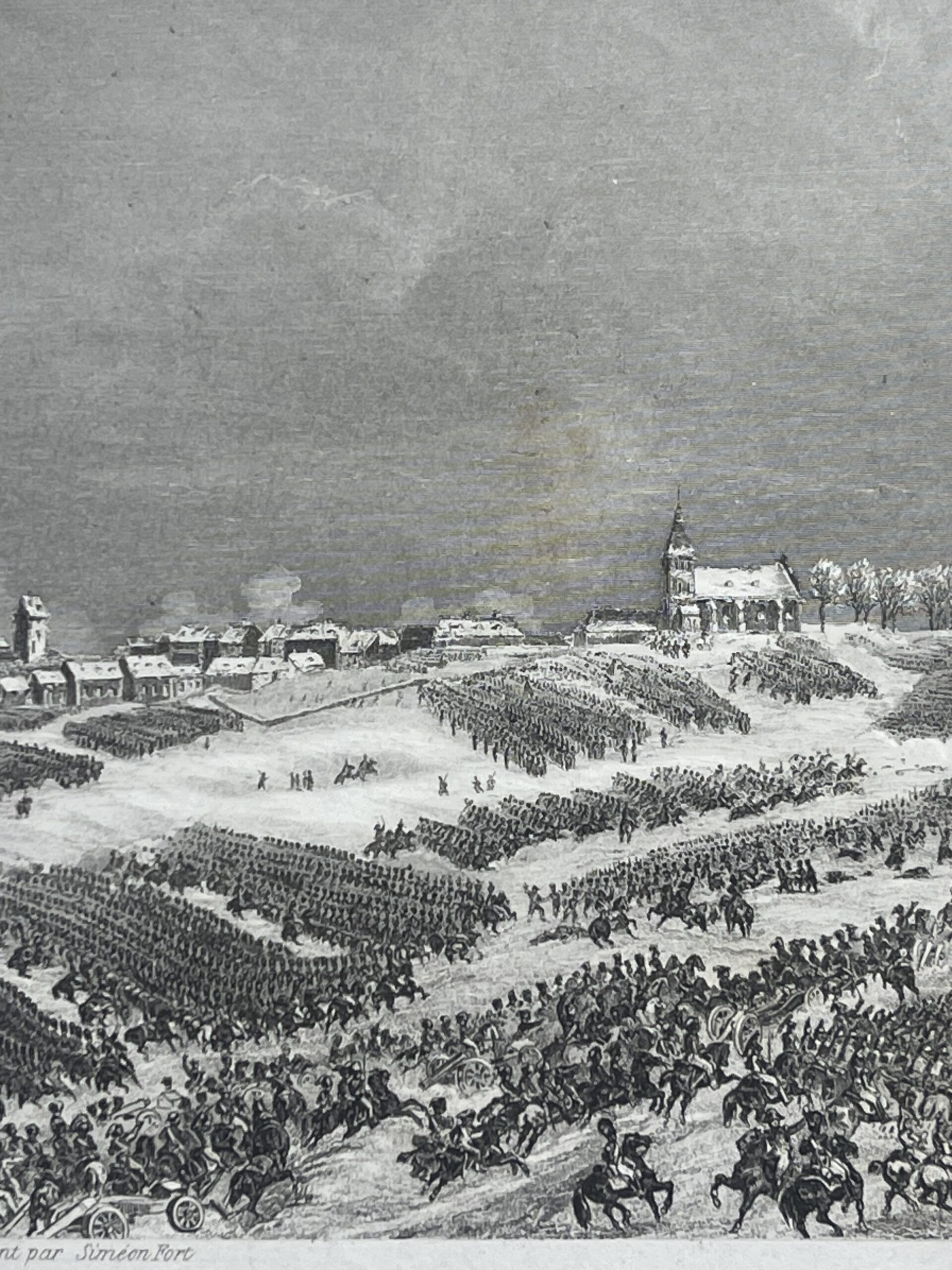
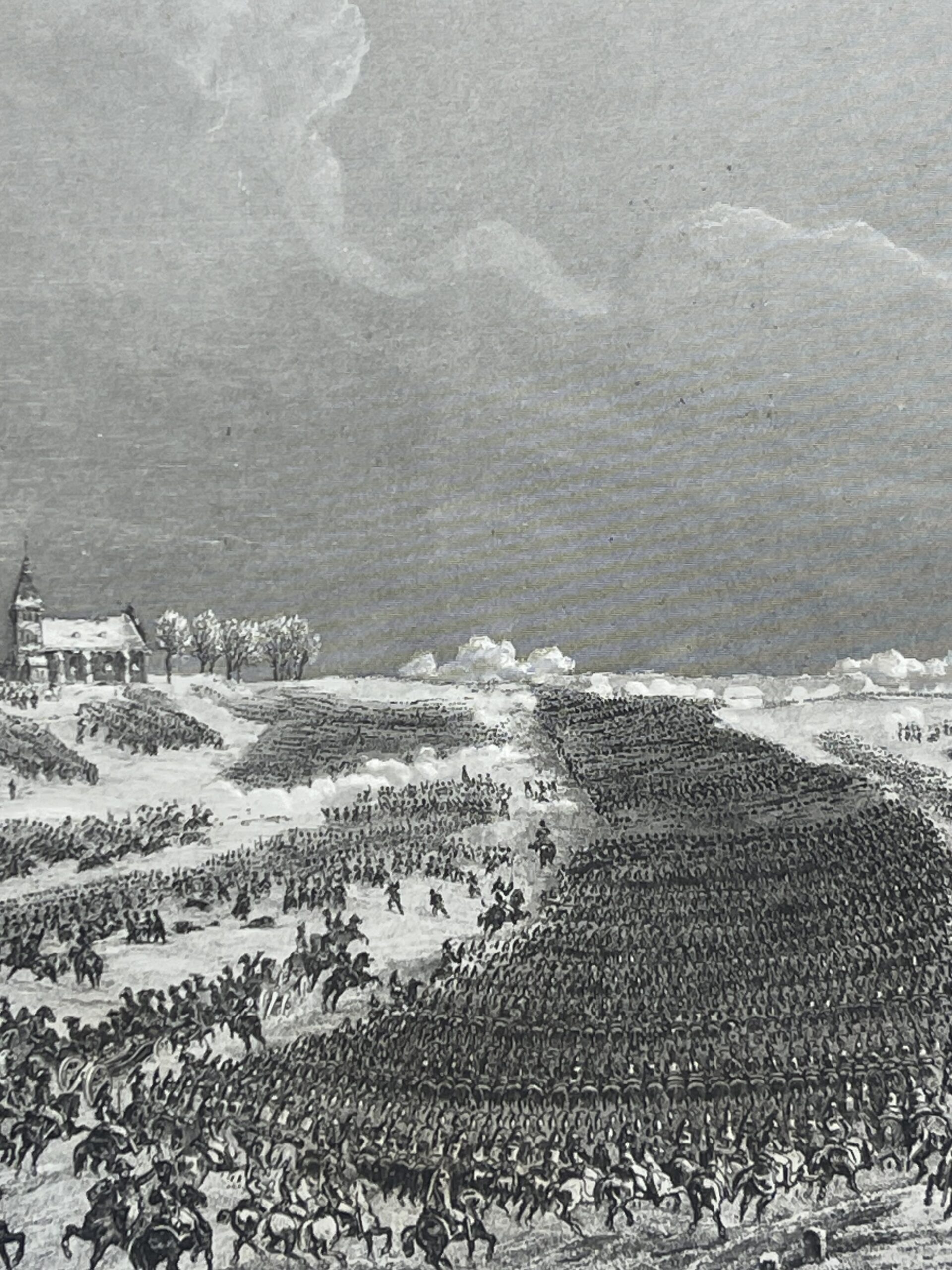
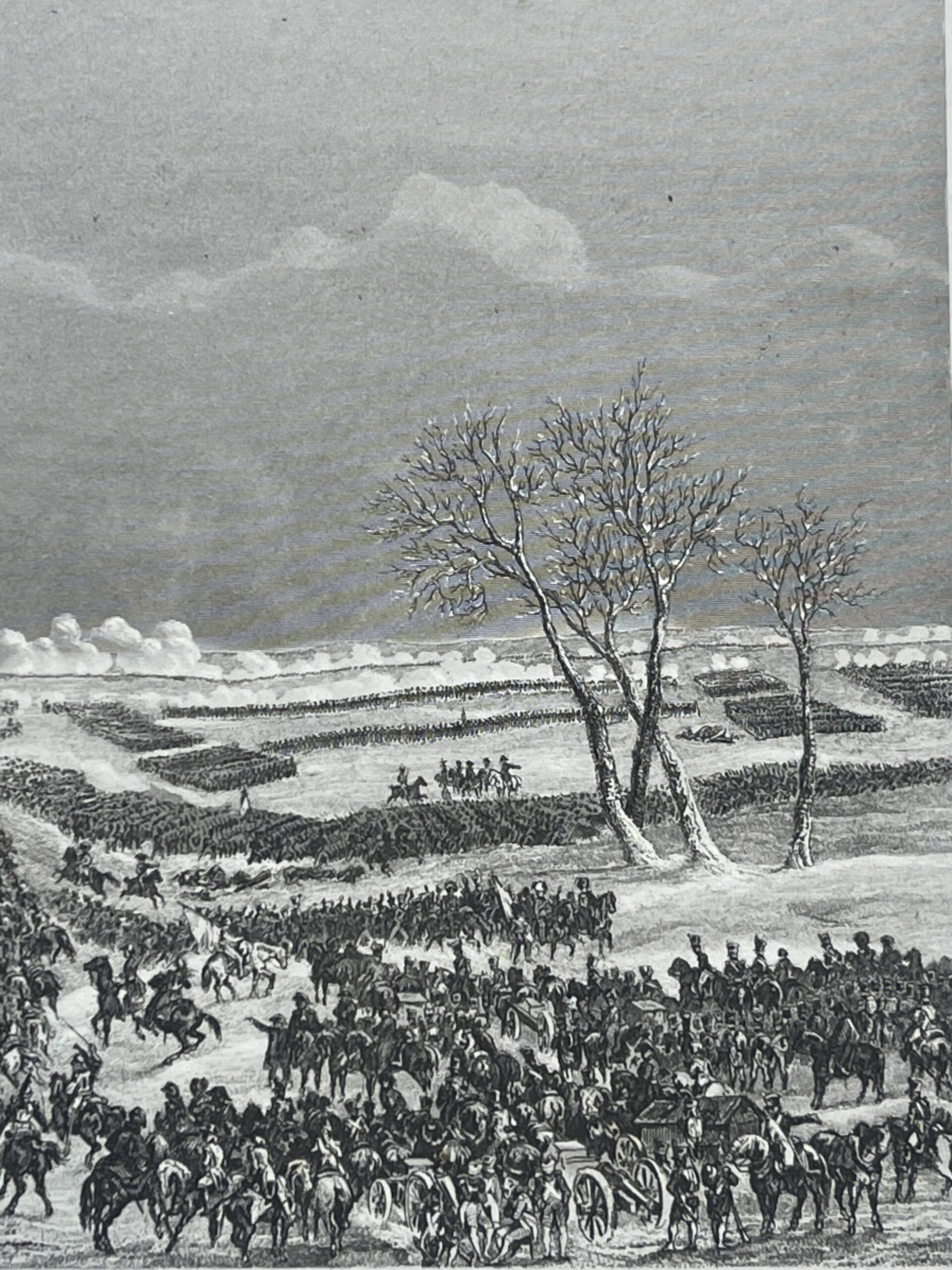
A remarkable panoramic composition after Siméon Fort, showing extensive infantry and cavalry formations across the snow-covered battlefield.
Sheet: 28.3 × 20.3 cm.
Engraved image: 23 × 14 cm.
Description
BATTLE OF EYLAU 1807 – NAPOLEONIC WARS – ANTIQUE FRENCH ENGRAVING
Original 19th-Century Engraving – After Siméon Fort – Circa 1840
An impressive antique French engraving depicting the Battle of Eylau, fought on 8 February 1807 between Napoleon Bonaparte’s Grande Armée and the Russian Imperial Army.
Based on a composition by the French military painter Siméon Fort (1793–1861), this remarkable panoramic view presents vast formations of infantry and cavalry deployed across a snow-covered battlefield.
The print captures one of the most dramatic engagements of the Napoleonic Wars, distinguished by its exceptional wealth of military detail and its expansive winter landscape.
THE BATTLE OF EYLAU – 8 FEBRUARY 1807
The Battle of Eylau was one of the bloodiest encounters of Napoleon’s campaigns in Eastern Europe.
The French army, commanded by Napoleon I, confronted Russian forces under General Levin August von Bennigsen, supported by Prussian troops.
The battle took place near Preussisch Eylau in East Prussia, now Bagrationovsk in the Kaliningrad region.
Fighting occurred in extremely difficult conditions, with snow, freezing temperatures and poor visibility affecting troop movements.
During the battle, Marshal Augereau’s corps suffered devastating losses after advancing into heavy enemy fire.
Napoleon responded by ordering a massive cavalry charge led by Marshal Joachim Murat.
This extraordinary mounted assault became one of the most celebrated cavalry actions of the Napoleonic era.
Despite enormous losses on both sides, the battle ended without a decisive victory.
The engagement remains an important episode in the history of Napoleon’s military campaigns.
A PANORAMIC VIEW OF THE NAPOLEONIC BATTLEFIELD
The engraving presents an immense landscape filled with military formations.
Long columns of infantry stretch across the snowy terrain, forming dark geometric masses against the pale winter ground.
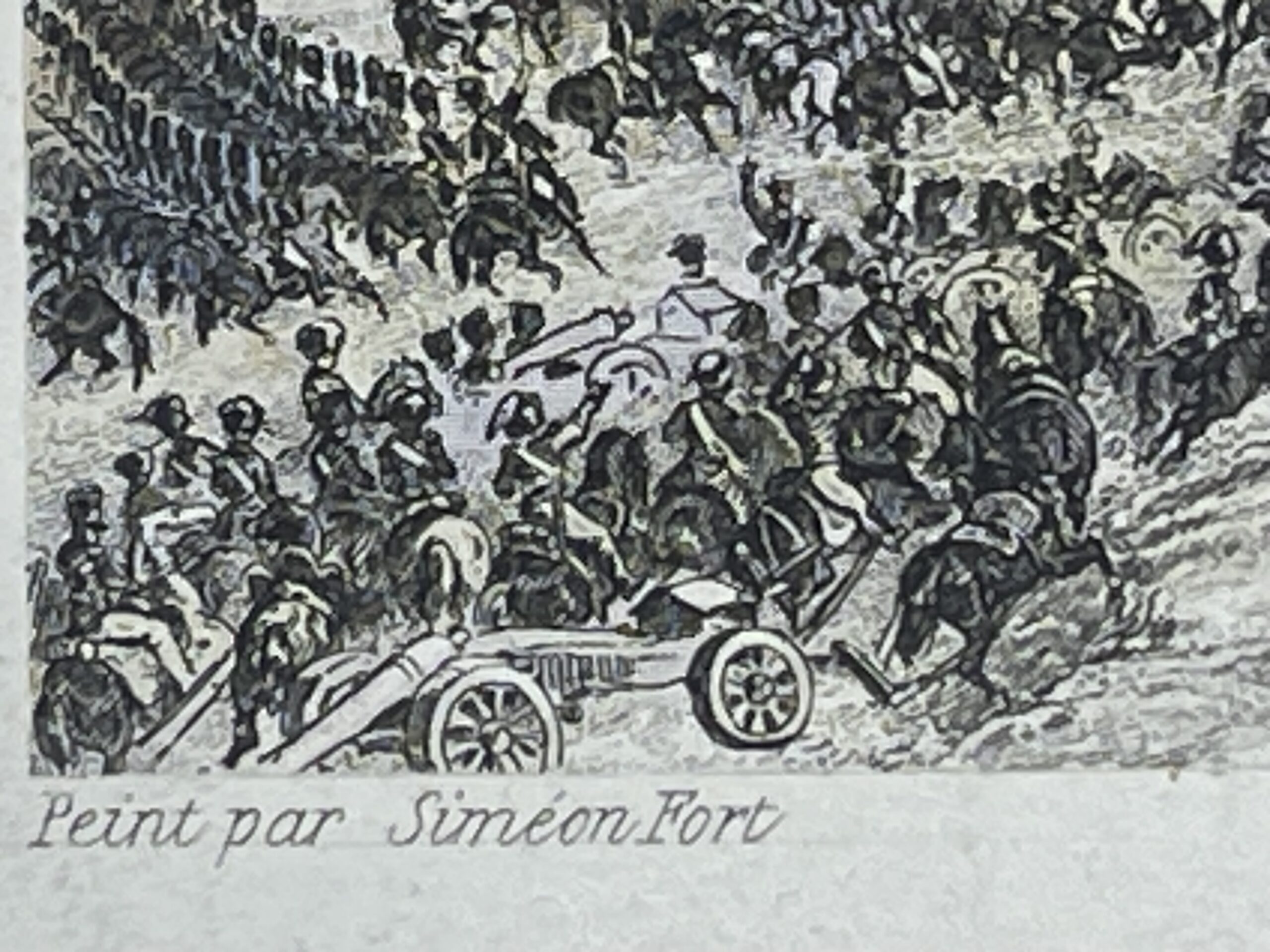
Numerous cavalry units advance between the formations, while mounted officers move across the battlefield.
The village of Eylau is visible in the distance, its church and surrounding buildings standing upon a low ridge.
Further troop formations occupy the surrounding heights, creating a remarkable sense of depth and scale.
The artist carefully records the relationship between the landscape, military formations and movements of cavalry.
The contrast between the densely packed soldiers and the snow-covered countryside gives the composition a particularly striking visual character.
SIMÉON FORT (1793–1861)
Siméon Fort was a French painter and draughtsman known for his military landscapes and representations of historical battles.
His work frequently depicted the campaigns of the French army, including important engagements of the Napoleonic period.
Fort developed a distinctive approach combining topographical observation with detailed depictions of troop movements and battlefield formations.
His compositions are especially appreciated by collectors of French military history and Napoleonic iconography.
An original watercolour by Siméon Fort depicting the Battle of Eylau is recorded in the collection of the Musée du Louvre, Paris, and assigned to the collections at Versailles.
NAPOLEON’S CAMPAIGN OF 1807
Following the defeat of Prussia in 1806, Napoleon continued his campaign against the Russian armies.
The severe winter conditions of early 1807 made operations especially difficult.
Eylau became one of the most costly engagements of this campaign, demonstrating the resilience of the Russian army and the dangers faced by the Grande Armée.
The campaign continued until Napoleon’s victory at Friedland in June 1807.
The subsequent Treaties of Tilsit temporarily transformed the political balance of Europe.
This engraving offers a fascinating visual record of the military history of the First French Empire.
AN ATTRACTIVE NINETEENTH-CENTURY HISTORICAL PRINT
The engraving is particularly notable for its detailed representation of infantry formations, cavalry movements and the winter landscape.
The panoramic composition makes it an appealing subject for collectors interested in Napoleon Bonaparte, French military history, antique battle engravings and nineteenth-century European prints.
DETAILS
Title: Battle of Eylau.
Historical event: 8 February 1807.
Historical figure: Napoleon Bonaparte.
Original composition: After Siméon Fort (1793–1861).
Engraving period: Circa 1840.
Technique: Antique black-and-white engraving.
Sheet dimensions: 28.3 × 20.3 cm.
Engraved image: 23 × 14 cm.
Printed plate number: 830.
Period: 19th century.
Subject: Napoleonic Wars, Grande Armée, French cavalry, Russian army and the Battle of Eylau.
CONDITION
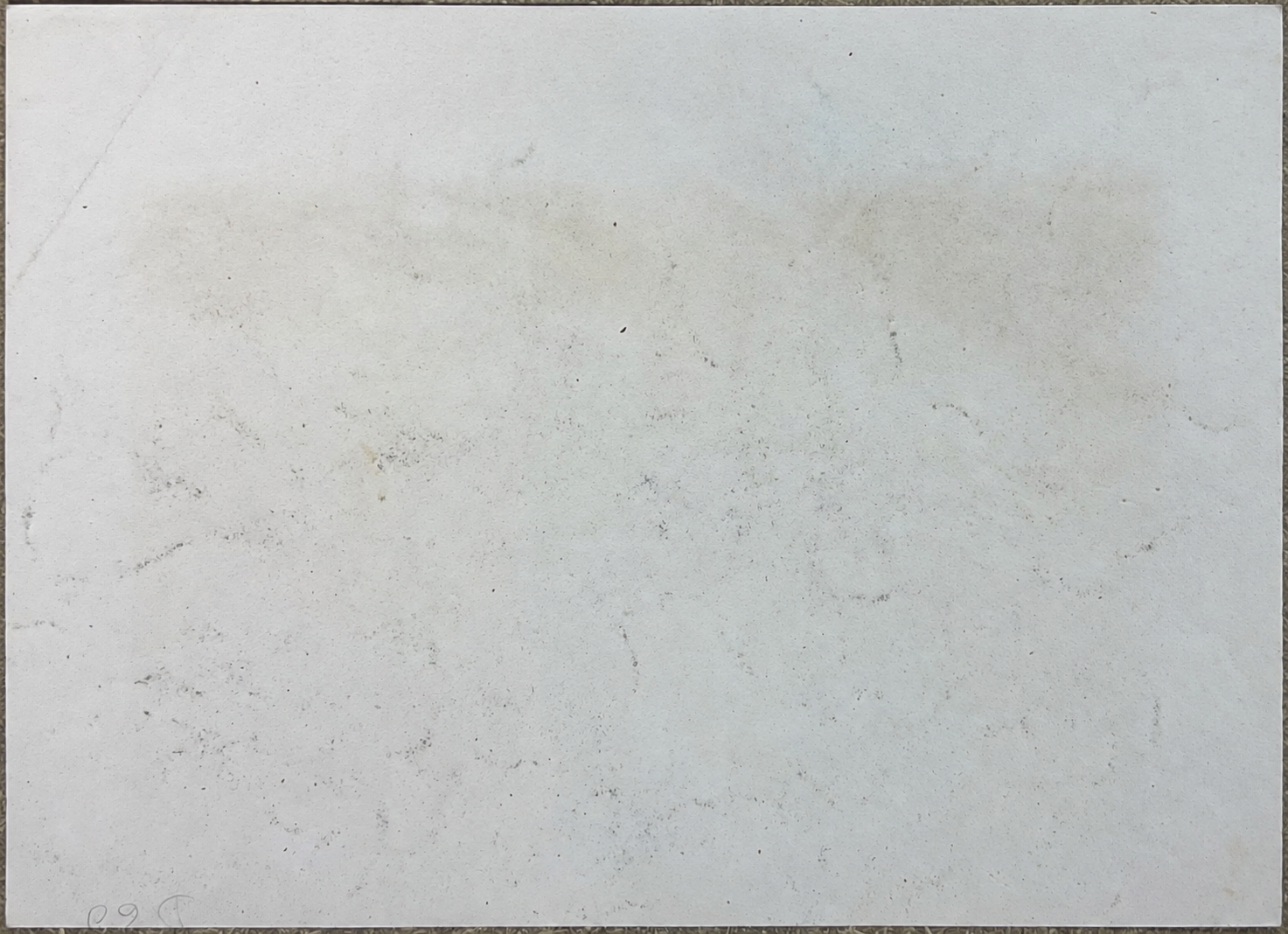
Antique impression showing the natural patina of aged paper.
The extensive battlefield composition, troop formations and architectural details remain clearly visible.
Please refer to the photographs for a detailed assessment of the sheet’s condition.
A fine nineteenth-century historical engraving illustrating one of the major battles of Napoleon’s military career.
Reference: 5431-11R800D100



Avis
Il n’y a pas encore d’avis.