London 1654 – Aeneas Fighting Mezentius and Lausus – Hollar after Francis Cleyn
119,00 €
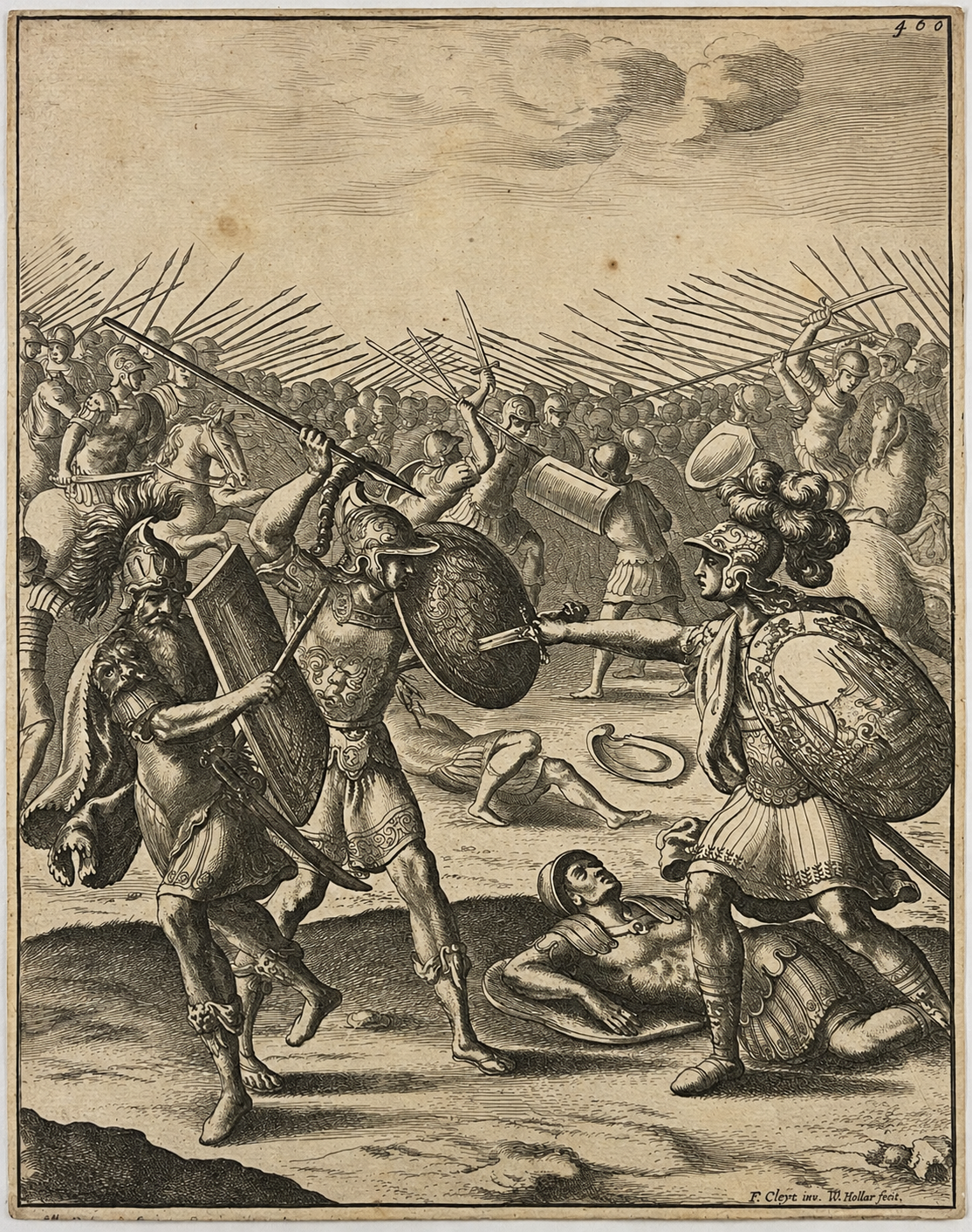
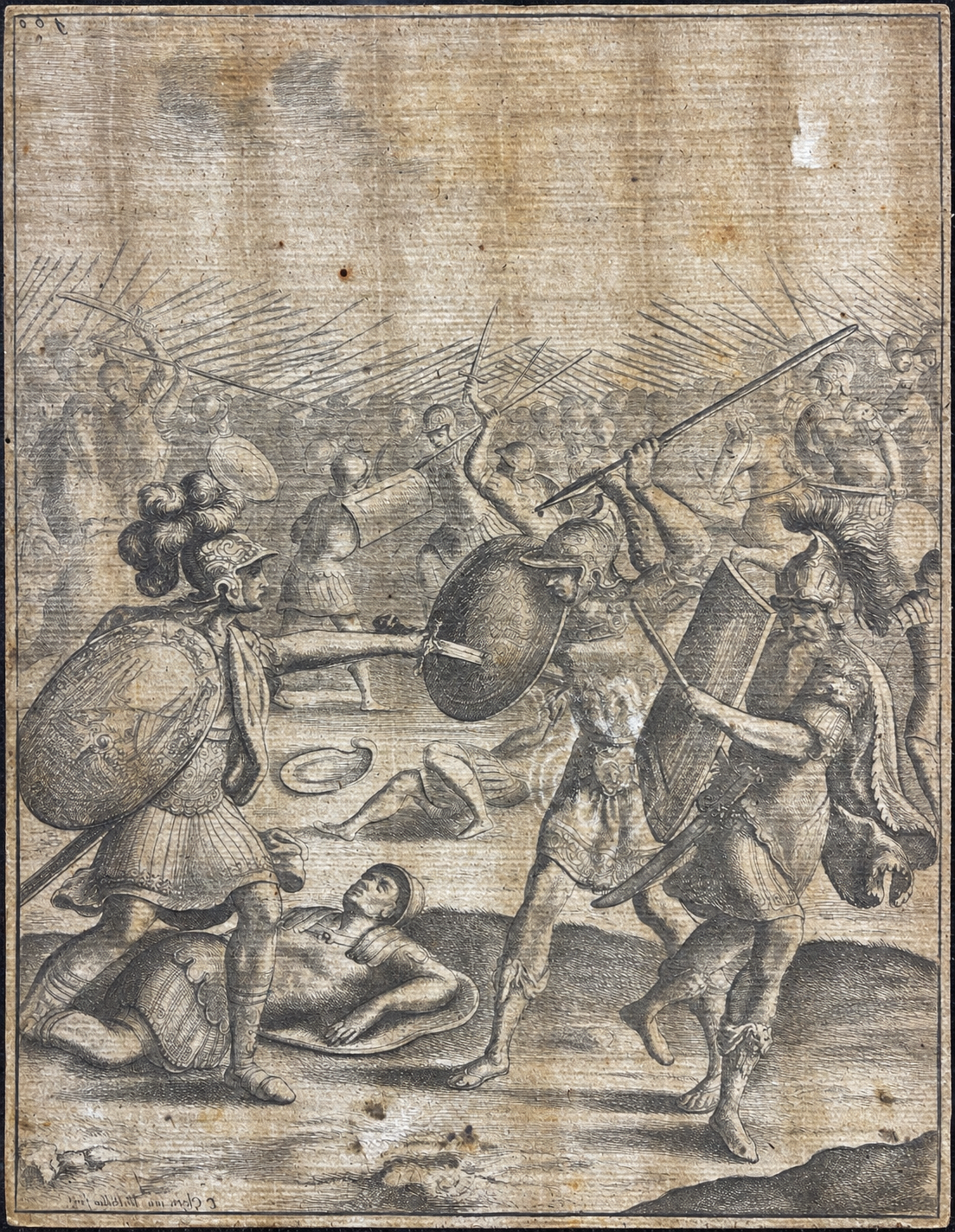
Wenceslaus Hollar Aeneas battle etching, after Francis Cleyn, illustrating the dramatic battle of Aeneas, Mezentius and Lausus from Virgil’s Aeneid, Book X.
The composition was published in London in 1654 for John Ogilby’s celebrated illustrated edition of Virgil.
A finely executed antique etching featuring richly detailed armour, warriors, shields, horses and spears.
Etcher: Wenceslaus Hollar (1607–1677).
Designer: Francis Cleyn (c.1582–1658).
Publication: John Ogilby, London, 1654.
Technique: Etching on antique laid paper.
Sheet dimensions: 26 × 20 cm.
Engraved image: 25.5 × 19.5 cm.
Condition: Beautiful antique impression with a very discreet repair on the right-hand side and minor age-related marks.
Museum reference: Royal Collection, RCIN 802036.
Description
Wenceslaus Hollar Aeneas battle etching – A remarkable antique seventeenth-century etching after Francis Cleyn, illustrating the battle between Aeneas, Mezentius and Lausus from Virgil’s Aeneid.
The composition was published in London in 1654 for John Ogilby’s celebrated illustrated edition of Virgil.
This finely executed engraving displays the exceptional precision and elaborate detail characteristic of Wenceslaus Hollar (1607–1677), one of the most distinguished European printmakers of the seventeenth century.
AENEAS FIGHTING MEZENTIUS AND LAUSUS
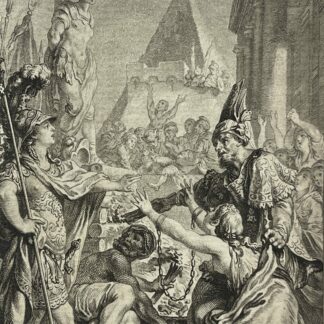
The composition depicts a dramatic battle involving the Trojan hero Aeneas and his enemies, Mezentius and Lausus.
The foreground is occupied by a group of heavily armed warriors engaged in fierce combat.
On the left, a bearded soldier wearing an elaborate helmet with a plume protects himself behind a large rectangular shield.
Beside him, another armoured warrior holds an oval shield decorated with intricate ornamental details.
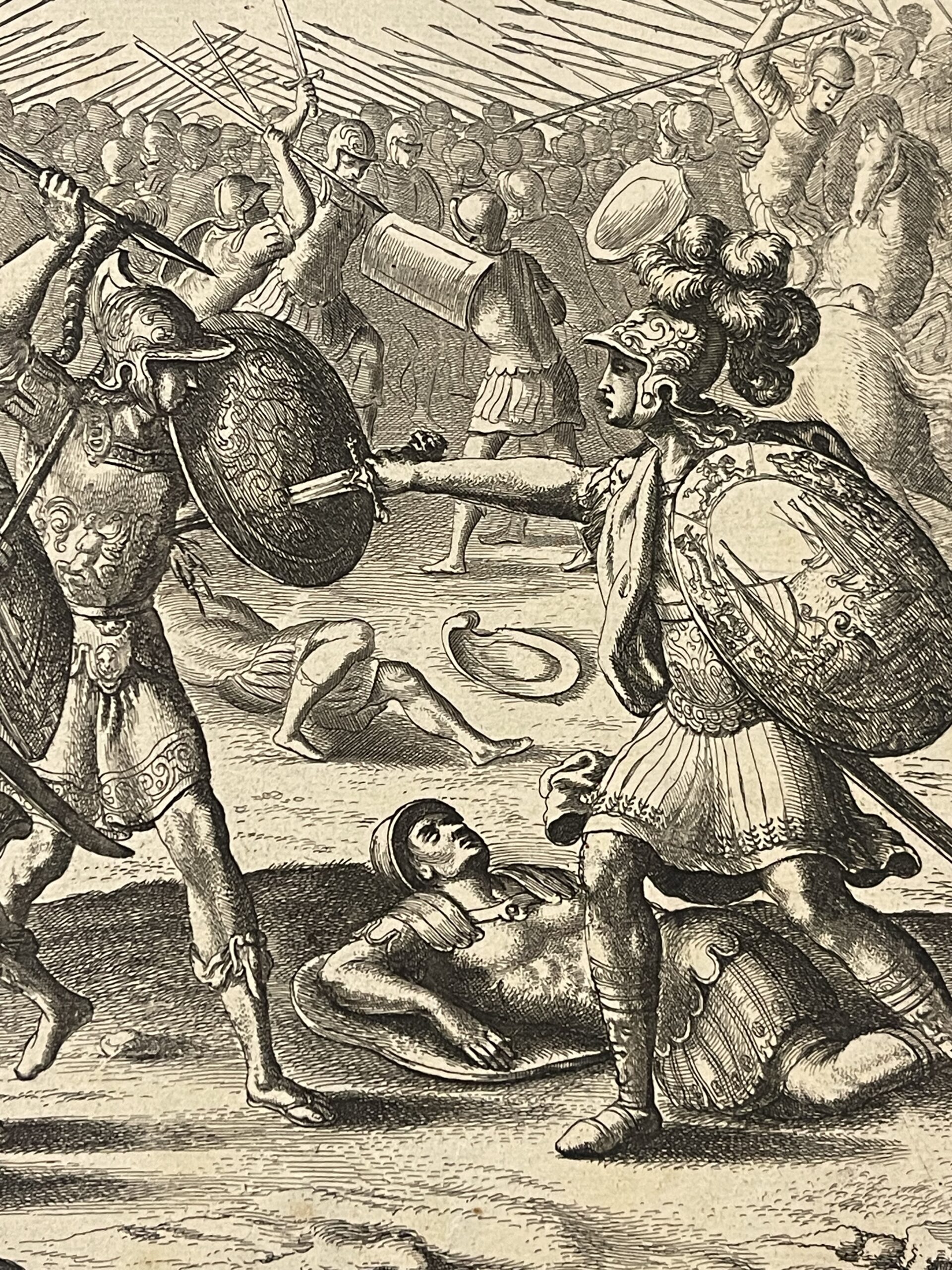
On the right, an imposing soldier wearing a richly ornamented cuirass and a magnificent helmet advances into the fighting.
His shield is decorated with elaborate designs.
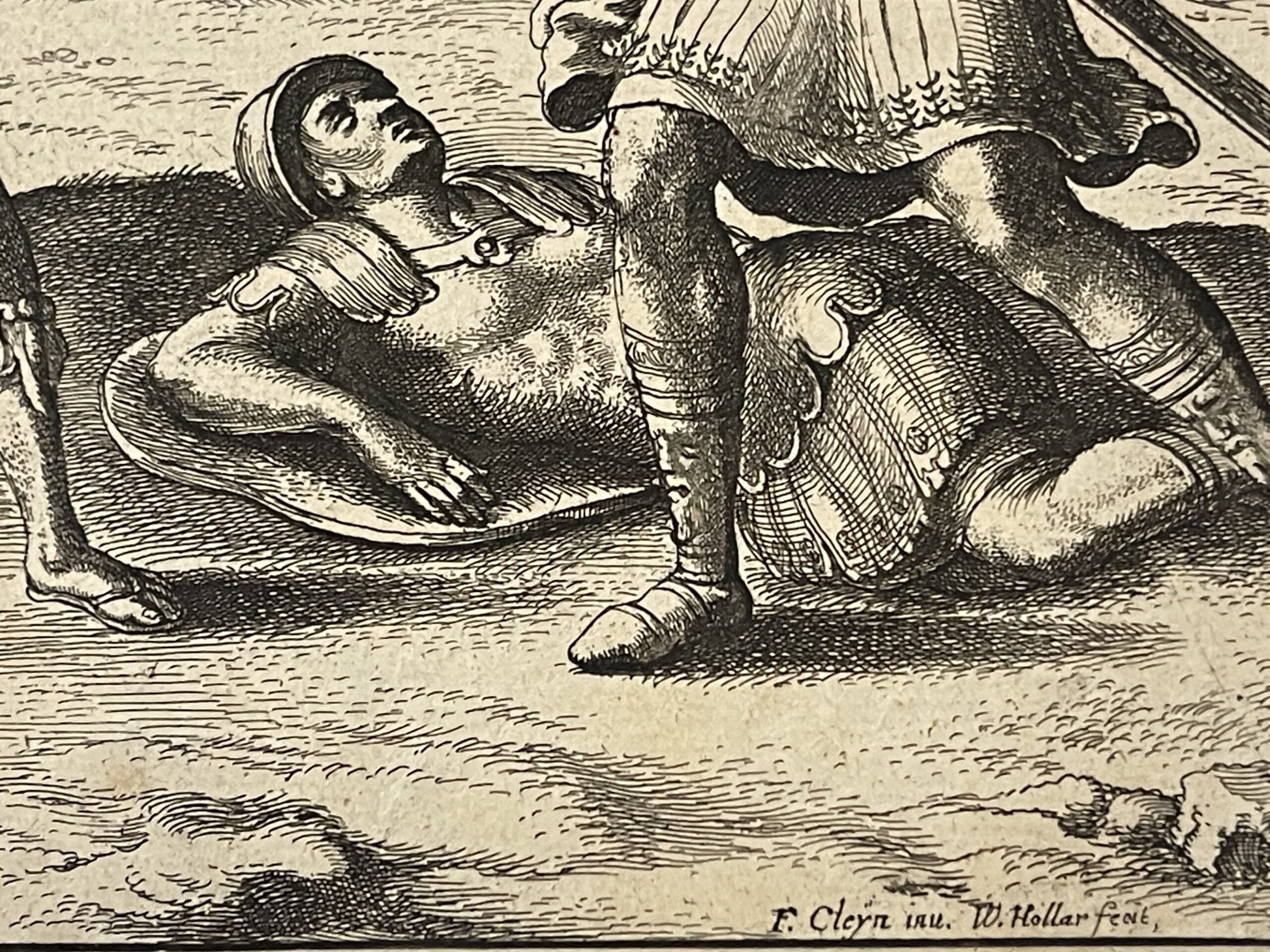
Several fallen soldiers lie upon the battlefield, while other warriors struggle around them.
Behind the principal figures, an immense crowd of infantrymen and horsemen continues the battle.
Numerous long spears rise above the soldiers, forming a dense and dramatic background.
The precision of the armour, weapons, shields and human figures is particularly remarkable.
THE STORY FROM VIRGIL’S AENEID
The Aeneid is the great Latin epic poem written by Virgil during the first century BC.
It recounts the adventures of Aeneas, a Trojan hero who escapes the destruction of Troy and travels across the Mediterranean before reaching Italy.
His arrival eventually leads to a war between the Trojan settlers and several peoples of ancient Italy.
In Book X of the Aeneid, Aeneas fights Mezentius, an exiled Etruscan king.
During the battle, Mezentius is wounded.
His son Lausus courageously intervenes to protect his father and allow him to escape.
Aeneas kills the young warrior but is deeply moved by his bravery and filial devotion.
Mezentius subsequently returns to battle in an attempt to avenge the death of his son.
This episode is one of the most dramatic and emotional passages of Virgil’s epic.
It combines heroic warfare with the tragedy of a father and son.
WENCESLAUS HOLLAR (1607–1677)
Wenceslaus Hollar, also known as Václav Hollar or Wenzel Hollar, was born in Prague in 1607.
He became one of the most accomplished etchers of the seventeenth century.
His artistic career took him through several European countries, including Germany, the Netherlands and England.
Hollar produced an extraordinary number of engravings and etchings.
His subjects included portraits, architectural views, landscapes, costumes, historical scenes, maps and literary illustrations.
His prints are admired for their technical excellence, remarkable precision and exceptional delicacy of line.
Hollar spent much of his later career in England and died in London in 1677.
FRANCIS CLEYN (c.1582–1658)
Francis Cleyn, also known as Franz Clein, was a German-born painter, designer and illustrator active in England.
He worked on important decorative projects for the English royal court and became known for his artistic designs.
Cleyn also supplied compositions for illustrated editions of classical literature.
His work for John Ogilby’s edition of Virgil in 1654 is an important example of his contribution to seventeenth-century book illustration.
The dramatic arrangement of the warriors in the present engraving demonstrates his skill in historical composition.
JOHN OGILBY’S VIRGIL — LONDON 1654
John Ogilby (1600–1676) was an English publisher, translator and cartographer.
His illustrated edition of Virgil, published in London in 1654, was one of the major English publishing enterprises of the seventeenth century.
The work contained elaborate illustrations depicting episodes from classical literature.
Distinguished artists and engravers contributed to the publication.
Wenceslaus Hollar executed several etchings after designs by Francis Cleyn.
The present composition represents one of the dramatic military episodes from the Aeneid.
A FINE SEVENTEENTH-CENTURY ETCHING
This engraving displays the remarkable precision of Hollar’s technique.
The armour, helmets, shields, weapons and decorative elements are rendered through numerous fine lines.
The engraved hatching creates subtle tonal variations and carefully modelled figures.
The complex arrangement of the soldiers conveys the movement and violence of battle.
In the lower right corner appears the original engraved inscription:
F. Cleyn inv. W. Hollar fecit.
This inscription identifies Francis Cleyn as the designer and Wenceslaus Hollar as the etcher.
The number 300 is visible in the upper right corner of the composition.
A DOCUMENTED HISTORICAL COMPOSITION
An impression of this etching is preserved in the British Royal Collection.
It is catalogued under the title:
Aeneas’ Fight with Mezentius and Lausus.
Royal Collection inventory number: RCIN 802036.
The collection confirms the attribution to Wenceslaus Hollar after Francis Cleyn and the publication of the composition in John Ogilby’s edition of Virgil, London, 1654.
COLLECTING INTEREST
This fine antique etching will appeal to collectors of seventeenth-century European prints, Wenceslaus Hollar, Francis Cleyn, classical literature and historical battle scenes.
Its richly detailed depiction of armour, horses, shields and ancient warriors gives the composition considerable artistic and historical interest.
The association with the celebrated 1654 edition of Virgil further enhances its importance.
DETAILS
Country of publication: England.
City: London.
Etcher: Wenceslaus Hollar (1607–1677).
Designer: Francis Cleyn (c.1582–1658).
Publisher: John Ogilby.
Original publication: 1654.
Literary source: Virgil’s Aeneid, Book X.
Subject: Aeneas fighting Mezentius and Lausus.
Technique: Etching.
Paper: Antique laid paper.
Original inscription: F. Cleyn inv. W. Hollar fecit.
Engraved number: 300.
Sheet dimensions: 26 × 20 cm.
Engraved image dimensions: 25.5 × 19.5 cm.
Format: Portrait.
CONDITION
Fine antique etching on laid paper displaying a natural age-related patina.
The composition retains excellent clarity and finely preserved engraved details.
A very discreet repair is present on the right-hand side of the sheet.
Minor age-related marks and narrow margins are visible.
The original engraved inscriptions remain clearly readable.
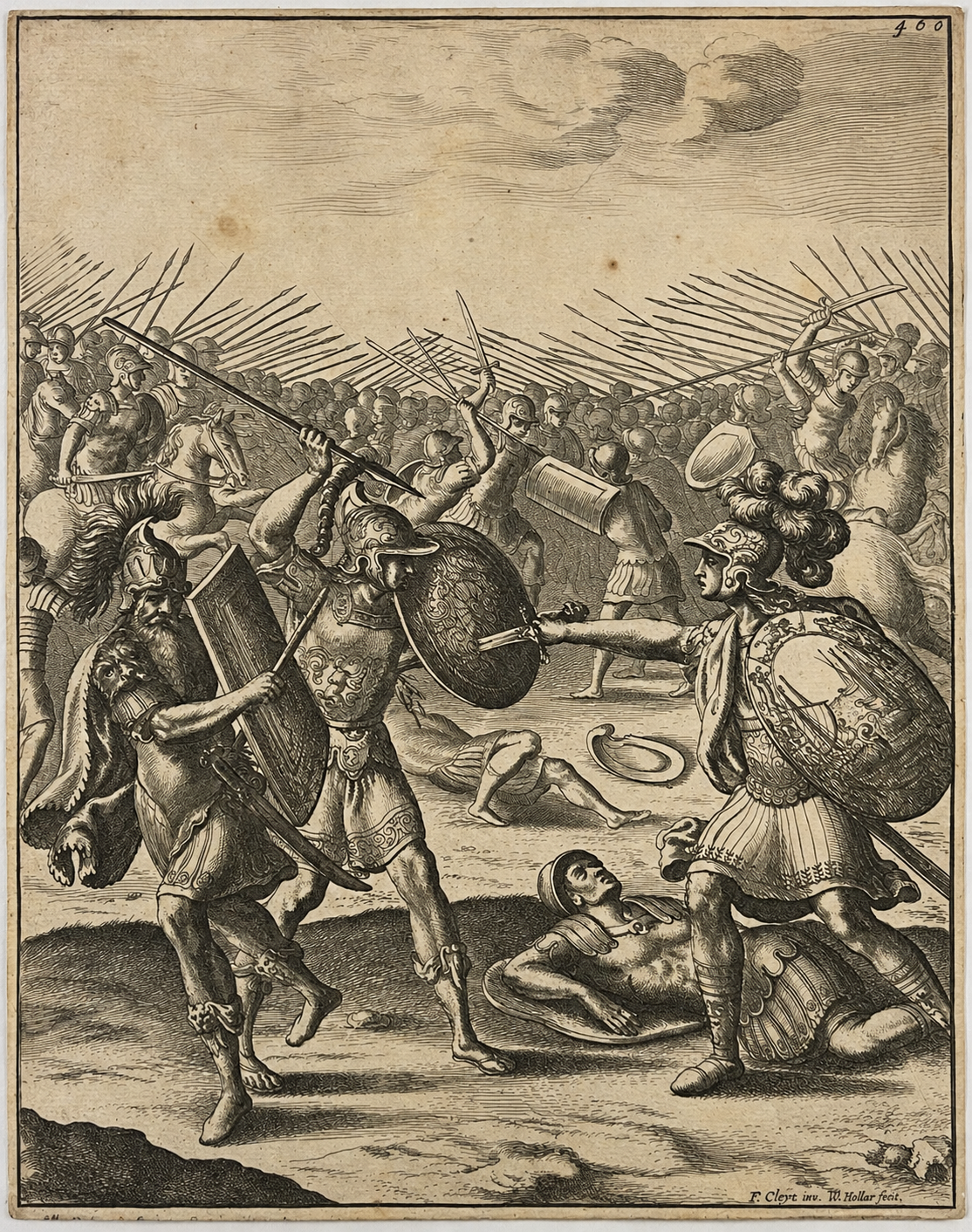
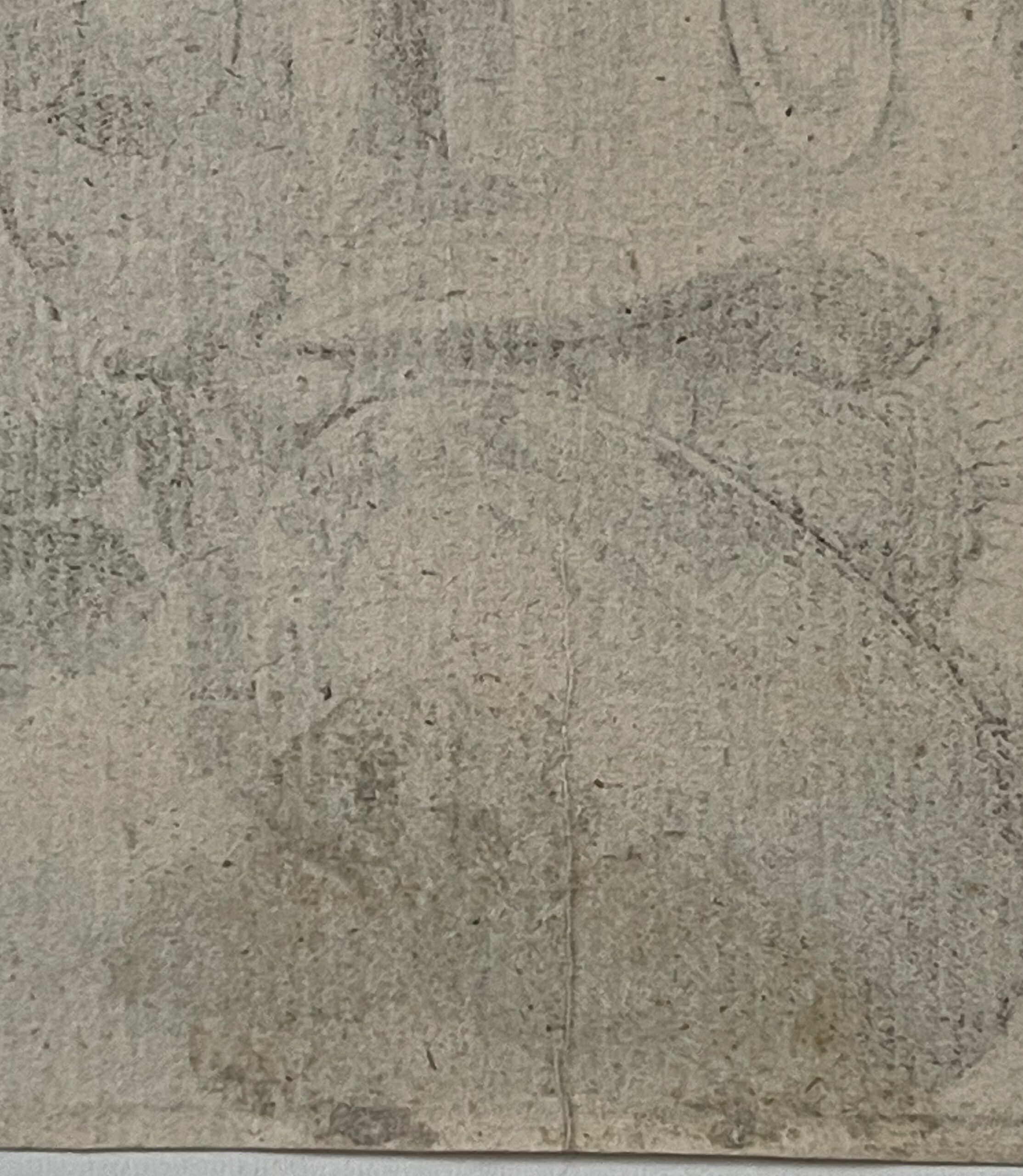
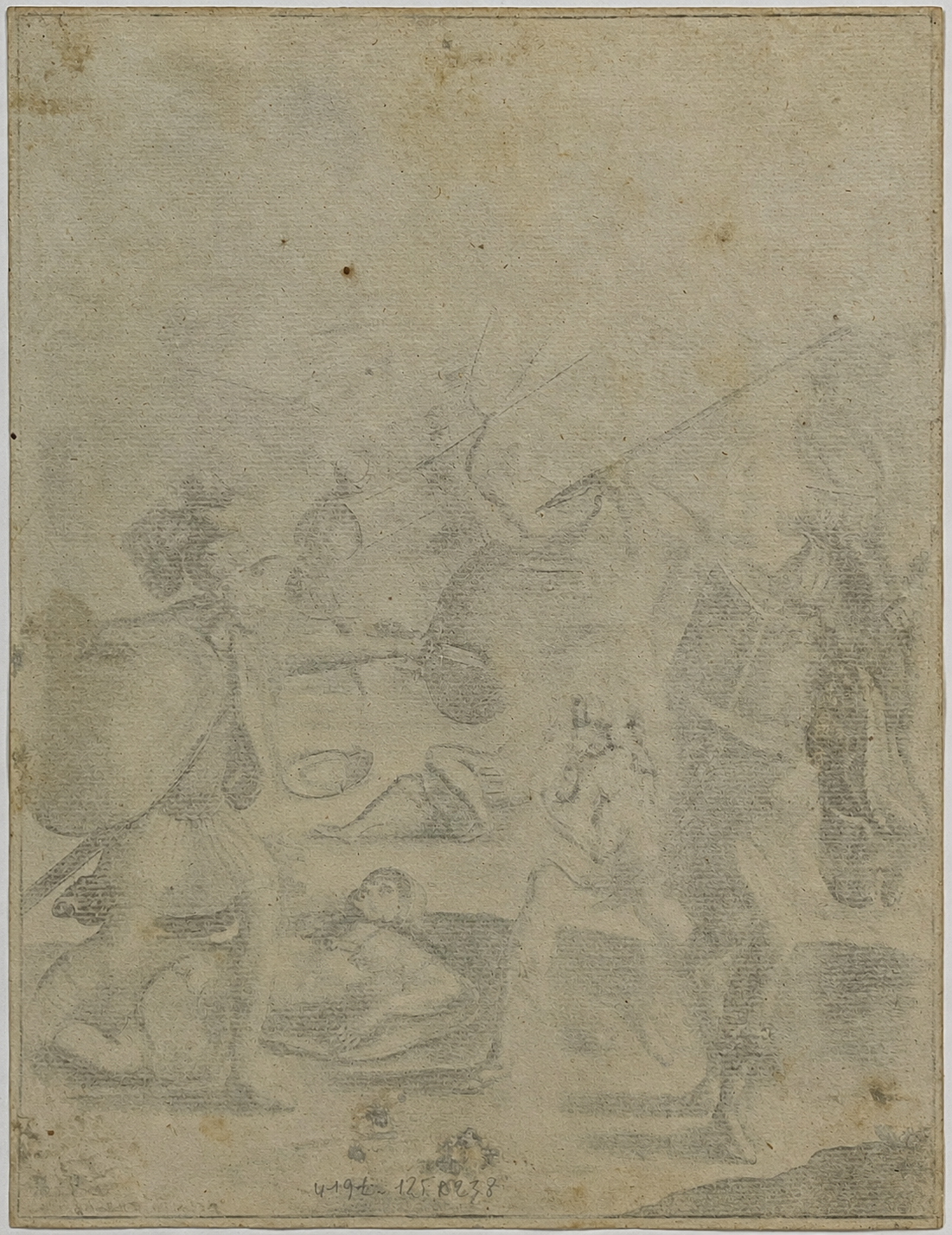
Please examine the photographs showing the front, reverse and details of the engraving.
A beautiful antique etching by Wenceslaus Hollar after Francis Cleyn, illustrating the battle of Aeneas, Mezentius and Lausus from Virgil’s Aeneid.

Avis
Il n’y a pas encore d’avis.