Assyrian Army Destroyed by an Angel – 1728 Biblical Engraving after Bernard Picart
89,00 €
Original large-format Biblical engraving dated 1728, designed by Bernard Picart (1673–1733) and engraved by Simon Henri Thomassin (1687–1741).
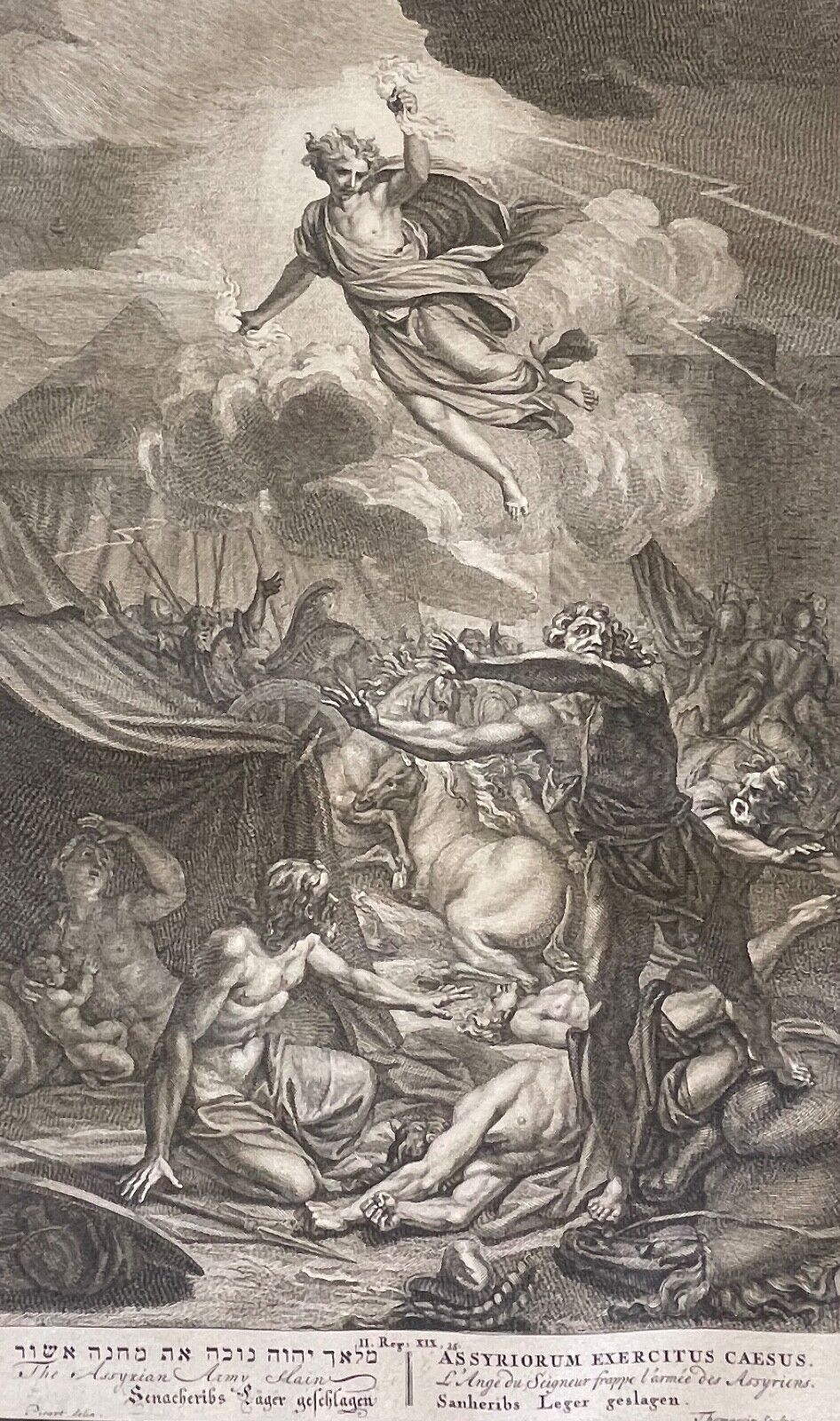
The Assyrian Army Slain by an Angel, depicting the divine destruction of King Sennacherib’s forces beneath a dramatic sky.
Fine eighteenth-century etching and engraving on antique laid paper, with original multilingual inscriptions.
Sheet: 40.7 × 27 cm.
Engraved image with captions: 34.7 × 21.2 cm.
Reference: 5215-312R672
Description
ASSYRIAN ARMY ANGEL ENGRAVING – BERNARD PICART – SIMON HENRI THOMASSIN – 1728
Original Eighteenth-Century Biblical Engraving – The Destruction of Sennacherib’s Army
An impressive original antique engraving dated 1728, designed by Bernard Picart (1673–1733) and engraved by Simon Henri Thomassin (1687–1741).
Entitled Assyriorum Exercitus Caesus (The Assyrian Army Slain), this dramatic composition represents the destruction of the Assyrian army by an angel of the Lord, as described in the Second Book of Kings, chapter 19.
The engraving combines powerful Baroque imagery with remarkable detail, expressive figures and dramatic contrasts of celestial light and earthly darkness.
THE ANGEL OF THE LORD DESCENDING FROM HEAVEN
At the centre of the upper composition, a powerful angel descends through great masses of clouds.
The figure is enveloped in flowing drapery, with one arm raised towards the heavens.
The angel carries flames in both hands, symbolising divine judgement.
Below, the Assyrian military camp is overcome by terror and confusion.
Soldiers flee or collapse, while others raise their hands in desperation.
A frightened horse rears amid the disorder.
In the foreground, several figures lie upon the ground among discarded weapons, clothing and military equipment.
The dramatic action is enhanced by the contrast between the brilliant celestial illumination and the dark shadows of the camp.
KING SENNACHERIB AND THE ASSYRIAN EMPIRE
Sennacherib ruled the Neo-Assyrian Empire from 705 to 681 BC.
His reign was characterised by major military campaigns and the expansion of Assyrian power throughout the ancient Near East.
In 701 BC, Sennacherib launched a campaign against the Kingdom of Judah during the reign of King Hezekiah.
The Assyrian advance threatened Jerusalem and became the subject of important accounts in the Hebrew Bible.
According to the Second Book of Kings, the angel of the Lord struck the Assyrian army during the night.
The biblical account records the death of 185,000 soldiers.
Following this divine intervention, Sennacherib withdrew to Nineveh.
This dramatic narrative became an important subject in European religious art.
A POWERFUL BAROQUE BIBLICAL COMPOSITION
The engraving is distinguished by its dramatic organisation and exceptional wealth of detail.
The angel dominates the upper part of the image, suspended between heaven and earth.
Below, the figures are arranged in a succession of expressive groups, conveying movement, fear and confusion.
The artist combines powerful gestures, elaborate draperies and carefully observed anatomical details.
Military tents, horses, weapons and equipment contribute to the historical setting.
The strongly contrasting clouds and rays of light reinforce the religious significance of the scene.
BERNARD PICART (1673–1733)
Bernard Picart was one of the most accomplished French draughtsmen and engravers of the early eighteenth century.
Born in Paris in 1673, he received his artistic education within the distinguished engraving tradition of his father, Étienne Picart.
He later established himself in Amsterdam, where he developed an important artistic career.
His extensive production included Biblical subjects, religious imagery, classical mythology, allegories and historical scenes.
Picart is particularly admired for his precise drawing, expressive compositions and ability to create complex narrative scenes.
SIMON HENRI THOMASSIN (1687–1741)
Simon Henri Thomassin was a French engraver belonging to a distinguished family of printmakers.
His work included religious and historical compositions after important European artists.
In the present engraving, Thomassin translates Picart’s drawing through delicate etched and engraved lines.
His treatment of the figures, clouds, garments and architectural details demonstrates considerable technical skill.
AN ORIGINAL EIGHTEENTH-CENTURY ENGRAVING
The engraving is executed using etching and engraving techniques, allowing the reproduction of subtle tonal contrasts and extremely fine details.
The composition is printed on antique laid paper.
The original inscriptions include the Latin title Assyriorum Exercitus Caesus, together with translations of the subject.
The signatures identifying Bernard Picart as the designer and Simon Henri Thomassin as the engraver are preserved beneath the image.
AN ATTRACTIVE COLLECTOR’S PRINT
This original eighteenth-century Biblical engraving is of particular interest to collectors of Bernard Picart, Simon Henri Thomassin, religious art and antique European prints.
Its large size, dramatic composition and important Old Testament subject give it considerable historical and decorative appeal.
DETAILS
Subject: The destruction of the Assyrian army by an angel.
Latin title: Assyriorum Exercitus Caesus.
Designer: Bernard Picart (1673–1733).
Engraver: Simon Henri Thomassin (1687–1741).
Date of impression: 1728.
Technique: Etching and engraving.
Period: Early 18th century.
Paper: Antique laid paper.
Sheet dimensions: 40.7 × 27 cm.
Engraved composition including captions: 34.7 × 21.2 cm.
Biblical reference: 2 Kings, chapter 19.
Historical subject: Sennacherib, King of Assyria.
CONDITION
Antique impression showing the natural patina of aged paper.
The engraved composition, original inscriptions and numerous details remain well preserved.
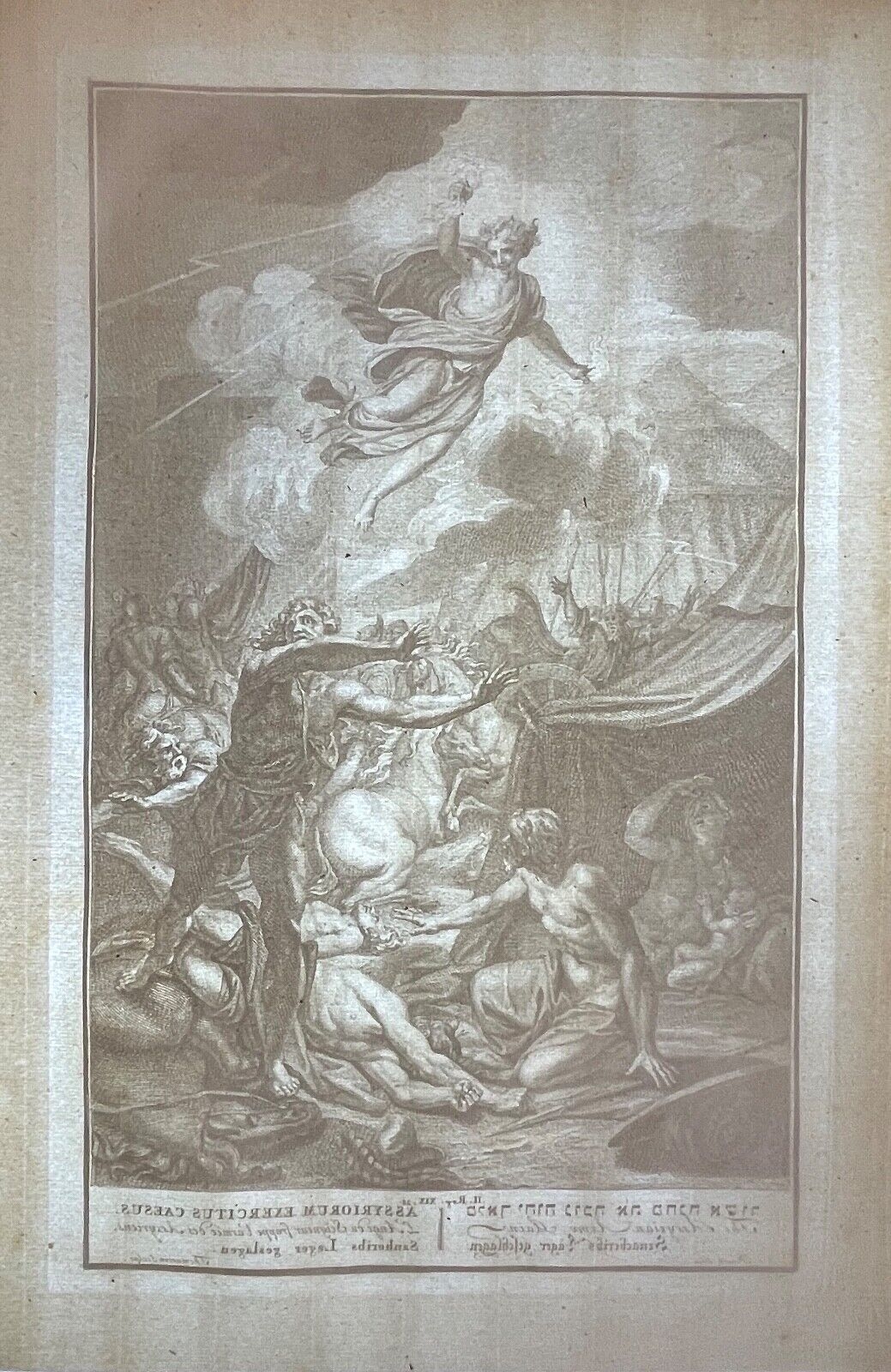
The sheet retains generous margins, with minor signs of age visible in the photographs.
A remarkable original eighteenth-century Biblical engraving combining the artistic invention of Bernard Picart with the fine craftsmanship of Simon Henri Thomassin.
Reference: 5215-312R672




Avis
Il n’y a pas encore d’avis.