1873 Gargantua Eating the Pilgrims – Gustave Doré Rabelais Woodcut
39,00 €
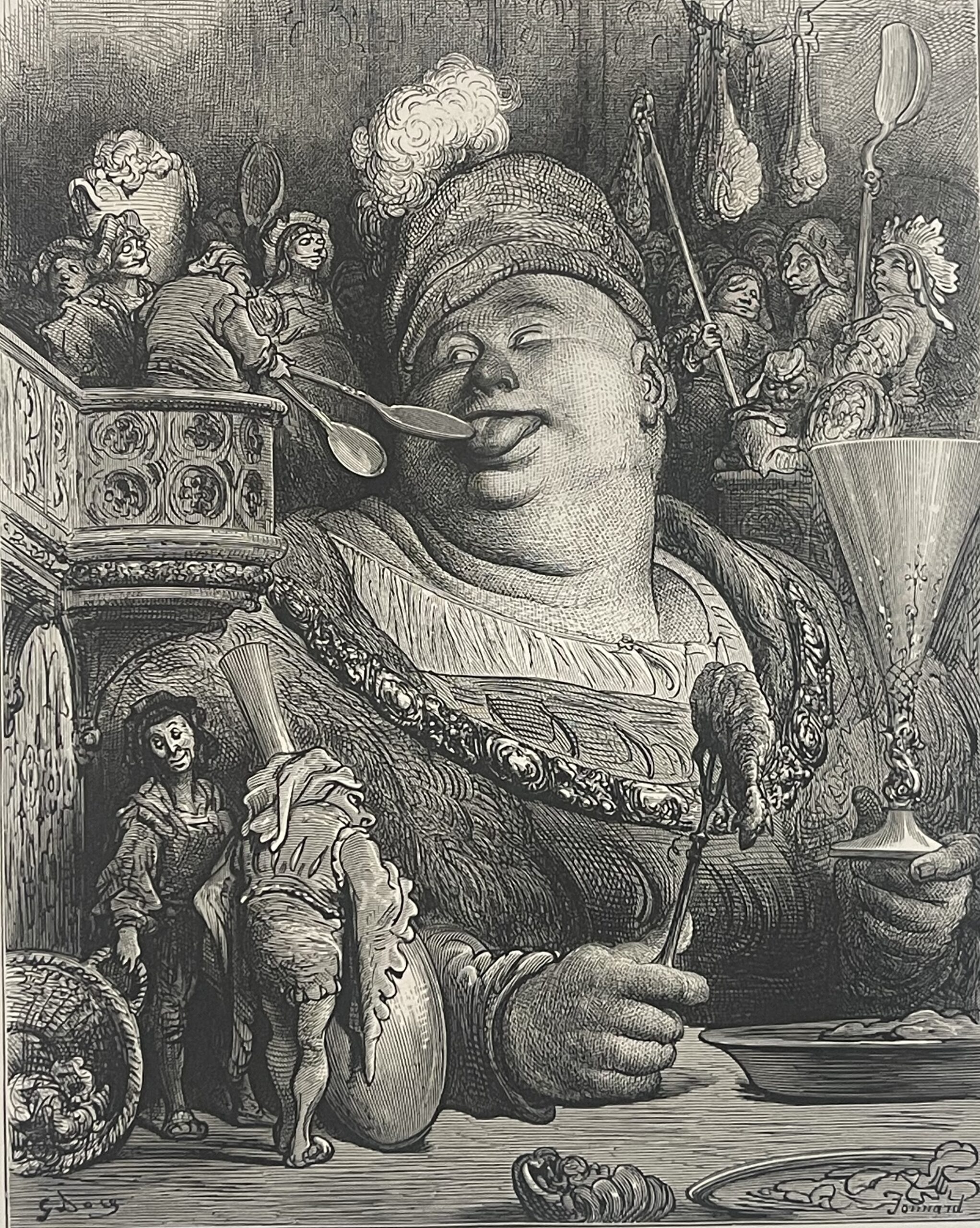
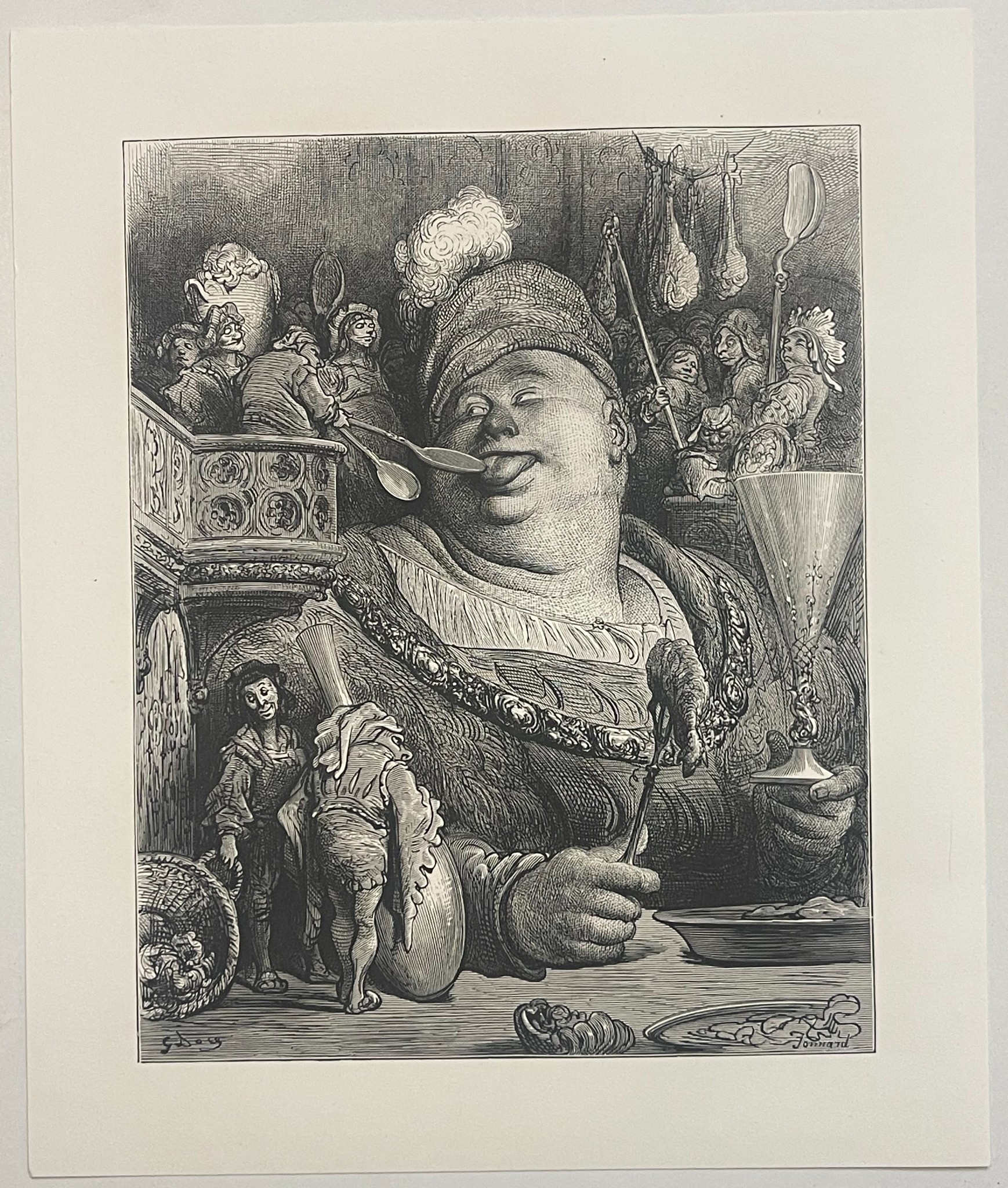
Original 1873 French wood engraving after Gustave Doré, illustrating the famous episode of the six pilgrims hidden in Gargantua’s salad.
A magnificent and humorous composition from François Rabelais’ Gargantua, Chapter XXXVIII, published by Garnier Frères in Paris in 1873.
Sheet: 30.7 × 25.7 cm.
Engraved image: 24.8 × 19.2 cm.
Description
GUSTAVE DORE – GARGANTUA EATING THE PILGRIMS – 1873
Original 19th-Century French Wood Engraving – François Rabelais
An impressive antique wood engraving from 1873, after Gustave Doré (1832–1883), illustrating one of the most entertaining episodes from Gargantua by François Rabelais.
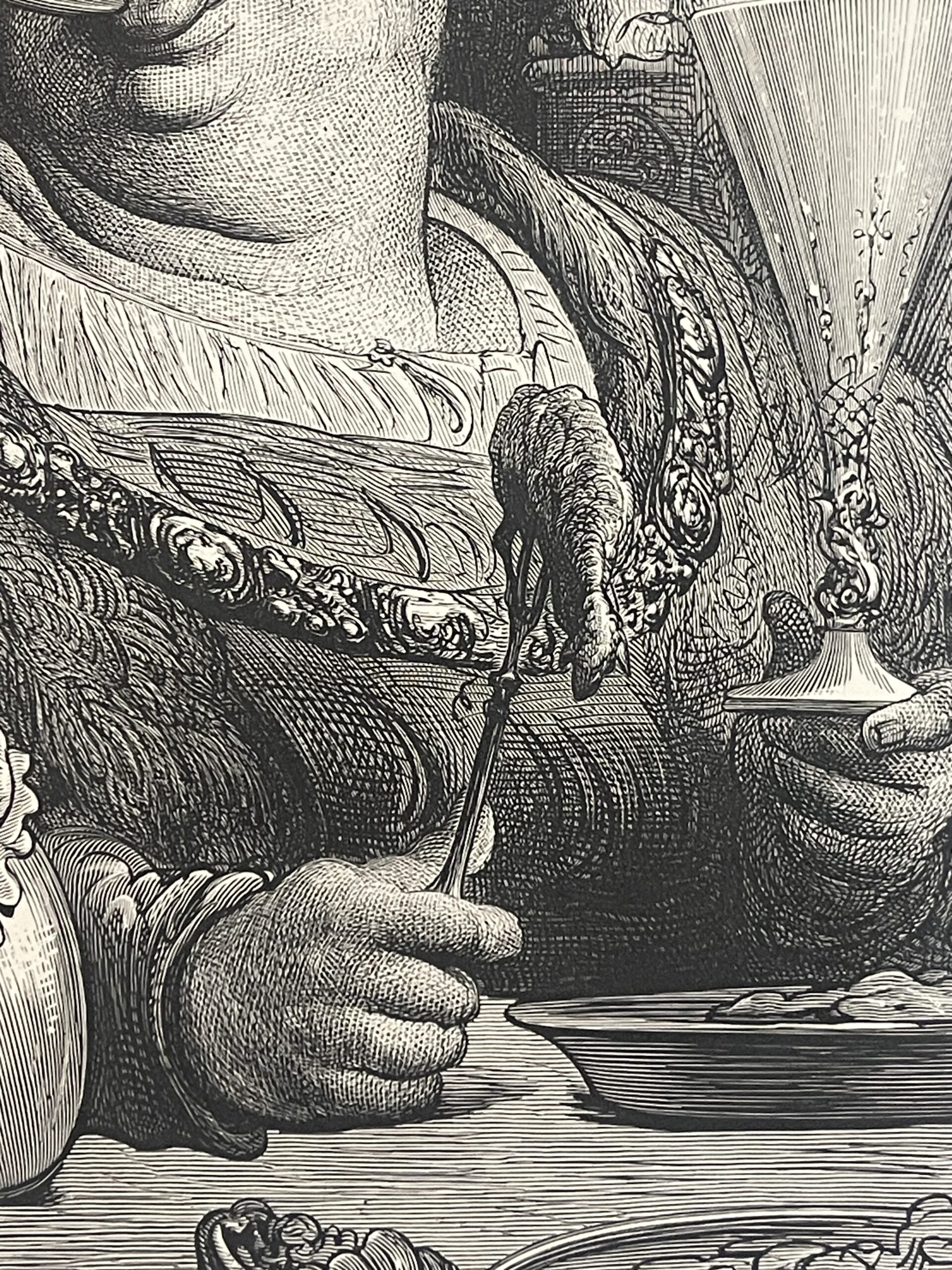
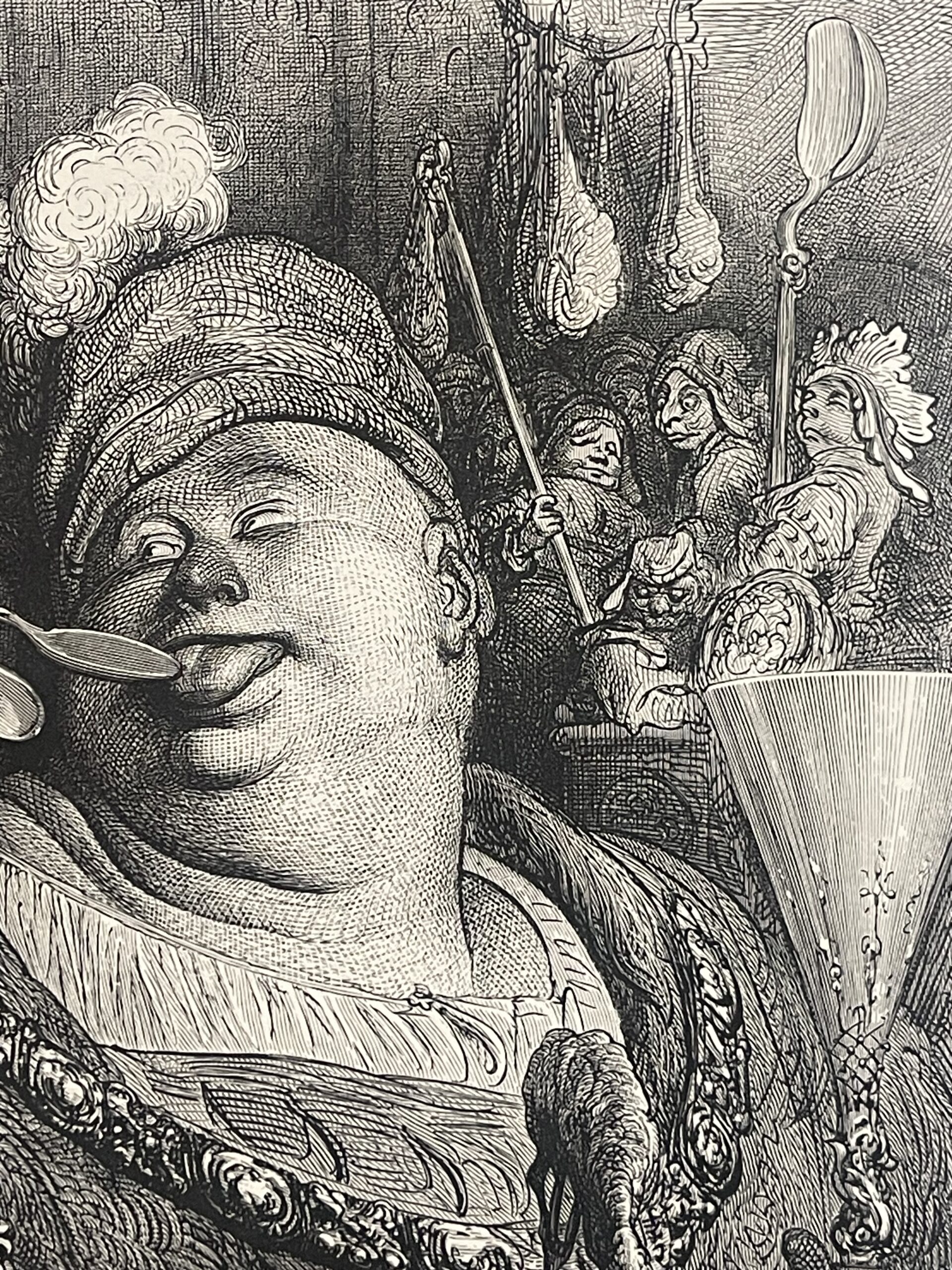
The composition depicts the giant Gargantua at his table, preparing to eat a group of unfortunate pilgrims accidentally concealed among his salad leaves.
This celebrated scene appears in Chapter XXXVIII of Gargantua and was illustrated by Doré for the magnificent edition of Rabelais’ works published in Paris by Garnier Frères in 1873.
GARGANTUA AND THE SIX PILGRIMS
According to the story, six pilgrims seeking refuge from danger hide among the lettuce plants in a garden.
Unaware of their presence, Gargantua orders the lettuces to be gathered and served as part of his enormous meal.
The unfortunate travellers find themselves mixed with the giant’s salad and are in immediate danger of being swallowed.
Rabelais transforms this extraordinary situation into a characteristic episode of comic exaggeration, in which gigantic appetites and miniature human figures create an unforgettable literary spectacle.
A MASTERPIECE OF FANTASTICAL ILLUSTRATION
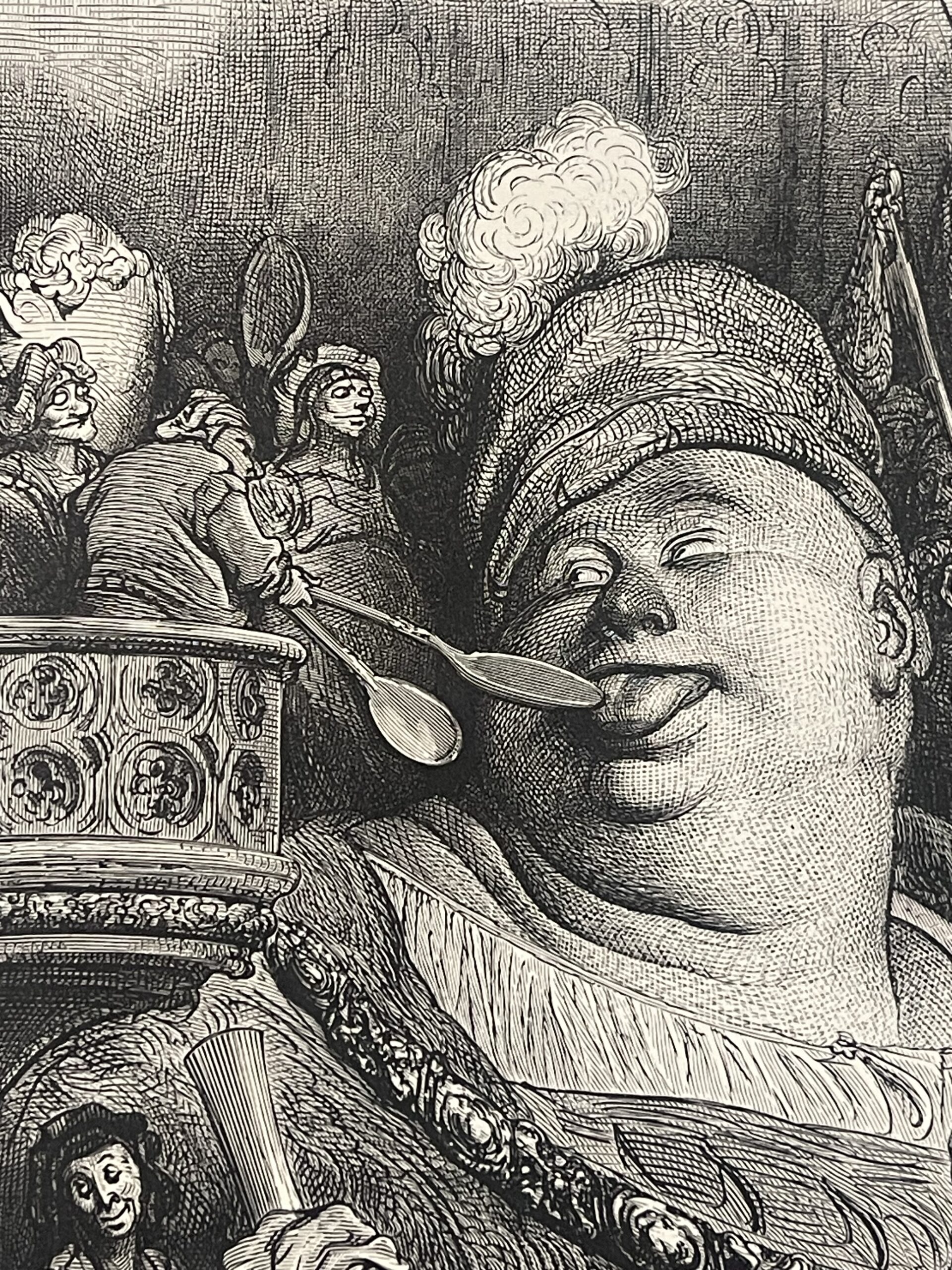
Gustave Doré represents Gargantua as an enormous, richly dressed figure enjoying a lavish banquet.
His immense face, elaborate costume and expressive gestures dominate the composition.
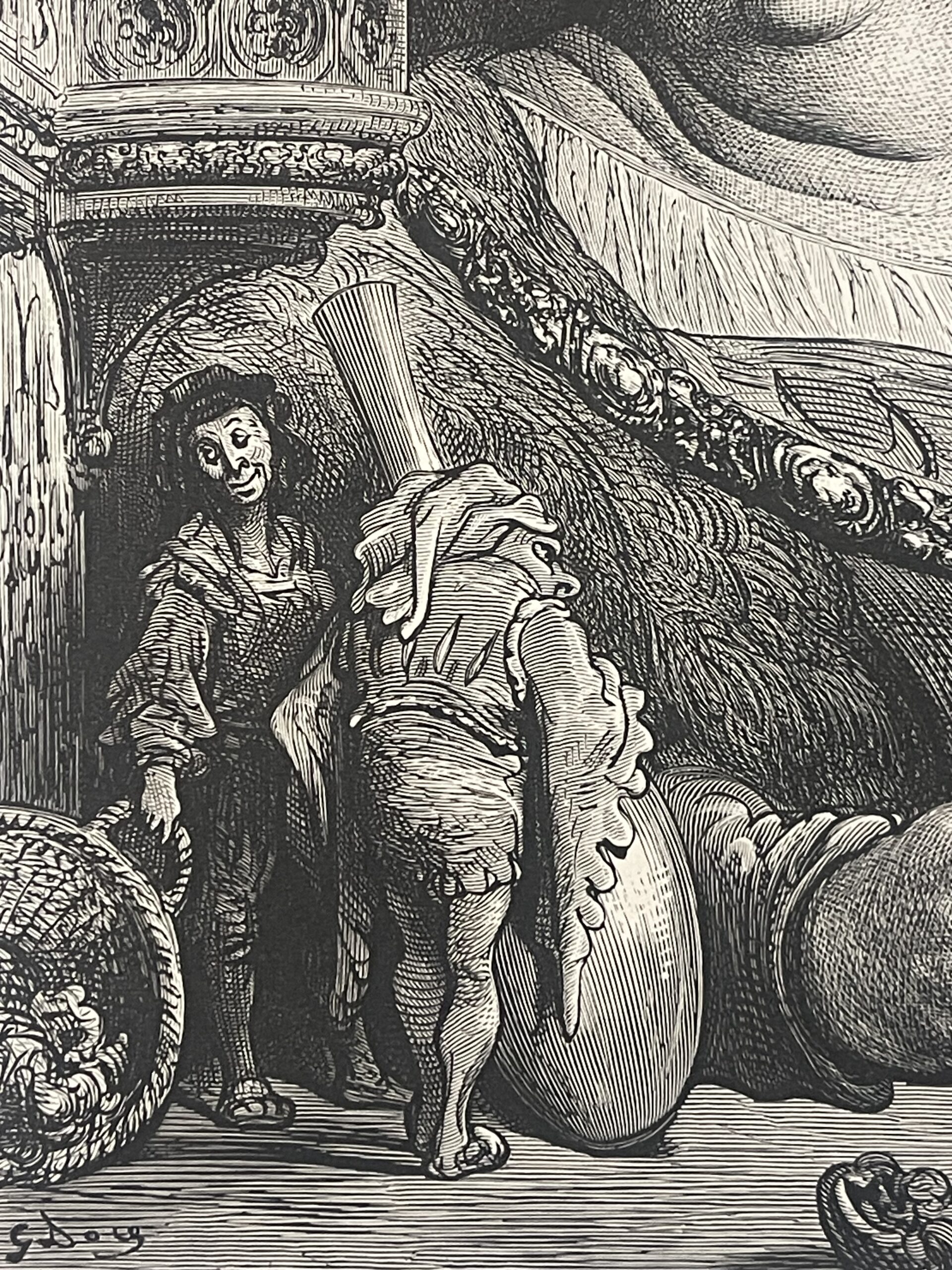
Around him, miniature attendants, diners and pilgrims provide a striking contrast of scale.
The elaborate architectural setting, banquet utensils and numerous background figures demonstrate Doré’s exceptional talent for combining fantasy, humour and meticulous detail.
The contrast between the enormous giant and the tiny human figures is central to the visual humour of the composition.
FRANÇOIS RABELAIS AND THE RENAISSANCE
François Rabelais was one of the most influential French writers of the Renaissance.
His celebrated novels Gargantua and Pantagruel combine satire, comedy, humanist philosophy and extraordinary imaginative storytelling.
The adventures of his giants became enduring classics of European literature.
Through exaggerated characters and extravagant episodes, Rabelais examined education, religion, politics and the social conventions of his time.
GUSTAVE DORÉ (1832–1883)
Gustave Doré was among the greatest European illustrators of the nineteenth century.
His illustrations for literary masterpieces by Dante, Cervantes, La Fontaine, Milton and Rabelais established his international reputation.
Doré’s illustrations of Rabelais are especially remarkable for their inventive compositions, expressive characters and astonishing wealth of detail.
The 1873 edition published by Garnier Frères is one of the celebrated achievements of nineteenth-century French book illustration.
AN ATTRACTIVE ANTIQUE WOOD ENGRAVING
This original nineteenth-century engraving preserves the fine line work, expressive figures and dramatic contrasts associated with Doré’s illustrations.
An entertaining and highly decorative subject for collectors of Gustave Doré, French literature, Renaissance satire and antique book illustrations.
DETAILS
Artist: After Gustave Doré (1832–1883).
Author: François Rabelais.
Literary work: Gargantua.
Subject: Gargantua Eating the Pilgrims.
Chapter: XXXVIII.
Publication: Paris, Garnier Frères, 1873.
Technique: Wood engraving.
Sheet dimensions: 30.7 × 25.7 cm.
Engraved image: 24.8 × 19.2 cm.
Period: 19th century.
Origin: France.
CONDITION
Antique impression showing the natural patina of aged paper. The engraved composition and its original fine details are well preserved.
A fine historical illustration combining French literary heritage with Gustave Doré’s exceptional imagination.
Reference: 5016-18R548


Avis
Il n’y a pas encore d’avis.