Description
Scylla Engraving – Original 1619 French Copperplate Print by Isaac Briot – Ovid’s Metamorphoses
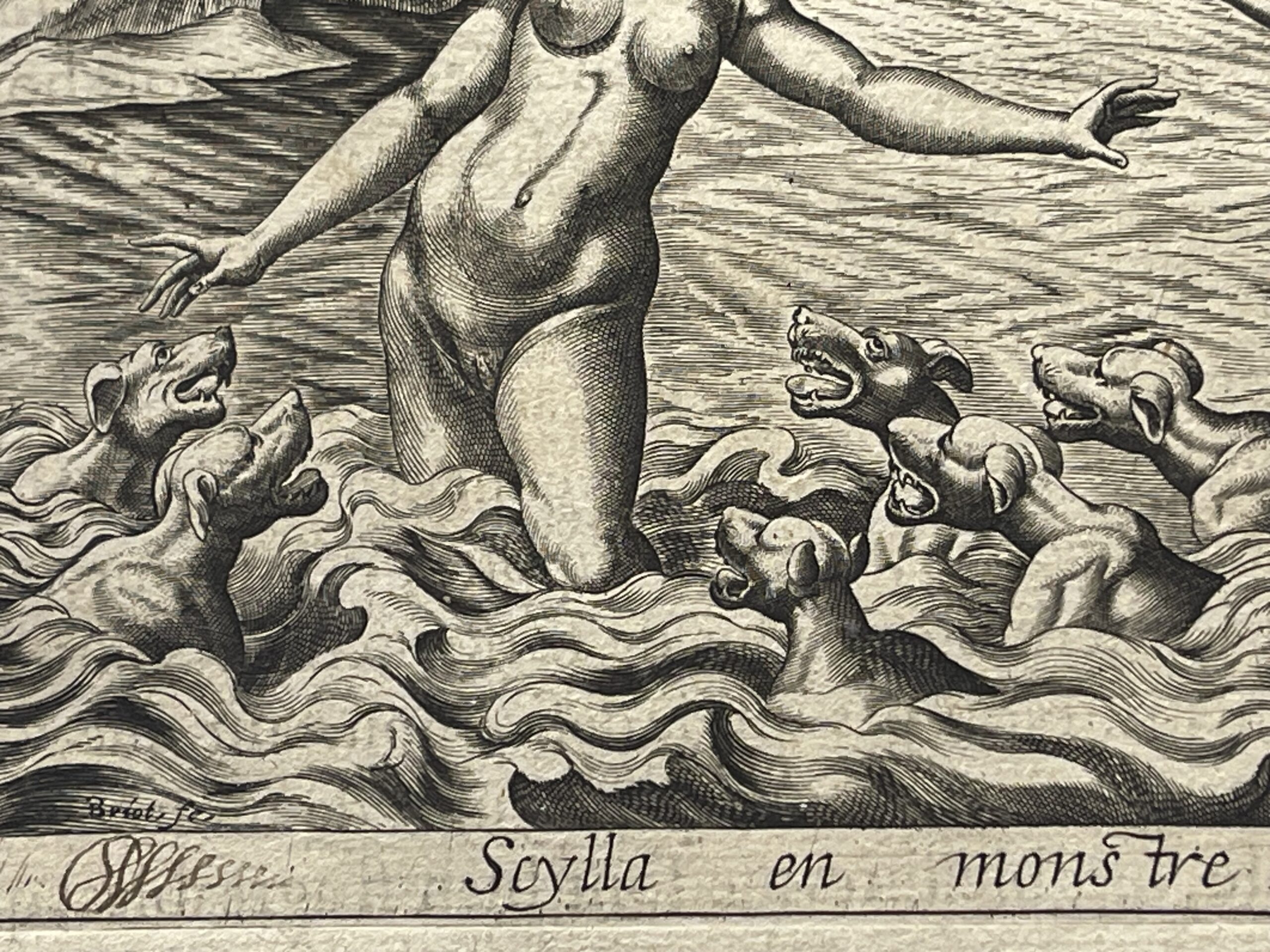
A remarkable original Scylla engraving dating from 1619, executed by the French engraver Isaac Briot (1585–1670).
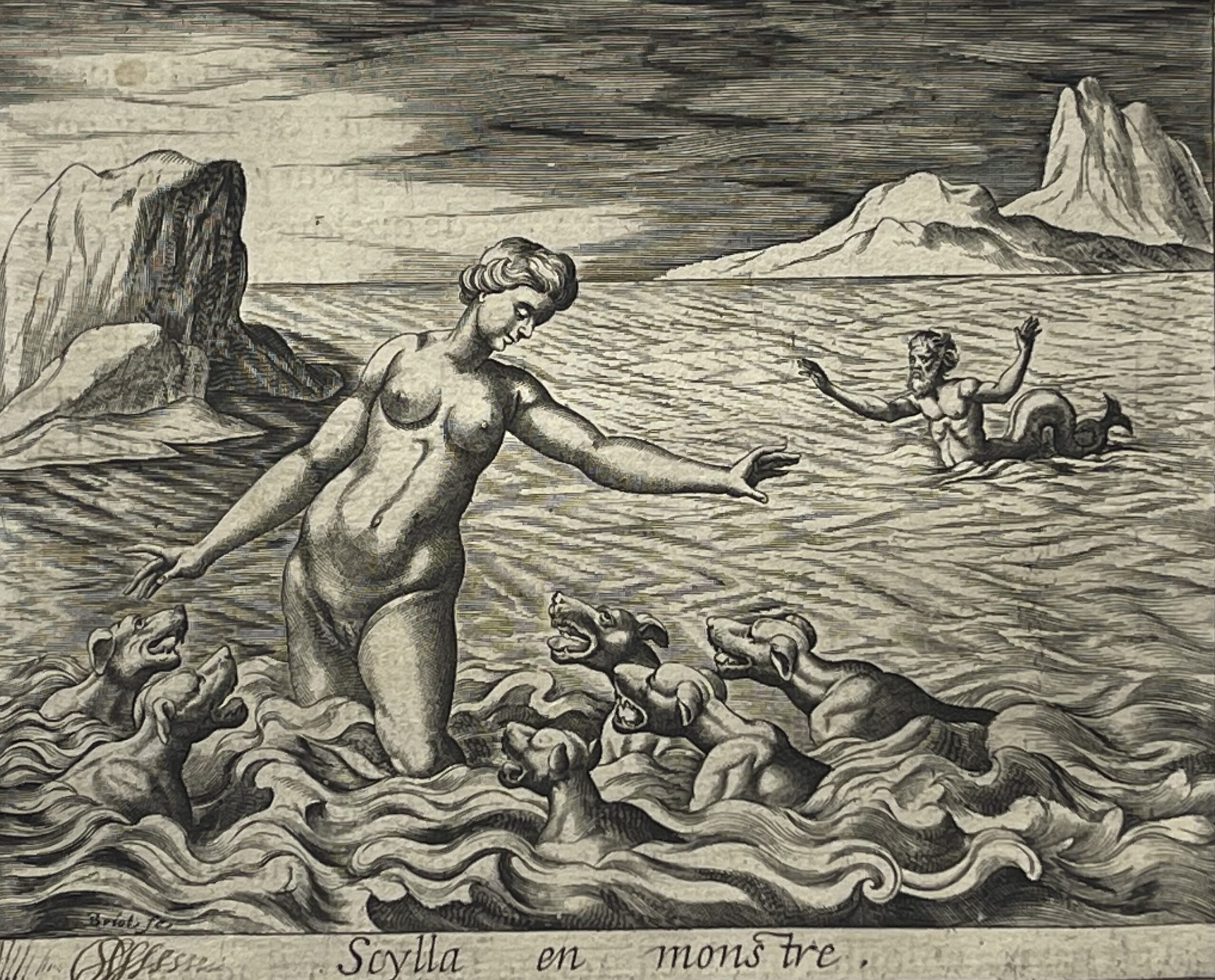
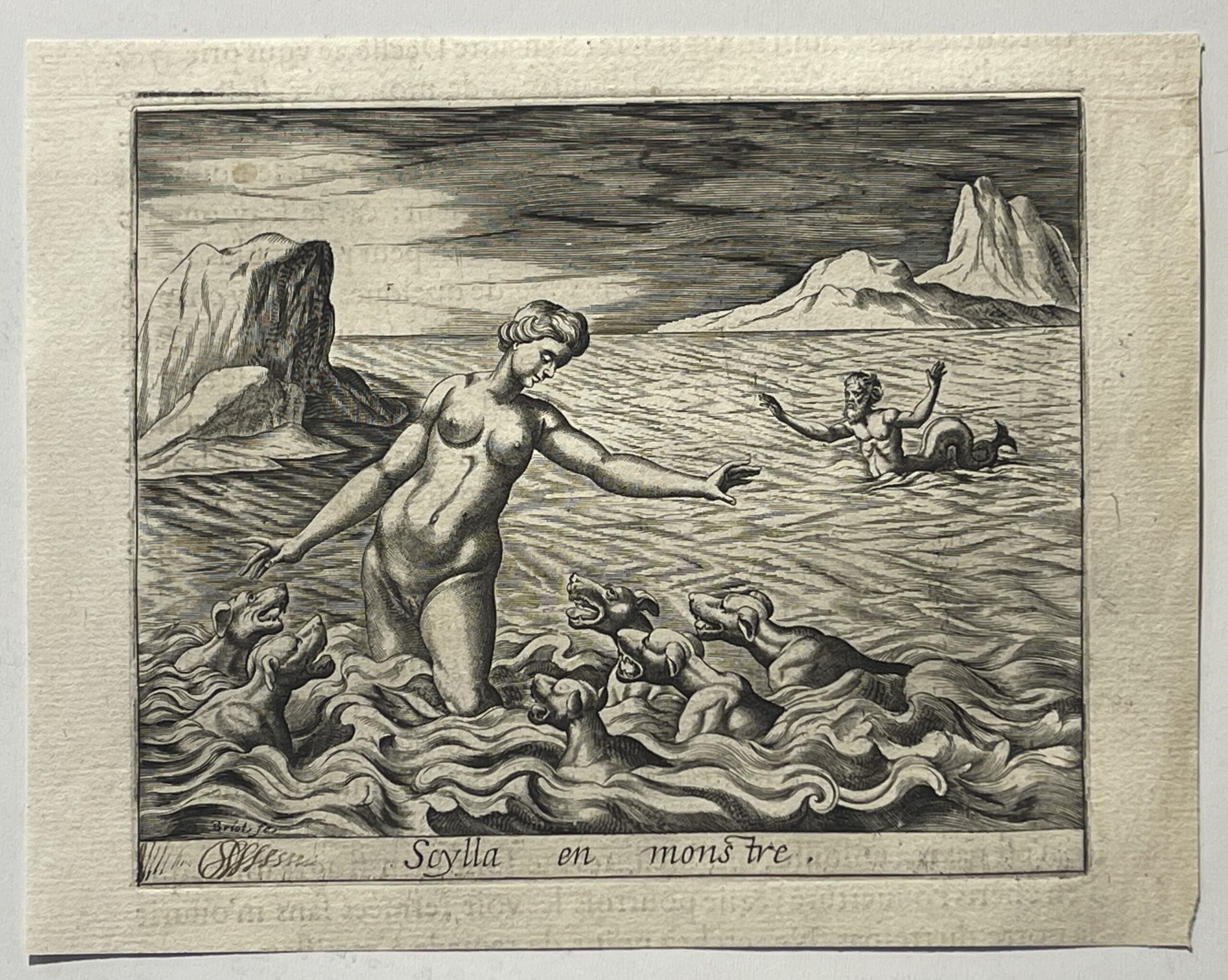
This beautiful early 17th-century copperplate engraving depicts the transformation of Scylla into a terrifying sea monster, one of the most dramatic episodes from Book XIV of Ovid’s Metamorphoses.
The print bears the original French title “Scylla en monstre” and the engraved signature “Briot fecit” in the lower left corner.
Scylla, Glaucus and the Revenge of Circe
In classical mythology, Scylla was a beautiful young sea nymph admired by Glaucus, a marine divinity whose body combined human and fishlike features.
Glaucus fell deeply in love with Scylla, but his advances were rejected.
Desperate to win her affection, he sought the assistance of Circe, the powerful enchantress renowned for her magical knowledge.
However, Circe herself fell in love with Glaucus.
When he refused her affection, she became consumed by jealousy and decided to take revenge upon Scylla.
Circe prepared a powerful magical potion and poisoned the waters where the young nymph regularly bathed.
When Scylla entered the water, she underwent a horrifying transformation.
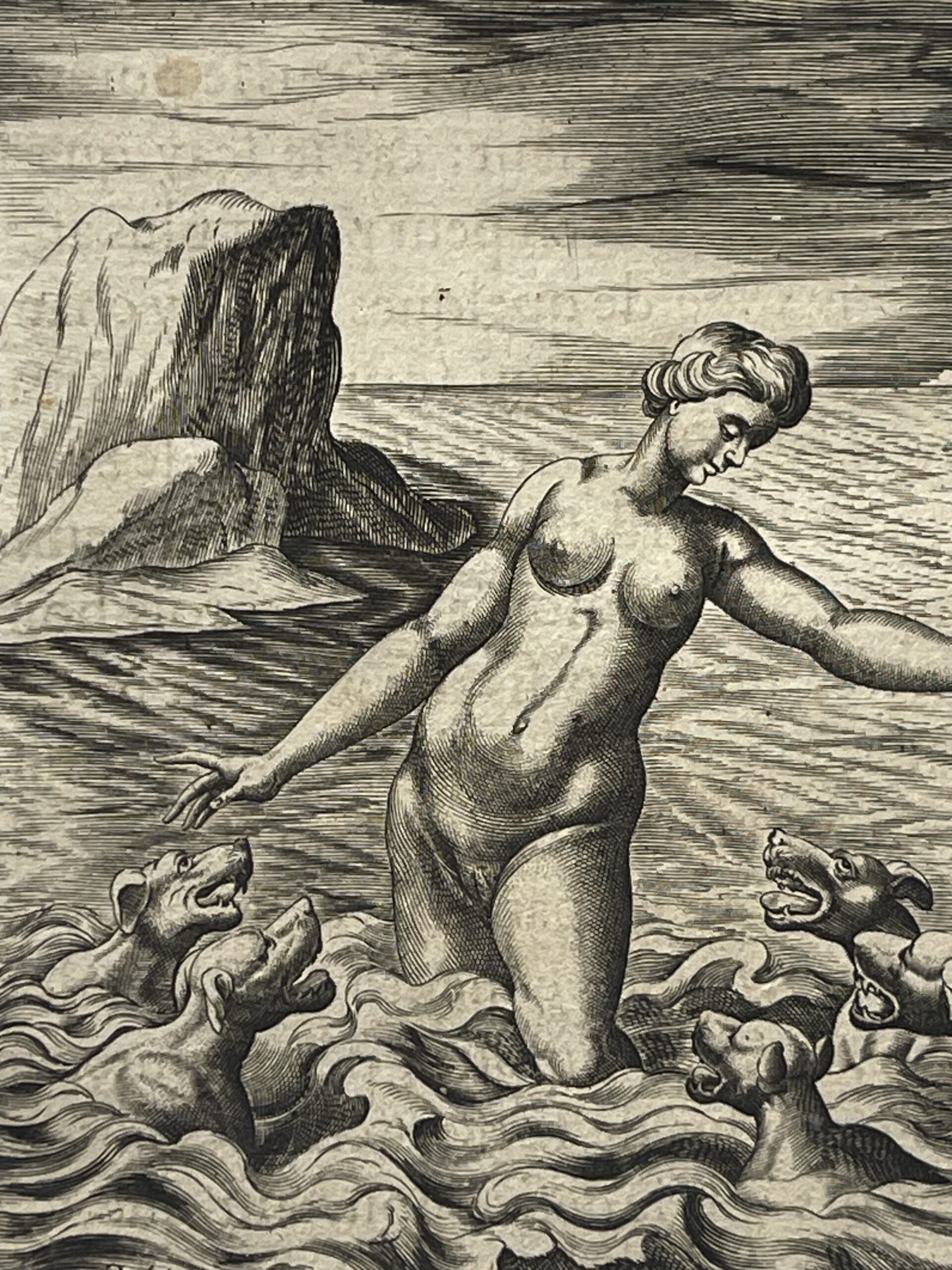
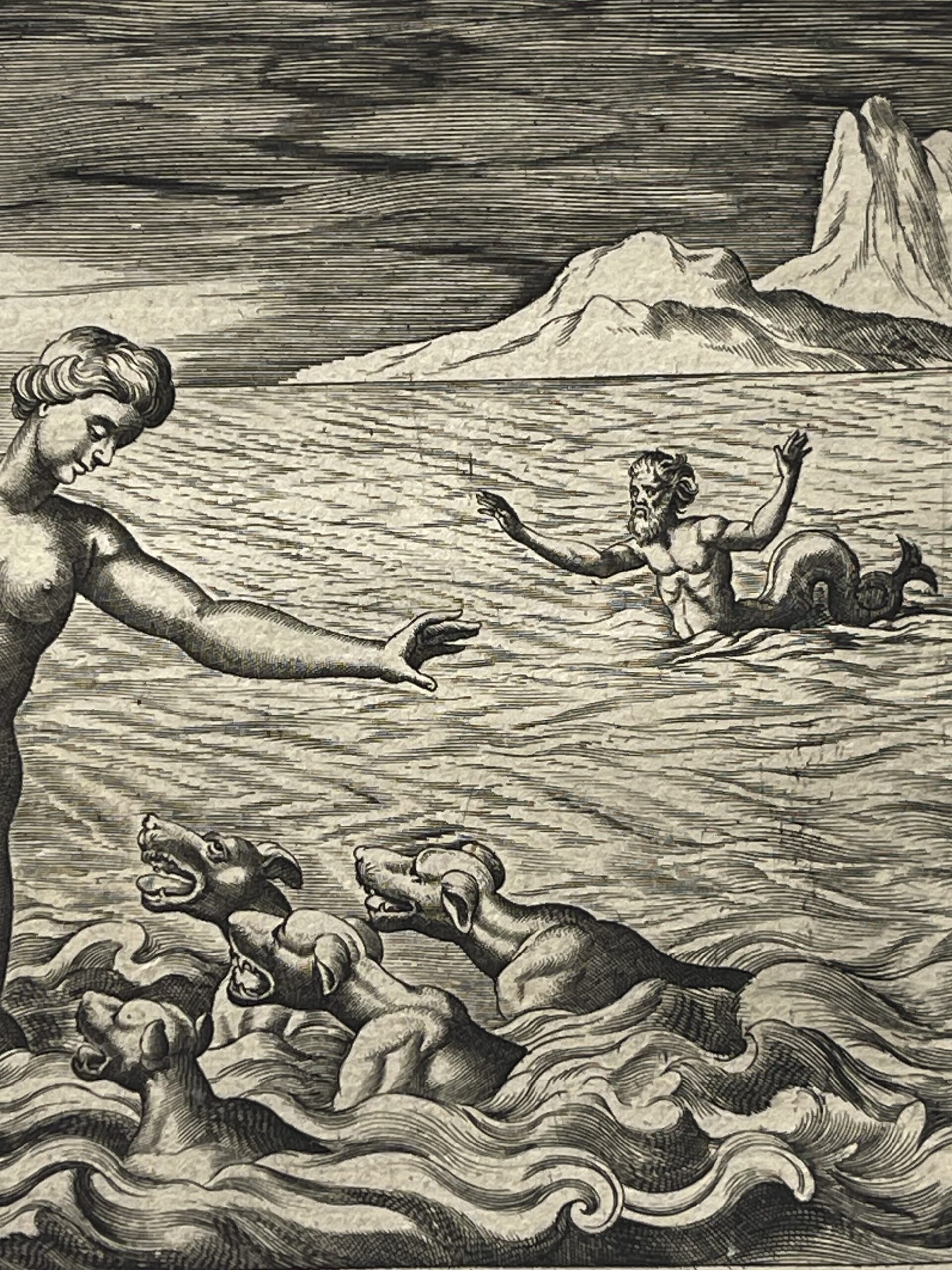
Several ferocious dog heads emerged around her body, barking and snapping at everything nearby.
The beautiful nymph had become one of the most feared monsters of classical mythology, traditionally associated with the dangerous waters of the Strait of Messina.
A Dramatic Mythological Composition
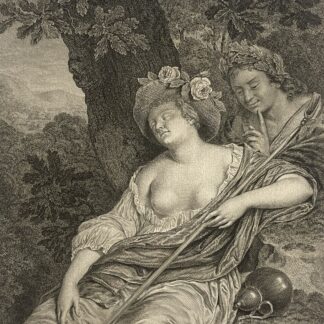
The engraving captures the moment of Scylla’s supernatural transformation.
At the centre of the composition, Scylla stands partially immersed in the sea, surrounded by a group of monstrous dog heads emerging from the turbulent waves.
Her arms are extended, and her expression conveys the shock of her transformation.
In the background, Glaucus appears as a marine deity with a human upper body and a curled fish tail.
The scene unfolds within an elaborate coastal landscape featuring towering rocks, distant mountains and an expansive sea beneath a dramatic cloudy sky.
The artist has used delicate engraved lines and precise cross-hatching to create movement, volume and atmosphere.
The sculptural treatment of Scylla’s figure contrasts beautifully with the animated forms of the sea monsters.
Isaac Briot and French Engraving in the Early 17th Century
Isaac Briot was an accomplished French engraver active during the first half of the 17th century.
His work includes historical subjects, portraits, decorative compositions and mythological illustrations.
This copperplate engraving reflects the quality and refinement of French illustrated publishing during the reign of Louis XIII.
An Authentic 1619 Impression
This print originates from the Paris edition of Ovid’s Metamorphoses, published in 1619.
The composition is documented in the collections of the Bibliothèque nationale de France, where it appears in Book XIV, page 395.
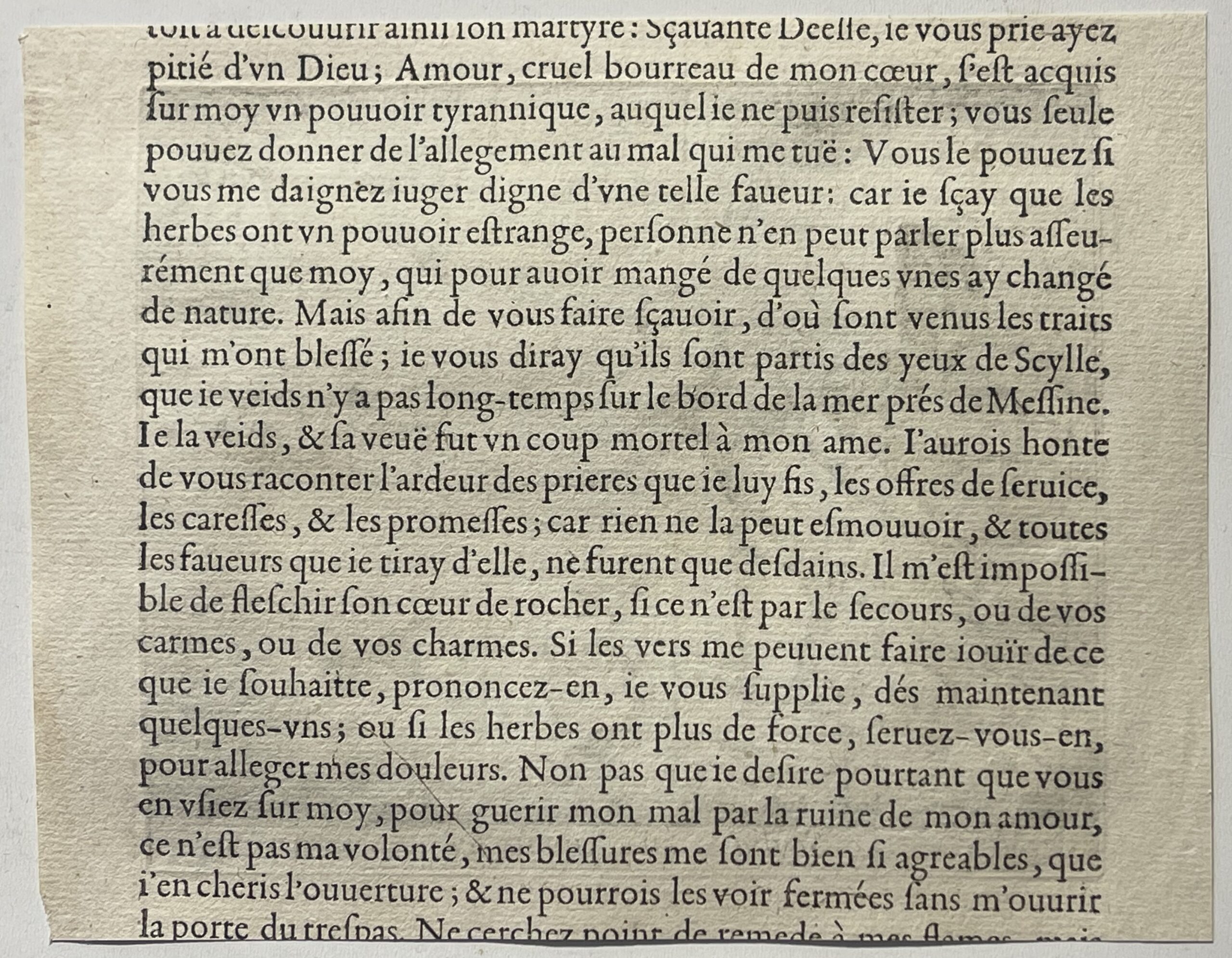
The reverse preserves original early 17th-century French printed text relating to the story of Glaucus and Scylla.
Characteristics
- Engraver: Isaac Briot (1585–1670)
- Original title: Scylla en monstre
- Date: 1619
- Period: Early 17th century
- Origin: France
- Technique: Original copperplate engraving
- Subject: Scylla transformed into a sea monster
- Literary source: Ovid’s Metamorphoses, Book XIV
- Sheet dimensions: 16.8 × 13.2 cm
- Engraved image: 13.5 × 11.2 cm
- Reverse: Original 17th-century French printed text
Condition
Antique impression displaying a natural patina of the paper. Beautiful preservation of the engraved composition and original inscriptions. Please examine the photographs.
A remarkable original mythological print from 1619, particularly appealing to collectors of Old Master engravings, classical mythology and early French illustrated books.

Avis
Il n’y a pas encore d’avis.