Description
Kouaoui Village Engraving – Papua, 1836
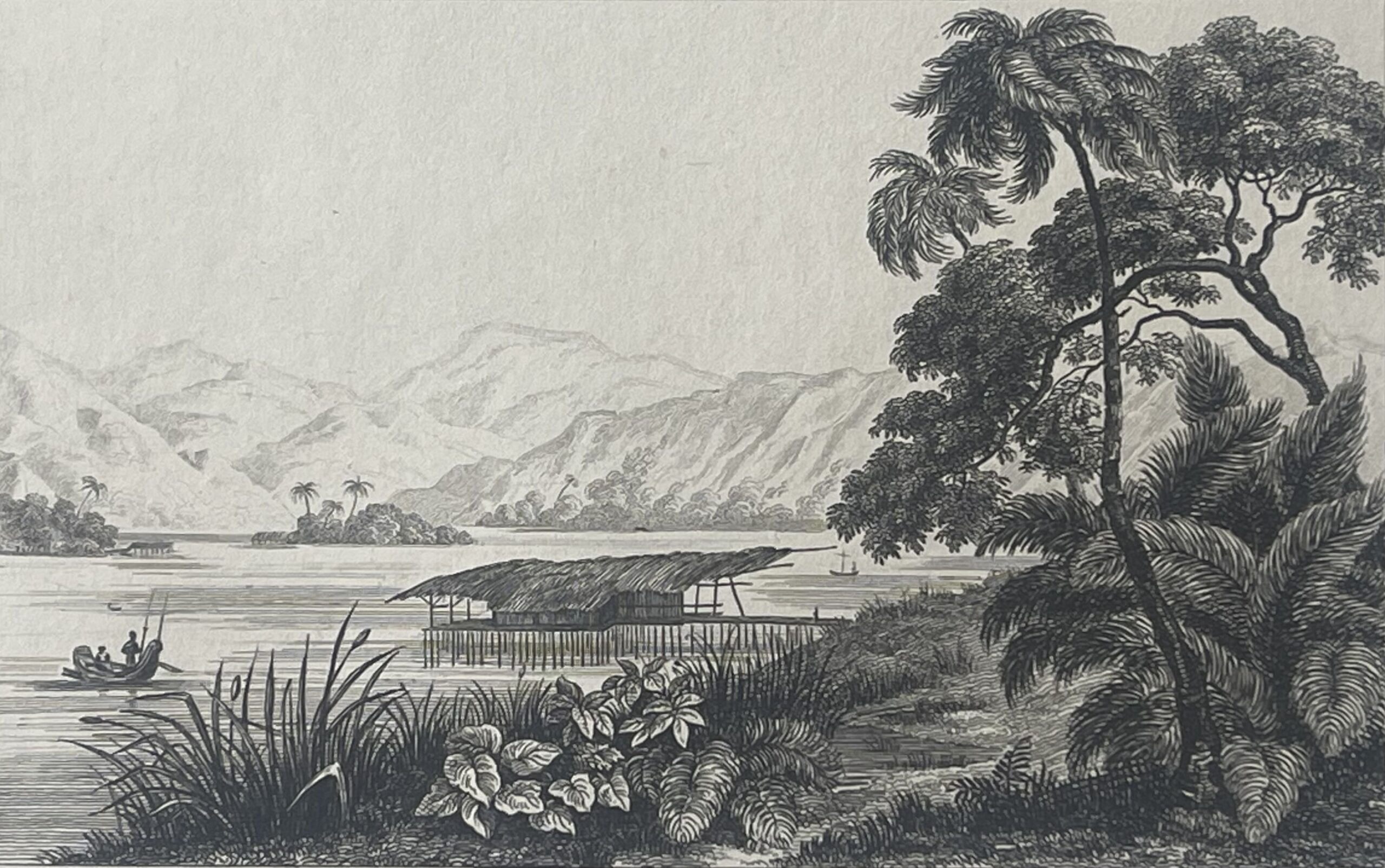
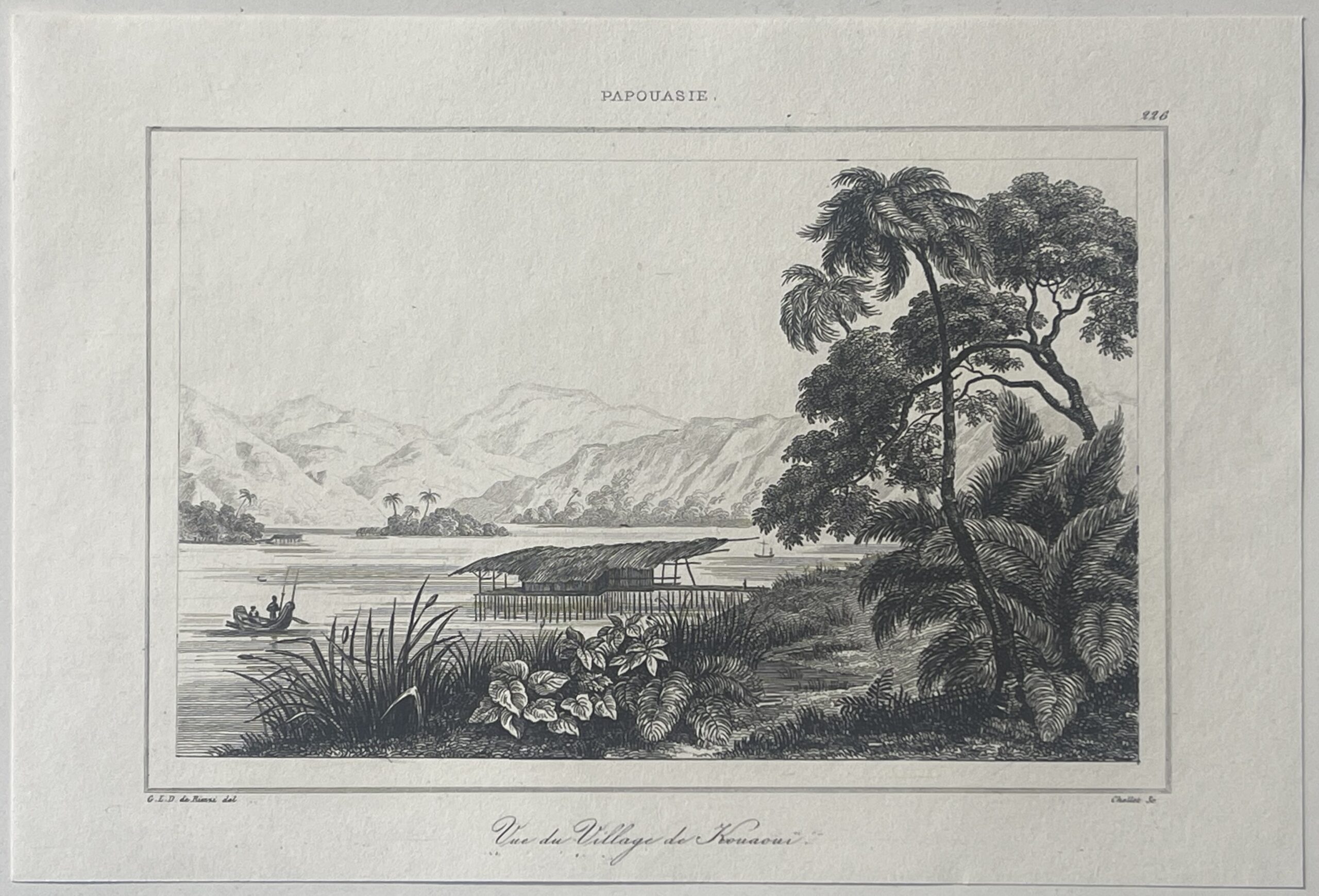
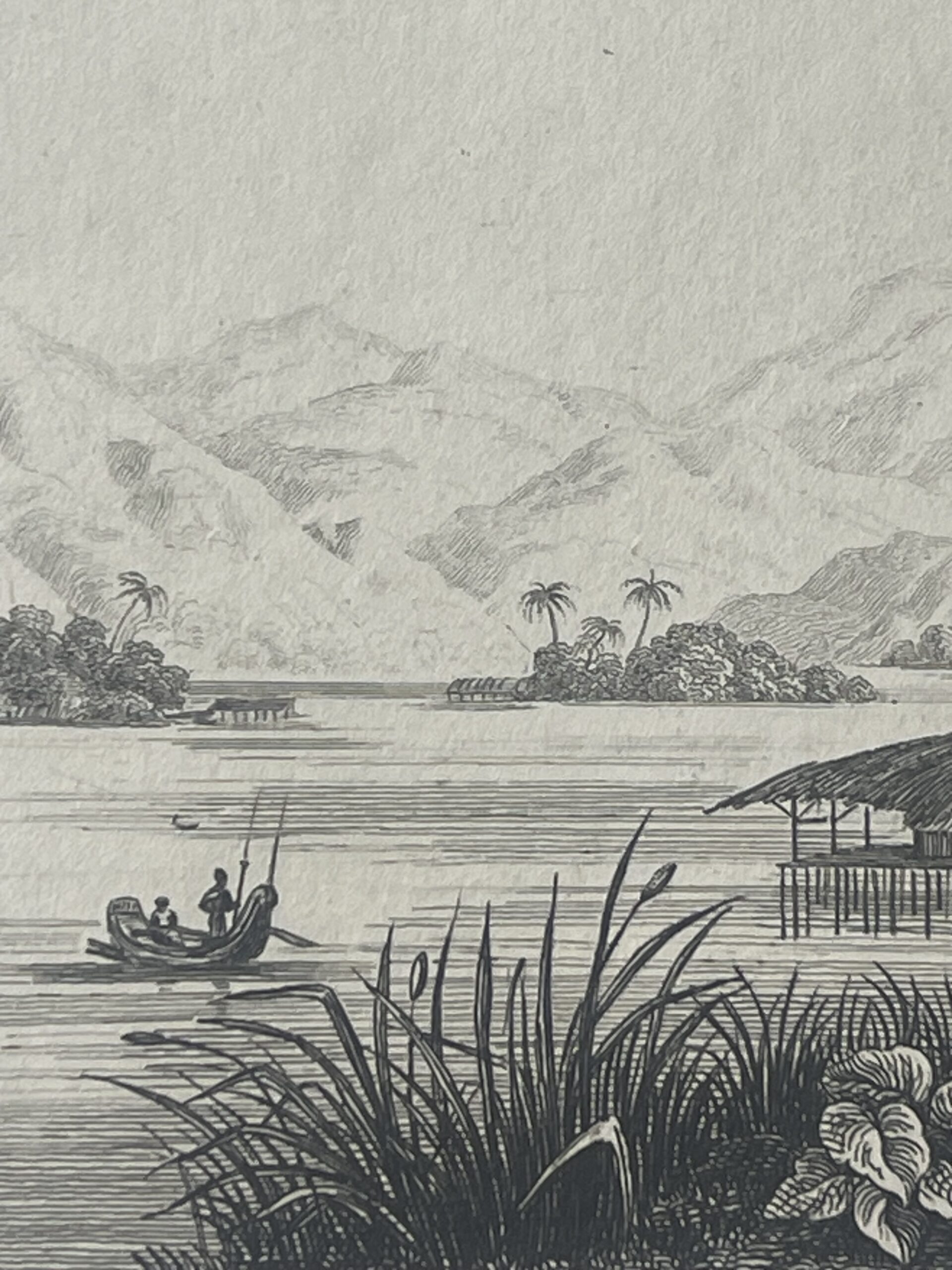
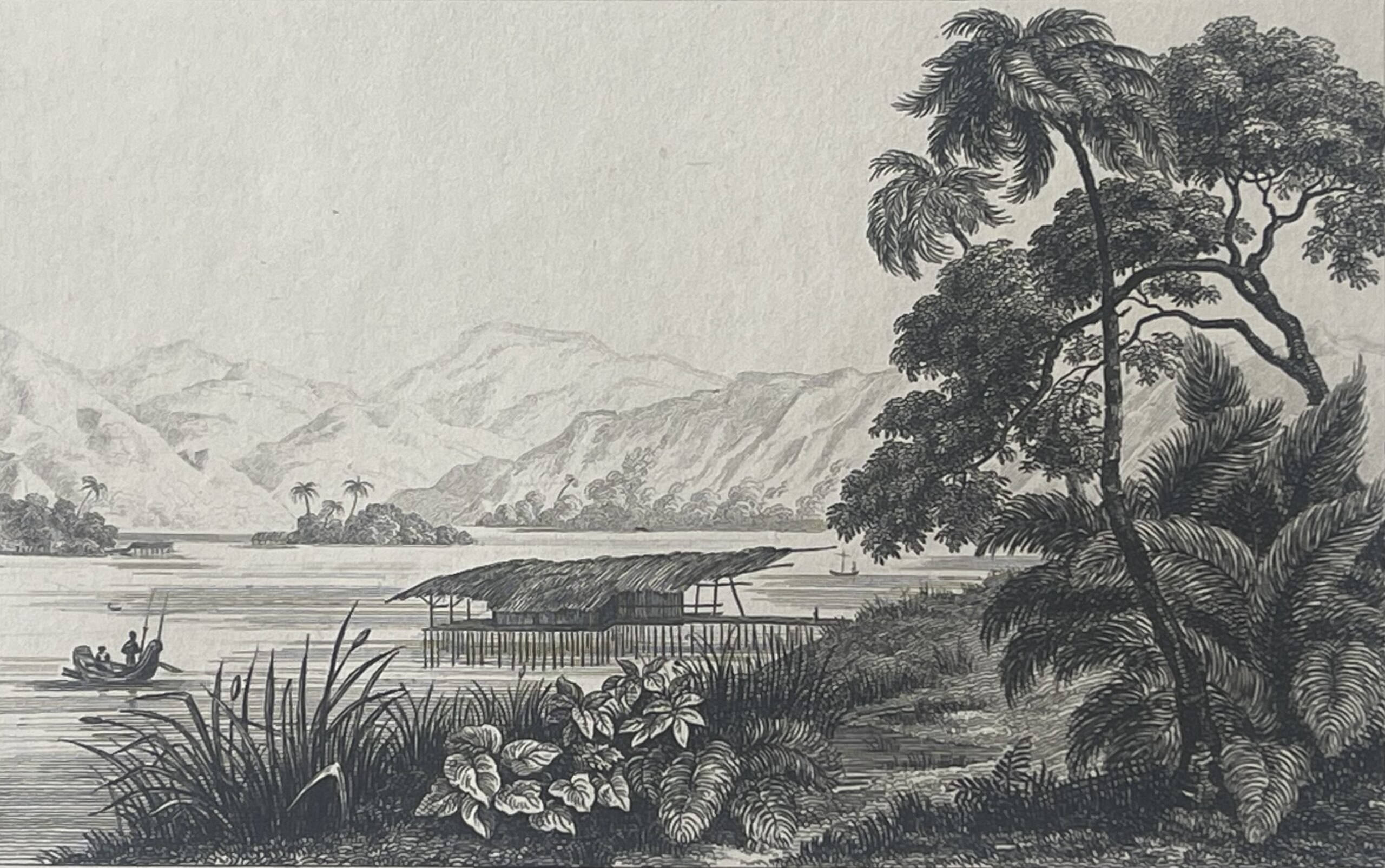
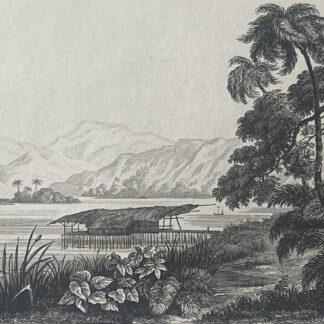
This Kouaoui village engraving is an original nineteenth-century view depicting a traditional settlement in Papua. Published in Paris in 1836, it presents a peaceful tropical landscape bordered by water and distant mountains.
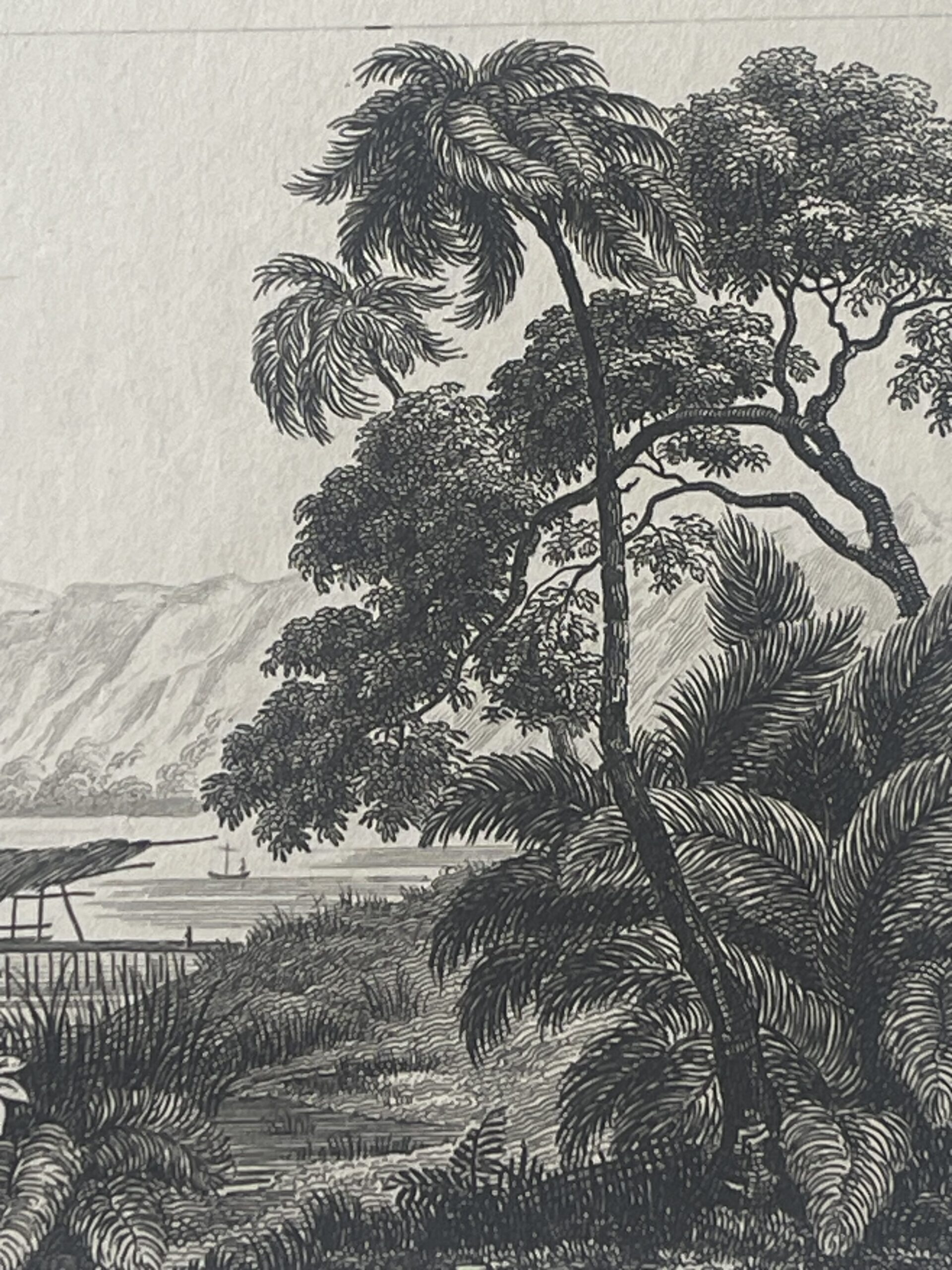
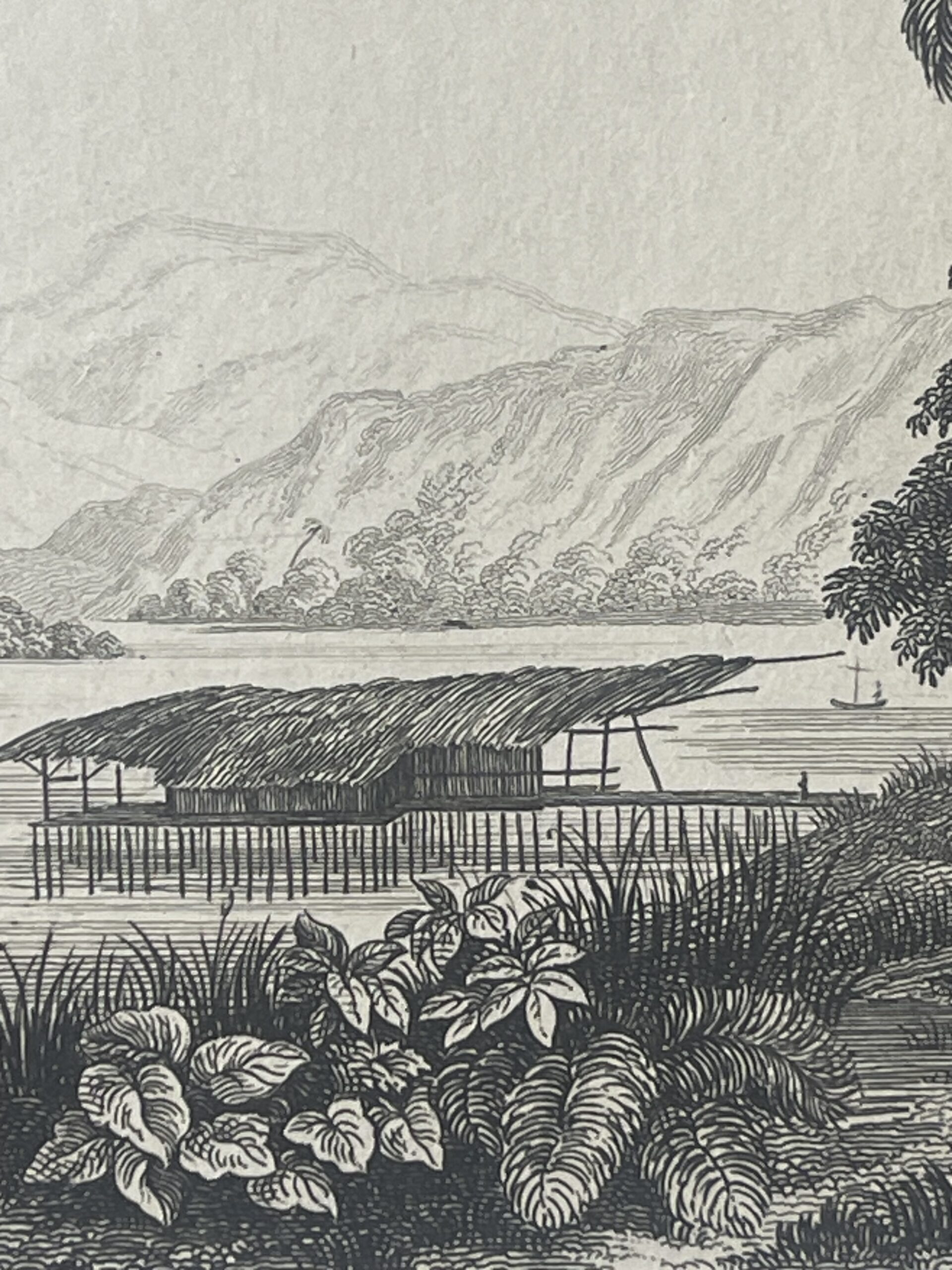
At the centre of the composition stands a large dwelling built on stilts above the water. A small canoe carrying several figures appears nearby, while dense tropical vegetation, palm trees and broad-leaved plants frame the foreground. The finely engraved mountainous background gives the scene remarkable depth and atmosphere.
The plate is entitled “Vue du Village de Kouaoui” and bears the number 226. It was published in Océanie ou Cinquième Partie du Monde, the important geographical and ethnographic work by G. L. Domeny de Rienzi, issued in Paris by Firmin Didot in 1836. The plate was engraved on steel by Chollet.
An Influential Image in European Archaeology
This representation of the stilt village of Kouaoui later acquired unexpected importance in the history of European archaeology.
Following the discovery of prehistoric lake-dwelling remains on the shores of Lake Zurich in 1854, Swiss archaeologist Ferdinand Keller reportedly drew inspiration from this image when producing his early reconstructions of prehistoric European settlements built above the water.
Keller’s widely circulated illustrations helped establish the enduring popular image of Europe’s prehistoric “lake villages.” This engraving is therefore of particular interest not only as a nineteenth-century representation of Papua and Oceania, but also as a visual source associated with the development of prehistoric archaeology in Europe.
- Sheet dimensions: 19 × 12.8 cm
- Engraved image dimensions: 15 × 9.8 cm
Avis
Il n’y a pas encore d’avis.