Description
Rawak Island Engraving
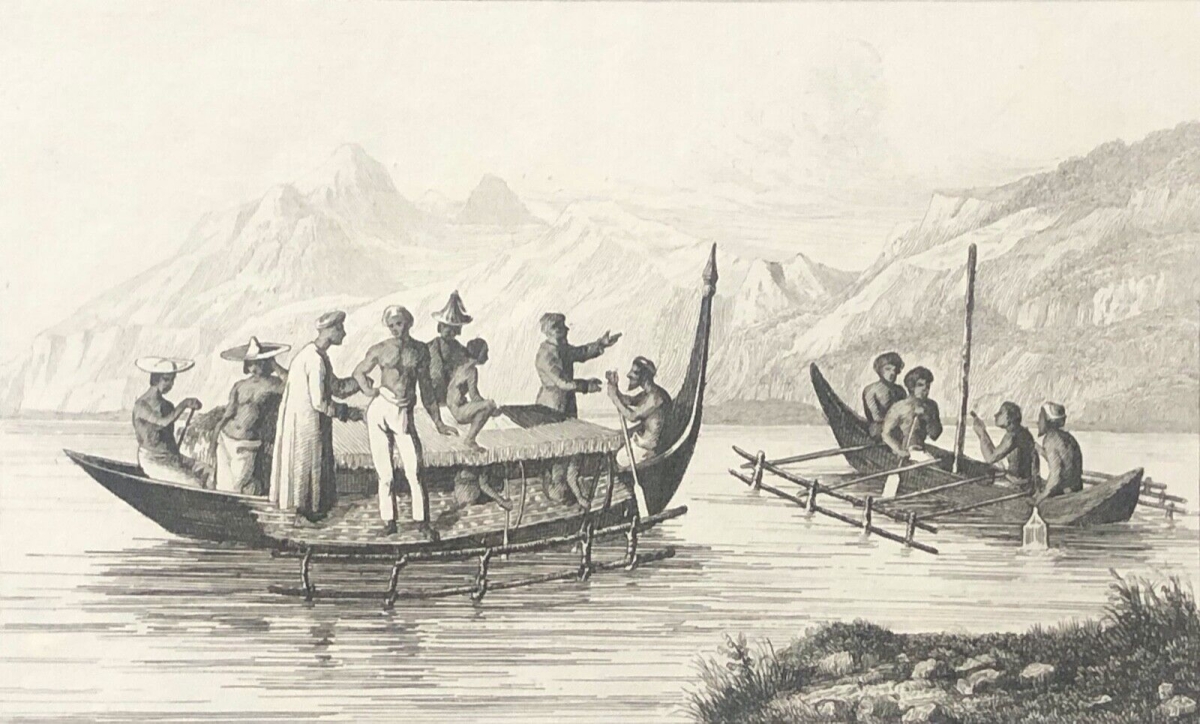
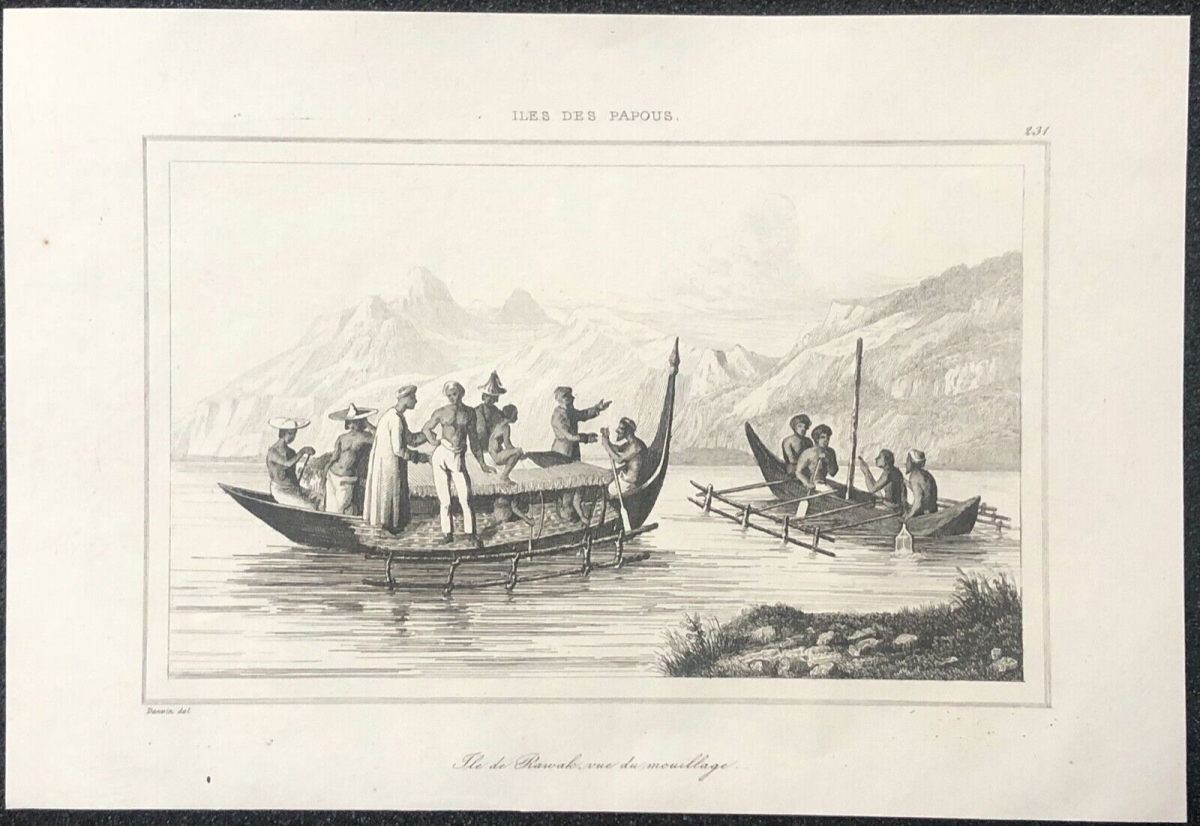
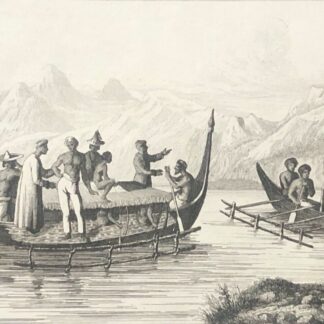
This original Rawak Island engraving depicts Papuan people travelling in two traditional boats against the mountainous landscape of western New Guinea.
The original French title printed beneath the image reads “Île de Rawak, vue du mouillage”, while the heading “Îles des Papous” and plate number 231 appear above the composition.
Papuan Boats and Outrigger Canoe
The foreground is occupied by two indigenous craft carrying several figures. The smaller boat is fitted with a lateral outrigger designed to improve stability at sea.
The larger vessel appears to illustrate an encounter between European travellers and local inhabitants. The figures are shown communicating while the boats rest on calm water near the mountainous coast.
The finely engraved landscape, reflections on the water and detailed construction of the boats give this small print considerable visual interest.
Rawak and Western New Guinea
Rawak is a small island situated near Waigeo in the Raja Ampat region, west of New Guinea. Although the plate uses the historical designation “Îles des Papous”, the area is now part of Indonesian Papua rather than the modern state of Papua New Guinea.
Danvin and Domeny de Rienzi
The composition was drawn by French painter and illustrator Victor-Marie-Félix Danvin. The engraver is not identified on this impression.
It was published in Paris by Firmin Didot frères in Grégoire Louis Domeny de Rienzi’s geographical and ethnographic work “Océanie ou Cinquième partie du monde”, issued in 1836-1837.
Details
- Original title: Île de Rawak, vue du mouillage
- Heading: Îles des Papous
- Location: Rawak Island, western New Guinea
- Present region: Indonesian Papua
- Artist: Victor-Marie-Félix Danvin
- Engraver: unidentified
- Date: 1837
- Technique: steel engraving
- Plate number: 231
- Sheet dimensions: 18.7 × 12.8 cm
- Image dimensions: 14.4 × 9 cm
Condition
Good antique condition. A few small spots and minor age-related marks are visible in the margins. Please examine all photographs carefully, as they form an essential part of the description.
This is an authentic 19th-century impression and not a modern reproduction.
Avis
Il n’y a pas encore d’avis.